Pescarino-Sapori di Terra e di Mare

Pescarino-Sapori di Terra e di Mare sits at the edge of Montemarcello with a Michelin Plate recognition (2024 and 2025) and a menu that moves between direct seafood cookery and more considered preparations, all anchored in Ligurian coastal produce. At the €€ price point, it occupies a position rare for the area: ingredient-led cooking in a genuinely remote setting. Rooms on-site make an overnight stay a practical option worth considering.
Pearl is the En Primeur Club membership app — saves, bookings, and concierge access live there. Same editors, same standards.
- Address
- via borea, 52, 19030 Montemarcello SP, Italy
- Phone
- +39 366 122 3749
- Website
- lefigarole.it
- Directions
- Get directions
 Saves & bookings on Pearl
A Village at the Edge, a Kitchen Facing the Sea
Montemarcello sits above the Gulf of La Spezia on a narrow ridge where Liguria gives way to Tuscany, and the village's remove from any major road is not incidental to the experience of eating here. The approach to Pescarino-Sapori di Terra e di Mare, along via Borea in a settlement that most Italian coastal visitors pass through without stopping, sets a particular expectation: this is not a destination restaurant in the way that Osteria Francescana in Modena or Enoteca Pinchiorri in Florence are destination restaurants, drawing international pilgrims and carrying the full machinery of multi-star ambition. What Pescarino offers is something structurally different: a cooking project whose scale and price point are calibrated to the village it occupies, not to a wider competitive tier.
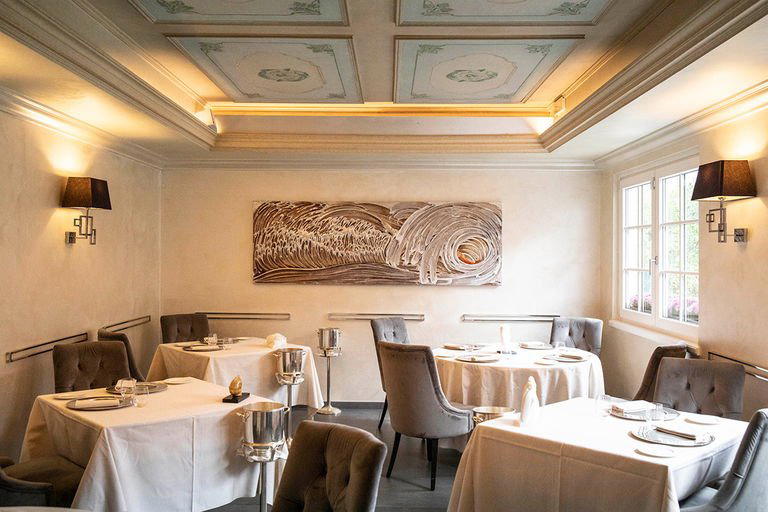
Inside, the room is defined by wooden walls and ceiling, materials that register immediately as warm rather than designed. A recently renovated terrace extends the space outward. Neither element is accidental in this part of the Ligurian coast, where the built environment tends to speak plainly rather than performing luxury.
Where the Ingredients Come From and Why That Defines the Menu
The editorial angle on Pescarino is about where the food originates and what the kitchen does with that proximity. The restaurant's sourcing runs primarily from the sea, which in this stretch of coast means the waters of the Gulf of La Spezia and the wider Ligurian Sea, both governed by seasonal variation and the kind of day-to-day catch variability that a kitchen at this scale can actually absorb. Larger operations further up the prestige ladder, places like Uliassi in Senigallia or Quattro Passi in Marina del Cantone, also anchor their menus in Adriatic or Tyrrhenian seafood respectively, but at higher price tiers where consistency across covers and seasons becomes a structural pressure. At the €€ bracket, Pescarino operates with a different kind of flexibility: the menu can reflect what arrived that morning rather than what was specified on a tasting programme drafted months in advance.
The Ligurian inflection matters here in specific ways. This region's seafood tradition is not built around the abundant, fatty catches of the Adriatic; it leans toward smaller fish, shellfish, and anchovies prepared with the herbaceous character that the local landscape produces: basil, pine nuts, the olive oils of the Riviera. Pescarino's kitchen works within these reference points while the Michelin Plate recognition in both 2024 and 2025 suggests the execution meets a threshold of consistency. The Plate designation is not a star. But in a village of Montemarcello's size, it functions as a meaningful signal that the cooking holds up against a broader Italian standard rather than just a local one.
The Shape of the Menu: Simple and Creative, Side by Side
What the venue's own recognised description makes clear is that the menu operates on two registers simultaneously. Some preparations are relatively direct, allowing the primary ingredient to carry the plate with minimal interference. Others reach toward something more creative, a structure that mirrors what coastal Italian kitchens increasingly adopt when they want to serve both the visitor who wants grilled fish done well and the one who wants to see what the kitchen can do when it extends itself. This is not the avant-garde pursuit of a Reale in Castel di Sangro or the technical ambition of Le Calandre in Rubano. The creativity here is proportionate and grounded in product rather than technique for its own sake.
The Ligurian nuances extend to other regional influences, which reflects how this stretch of coast has historically absorbed culinary inputs from both the Ligurian hinterland and the neighbouring Tuscan coastline. Montemarcello sits at that boundary, and a kitchen operating here would be unusual if it did not at some level reflect that geographic double identity.
Planning Around the Location
The isolation that defines Montemarcello is also the point. Visitors arriving by car from La Spezia face a drive through a series of hairpin-cornered roads that tighten as they ascend toward the village. There is no rail connection; the logistics of reaching the place and then returning in the same evening have a way of concentrating the mind toward one practical conclusion: the rooms available at Pescarino make the overnight option something to consider seriously rather than dismiss as a convenience. A meal that ends with the terrace view and the knowledge that you do not need to reverse back down the hill immediately changes in character. For visitors building a longer stay in this part of Liguria, offer additional context for structuring the visit.
On pricing, the €€ bracket positions Pescarino well below the multi-course formality of starred coastal peers in Italy, which at the €€€€ tier, as seen at Dal Pescatore in Runate or Atelier Moessmer Norbert Niederkofler in Brunico, carry a different set of expectations entirely. Here, the price is consistent with the village's own register: accessible enough to eat here on two consecutive evenings without it becoming a financial decision, which for a kitchen working with fresh coastal produce is the correct pricing logic. For a broader picture of what the area offers at table, the surrounding options include a handful of local restaurants and bars, and Colli di Luni wines pair naturally with this kind of seafood-forward cooking.
Comparable Venues
Comparable venues nearby, for context on price, style, and recognition.
| Venue | Cuisine | Price | Awards | Notes |
|---|---|---|---|---|
| Pescarino-Sapori di Terra e di MareThis venue — the venue you are viewing | Modern Ligurian Seafood | $$$ | Michelin Plate | Not listed |
| La Veranda del Color | Modern Mediterranean Fine Dining | $$$ | Michelin Plate | Bardolino |
| 20 Posti | Contemporary Mediterranean Fine Dining | $$$ | Michelin Plate | Empoli town centre |
| Osteria Vecchia Noce | Traditional Tuscan Regional Cuisine | $$$ | Michelin Plate | Vicopisano |
| Da Giovanni | Modern Italian Seafood | $$$ | Michelin Plate | Cortina Vecchia |
| Nido del Picchio | Modern Italian Fine Dining | $$$ | Michelin Plate | Carpaneto Piacentino |
Recognition history
Dated appearances from independent guides and award organizations, with the underlying list record or original source where available.
Michelin Plate
Michelin
Michelin Plate
Michelin
Michelin Plate
Michelin
Continue exploring
More in Montemarcello
Restaurants in Montemarcello
Browse all →
Bars in Montemarcello
Browse all →
At a Glance
- Romantic
- Elegant
- Rustic
- Scenic
- Cozy
- Date Night
- Special Occasion
- Celebration
- Group Dining
- Terrace
- Panoramic View
- Standalone
- Local Sourcing
- Sustainable Seafood
- Garden
- Mountain
Current opening hours
- Monday
- Closed
- Tuesday
- 7:30–10 PM
- Wednesday
- 7–11 PM
- Thursday
- 7–11 PM
- Friday
- 7–11 PM
- Saturday
- 11 AM–3 PM, 7–11 PM
- Sunday
- 11 AM–2:30 PM, 7–11 PM
Hours can change for holidays and private events. Last verified .
Warm and welcoming atmosphere with rustic-elegant wood-paneled interiors; winter dining by crackling fireplace, summer dining under cool pine trees on the terrace.