Pea Porridge


Pea Porridge holds a Michelin star and has been running since 2009 from a residential square in Bury St Edmunds, making it one of the most sustained independent achievements in the region. The daily-changing menu draws from North African, Middle Eastern, and Mediterranean traditions, with charcoal cookery at its core and a wine list built around organic and natural producers. Among the town's £££ tier, it occupies a distinct position — no French technique, no modernist plating, but precise, assertive flavour.
 Discover on Pearl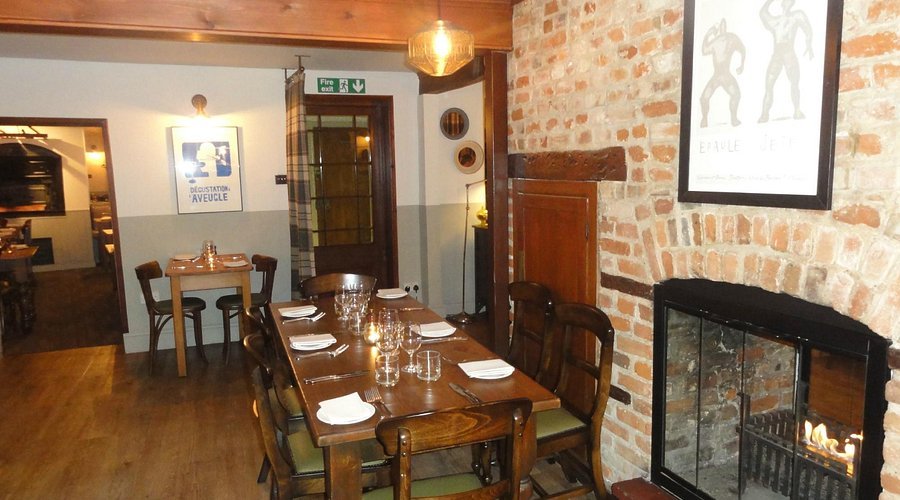
A Residential Square, a Charcoal Fire, and Fifteen Years of Earned Authority
Cannon Street in Bury St Edmunds is not the address you would expect to find a Michelin-starred restaurant. There is no shopfront theatre, no valet queue, no brass plaque signalling arrival. The square outside Pea Porridge once held a patch of green — the old town common the name quietly references — and the building still carries that unhurried, residential quality. Three conjoined rooms with exposed brick walls set the register immediately: this is a room built for eating, not for impressing people with the fact that you are eating.
That distinction matters in a county where restaurant ambition tends to announce itself. Across the East of England, the Michelin-starred tier is thin, and the handful of addresses that have earned a star outside Cambridge and the coast have mostly done so within a familiar idiom of country-house formality or modern British precision. Pea Porridge, which has held its star and has been operating since 2009, sits entirely outside that convention. Its reference points are the eastern Mediterranean, the Caucasus, and North Africa , a culinary geography that most one-star kitchens in rural England do not attempt and fewer execute with this degree of consistency.
The shortlist, unlocked.
Hard-to-book tables, cellar releases, and concierge-planned trips.
Get Exclusive Access →Za'atar, Charcoal, and the Logic of the Daily Menu
The editorial angle that most usefully frames Pea Porridge is not technique in the formal sense but flavour architecture. In Mediterranean and Middle Eastern cooking, fresh and dried herbs are structural rather than decorative: za'atar carries fat and acid simultaneously, oregano shapes the backbone of a braise, and a dish built around dukkah is already a finished flavour statement before the protein arrives. This is the register in which the kitchen operates, and it explains why the menu changes daily rather than seasonally in the conventional sense. The charcoal oven imposes its own logic on the day's produce, and the dishes that emerge from it are calibrated around smoke, char, and the herb-forward saucing that the broader tradition demands.
The bread arrives first, and multiple sources single it out as the meal's opening argument. Sourdough flatbread fresh from the oven is the standard introduction, deployed alongside appetisers that reflect the kitchen's geographical range: taramasalata sits in Greek territory, while kashke bademjan, a garlicky Persian aubergine preparation with walnut notes, pulls from the Caucasus. Both are dishes where za'atar or a close relative does practical work, binding fat and acidity into something that reads as coherent rather than eclectic.
From there the menu operates across a wide band. A Muntjac kofte with tzatziki, blistered peppers, molasses, and za'atar represents the kitchen's Middle Eastern register at its most direct: the wild venison provides the mineral base, the molasses introduce sweetness and depth, and the za'atar holds the whole construction together with its dried thyme and sesame character. At the lighter end, a tempura-battered courgette flower with aged feta, beetroot borani, and dukkah demonstrates how the kitchen layers herb-and-spice compounds as flavour endpoints rather than garnish. Dukkah, built from toasted nuts and spices including coriander, cumin, and dried herbs, provides crunch and finish in a single application.
The main course tier reaches toward the Moroccan tagine made with spiced kid goat , a dish that sits within a long tradition of slow-cooked, aromatics-led braises where cinnamon, preserved lemon, and herbs define the sauce rather than enriching it. From the charcoal oven, pluma Ibérica pork with peperonata, crispy chickpeas, baked figs, and mojo verde represents the Ibero-Mediterranean axis, with the verde sauce providing the herbal brightness that cut meat fat demands in this cooking tradition. The kitchen does not confine itself to a single geography within the broader Mediterranean arc, and that range is what makes daily menu changes viable: the ingredient logic is consistent even when the specific national reference shifts.
Dessert follows the same principle. Burnt Basque cheesecake finished with kataifi pastry and rose petals draws from two distinct traditions , the Basque approach to high-temperature, almost caramelised set custard, and the Levantine pastry and floral conventions , and produces something that reads as the kitchen's own synthesis. Cheeses served with Greek mountain honeycomb and frozen Muscat grapes signal that the wine-adjacent thinking extends to the cheese course.
Where Pea Porridge Sits in the Bury St Edmunds Dining Picture
The town's restaurant tier at the £££ price point includes Maison Bleue (French), which operates within a French classical idiom, and Bellota. At the lower price point, Lark (New American, Modern Cuisine) brings a different set of references. Pea Porridge occupies a position that none of those venues contest: the only Michelin-starred address in the group, and the only one whose menu is built on charcoal cookery and eastern Mediterranean herb tradition rather than European classical cooking.
For broader context within England's single-star tier, the comparison set shifts. Addresses like The Fat Duck in Bray, The Ledbury in London, L'Enclume in Cartmel, Moor Hall in Aughton, Gidleigh Park in Chagford, Hand and Flowers in Marlow, Le Manoir aux Quat' Saisons, a Belmond Hotel in Great Milton, and Restaurant Andrew Fairlie in Auchterarder represent the more conventional starred tier, where formal service structures and European cooking lineages are the norm. Pea Porridge's peer set in terms of cuisine orientation is closer to Mediterranean specialists elsewhere in Europe, such as La Brezza in Ascona and Arnaud Donckele and Maxime Frédéric at Louis Vuitton in Saint-Tropez, though the format and register are significantly different from either.
The Wine List as a Second Editorial Argument
The organic and natural wine list is not incidental. In a town where most restaurant wine programs are built around conventional European selections, a list that looks to the eastern Mediterranean and the Caucasus for its most interesting choices constitutes a distinct position. Georgian, Greek, and Levantine producers have been part of the natural wine conversation for over a decade, but most provincial English restaurants have not followed that conversation in depth. The fact that this list does reflects the same appetite for geographical specificity that drives the food. The lunch menu, which runs Thursday through Saturday from 12pm to 1:30pm, is noted as offering particularly strong value within this format.
Planning a Visit
Pea Porridge operates a tight weekly schedule: closed Sunday, Monday, and Tuesday, with Wednesday evening service only (6:30pm to 8:30pm), then lunch and dinner Thursday and Friday, and lunch plus a slightly extended dinner on Saturday (until 9:30pm). The address is 28-29 Cannon Street, Bury St Edmunds IP33 1JR. The restaurant is husband and wife run, which shapes the service dynamic: the operation is small, the room is personal, and the kitchen's output reflects direct ownership throughout. A Google rating of 4.6 across 392 reviews, combined with the 2024 Michelin star, places this among the most consistently regarded addresses in the region. Given the limited weekly hours and the Michelin recognition, advance booking is advisable, particularly for weekend lunch and Friday or Saturday evening.
For broader planning, the full Bury St Edmunds restaurants guide covers the town's dining range across price points and cuisines. The Bury St Edmunds hotels guide, bars guide, wineries guide, and experiences guide complete the picture for a full visit to the town.
The shortlist, unlocked.
Hard-to-book tables, cellar releases, and concierge-planned trips.
Get Exclusive Access →Frequently Asked Questions
The Quick Read
A compact peer snapshot based on similar venues we track.
| Venue | Notes | Price |
|---|---|---|
| Pea Porridge | This venue | £££ |
| Lark | New American, Modern Cuisine, ££ | ££ |
| Maison Bleue | French, £££ | £££ |
| Bellota |
Need a table?
Our members enjoy priority alerts and concierge-led booking support for the world's most difficult tables.
Get Exclusive AccessThe shortlist, unlocked.
Hard-to-book tables, cellar releases, and concierge-planned trips.
Get Exclusive Access →