Pambiche
Pambiche brings Cuban cooking to Portland's Northeast corridor at 2811 NE Glisan St, operating in a city where Caribbean traditions are underrepresented on the dining map. The kitchen draws on the island's layered culinary inheritance, Spanish, African, and indigenous threads worked into a format that reads clearly against Portland's produce-forward dining culture. It occupies a different competitive tier from the city's headline tasting-menu circuit, built instead around neighborhood regularity and cultural specificity.
Pearl is the En Primeur Club membership app — saves, bookings, and concierge access live there. Same editors, same standards.
- Address
- 2811 NE Glisan St, Portland, OR 97232
- Phone
- +15032330511
- Website
- pambiche.com
- Directions
- Get directions
 Saves & bookings on Pearl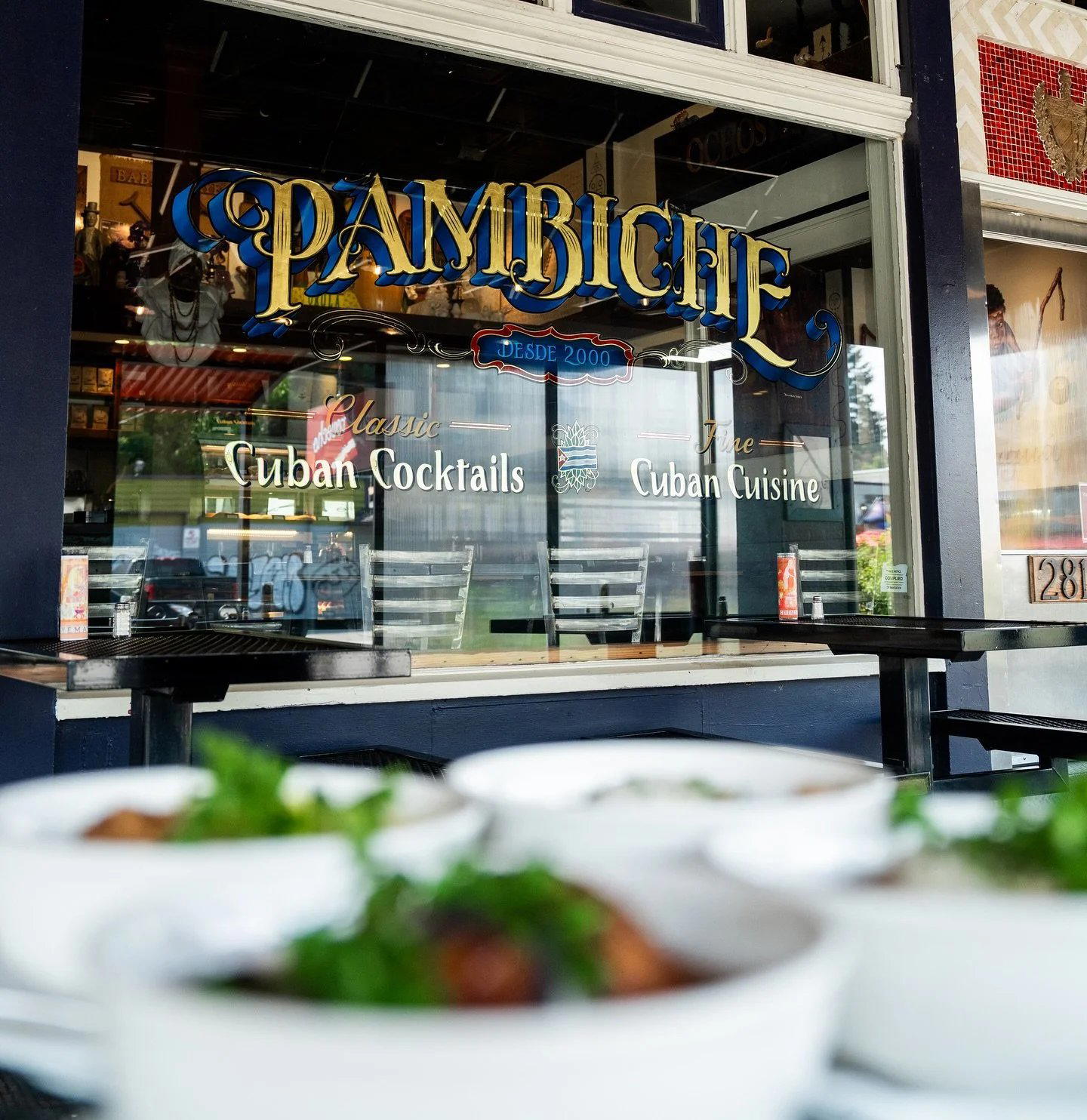
Cuban Cooking in a Pacific Northwest Frame
Portland's Northeast quadrant has developed one of the more culturally specific dining corridors in the Pacific Northwest, where Vietnamese counter cooking at Berlu, Haitian wood-fire technique at Kann, and Thai tasting formats at Langbaan collectively signal a city that takes imported culinary traditions seriously. Pambiche at 2811 NE Glisan St, Portland, OR, sits within that lineage, occupying the Cuban corner of a neighborhood that has learned to read specificity as a marker of credibility. Cuban cuisine is among the more complex of the Caribbean traditions, a three-century overlap of Spanish colonial technique, West African ingredient knowledge, and indigenous Taíno food culture, and Portland gives it unusual room to operate without the dilution that often flattens it in markets where the cuisine is more commercially established.
Pambiche's exterior announces its intentions before you reach the door. Painted in the saturated palette that Cuban architectural tradition associates with the colonial streetscapes of Havana and Trinidad, it reads against Portland's characteristic muted-tone aesthetic as a deliberate contrast. The interior continues that visual argument: a compressed, warm space where color is structural rather than decorative. In a city whose dining rooms increasingly trend toward exposed concrete and Scandinavian restraint, the choice to hold to a different visual grammar is itself an editorial position about what authenticity requires.
Where Caribbean Technique Meets Oregon Produce
The intersection that makes Pambiche interesting from an editorial standpoint is the one between a fixed culinary tradition and a variable local supply chain. Cuban cooking is not fusion in any contemporary sense, its flavor architecture is largely settled, built around sofrito bases, adobo-seasoned proteins, black beans cooked low and long, and the structural role of plantains across multiple preparations. What changes when that tradition operates in the Pacific Northwest is the ingredient sourcing: Oregon's agricultural output, particularly in pork, citrus alternatives, root vegetables, and dairy, enters a framework that Caribbean cooking has used for centuries but now assembles from different raw material.
This is a pattern visible at other points on the American dining map. At Blue Hill at Stone Barns in Tarrytown, the kitchen's entire premise rests on running classical European technique through a radically localized ingredient stream. At Single Thread Farm in Healdsburg, Japanese kaiseki structure absorbs Sonoma County's seasonal produce calendar. The dynamic at Pambiche is less formally articulated but operates on a recognizable logic: a cuisine shaped by one geography finding its ingredients in another, and the small adjustments that result. For the diner, the effect is a dish that reads Cuban in technique and flavor profile but carries the quality markers of Pacific Northwest sourcing.
Reading the Menu Against the Cuban Canon
Cuban restaurant menus in the United States tend to segment into two commercial registers: the fast-casual cubano-and-rice format built for volume, and the sit-down interpretation that attempts broader coverage of the national cuisine. Pambiche operates in the second register, which means the menu carries dishes that move beyond the handful of preparations most American diners recognize from the former. Ropa vieja, picadillo, lechón preparations, and the full plantain spectrum from tostones to maduros all belong to a canon that the kitchen works through with the kind of consistency that builds a neighborhood restaurant's reputation over years.
The drink program at Cuban-tradition restaurants in the United States has historically been the weakest link, mojitos and daiquiris served adequately but without the craft attention that cocktail-forward cities now expect. Portland's bar culture, which has moved firmly toward technical precision in the decade since the city's cocktail scene professionalized, creates an interesting pressure point for any restaurant operating with a rum-based program. Cuban spirits are among the more historically complex of the sugarcane distillates, and there is room for a kitchen at this level to make the bar a parallel argument to the food.
Positioning Against Portland's Dining Tiers
Portland's fine-dining circuit, the tier that generates national press and operates with prix-fixe formats and tasting menus, sits in a different competitive set from Pambiche. That upper bracket includes venues that measure themselves against destinations like Lazy Bear in San Francisco, Alinea in Chicago, or The French Laundry in Napa. Pambiche does not operate in that tier. Its comparable set is neighborhood restaurants with cultural specificity and consistent execution, venues that anchor a corridor rather than attract destination diners from outside the city.
Within Portland, that comparison includes Nostrana and Ken's Artisan Pizza, both of which have built durable reputations through consistency and a specific culinary argument rather than format innovation. The common thread is that all three operate as neighborhood institutions in a city where that designation carries real weight, Portland diners, more than those in most American cities of comparable size, support restaurants that root themselves in place and maintain quality over years. Pambiche has occupied the Glisan Street address long enough to have established that kind of neighborhood equity.
For visitors using Portland as a stop on a broader Pacific Coast itinerary that includes Providence in Los Angeles or Addison in San Diego, Pambiche represents a different kind of meal, lower formality, higher cultural specificity, and no pretension about operating in a register other than the one it occupies. That clarity of positioning is its own credibility signal.
Planning Your Visit
Pambiche sits on NE Glisan Street in Portland's inner Northeast, a corridor accessible by public transit and walkable from several of the neighborhood's lodging options. The restaurant's long-standing presence on that block means it functions as a reference point rather than a discovery for most Portland diners, which has implications for reservations. Arriving without a reservation on a Friday or Saturday evening carries meaningful risk; weekday visits or early sittings offer more flexibility.
A Tight Comparison
Comparable venues nearby, for context on price, style, and recognition.
| Venue | Cuisine | Price | Notes |
|---|---|---|---|
| PambicheThis venue — the venue you are viewing | Kerns, Traditional Cuban | $$ | Not listed |
| Scottie's Pizza Parlor | Not listed | $$ | Hosford-Abernethy, New York- and Neapolitan-Style Pizza |
| India House | Downtown, Authentic Indian Cuisine | $$ | Not listed |
| Jake's Famous Crawfish | Pearl, Classic Pacific Northwest Seafood | $$ | Not listed |
| The Star Portland | Pearl, Chicago-Style Deep Dish Pizza | $$ | Not listed |
| Delta Cafe | Woodstock, Southern Cajun Soul Food | $$ | Not listed |
Continue exploring
More in Portland
Restaurants in Portland
Browse all →
Bars in Portland
Browse all →
Hotels in Portland
Browse all →
At a Glance
- Lively
- Cozy
- Rustic
- Whimsical
- Casual Hangout
- Brunch
- Craft Cocktails
- Local Sourcing
Current opening hours
- Monday
- Closed
- Tuesday
- Closed
- Wednesday
- 11 AM–10 PM
- Thursday
- 11 AM–10 PM
- Friday
- 11 AM–10 PM
- Saturday
- 11 AM–10 PM
- Sunday
- 11 AM–10 PM
Hours can change for holidays and private events. Last verified .
Funky and lively atmosphere in a brightly painted turn-of-the-century Victorian space filled with Cuban cultural vibes.