Palizzi Social Club
Palizzi Social Club on South 12th Street operates as a members-only Italian-American institution in South Philadelphia, the neighborhood that built much of the city's immigrant dining identity. The format is deliberately restricted and the atmosphere tilts toward an earlier era of red-sauce hospitality — the kind of room that feels like it has been running exactly this way for decades, regardless of what happens in the broader dining scene.
Pearl is the En Primeur Club membership app — saves, bookings, and concierge access live there. Same editors, same standards.
- Address
- 1408 S 12th St, Philadelphia, PA 19147
- Website
- palizzisocial.com
- Directions
- Get directions
 Saves & bookings on Pearl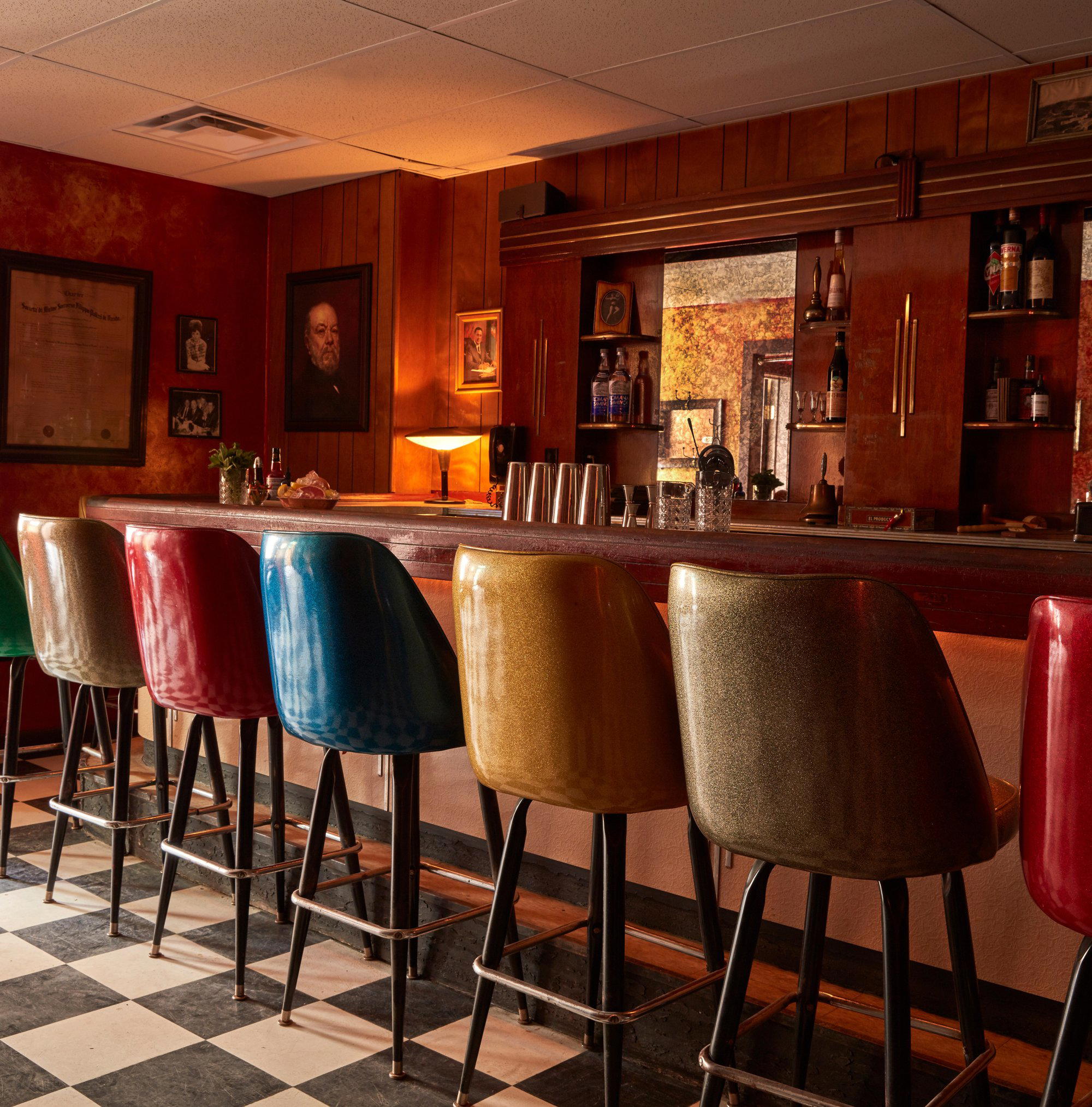
What South 12th Street Tells You Before You Walk In
South Philadelphia's dining character was shaped by successive waves of Italian immigrant settlement, and the blocks around South 12th Street still carry that specific residential density — row houses, neighborhood institutions, the kind of street where a social club could operate for decades without needing a sign to explain itself. Arriving at 1408 S 12th St, the physical read is immediate: this is not a restaurant that performs its credentials outward. The facade is restrained, the signage minimal. The communication, if any, is directed inward, at members, not at passers-by. In a city where Fork (New American) and Friday Saturday Sunday occupy a more legible fine-dining tier, Palizzi Social Club operates in a different register entirely — one defined by exclusion, history, and a deliberate refusal to participate in the ambient noise of contemporary restaurant culture.
Members-Only and What That Actually Means
The social club format is an older American institution than most diners realize. Across Italian-American communities in cities like Philadelphia, New York, and Chicago, social clubs served as gathering places for immigrant families, spaces where language, food, and community practice could be maintained outside mainstream American culture. Most of those institutions have closed, consolidated, or converted into something more commercially accessible. Palizzi has not. The members-only structure is not a marketing device; it reflects the building's actual organizational history. This places Palizzi Social Club in a distinct category from restaurants that adopt exclusive or restricted formats as a mechanism to generate demand, a model seen at everything from intimate omakase counters to high-intimacy tasting experiences at places like Lazy Bear in San Francisco or Alinea in Chicago. At Palizzi, the restriction is structural, not theatrical.
The Atmosphere Carries the Room
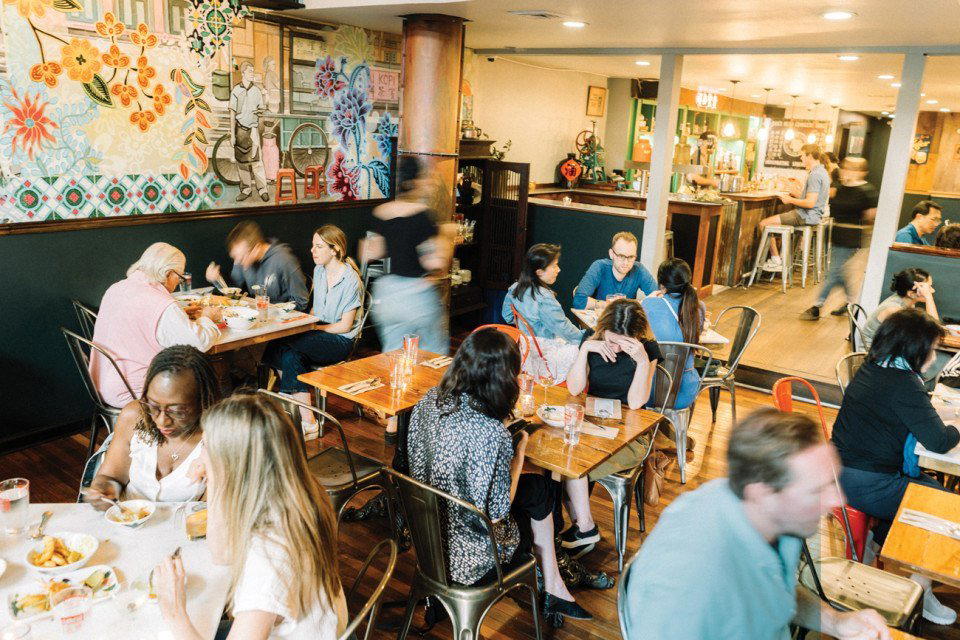
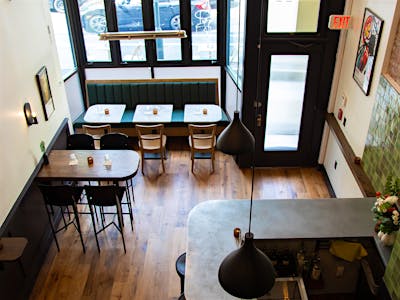
Italian-American red-sauce dining has its own sensory grammar, and Palizzi Social Club speaks it fluently. The interior reads as a period document: the kind of room where the lighting does not flatter the food so much as it flatters the gathering. Checkered tablecloths, framed photographs, the ambient noise of a room where people arrive knowing each other, these elements compose a setting that feels materially different from the spare, considered interiors of Philadelphia's newer dining wave, represented by restaurants like My Loup or the Southeast Asian precision of Kalaya. The comparison is not a value judgment; it's a calibration. Palizzi operates in a tradition where the room is the point as much as the plate.
Sound matters in this context. A full room at a South Philly social club produces a specific acoustic texture: overlapping conversation, the clink of house wine poured without ceremony, laughter that carries across tables. This is the opposite of the considered quiet found at a counter like Atomix in New York City, where silence is part of the format. Neither approach is incidental, both are architecturally intentional, just in opposite directions.
Italian-American Cooking in Its South Philly Form
South Philadelphia's Italian-American cooking tradition diverged from its European source material over a century of local adaptation. The dishes that emerged, hearty, abundant, built for communal tables rather than individual contemplation, reflect the economics and social patterns of immigrant communities, not the restaurant logic of contemporary dining. This food is not trying to be Naples or Rome. It is trying to be South Philly, which is a specific and distinct thing. Against the broader Philadelphia dining scene, where New American formats at places like Fork or Mawn signal a more internationally inflected sensibility, Palizzi's kitchen belongs to an older and more local conversation.
The Italian-American format also sets Palizzi apart from the prestige-kitchen model that defines the upper tier of American restaurant culture, the tasting-menu rigor of The French Laundry, the ingredient-led precision of Blue Hill at Stone Barns, the seafood-focused classicism of Le Bernardin in New York City. These are not peer comparisons, they are markers of distance. Palizzi's value is not in proximity to that tier; it's in being something those places cannot be.
What Makes This Format Durable
The durability of Palizzi Social Club as a Philadelphia institution reflects something true about how certain kinds of eating places survive: by being genuinely irreplaceable rather than by being the most current or the most awarded. The Philadelphia dining scene has expanded significantly in recent years, with ambitious restaurants drawing national attention and chefs building reputations that circulate well beyond the city. That expansion has not displaced places like Palizzi, it has, if anything, clarified their value by contrast. In cities where a Providence in Los Angeles or an Addison in San Diego sets one kind of standard, the neighborhood institution that predates the current era of fine dining ambition operates on entirely different terms.
Social clubs specifically survive when they maintain actual community function. The moment a social club becomes a restaurant that performs being a social club, the atmosphere evacuates. Palizzi has resisted that conversion, the members-only format is the mechanism by which the atmosphere is protected, rather than a feature layered on top of it.
For a broader picture of where Palizzi sits within Philadelphia's full dining range, see our full Philadelphia restaurants guide, which covers everything from South Philly neighborhood institutions to the city's nationally recognized tasting-menu programs.
Know Before You Go
- Address: 1408 S 12th St, Philadelphia, PA 19147
- Neighborhood: South Philadelphia
- Format: Members-only social club with Italian-American roots
- Phone / Website: Not publicly listed, contact through membership channels
- Hours: Not publicly posted; varies by club schedule
- Price Range: Not publicly listed
- Reservations: Membership required; walk-in access is not standard
Continue exploring
More in Philadelphia
Restaurants in Philadelphia
Browse all →
Bars in Philadelphia
Browse all →
At a Glance
- Cozy
- Intimate
- Classic
- Well Known
- Special Occasion
- Group Dining
- Late Night
- Historic Building
- Craft Cocktails
Current opening hours
- Monday
- Closed
- Tuesday
- Closed
- Wednesday
- Closed
- Thursday
- 5 PM–1 AM
- Friday
- 5 PM–3 AM
- Saturday
- 5 PM–3 AM
- Sunday
- 5 PM–1 AM
Hours can change for holidays and private events. Last verified .
Nostalgic atmosphere with Formica tables, tile floors, warm community feel, and no phones or photography allowed, evoking old-school Italian-American comfort.
Know Before You Go
- Getting there
- 1408 S 12th St, Philadelphia, PA 19147