Oystermen

A dedicated oyster bar anchors this seafood-focused restaurant on Henrietta Street in Covent Garden, where a market-led menu moves between whole Dorset crabs, native lobsters, and pan-fried stone bass depending on what the season allows. All-day hours make it a practical choice for the theatre crowd, and a knowledgeable floor team navigates a fish-friendly wine list with care. The space has expanded since its pop-up origins, with outdoor seating adding breathing room to a naturally breezy interior.
Pearl is the En Primeur Club membership app — saves, bookings, and concierge access live there. Same editors, same standards.
- Address
- 32 Henrietta St, London WC2E 8NA, United Kingdom
- Phone
- +44 20 7240 4417
- Website
- oystermen.co.uk
- Directions
- Get directions
 Saves & bookings on Pearl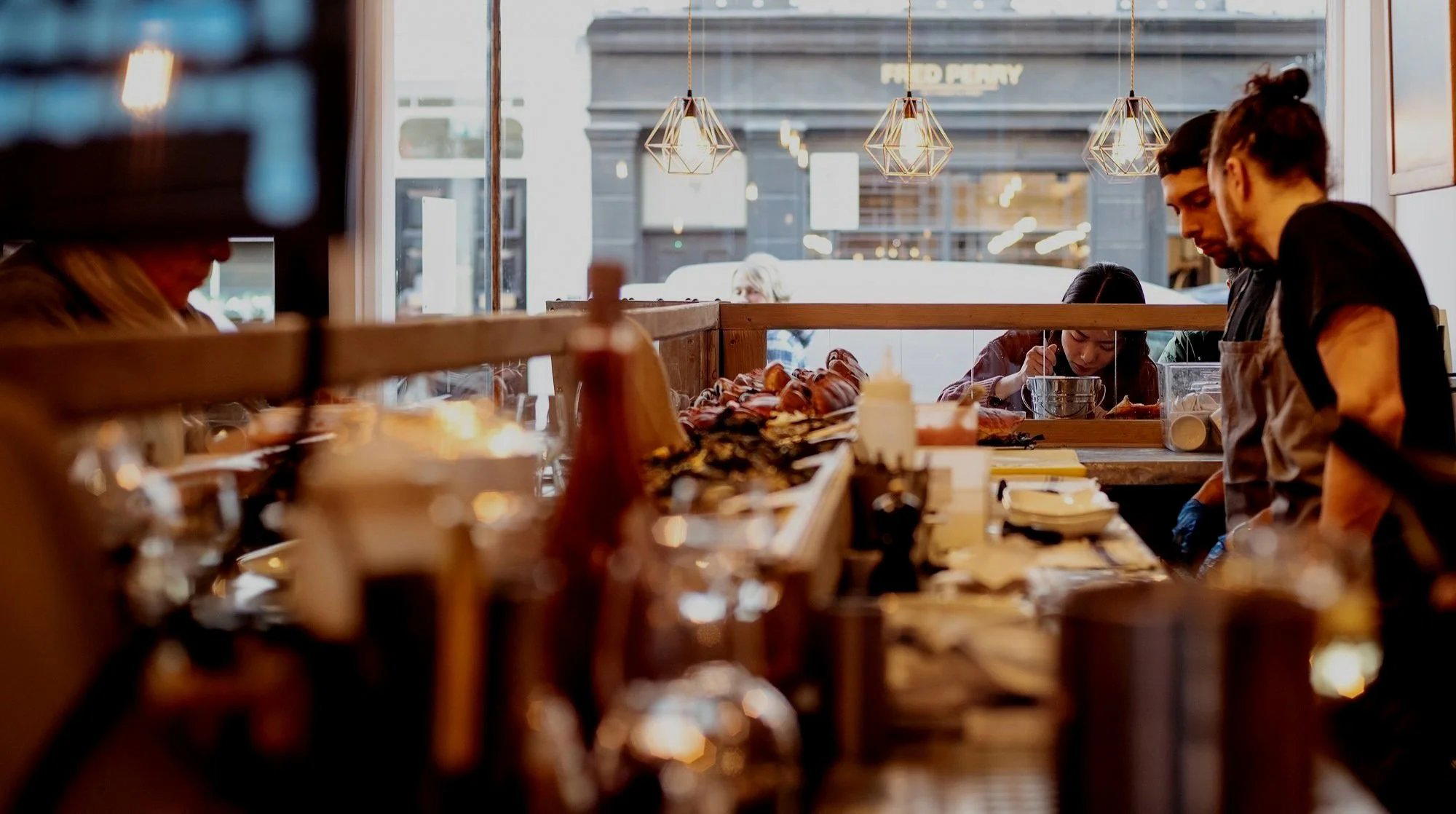
A Counter Built Around the Catch
Covent Garden is not, by default, seafood territory. The neighbourhood runs on pre-theatre convenience and tourist throughput, which means most restaurants on or near the piazza are calibrated for speed and volume rather than product quality. Oystermen, on Henrietta Street, operates on a different logic: the oyster bar at its centre is a structural commitment, not a decorative detail, and the rest of the menu is organised around whatever the market offers that week. That approach puts it in a small peer group of London seafood specialists where the physical counter, and the daily catch displayed on it, functions as both kitchen organiser and editorial statement.
British seafood restaurants operating at this level tend to follow one of two formats: the formal white-tablecloth dining room, where classical French technique applied to domestic product defines the experience, or the more informal counter-led model, where provenance and simplicity take precedence over ceremony. Oystermen sits firmly in the latter category, and the breezy interior, extended since the restaurant's early days, reinforces that positioning. The space is not austere, but it does not dress up what it is. Comparable seafood-focused operations elsewhere in the UK, from hide and fox in Saltwood to coastal tasting-menu formats like Moor Hall in Aughton, pursue a more formal register. Oystermen's identity is built around access and directness rather than occasion dining.
The Space After the Pop-Up Years
That backstory shapes the interior logic. The space feels like it was designed by people who had spent years working without a fixed room and had clear ideas about what they wanted when one finally materialised: a functioning oyster counter in a prominent position, enough flexibility to handle both pre-theatre timing and longer, more leisurely meals, and enough light and air to keep things from feeling heavy.
The pandemic-era outdoor extension added a further dimension. In a neighbourhood where outdoor dining is limited by narrow Georgian streetscapes, even a modest terrace changes the calculus for diners who want the seafood-bar atmosphere without the enclosure. The all-day opening structure, which serves the Covent Garden theatre crowd both before and after performances, means the room cycles through different energies across a single day: quieter at lunch, busier and faster in the early evening rush before curtain up, then more relaxed again for later sittings.
For the theatre district context, compare how major-occasion venues like Alain Ducasse at The Dorchester or CORE by Clare Smyth command multi-hour dinner commitments, while Oystermen's format accommodates a 45-minute pre-show window just as naturally as a full sitting. That operational range is part of what makes the Henrietta Street address work in its specific Covent Garden context.
Menu Architecture: Market Logic Over Fixed Templates
The menu at Oystermen follows the catch and the season, which means the written list changes rather than being a fixed document. What this produces in practice is a range that can move from a gratin of Isle of Man queenie scallops with chives and lemon to cured sea trout with apple and ponzu dressing, or from whole undressed Dorset crabs to native lobsters served with garlic butter and chips, depending on availability and season. Pan-fried stone bass arrives with parsnip purée, wild mushroom sauce, and crispy bacon, a combination that leans into autumn-winter produce while keeping the fish central. The occasional departure from the strictly British-waters brief, such as hake with red curry sauce, baby sweetcorn, and crispy kale, signals a kitchen comfortable with range without abandoning its seafood focus.
This market-responsive model is standard practice at the serious end of British seafood cooking. The fixed-menu approach, where a chef commits to a set list regardless of what the fish market offers that morning, tends to produce more predictable results but less interesting ones. Oystermen's method, working from a small kitchen the kitchen team themselves have described as teeny-tiny, requires tighter daily discipline: you cannot overorder, you cannot hold excess stock, and you cannot hide behind a long menu of safety dishes. The squid salad with anchovy toast and the skate preparation cited in diner feedback both point to a kitchen using secondary and less fashionable cuts effectively, which is a reliable indicator of genuine seafood confidence rather than surface-level product sourcing.
The dessert section follows a similar logic: vanilla panna cotta with blackberries and crumble, strawberry tartlet with vanilla custard and basil. These are not ambitious constructions, but they are appropriate endings for a menu that prioritises the fish course. Restraint at the dessert stage is often the correct editorial decision in seafood-focused restaurants.
Wine and Service: Fish-Friendly and Knowledgeable
The wine list at Oystermen is described consistently as fish-friendly and well-chosen, served by staff who know it. In practice, fish-friendly wine means a bias toward high-acid whites, skin-contact options, lighter reds that will not fight the iodine notes in shellfish, and good mineral-driven Champagne and English sparkling. The list is fish-friendly and well chosen, served by staff who know it, and the service model is efficient and clued-up rather than formal and deferential. This is knowledgeable hospitality without ceremony.
London's higher-end comparators, including The Ledbury or destination-level wine programs at properties like Waterside Inn in Bray, operate with sommelier teams and cellar depth that constitutes a separate attraction. Oystermen's wine offering is in service of the food rather than a parallel draw, which is the appropriate configuration for a casual-register seafood specialist.
Oystermen in the London Seafood Context
London's dedicated seafood restaurants occupy a fairly narrow band of the dining market. At the formal end, classical French-influenced operations apply brigade technique to premium British product. At the casual end, the fish-and-chip shop and the Billingsgate-adjacent café. Oystermen operates in the middle ground: ingredient-led, market-dependent, informed by the counter tradition of European seafood bars but delivered in a format accessible to a Covent Garden lunch crowd or a pre-theatre pair. That middle tier is where London seafood has developed most interestingly over the past decade, and Oystermen's trajectory from pop-up circuit to established Henrietta Street premises reflects that broader movement.
For international reference points, the counter-service seafood model has European parallels from Lisbon to Marseille and North American equivalents in operations like Le Bernardin in New York City, though Le Bernardin operates at a considerably more formal and expensive register. Closer to Oystermen in spirit, if not in geography, is the kind of casual coastal seafood bar ethos found at operations like Emeril's in New Orleans, where the oyster counter is a social and architectural centrepiece rather than an afterthought.
For other destination-level UK dining, see L'Enclume in Cartmel, Gidleigh Park in Chagford, and Hand and Flowers in Marlow.
Credentials Lens
Comparable venues nearby, for context on price, style, and recognition.
| Venue | Cuisine | Price | Notes |
|---|---|---|---|
| OystermenThis venue — the venue you are viewing | British Seafood Oyster Bar | $$$ | Not listed |
| Wright Brothers Battersea | Seafood and Oysters | $$$ | Nine Elms |
| Wright Brothers Borough Market | British Seafood & Oyster Bar | $$$ | Borough |
| Salmontini | Seafood and Sushi with Smoked Salmon Focus | $$$ | Belgravia |
| Seabird | Modern Seafood with Iberian Influences | $$$ | Bankside |
| Bentley's | Classic British Seafood and Oyster Bar | $$$$ | Piccadilly Circus |
Recognition history
Dated appearances from independent guides and award organizations, with the underlying list record or original source where available.
The Good Food Guide GFG Good
The Good Food Guide
Continue exploring
More in London
Restaurants in London
Browse all →
Bars in London
Browse all →
Hotels in London
Browse all →





At a Glance
- Rustic
- Lively
- Cozy
- Intimate
- Date Night
- Casual Hangout
- Open Kitchen
- Sustainable Seafood
- Local Sourcing
Current opening hours
- Monday
- 12–11 PM
- Tuesday
- 12–11 PM
- Wednesday
- 12–11 PM
- Thursday
- 12–11 PM
- Friday
- 12–11 PM
- Saturday
- 12–11 PM
- Sunday
- 12–9 PM
Hours can change for holidays and private events. Last verified .
Rustic-chic with blackboards, deep-blue ceiling, white walls, and a lively unpretentious atmosphere that feels like a seaside restaurant but cramped and stark for some.