Otemanu

On the island of Bora Bora, Otemanu brings a Polynesian French kitchen to the dining scene in Vaitape, earning recognition for its expression of local terroir. Chef Eli Anderson draws on the ingredients and culinary identity of French Polynesia, positioning the restaurant within a small cohort of island restaurants where provenance shapes the plate. Rated 4.5 from 42 Google reviews.
 Discover on Pearl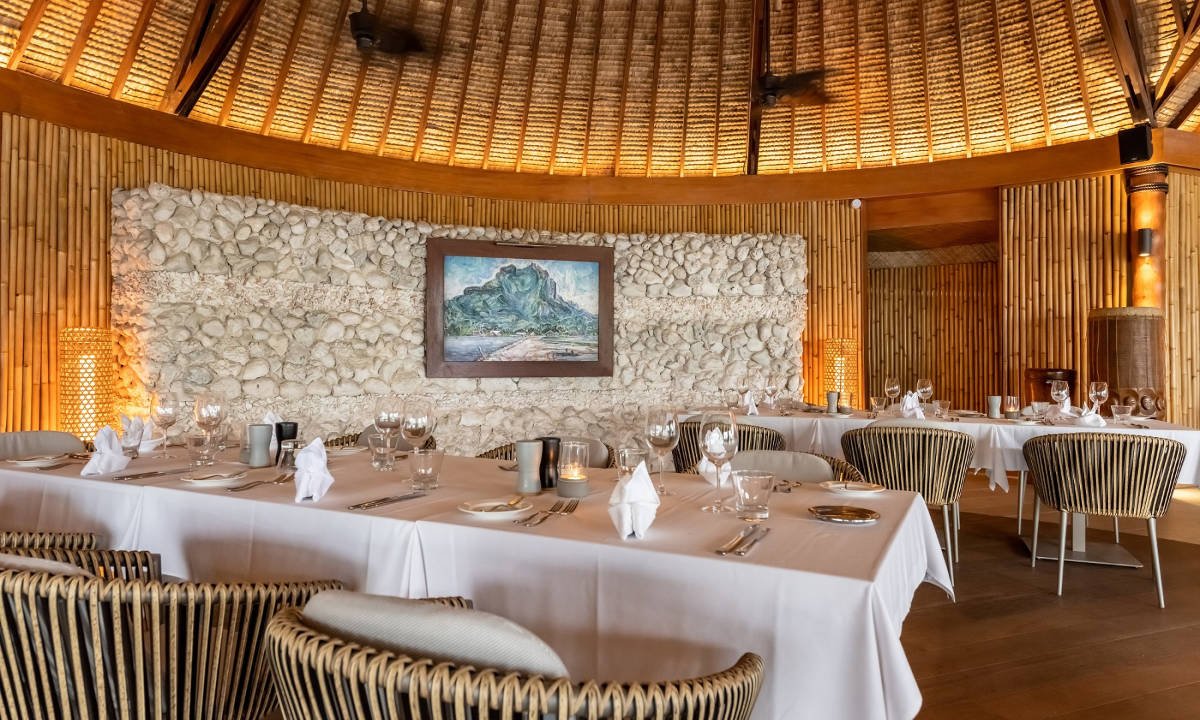
Where the Lagoon Meets the Plate
Bora Bora's dining scene is framed, above all else, by geography. The island sits in the Society archipelago roughly 230 kilometres northwest of Papeete, enclosed by a turquoise lagoon and dominated by the basalt silhouette of Mount Otemanu. That setting is not merely backdrop. It dictates what grows, what swims, and what arrives on the table with any claim to freshness. The restaurants that take this seriously — that treat the lagoon and the volcanic soil as a sourcing brief rather than a postcard — occupy a distinct tier in French Polynesia's dining conversation. Otemanu, in Vaitape, positions itself inside that tier.
Vaitape is Bora Bora's main settlement and commercial centre, a modest harbour town that serves as the island's practical hub. It lacks the resort bubble atmosphere of the motu strips further out, which means dining here tends to connect more directly to the rhythms of local life. Arriving by boat from any of the over-water bungalow properties brings you into a different register entirely: the working waterfront, the market stalls, the supply chains that feed the island. It is in this context that a kitchen committed to terroir expression makes particular sense.
The shortlist, unlocked.
Hard-to-book tables, cellar releases, and concierge-planned trips.
Get Exclusive Access →Polynesian French Cooking and the Terroir Argument
The phrase "Polynesian French" describes a culinary tradition that has been evolving across the islands since French governance took hold in the 19th century, producing a hybrid that is neither the classical repertoire of metropolitan France nor purely indigenous Pacific cooking. At its worst, the form defaults to generic resort food with a coconut garnish. At its most considered, it treats French technique as a framework for making Polynesian ingredients legible to a broader audience , while keeping the ingredients themselves as the point.
The recognition that Otemanu has received centres on exactly this: Expression of the Terroir. That designation, as a formal highlight in the restaurant's awards profile, signals a kitchen that has been assessed not merely for cooking skill but for its relationship to place. It puts Otemanu in a conversation that ranges well beyond the Society Islands. Restaurants recognised for this quality elsewhere , from Aponiente in El Puerto de Santa María, where the tidal ecosystem drives the entire menu, to Atelier Moessmer Norbert Niederkofler in Brunico, where Alpine provenance is the organising principle , share a common commitment: the sourcing logic precedes the cooking decisions, not the reverse.
In French Polynesia, that sourcing logic means working with lagoon fish, root vegetables such as taro and fei banana, tropical fruits grown on the volcanic hillsides, and reef-adjacent seafood that differs considerably from what arrives in any metropolitan fish market. Chef Eli Anderson's kitchen at Otemanu is built around these materials. The French Polynesian fine dining cohort is small , Hawaiki Nui in Tahaa and Le Kenae in Taiohae represent the kind of island-rooted ambition that makes regional comparisons meaningful , and within it, a terroir-led approach remains the distinguishing mark of the more serious operations.
The Case for Eating Here
A 4.5 rating across 42 Google reviews is a modest data set, but it is consistent with a restaurant that attracts guests who sought it out rather than stumbled in. In a destination market like Bora Bora, where most visitors eat inside their resort properties, any restaurant drawing deliberate footfall from off-property guests has cleared a meaningful threshold. The rating suggests that the kitchen is delivering at a level that holds up against the high baseline expectations of island visitors.
The terroir recognition carries more weight editorially. Across French Polynesia, the challenge for any kitchen is the supply chain. Import dependence is significant across the islands, and a restaurant that has earned formal recognition for its connection to local ingredients has, by implication, solved a logistical problem that many of its peers have not. That is not a small achievement in a market where refrigerated container shipping from Papeete and beyond defines much of what appears on menus.
Placing this in a wider frame: the restaurants globally that have built reputations around terroir expression , from Arzak in San Sebastián to Dal Pescatore in Runate , share an ability to make a specific geography taste like itself. The stakes are different in scale and culinary heritage, but the underlying editorial logic applies in Vaitape as much as in the Basque Country or the Po Valley: when a kitchen is rewarded for place-specificity, the place becomes the reason to go.
What to Order and When to Go
Without a confirmed dish list from the kitchen, recommending specific plates would move beyond what the available data supports. What the cuisine profile and terroir designation point toward is a menu organised around lagoon fish and local produce rather than imported proteins or generic resort staples. In French Polynesian cooking of this type, preparations tend to follow a pattern: raw fish preparations drawing on the poisson cru tradition, grilled or roasted reef fish finished with locally sourced citrus or coconut, and starch components leaning on taro and breadfruit rather than metropolitan carbohydrates. Within a Polynesian French frame, French technique is visible but not dominant.
Timing in Bora Bora follows the South Pacific seasonal calendar. The dry season runs from May through October, with lower humidity, clearer visibility in the lagoon, and more reliable weather for travel between islands. The wet season from November through April brings heavier rainfall but also fewer visitors and, in many cases, more flexibility in securing tables at restaurants that would otherwise fill with resort guests. For a kitchen prioritising local ingredients, the wet season also tends to deliver a broader range of tropical fruit.
Planning a Visit to Vaitape
Vaitape is accessible by boat transfer from the main resort areas and by ferry from Bora Bora's airstrip. Most visitors arriving from Papeete's Faa'a International Airport connect via Air Tahiti to Bora Bora's small runway on the northern motu, then cross the lagoon by shuttle boat. The town itself is compact and walkable from the main dock. For context on what else to eat, drink, and do in the area, see our full Vaitape restaurants guide, our full Vaitape bars guide, our full Vaitape hotels guide, our full Vaitape wineries guide, and our full Vaitape experiences guide.
Booking details, hours, and current pricing are not confirmed in available data; contacting the restaurant directly or checking current listings before visiting is advisable. Given the small dining market in Vaitape, reservations are likely preferable to walk-in, particularly during the dry season peak from June through September.
Frequently Asked Questions
- What kind of setting is Otemanu?
- Otemanu is a Polynesian French restaurant in Vaitape, the main town on the island of Bora Bora in French Polynesia. The setting is a working harbour town rather than a resort enclave, which positions it closer to the everyday rhythms of island life. The restaurant's recognition for terroir expression suggests an environment oriented around local identity rather than tourist-facing spectacle. It holds a 4.5 Google rating across 42 reviews.
- Is Otemanu good for families?
- Bora Bora is a premium destination where most dining options skew toward couples and high-spend travellers. Otemanu's cuisine profile , Polynesian French with a terroir focus , does not preclude families, but the setting in Vaitape and the style of cooking suggest it is better suited to guests with an interest in serious island cooking than to those seeking casual resort dining. Pricing information is not confirmed in current data; families with specific budget requirements should contact the restaurant directly before booking.
- What is the must-try dish at Otemanu?
- Specific dish information is not available in confirmed data, which means naming a single plate would go beyond what can be responsibly stated. What the cuisine type and terroir recognition indicate is a kitchen centred on local lagoon fish and Polynesian produce prepared within a French technical framework. In this tradition , shared by other French Polynesian restaurants working with poisson cru and reef fish , the most representative plates tend to be those that foreground the raw ingredient rather than mask it. Chef Eli Anderson's kitchen has been formally recognised for that relationship to local sourcing.
For broader context on terroir-led cooking at this level across other markets, see Le Bernardin in New York City, Alain Ducasse at Louis XV in Monte Carlo, Alléno Paris au Pavillon Ledoyen, 8½ Otto e Mezzo Bombana in Hong Kong, Atomix in New York City, Lazy Bear in San Francisco, and Emeril's in New Orleans.
Side-by-Side Snapshot
These are the closest comparables we have in our database for quick context.
| Venue | Cuisine | Price | Awards | Notes |
|---|---|---|---|---|
| Otemanu | Polynesian French | HIGHLIGHTS: • EXPRESSION OF THE TERROIR | This venue | |
| Hawaiki Nui | Polynesian | Polynesian | ||
| Le Kenae | French Polynesian | French Polynesian | ||
| Le Nuku Hiva | Polynesian Cuisine | Polynesian Cuisine | ||
| Le Taha’a | Polynesian Fine Dining | Polynesian Fine Dining |
Need a table?
Our members enjoy priority alerts and concierge-led booking support for the world's most difficult tables.
Get Exclusive AccessThe shortlist, unlocked.
Hard-to-book tables, cellar releases, and concierge-planned trips.
Get Exclusive Access →