Osteria Romana
Osteria Romana brings the pacing and customs of traditional Roman dining to Norwalk, Connecticut, operating from a fixed address on Westport Avenue in a corridor that also houses some of the city's more considered restaurant choices. The kitchen draws on the canon of Roman trattoria cooking, where restraint in technique and fidelity to regional ingredients define the approach. For southwestern Connecticut, it occupies a distinct position in the Italian dining tier.
Pearl is the En Primeur Club membership app — saves, bookings, and concierge access live there. Same editors, same standards.
- Address
- 250 Westport Ave, Norwalk, CT 06851
- Phone
- +12032290844
- Website
- osteriaromana.com
- Directions
- Get directions
 Saves & bookings on Pearl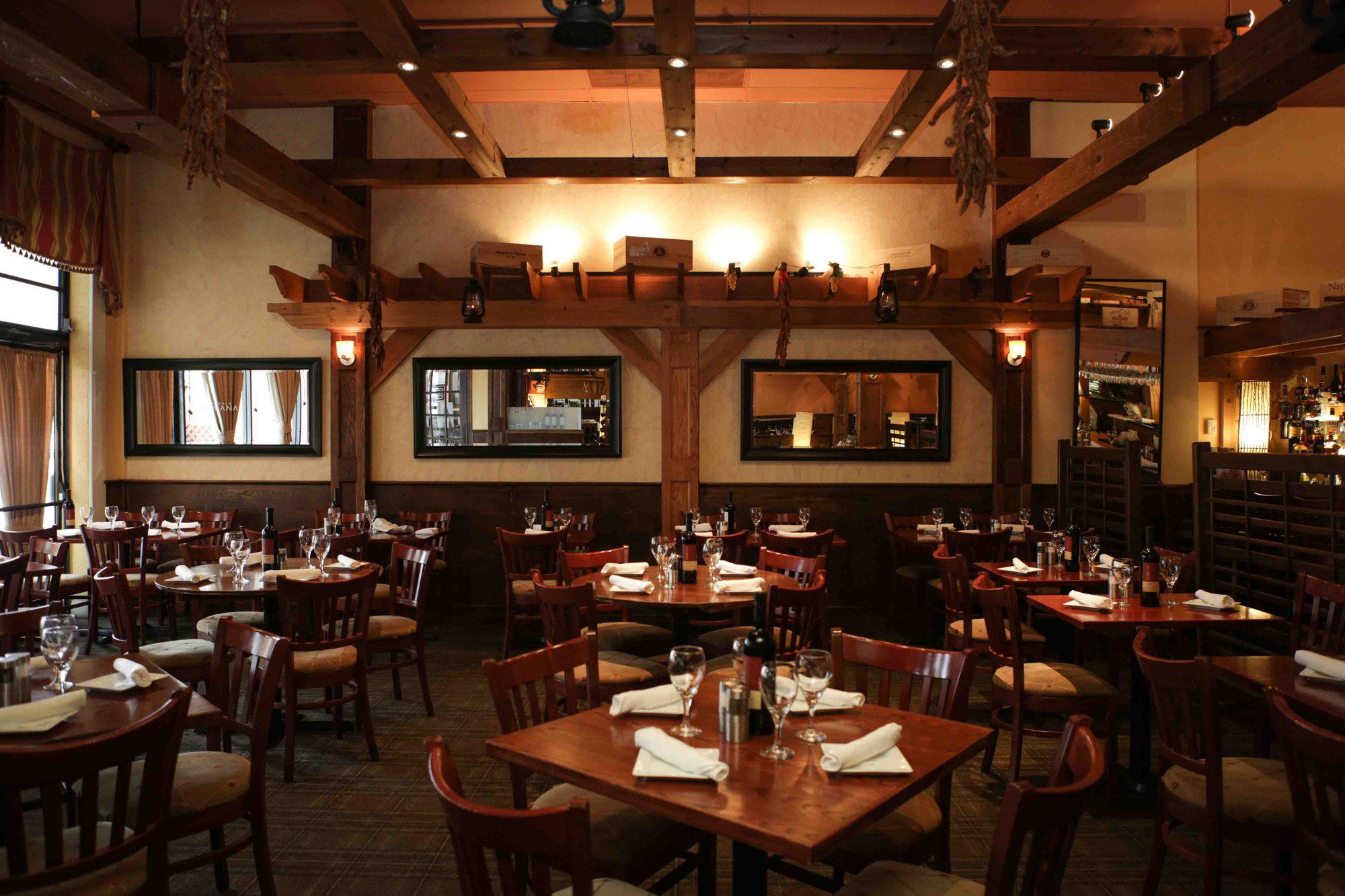
The Ritual Before the First Course
Roman dining has always been less about spectacle and more about sequence. The meal begins before anyone orders: bread arrives, a carafe is poured, and the room settles into a cadence that southern Italian kitchens rarely rush. At Osteria Romana on Westport Avenue in Norwalk, Connecticut, that rhythm is the point. The address, 250 Westport Ave, places it squarely in a commercial strip that also draws commuters and families — but the interior signals something more deliberate than a neighborhood convenience stop. The room is built for sitting, not turning tables.
This matters in context. Southwestern Connecticut's Italian restaurant tier tends to split between red-sauce houses serving the suburban appetite for familiarity and a smaller cohort of places working closer to regional specificity. Osteria Romana positions itself in the second group, where the word "osteria" carries weight: historically, an osteria was a place that served wine and simple food, a step below the ristorante in formality but often a step above in honesty. That framing shapes what a visitor should expect and how they should pace their evening.
What Roman Cooking Actually Looks Like at the Table
The canon of Roman trattoria cooking is not wide, but it is deep. A handful of pasta preparations — cacio e pepe, carbonara, amatriciana, gricia, define the category globally, and they are deceptively hard to execute with fidelity. The challenge is not the ingredient list, which is short, but the emulsification technique and the quality of the pecorino romano and guanciale doing the work. In cities like Rome, the differences between a competent and a serious version of these dishes are immediately legible to a trained palate. In a Connecticut context, the standard of comparison shifts, but the internal logic of the dish does not.
Beyond pasta, the Roman table moves through secondi that lean on offal, slow-braised meats, and seasonal vegetables prepared without elaboration. Carciofi alla romana and alla giudia represent the city's most distinctive vegetable tradition, two preparations of the same artichoke that demonstrate opposing techniques within a single ingredient. This kind of specificity is where an osteria reveals its intentions. Whether the kitchen reaches for that level of precision is something a first visit will confirm.
Restaurants in this category across the northeastern United States often adapt the menu to local availability and audience expectations, which is not inherently a compromise, it is simply the condition of cooking a regional cuisine outside its region. Comparable Italian programs in the broader area, from Manhattan down through coastal Connecticut, show a range of approaches: some maintain strict regional identities, others blend northern and southern Italian traditions under a single roof. Osteria Romana's name declares a Roman identity, which sets a specific expectation the menu either meets or explains.
Norwalk's Italian Tier and Where Osteria Romana Fits
Norwalk's dining scene has expanded meaningfully over the past decade, with the Wall Street and South Norwalk corridors drawing the most attention. The Westport Avenue address situates Osteria Romana in a different part of the city, one that serves a residential and commuter catchment rather than a destination-dining audience. That distinction affects everything from the wine list's length to the noise level on a Tuesday.
Among the Italian-adjacent options in the city, Osteria Romana occupies a specific register. Nearby, El Baja and Harbor Lights represent different culinary traditions entirely, while Match and Overton's occupy the American and seafood registers respectively. Rowayton Seafood draws a different audience altogether. In that mix, an osteria format focused on Roman cooking holds a position that does not duplicate what the rest of the Norwalk dining tier offers. For the broader context of where Norwalk dining is heading, our full Norwalk restaurants guide maps the scene by neighborhood and category.
The price register at an osteria typically runs below fine dining but above the casual trattoria. In practical terms, that means an evening at Osteria Romana should cost less than a night at a white-tablecloth Italian room in Westport or Greenwich, while still representing a considered spend rather than a spontaneous weeknight decision. The value calculus depends heavily on execution: a technically sound cacio e pepe made with the right ratio of pasta water to cheese is worth considerably more than a cream-added approximation at the same price point.
How the Meal Should Unfold
The customs of Roman dining reward patience. An antipasto course is not optional preamble, it sets the tempo and signals the kitchen's confidence with ingredients before technique becomes a factor. A plate of supplì, the Roman fried rice balls that differ from their Sicilian arancini cousins in shape and filling, or a spread of cured meats and pickled vegetables, tells you more about the kitchen's sourcing than any menu description. From there, the primi course carries the most diagnostic weight: this is where pasta technique either holds or breaks.
Secondi at a Roman osteria are typically quieter dishes, proteins that have spent time in the oven or braising liquid rather than arrived at temperature from a hot pan. The meal closes with something simple: a dessert wine, a biscotti, or a tiramisu that does not try to be architectural. The ritual is not about escalation. It is about sustained attention to a sequence that has been refined over centuries.
Compared to the kind of theatrical progression found at places like Alinea in Chicago, Lazy Bear in San Francisco, or Atomix in New York City, the osteria format is its structural opposite: low ceremony, high repetition, consistent rather than surprising. That is not a lesser ambition, it is a different one, and it suits a different kind of evening. Fine dining destinations like The French Laundry in Napa, Le Bernardin in New York City, or Blue Hill at Stone Barns in Tarrytown operate in a register defined by singularity and ceremony. An osteria operates in the register defined by reliability and comfort, and that is a harder thing to maintain over years than novelty. Other ambitious American restaurants, Single Thread Farm in Healdsburg, Providence in Los Angeles, Addison in San Diego, The Inn at Little Washington, and Emeril's in New Orleans, each pursue their own version of ceremony. Even internationally, the format contrast holds: 8 1/2 Otto e Mezzo Bombana in Hong Kong represents how Italian cuisine scales upward into formal fine dining outside Italy. Osteria Romana, by name and by format, makes the opposite bet.
Planning Your Visit
Osteria Romana is located at 250 Westport Ave, Norwalk, CT 06851, accessible by car from the Merritt Parkway corridor and from Westport and Darien. For current hours, booking availability, and menu details, reaching out directly or checking the venue's current online presence is advisable before making a special trip. Given the format and the Norwalk market, walk-ins may be viable on weeknights, but weekend evenings in a room committed to a slower dining pace fill earlier than the table count might suggest. Plan accordingly.
How Osteria Romana Norwalk compares with similar nearby venues.
| Venue | Cuisine |
|---|---|
| Valencia Luncheria | Venezualen |
Continue exploring
More in Norwalk
Restaurants in Norwalk
Browse all →
Bars in Norwalk
Browse all →
Hotels in Norwalk
Browse all →
Wineries in Norwalk
Browse all →
At a Glance
- Rustic
- Cozy
- Elegant
- Classic
- Date Night
- Family
- Celebration
- Special Occasion
- Live Music
- Open Kitchen
- Terrace
- Extensive Wine List
- Local Sourcing
Current opening hours
- Monday
- 11:45 AM–10 PM
- Tuesday
- 11:45 AM–10 PM
- Wednesday
- 11:45 AM–10 PM
- Thursday
- 11:45 AM–10 PM
- Friday
- 11:45 AM–10 PM
- Saturday
- 11:45 AM–10 PM
- Sunday
- 11:45 AM–9 PM
Hours can change for holidays and private events. Last verified .
Cozy and warm with contemporary Italian decor that evokes the Italian countryside, spacious outdoor terrace, and lively atmosphere enhanced by occasional live music.
Know Before You Go
- Getting there
- 250 Westport Ave, Norwalk, CT 06851