Osteria Lupo

Osteria Lupo on Magazine Street sits in a tier of New Orleans dining that takes Italian-American cooking seriously enough to earn a 2025 Michelin Plate recognition. The kitchen works within a tradition that prizes craft over novelty, making it a credible choice for milestone dinners in a city where the competition for occasion dining is genuinely fierce.
Pearl is the En Primeur Club membership app — saves, bookings, and concierge access live there. Same editors, same standards.
- Address
- 4609 Magazine St, New Orleans, LA 70115
- Phone
- (504) 273-1268
- Website
- osterialupo.com
- Directions
- Get directions
 Saves & bookings on Pearl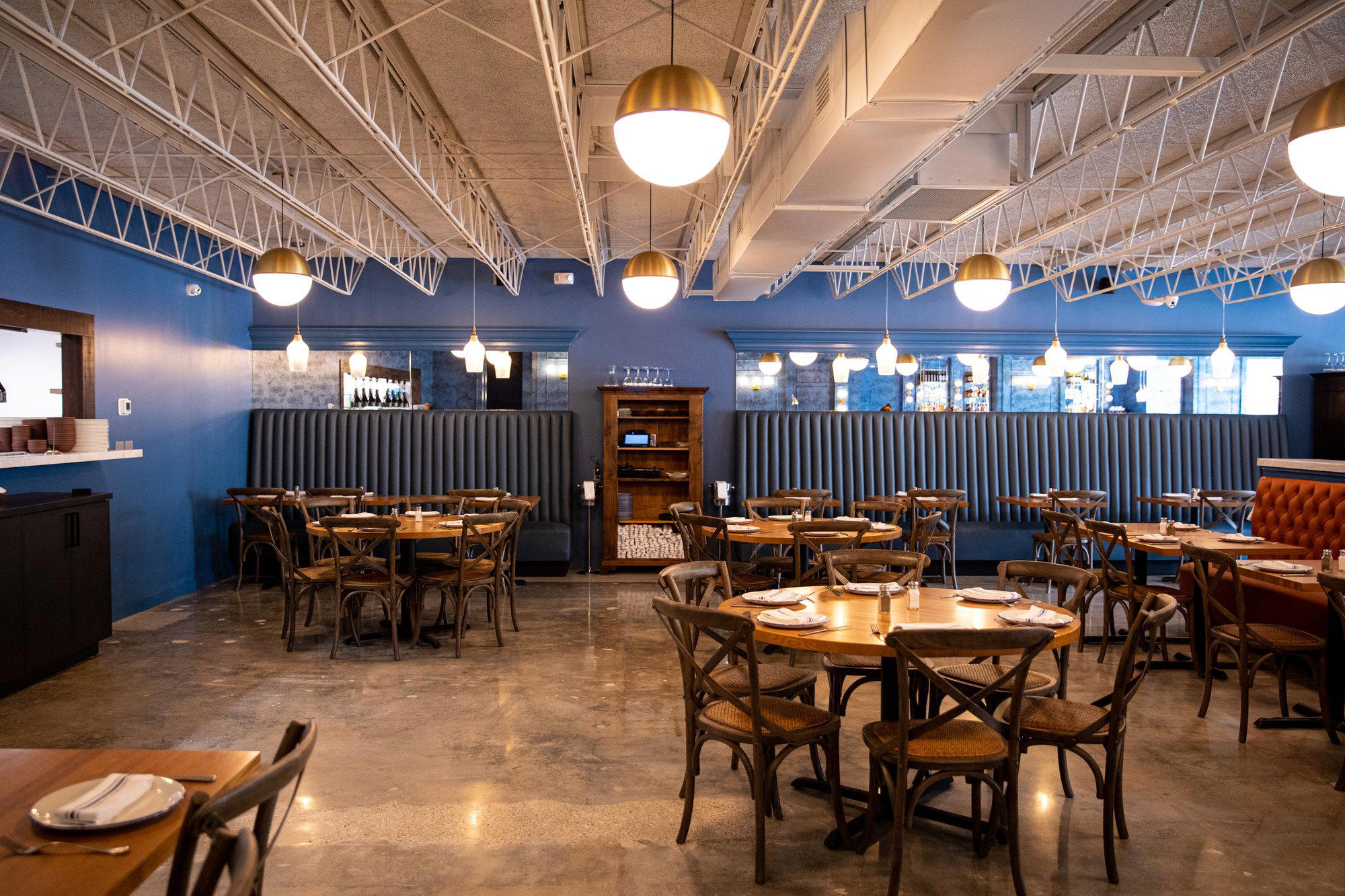
Magazine Street and the Case for Italian-American Occasion Dining
Magazine Street's restaurant corridor runs through Uptown New Orleans with a density that rewards walking and punishes indecision. At the upper end of that stretch, around the 4600 block, the character shifts from casual neighborhood cafes toward something more deliberate. Osteria Lupo occupies that register: a room that reads as a considered setting for a meal that matters.
Italian-American cooking in the American South occupies an interesting position. It draws on immigration patterns that shaped cities like New Orleans from the late nineteenth century onward, and it sits in productive tension with the Creole and Cajun traditions that dominate the city's culinary identity. The leading practitioners in this category treat the Italian-American canon not as a lesser alternative to its Italian source material, but as its own evolved tradition, one that absorbed Gulf Coast ingredients and Southern technique across generations. Osteria Lupo's 2025 Michelin Plate recognition signals that it operates at the more serious end of that category in New Orleans.
The Occasion Dining Tier in New Orleans
New Orleans has a stratified occasion dining scene. At the leading sit Michelin-starred rooms and long-established institutions. Below that, a competitive middle tier handles the majority of anniversary dinners, milestone birthdays, and celebratory gatherings. Osteria Lupo's Michelin Plate positions it at the upper edge of that middle tier, which matters practically: it carries enough recognition to justify a significant dinner without the formality or price ceiling of a starred room.
For comparison, Saint-Germain operates at the $$$$ Contemporary level, a different comparable set that skews toward tasting menus and higher ceremony. Zasu, also at the $$$ tier, takes an American Contemporary angle that overlaps in price but diverges in cuisine logic. Within the Italian-American category specifically, the Southern region offers useful parallels: Andrew Michael Italian Kitchen in Memphis and Pulito Osteria in Jackson both work the $$$ Italian-American space, demonstrating that this is a category with genuine ambition outside the major coastal markets.
Nationally, the Italian-American fine-casual format has been legitimized by programs at places like Le Bernardin in New York City, where the discipline around a single culinary tradition refined an entire category's ceiling. That Michelin's inspectors have placed the restaurant in their New Orleans guide at all, in a city where Creole cooking commands most of the critical attention, says something about the kitchen's consistency.
What the $$$ Italian-American Format Signals
The $$$ designation at an Italian-American osteria typically implies a menu built around house-made pasta, sourced proteins, and a wine list that takes regional Italian selections seriously. It is a format that rewards the kind of dinner where the table lingers rather than turns. Courses arrive with some intention around pacing. The room is set up for conversation, not just consumption.
This is exactly the format that works for occasions. Unlike tasting menus at the $$$$ tier, where the kitchen controls the tempo entirely, an osteria-format celebration dinner allows some autonomy: guests can order around the table's preferences, one person goes heavier on pasta, another anchors on the secondi, the group shares something to start. That flexibility is not a compromise on quality; it is a feature of the format. Rooms like Bayona have demonstrated for years that New Orleans diners understand the value of that kind of structured informality.
Against New Orleans's dominant idiom of Creole and Cajun cooking, where Emeril's set one kind of benchmark and Commander's Palace another, an Italian-American room at this level offers a different occasion register: familiar enough to be comfortable, crafted enough to feel like a considered choice. Re Santi e Leoni approaches the Contemporary end of the New Orleans spectrum, while the restaurant stays within an identifiable Italian-American idiom.
Planning the Visit
The restaurant sits at 4609 Magazine Street, in the Uptown stretch that connects easily to the Garden District and draws both neighborhood regulars and visitors making a deliberate dining decision. Magazine Street has enough street presence and adjacent bars that arriving early and walking the block before dinner makes sense as an approach, particularly for groups celebrating something specific.
For occasion-driven bookings, the Michelin Plate status means the restaurant carries external validation that holds up when someone in the party asks why this restaurant rather than a more familiar name. That signal matters more than people admit when planning a dinner for a group with mixed levels of food knowledge. Not every person at the table needs to know how the Michelin process works; the recognition communicates seriousness quickly.
The $$$ price tier places the restaurant in range of the dinner occasions where the bill feels appropriate to the moment without requiring the kind of advance budgeting that a $$$$ tasting menu demands. For birthdays, anniversaries, and professional celebrations where the meal is the event rather than an accompaniment to something else, that tier alignment is a practical advantage.
For those calibrating the restaurant against the broader American occasion dining tier, rooms like Lazy Bear in San Francisco, Alinea in Chicago, The French Laundry in Napa, Single Thread Farm in Healdsburg, and Providence in Los Angeles represent the starred upper tier. The restaurant is a different kind of choice: the Michelin Plate indicates consistent kitchen quality without the formality or booking friction that those rooms require.
Comparable Spots, Quickly
Comparable venues nearby, for context on price, style, and recognition.
| Venue | Cuisine | Price | Awards | Notes |
|---|---|---|---|---|
| Osteria LupoThis venue — the venue you are viewing | Northern Italian Osteria | $$$ | Michelin Plate | Not listed |
| Central Grocery Company | Original Italian Muffuletta Deli | $$ | Not listed | French Quarter |
| Angelo Brocato Ice Cream | Sicilian Gelato & Italian Desserts | $$ | Not listed | Mid-City |
| Sofia | Modern Italian | $$$ | Not listed | Arts District |
| GW Fins | Modern Seafood Fine Dining | $$$ | Not listed | French Quarter |
| Irene's | Upscale Italian-Creole | $$$ | Not listed | French Quarter |
Recognition history
Dated appearances from independent guides and award organizations, with the underlying list record or original source where available.
Michelin Plate
Michelin
Continue exploring
More in New Orleans
Restaurants in New Orleans
Browse all →
Bars in New Orleans
Browse all →
At a Glance
- Romantic
- Elegant
- Rustic
- Cozy
- Date Night
- Special Occasion
- Open Kitchen
- Extensive Wine List
- Local Sourcing
Current opening hours
- Monday
- 4–9 PM
- Tuesday
- 4–9 PM
- Wednesday
- 4–9 PM
- Thursday
- 4–9 PM
- Friday
- 4–9 PM
- Saturday
- 4–9 PM
- Sunday
- 4–9 PM
Hours can change for holidays and private events. Last verified .
Sleek yet classic elegance with industrial-romantic interior evoking Mediterranean summers.