
Tabelog 100 #81
Our verdict
Oshima brings Sapporo-style miso ramen into Tokyo’s eastern Edogawa ward with a compact 16-seat format and recognition in Tabelog’s Ramen TOKYO 100 for 2024 and 2025. The appeal is not luxury signalling, but a disciplined bowl economy: heat, miso depth, fast turnover, cash-only simplicity, and a neighbourhood setting away from the central ramen circuits.

Pearl is the En Primeur Club membership app, where members save venues, book tables and use the concierge.
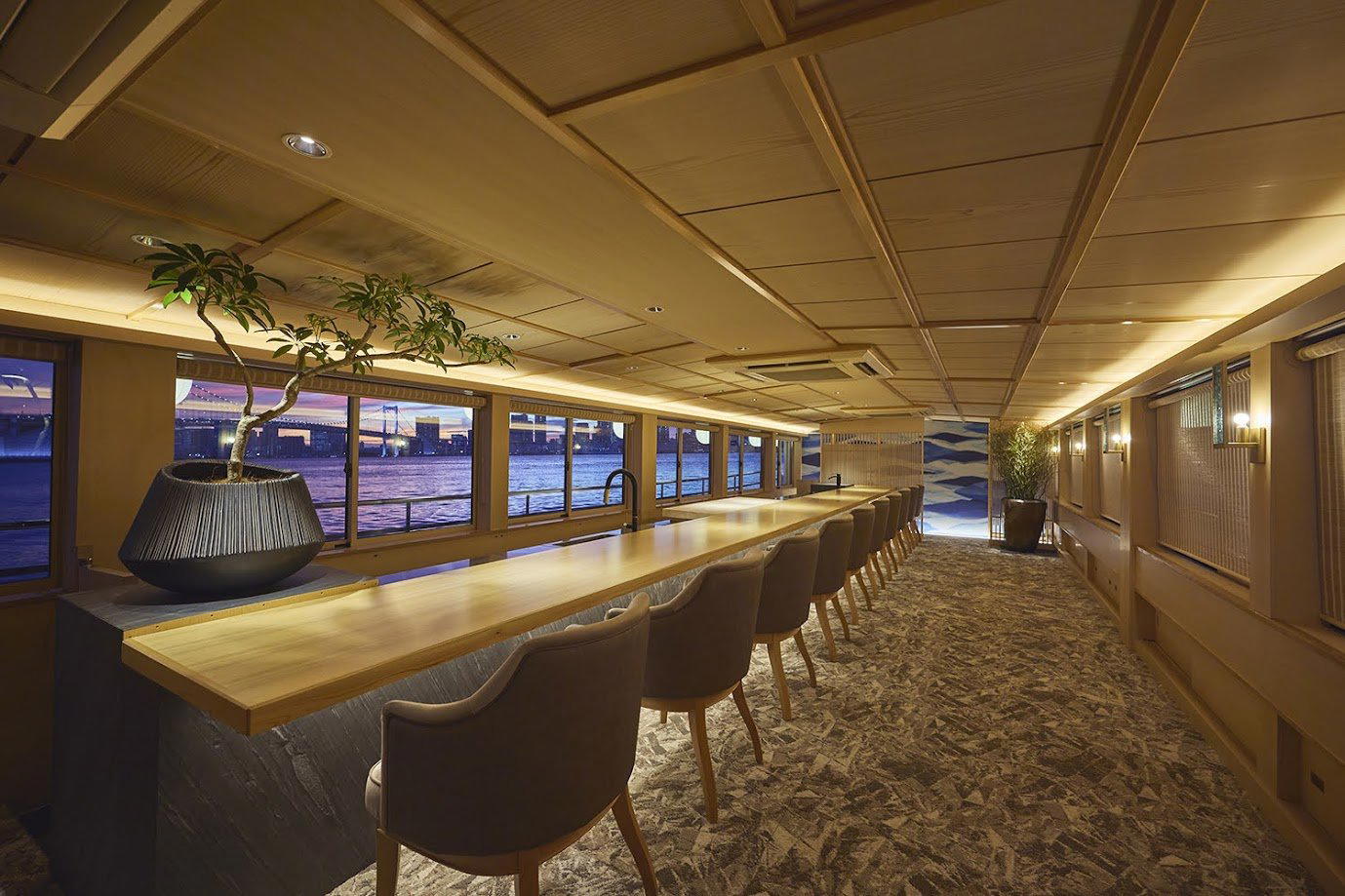
A serious Tokyo ramen shop often asks you to read the room before the menu: the pause at the entrance, counter clatter, fast kitchen-floor exchange, and sense that a bowl has a narrow window for serving and eating. In Tokyo, that grammar can feel residential rather than theatrical. Oshima sits within the city’s broad everyday dining landscape, where ramen is less tourist performance than a meal shaped by rhythm, repetition, and local regularity.
That matters. Tokyo ramen is often reduced to queues and rankings, but its deeper strength is modest-scale specialization: shops built around one soup logic, noodle preference, and a clear house style. Ramen carries different meanings from counter to counter; it can be rich, direct, warming, quick, or carefully restrained, but it depends on structure rather than garnish. Oshima’s public identity is anchored in ramen, and its 2025 Tabelog Hyakumeiten recognition places it in a competitive field where consistency matters more than dining-room polish.
Ramen, translated through Tokyo's everyday dining culture
The Tokyo setting is part of the argument. The city’s ramen reputation is not concentrated only in the hotel, shopping, or nightlife core; some compelling bowls require moving through parts of the city where customer patterns and service expectations create a different restaurant. Tokyo gives Oshima a context closer to everyday ramen culture than destination dining. The room and service are best understood through ramen cadence: quick decisions, close attention to the bowl, and a format designed around focus rather than ceremony.
Ramen also has an environmental logic worth noting. Shops are resource-intensive: stock, heat, water, noodles, toppings, and short service windows all pressure waste control. A focused ramen format can act as disciplined constraint. A narrow category reduces the sprawl that leads casual restaurants into over-ordering, while a compact operation shortens the distance between production and consumption. When soup is managed as a finite daily resource rather than an endlessly replenished commodity, kitchen incentives align with freshness, demand planning, and less end-of-service surplus.
That does not make ramen an environmental virtue signal; it makes the trade-offs honest. Better shops understand scale: not too many promises, distractions, or menu inflation. Oshima fits that model in spirit. It is built for throughput and concentration, not sprawling hospitality. For travellers used to tasting menus as seriousness, Tokyo ramen is a corrective: technical intent can live inside a bowl priced for routine eating.
Recognition without luxury theatre
Tabelog Hyakumeiten recognition is useful because it does not make the shop fine dining. It signals traction among ramen-focused diners in a brutally competitive city. A Tabelog score of 3.79 is meaningful in context: Japanese user-rating culture compresses scores, especially for casual specialist venues, so that range usually indicates sustained credibility, not passing curiosity.
The same price band clarifies the point. One More, Coffee Dojo Samurai, Shokudo Otsuka, Steak Ishii, and Tandoor Bar Kamal 2 Go all help show how Tokyo’s dining map can hold very different kinds of everyday or specialist stops without asking each to behave like the others. Against that spread, Oshima does not compete on breadth. It competes on ramen-shop values: clarity, repetition, and enough recognition to justify a cross-town detour for diners who care about the form.
Chef biography is secondary, as it should be. The more interesting point is what Oshima says about Tokyo’s appetite for focused ramen specialists. The capital does not merely absorb dining styles; it tests whether they survive high volume, harsh comparison, and diners with dozens of alternatives. Ramen in Tokyo succeeds when it avoids performance for performance’s sake, retaining the food’s practical appeal while meeting the capital’s demand for precision.
How to fit it into a Tokyo food itinerary
Oshima is a targeted ramen stop, not an all-purpose night out. Build it into a Tokyo day, or treat it as a deliberate detour rather than an add-on between hotel drinks and late dinner. The format reinforces the ramen norm: timing, patience, and flexibility matter more than concierge muscle. The value proposition is part of the lean model common to small Japanese specialists, where quick turns and clear expectations keep the meal accessible.
For a broader Tokyo food map, use Oshima as the ramen counterpoint to varied itineraries. Other Tokyo dining can pull toward seafood, charcoal, skewers, curry, café culture, or compact counter formats, showing how repetition and sourcing define many Japanese specialties. Casual Tokyo also includes visual café culture and focused quick-meal cooking, while more elaborate rooms occupy a different register. For the wider city edit, start with Our full Tokyo restaurants guide, then layer in Our full Tokyo hotels guide, Our full Tokyo bars guide, Our full Tokyo wineries guide, and Our full Tokyo experiences guide depending on the trip.
Travellers extending the comparison beyond Tokyo can read Oshima alongside regional Japanese formats in general: sukiyaki, café minimalism, local set-meal culture, curry specialization, contemporary dining, and Japanese drinking or snack traditions all show how small formats can carry large expectations. The lesson is scale: Oshima’s appeal comes from a compact shop doing ramen with enough discipline to earn recognition, while keeping the meal close to its original democratic promise.
Price and Positioning
Comparable venues to calibrate price, style, and recognition.
| Venue | Cuisine | Price | Awards | Notes |
|---|---|---|---|---|
| OshimaThis venue (the venue you are viewing) | Sapporo-style miso ramen shop | $1–10 | Tabelog 100 #81 | Not listed |
| Echigoya Wakasa | Traditional Japanese Sweets | $1–10 | Tabelog 100 #34 | Sumida, Traditional Japanese Sweets |
| Fukuo Shoten | Traditional Japanese sweets and agar jelly shop | $1–10 | Tabelog 100 #61 | Chiyoda, Traditional Japanese sweets and agar jelly shop |
| Curry Ya Banbi | Japanese curry & Indian curry izakaya | $10–20 | Tabelog 100 #64 | Chiyoda, Japanese curry & Indian curry izakaya |
| Maihama | Japanese Izakaya | Not listed | Tabelog 100 #77 | Minato, Japanese Izakaya |
| Shiroi Kuro | Modern Japanese sweets & roll cake café | $1–10 | Tabelog 100 #95 | Minato, Modern Japanese sweets & roll cake café |
Recognition history
Dated appearances from independent guides and award organizations, with the underlying list record or original source where available.
Tabelog 100 #81 · No. 81
Tabelog · Tabelog 100 - Ramen - TOKYO - 2025
Oshima
Featured Guides

Continue exploring
More in Tokyo
Restaurants in Tokyo
All restaurants in Tokyo →








Details
- Lively
- Cozy
- Casual
- Solo
- Casual Hangout
- Family
- After Work
- Standalone
- Beer Program
- A La Carte
- Counter Dining
- Beer
Current opening hours
- Monday
- Closed
- Tuesday
- 11 AM–3 PM, 5–8:30 PM
- Wednesday
- 11 AM–3 PM, 5–8:30 PM
- Thursday
- 11 AM–3 PM, 5–8:30 PM
- Friday
- 11 AM–3 PM, 5–8:30 PM
- Saturday
- 11 AM–3 PM, 5–8:30 PM
- Sunday
- 11 AM–4 PM, 5–8 PM
Hours can change for holidays and private events. Hours as of .