
Michelin Plate
Our verdict
Run by the same team as Naama in Rzeszów's city centre, Okovita occupies a stylishly modern suburban space on ul. Sędziszowska, where voile curtains partition tables for a more intimate dining experience. House-made sourdough and carefully conceived plates—like butterflied trout with braised cabbage and tomatoes—anchor the concise menu, backed by warm, attentive service.

Pearl is the En Primeur Club membership app, where members save venues, book tables and use the concierge.
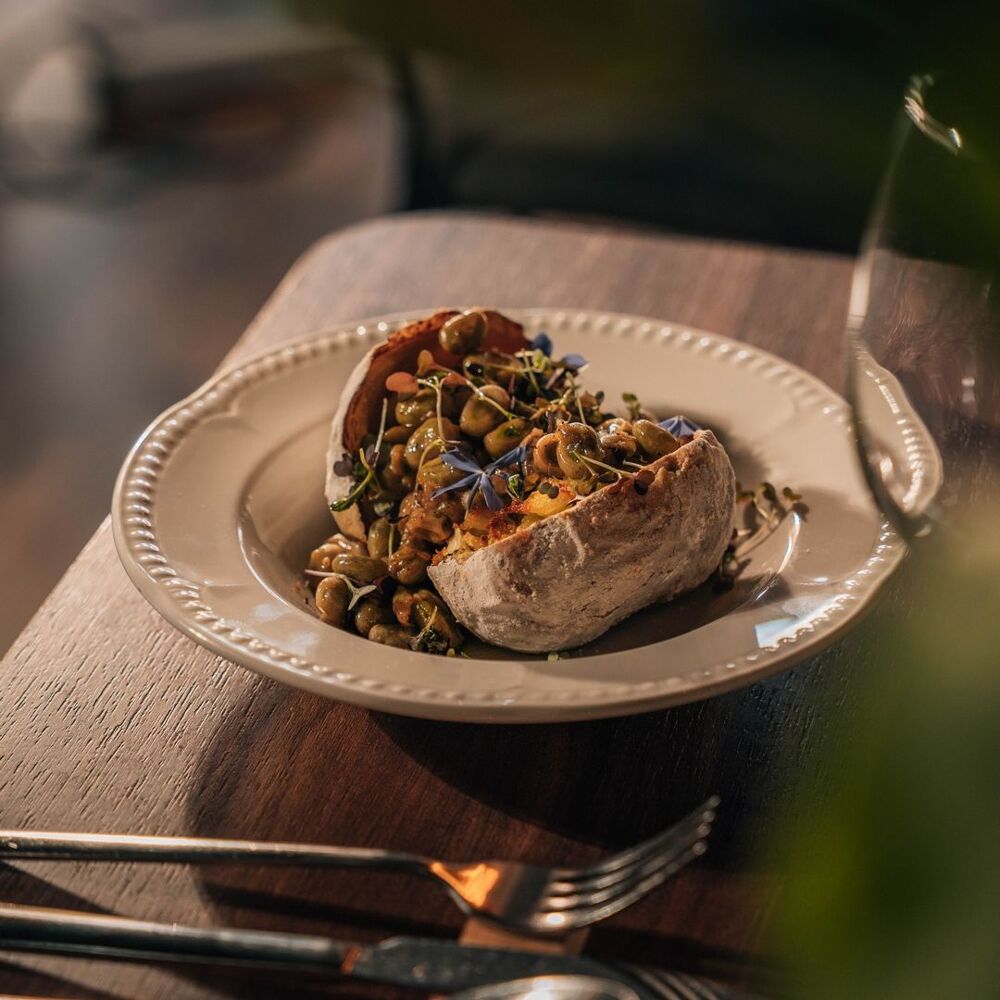
The dining room at Okovita sits in a low-rise suburban block on ul. Sędziszowska, a quiet stretch six kilometres south-west of Rzeszów's Old Town. The façade offers little fanfare; inside, natural light filters through semi-sheer voile curtains that section the space into smaller pockets, creating the kind of privacy rarely found in open-plan neighbourhood restaurants. The same team that operates Naama in the city centre opened this second address to serve a residential catchment that otherwise relies on casual pizza parlours and grills. The result is a modern Polish neighbourhood spot that applies restraint to format, sourcing, and technique without the formality of Rzeszów's more centrally located establishments like Braseria Pasieka or Muro.
House-Made Sourdough and a Produce-Led Menu
The kitchen leans on local farms for root vegetables, brassicas, and freshwater fish, and the menu reads as a concise list of mains rather than a multi-course progression. Each dish arrives as a studied composition: butterflied trout pairs with braised cabbage and tomatoes, the cabbage cooked long enough to soften its sulphur edge and the tomatoes reduced to a concentrated sweet acidity that offsets the fish's mild fat. House-made sourdough opens the meal, a tangible marker of the kitchen's willingness to invest labour where industrial product would suffice, and the loaf's tight crumb and crust integrity suggest extended fermentation and careful shaping. That same discipline carries through the plate work, where garnish serves structural rather than decorative purpose: fresh herbs provide brightness, rendered fat or reduced stock adds body, and texture contrasts arrive through cooking method rather than added crunch. Sourcing matters here not as a story to tell but as a constraint that defines what appears on the menu; the kitchen builds around what comes in from suppliers each week, a model more common in Poland's Kraków or Warsaw dining scenes than in Rzeszów's smaller restaurant economy.
A Suburban Address That Functions as a Local Anchor
Okovita's location on the city's southern periphery places it outside the tourist route that loops through Rynek and the main pedestrian zones. The surrounding neighbourhood is residential, served by tram lines that connect to the central station in twenty minutes. Families and regulars from the adjacent blocks fill most tables, and the service style reflects that: staff greet repeat guests by name, adjust pacing without prompting, and deliver plates with a minimum of ceremony. The voile curtains that divide the room offer acoustic and visual separation, so a party of six at one table does not dominate the experience of a couple seated three metres away. The furniture is modern, pale wood, upholstered chairs, minimal ornament, and the lighting is calibrated to soften rather than spotlight. For visitors staying in the centre, Okovita requires a deliberate journey, but the format rewards that effort with a meal that feels grounded in its immediate context rather than designed for passing trade. Rzeszów's dining scene remains small enough that most recognised addresses cluster within a fifteen-minute walk of each other; Okovita operates in the gap beyond that radius, where real estate costs drop and the kitchen can prioritise sourcing budget over location premium.
The team's other project, Naama, sits in the city centre and draws a broader mix of business diners and tourists exploring Rzeszów's restaurant landscape. Okovita functions as the quieter sibling: fewer covers per service, a slightly narrower menu, and a clientele that skews local. That dynamic allows the kitchen to test ideas, new suppliers, seasonal preparations, off-menu specials, without the pressure of maintaining a high-traffic turnover. The result is a more consistent execution night to night, a factor that matters when a kitchen works with ingredients that demand precise timing and temperature control.
What the Format Implies About Rzeszów's Dining Tier
Poland's dining culture has bifurcated over the past decade: cities like Kraków and Warsaw now support multi-starred fine dining alongside a strong mid-tier of ingredient-focused neighbourhood spots, while smaller urban centres like Rzeszów lag in both categories. Okovita occupies a middle position, more ambitious than the city's casual grill houses but less structured than the few formal dining rooms that have emerged in recent years. The house-made bread, the careful sourcing, and the staff's ability to read the room all signal a kitchen and front-of-house team with experience in higher-end environments, yet the pricing and format remain accessible. That balance is difficult to sustain in a market where rent is low but supplier networks are thin; most neighbourhood restaurants in secondary Polish cities default to imported product and high-margin proteins. Okovita's model, local produce, daily prep, consistent technique, requires a committed local following to pencil out, and the repeat business from the surrounding residential blocks provides that foundation.
For context, Under SEOUL and Sushi House 77 Rzeszów also serve the city's suburban periphery, but both lean on specialty cuisines with narrower appeal. Okovita's Polish-inflected menu and accessible pricing position it as a repeatable option rather than an occasional splurge, a distinction that matters in a city where most residents dine out once or twice a week rather than nightly. The voile curtains and modern décor prevent the space from reading as canteen-casual, while the service warmth and neighbourhood location keep the experience approachable. That combination is rarer than it should be in Poland's smaller cities, where restaurants tend to choose between rustic charm and urban minimalism without attempting to bridge the two.
Visitors planning a broader tour of Rzeszów's dining options will find Okovita a useful contrast to the more centrally located addresses; it demonstrates what a skilled team can achieve when freed from the pressure of serving tourist foot traffic. The tram ride from the centre is direct, the neighbourhood quiet enough to walk after dark, and the meal itself functions as a reminder that Poland's ingredient culture, rooted in seasonal vegetables, freshwater fish, and grain-based baking, can support contemporary technique without requiring imported luxury product or multi-course theatrics.
Frequently asked questions
Can I bring kids to Okovita?
The voile curtains dividing tables create an intimate, quiet setting that suits adult dining more naturally than family groups. The same team runs Naama in the city centre, which may offer more flexible seating for families.
What kind of setting is Okovita?
The dining room on Sędziszowska carries a modern, stylish design with voile curtains that screen individual tables. The suburban location south of Rzeszów's centre draws a local clientele rather than tourist foot traffic.
What distinctions does Okovita have?
Okovita has received recognition including: Run by the same team as Naama in the city centre, this suburban spot has a stylishly modern feel, while its voile curtains dividing the tables add an intimate air. The house-made sourdough gets the meal off to a great start, before the care….
Where is Okovita in Rzeszow?
Okovita is located at ul. Sędziszowska 6, Rzeszów, Podlaskie, 35-505, POL, Rzeszow.
Do they take walk-ins at Okovita?
No public booking policy is listed, and the intimate table layout suggests capacity is limited. Because the venue functions as a neighbourhood anchor rather than a high-volume operation, calling ahead is the safer approach.
What's the signature at Okovita?
The house-made sourdough opens every meal, followed by dishes such as butterflied trout with braised cabbage and tomatoes. The kitchen sources from local farms and emphasizes root vegetables, brassicas, and freshwater fish.
What if I have allergies at Okovita?
The concise, produce-led menu suggests the kitchen works with limited mise en place and can likely adapt preparations. The team is noted for warm, friendly service, which typically extends to dietary accommodations when communicated in advance.
How It Stacks Up
Comparable venues by cuisine and price in the same metro.
| Venue | Cuisine | Price | Awards |
|---|---|---|---|
| OkovitaThis venue (the venue you are viewing) | Modern Polish comfort food with tasting menu | $30–50 | Michelin Plate |
| Braseria Pasieka | Italian Pizza with Regional Polish Grill | $20–30 | Not listed |
| Włoska Restauracja Bellanuna | Authentic Italian Osteria | $20–30 | Not listed |
| Naama | Authentic Moroccan Restaurant | Not listed | Michelin Bib Gourmand |
| Muro | Modern surf & turf with Japanese influence | $30–50 | Michelin Plate |
Recognition history
Dated appearances from independent guides and award organizations, with the underlying list record or original source where available.
Michelin Plate
Michelin
Continue exploring
More in Rzeszow
Restaurants in Rzeszow
All restaurants in Rzeszow →
Wineries in Rzeszow
Browse all →
Okovita
The wine
- Wine program
- Deep wine list
- Extensive wine list
- Sommelier-led
Details
- Modern
- Elegant
- Romantic
- Cozy
- Intimate
- Sophisticated
- Date Night
- Business Dinner
- Family
- Celebration
- Special Occasion
- Private Event
- Private Dining
- Garden
- Standalone
- Extensive Wine List
- Sommelier Led
- Local Sourcing
- Tasting Menu
- A La Carte
- Wine
- Spirits
- Cocktails
- Vegetarian Friendly
Modern, stylish interiors with an intimate, romantic and family-friendly atmosphere; refined but relaxed, designed for lingering lunches, degustation dinners and private celebrations.