Ocean Cellar
Ocean Cellar sits in Swakopmund, Namibia's coastal resort town where the cold Benguela Current shapes both the local seafood supply and the wider dining character of the Skeleton Coast strip. The restaurant operates within a town where Atlantic fish stocks, desert-grown produce, and a German colonial culinary inheritance converge in ways found almost nowhere else in sub-Saharan Africa.
Pearl is the En Primeur Club membership app — saves, bookings, and concierge access live there. Same editors, same standards.
- Address
- Swakopmund, Namibia
- Directions
- Get directions
 Saves & bookings on Pearl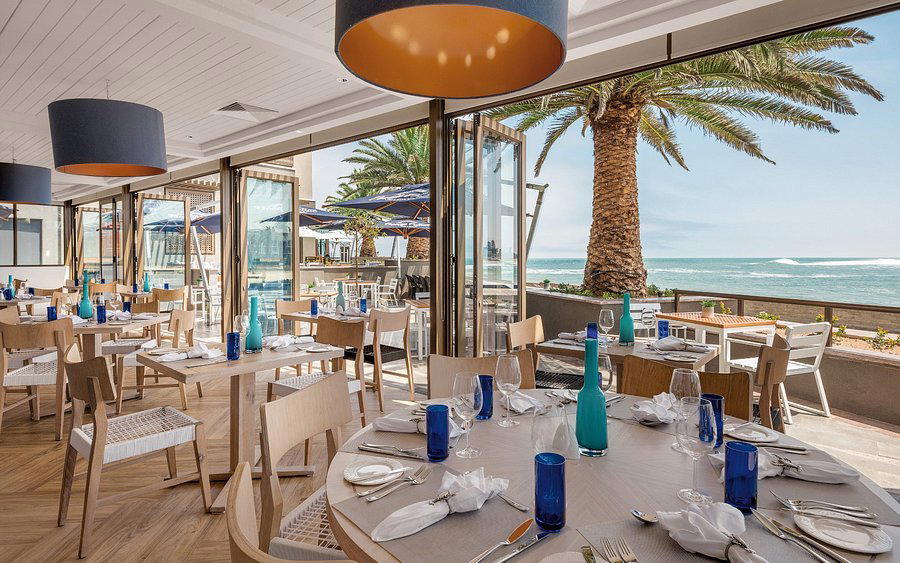
Where the Benguela Current Sets the Table
Swakopmund arrives at the traveller differently from most coastal towns. The cold, nutrient-dense Benguela Current running northward along Namibia's Atlantic shoreline suppresses the air temperature even in summer, wrapping the town in a marine haze that softens the otherwise fierce desert light. Arriving at the waterfront strip in the early evening, with fog drifting in off the sea and the smell of salt and kelp carried on a flat breeze, you understand immediately that this is not a warm-water coast. It is something more interesting: a cold-current shore that produces notable seafood precisely because the water is inhospitable to the fish themselves, driving dense schools of Cape hake, kingklip, kabeljou, and rock lobster into the nearshore zone. The town's restaurants have built around this supply for over a century, and Ocean Cellar is one of the addresses that draws on it.
Swakopmund sits apart in Namibia's dining geography, shaped by German colonial kitchen traditions and the raw material advantage of cold-Atlantic protein.
What a Cold-Current Shore Actually Produces
The ingredient argument for Swakopmund is not sentimental localism. It is structural. The Benguela upwelling system, among the more productive marine ecosystems on the Atlantic, draws cold, oxygen-rich water from depth, feeding massive populations of anchovy and sardine that in turn support larger commercial and recreational species. Namibian waters are among the least exploited on the continent relative to their yield, partly because the coastline is remote and the population sparse. That combination of biological productivity and lower fishing pressure means the seafood reaching restaurants here is fresher and less travelled than comparable product reaching the kitchens of coastal cities further south.
Ocean Cellar operates within this setting. The Skeleton Coast supply chain is short by the standards of virtually any comparable seafood-focused restaurant in a major market. Compare that with restaurants such as Le Bernardin in New York City or Amber in Hong Kong, which source through global cold-chain networks spanning multiple continents. In Swakopmund, the distance from water to kitchen is measured in kilometres, not logistics corridors. That proximity is either an asset a kitchen chooses to honour or a detail it ignores. The question for any Swakopmund seafood address is which side of that line it falls on.
The German Colonial Kitchen and What Came After
Swakopmund's culinary inheritance is genuinely unusual in the African context. German colonial settlement from the late nineteenth century established a food culture that persisted across independence and continues to define a strand of local hospitality: rye bread bakeries, bratwurst, schnitzel, and the particular German habit of pairing cold-water fish with assertive preparations. That tradition runs alongside Namibian braai culture and, increasingly, a more contemporary approach to indigenous ingredients including bush tomato, devil's claw, and the various game proteins available from the interior. The interior supply also matters to coast-town restaurants: Namibia's vast unfenced ranchlands produce some of the continent's least medicated beef and game, and the distance from Swakopmund to working farmland is short enough to make land-sourced ingredients genuinely local.
Restaurants operating in this environment sit at an interesting crossroads. The Namibian German tradition represented by addresses like Gmundner Lodge in Dordabis District and the safari-lodge format typified by Epako Safari Lodge and Spa in Omaruru district show two different ways the Namibian ingredient story gets told: one through colonial European framing, one through the immersive wilderness-meal format. A Swakopmund town restaurant like Ocean Cellar sits in neither category exactly, working instead within the more compressed, urban expression of the same supply base.
The Coastal Town Dining Tier
Swakopmund's restaurant scene divides into a handful of recognisable categories. There are the German-inflected sit-down institutions, the casual harbour-adjacent fish-and-chips formats, the hotel dining rooms that serve international visitor traffic, and a smaller tier of more considered addresses that treat local sourcing as a programme rather than a marketing note. The last group is where the editorial interest lies, and where the restaurant positions itself by name and location. A cellar reference in a coastal address typically signals wine seriousness alongside a kitchen, which in this market means navigating South Africa's Cape wine regions as the primary supply while building a food programme around Atlantic protein and the surrounding landscape's land-based produce.
For comparison with how other coastal and seafood-focused addresses handle the tension between sourcing discipline and accessible format, Aponiente in El Puerto de Santa María represents the maximalist interpretation, building an entire tasting menu architecture around marine ingredients. Anchors at The Jetty in Walvis Bay, a short drive south, offers the more immediate regional comparison: another Namibian coastal address working the same Benguela supply with a different format and catchment.
Visit Details
Reservations are essential. The restaurant is a Namibian Seafood & Oyster Bar in Swakopmund, with pricing around USD 45 per person and a smart casual dress code.
Comparison Snapshot
Comparable venues nearby, for context on price, style, and recognition.
| Venue | Cuisine | Price | Notes |
|---|---|---|---|
| Ocean CellarThis venue — the venue you are viewing | Namibian Seafood & Oyster Bar | $$$ | Not listed |
| Anchors @ The Jetty | Fresh Seafood Waterfront | $$ | Walvis Bay Waterfront |
| Gmundner Lodge | Refined Namibian Fine Dining | $$$$ | Dordabis District |
| Epako Safari Lodge & Spa | Namibian Fusion with French Techniques | $$$$ | Omaruru district |
| EPAKO Restaurant | Namibian fine dining with African influences and French techniques | $$$$ | Omaruru district |
Continue exploring
More in Swakopmund
Restaurants in Swakopmund
Browse all →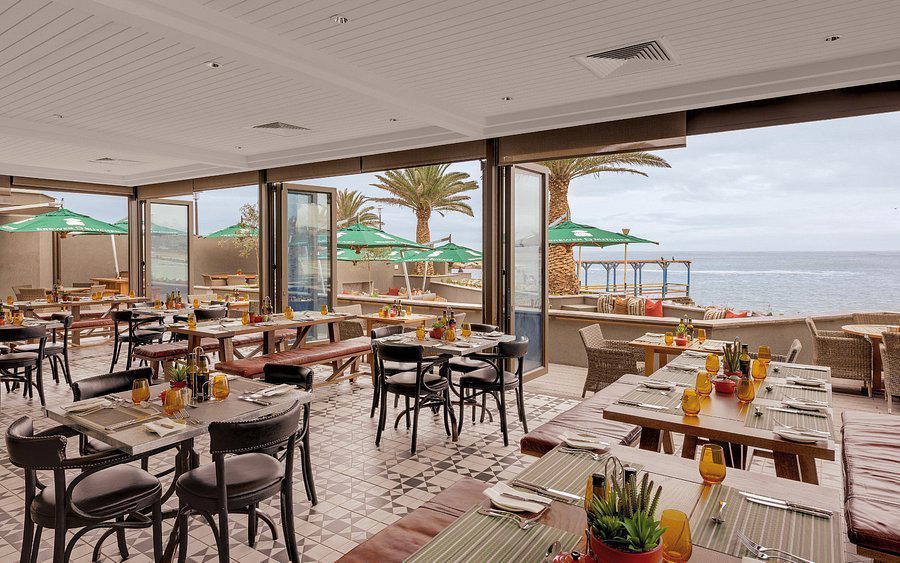
Bars in Swakopmund
Browse all →
At a Glance
- Scenic
- Elegant
- Sophisticated
- Date Night
- Business Dinner
- Group Dining
- Special Occasion
- Waterfront
- Open Kitchen
- Terrace
- Hotel Restaurant
- Extensive Wine List
- Sommelier Led
- Local Sourcing
- Sustainable Seafood
- Waterfront
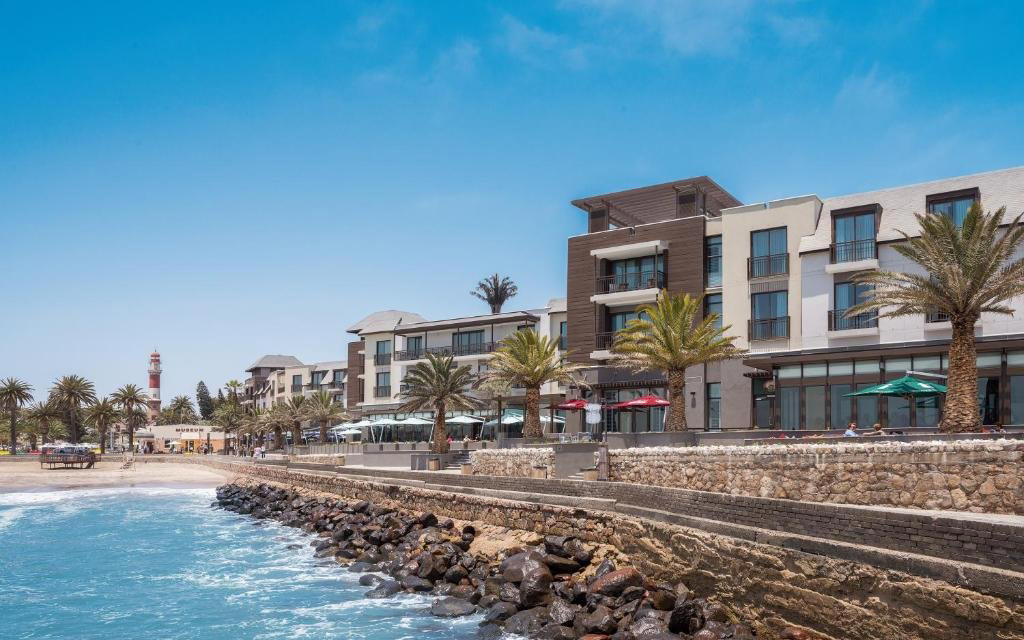
Far-reaching oceanfront setting with soothing sounds of lapping waves, sea-facing terrace with Atlantic Ocean views, and a sophisticated yet relaxed coastal atmosphere.