
Tabelog 100 #64
Our verdict
Aso places Naha’s everyday cafeteria tradition in a sharper register: fish-focused cooking, lunch service, and recognition in Tabelog 100 - Diner - 2026. Its appeal is less about ceremony than about how Okinawa’s capital folds seafood, office-district rhythm, and compact shokudo culture into a meal with clear local footing.

Pearl is the En Primeur Club membership app — saves, bookings, and concierge access live there. Same editors, same standards.
- Address
- Japan, 〒900-0032 Okinawa, Naha, Matsuyama, 1 Chome−6−22 伊是名マンション
- Phone
- +81 98-868-7880
- Hours
- Mon–Fri 11:30 AM–2 PMSat–Sun Closed
- Website
- tabelog.com
- Directions
- Get directions
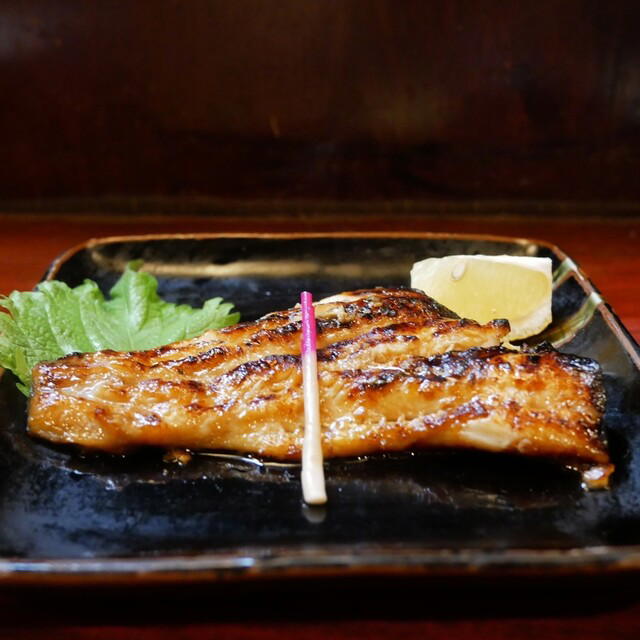
Matsuyama sits close to Naha’s civic and commercial core, where lunch is not a leisurely performance but a disciplined daily ritual. The rhythm around Prefectural Office Station favors compact rooms, short service windows, and menus that understand the working day. In that setting, Aso belongs to a Japanese shokudo lineage that treats the cafeteria not as a lesser category, but as a serious expression of regional appetite.
That distinction matters in Okinawa. Naha dining is often reduced to resort-adjacent clichés, pork narratives, tropical drinks, and visitor-friendly izakaya circuits. The stronger reading is more specific: the city’s daytime food culture depends on small restaurants that make local regularity legible. Fish-focused cooking carries particular weight here, not because it needs theatrical plating, but because island geography makes seafood part of the ordinary grammar of eating.
Fish-led shokudo culture, without resort gloss
The shokudo format is one of Japan’s clearest tests of judgment. It leaves little room for imported luxury signals. Rice, soup, fish, pickles, and small side dishes have to function as a complete argument: portion, seasoning, pacing, and value all show at once. Aso’s recognition in Tabelog 100 - Diner - 2026 places it within a national list that looks beyond formal fine dining toward everyday restaurants with unusually strong local credibility.
In Naha, that puts the restaurant in a different conversation from higher-spend meat-led rooms. Miyazaki Beef Specialty Restaurant Naha Miyachiku, Niku no Hentai Shudan Shippu Horumon Kumoji honten, and Shimabuta Ishiyaki San point toward beef, horumon, and island pork as occasion dining. Shokusai Shubo Matsumoto sits in a higher dinner bracket outside the metro comparison set. LITOR overlaps more closely on price, but its broader restaurant positioning reads differently from a cafeteria category built around set-meal efficiency. The useful comparison is not luxury versus simplicity; it is how much cultural information a meal can carry without adding ceremony.
Okinawan food has always absorbed outside influence: Ryukyuan court cooking, postwar American presence, mainland Japanese formats, and the practical demands of island supply. A cafeteria in Naha can show that mixture more honestly than a polished tasting counter. Fish, in this context, is not an accessory to a concept. It is a marker of place, economy, and habit. The Tabelog score of 3.67 and selection for the 2026 Diner list give that local category measurable recognition without pushing it into the language of luxury dining.
Why Naha's serious meals are not confined to dinner
Travelers often misread Naha by saving ambition for evening. That misses how much of the city’s food intelligence is concentrated at midday, especially around office districts and transit-adjacent pockets. Lunch-only or lunch-centered restaurants in Japan tend to compress their identity: limited operating time, focused throughput, and a clientele that notices small failures quickly. Aso fits that pattern, which makes it more useful for understanding Naha than another polished night out built around drinks and extended ordering.
The room’s category, cafeteria, should be taken literally and respectfully. In Japan, shokudo does not imply carelessness; it implies a meal architecture designed for repetition. The format asks whether a restaurant can be satisfying without spectacle. That is a demanding standard in a city where visitors often arrive chasing either Okinawan folk nostalgia or resort comfort. A meal here belongs to neither. It is urban Naha: practical, fish-forward, and tied to the weekday pulse of Matsuyama.
That is also why the award signal is useful. Michelin-style hierarchies can undercount restaurants that matter locally because their value is bound to frequency rather than rarity. Tabelog’s Diner category gives visibility to places where regular eating, not special-occasion theater, is the point. For a traveler building a serious Naha itinerary, this kind of address should sit beside, not below, more obvious restaurant choices.
How to place it in a Naha itinerary
Aso works better as a reading of the city than as a trophy meal. Pairing it with Naha’s broader restaurant map gives the clearest picture: Our full Naha restaurants guide covers the wider dining field, while nearby alternatives such as Agu Shabushabu Miruku Naha ten, BACAR OKINAWA, Heki Kokusai dori matsuo ten, and A LONG VACATION. show how varied the city’s restaurant culture becomes once shokudo, pork, Italian-leaning kitchens, steak, and contemporary formats are read together.
The surrounding plan matters, too. Naha rewards compact scheduling: restaurants, bars, hotels, and cultural stops sit close enough to build a day by neighborhood rather than by isolated reservation. After a fish-led daytime meal, the city’s drinking side can be read through BAR Owl and Our full Naha bars guide. For lodging context, Our full Naha hotels guide helps separate city-base convenience from resort logic. Broader planning sits in Our full Naha experiences guide and Our full Naha wineries guide, even where wine culture is not the city’s central draw.
For readers comparing Japanese casual formats beyond Okinawa, the useful thread is repetition rather than luxury. -Grilled beef Sukiyaki- KAMAKURA TANUKIAN 鎌倉 たぬき庵 in Kamakura. 鮪と炭火焼き うお炭 秋葉原店 in Tokyo.cafe in Osaka.know in Kumamoto, (Shoku) Vietnam in Kawasaki, [Curry Senmon Ten] Maruyama Kyoju. in Sapporo, Jōdo Saké Bar in Los Angeles, and Onigiri Time in Pasadena each illustrate a different way that focused formats travel, adapt, or stay rooted. Aso’s value is narrower and more local: it shows how a Naha cafeteria can carry enough precision, habit, and fish-market logic to earn national diner recognition without abandoning the plainspoken structure that gives the category its force.
Frequently asked questions
What does dinner at Aso typically cost?
Pricing at Aso is listed as JPY 3,000 - JPY 3,999.
What are Aso's hours?
Hours at Aso: Mon: 11:30 AM–2 PM; Tue: 11:30 AM–2 PM; Wed: 11:30 AM–2 PM; Thu: 11:30 AM–2 PM; Fri: 11:30 AM–2 PM; Sat: Closed; Sun: Closed.
Where is Aso in Naha?
Aso is located in Naha.
What is Aso known for?
Aso is primarily known for its core concept and execution in Naha.
Booking and Cost Snapshot
Comparable options at the same price tier.
| Venue | Cuisine | Price | Awards | Notes |
|---|---|---|---|---|
| AsoThis venue — the venue you are viewing | Traditional Japanese fish-focused teishoku cafeteria | $30–50 | Tabelog 100 #64 | Not listed |
| Niku no Hentai Shudan Shippu Horumon Kumoji honten | Ishigaki Beef Yakiniku & Horumon | $50–100 | Tabelog 100 #91 | Kumoji, Ishigaki Beef Yakiniku & Horumon |
| Miyazaki Beef Specialty Restaurant Naha Miyachiku | Miyazaki Wagyu Teppanyaki | $150–200 | Not listed | Miebashi, Miyazaki Wagyu Teppanyaki |
| Shabushabu Kin Honten | Okinawan Agu Pork Shabu-shabu | $50–100 | Tabelog 100 #96 | Makishi, Okinawan Agu Pork Shabu-shabu |
| Teppanyaki Sawafuji | Teppanyaki & Ishigaki Beef Steak | $50–100 | Tabelog 100 #49 | Kumoji, Teppanyaki & Ishigaki Beef Steak |
| YOROKOBI | Okinawan Shabu-Shabu | $50–100 | Not listed | Makishi, Okinawan Shabu-Shabu |
Recognition history
Dated appearances from independent guides and award organizations, with the underlying list record or original source where available.
Tabelog 100 #64 · No. 64
Tabelog · Tabelog 100 - Diner - 2026
Details
- Cozy
- Classic
- Solo
- After Work
- Casual Hangout
- Standalone
- Set Menu
- A La Carte
- Pescatarian Friendly
Current opening hours
- Monday
- 11:30 AM–2 PM
- Tuesday
- 11:30 AM–2 PM
- Wednesday
- 11:30 AM–2 PM
- Thursday
- 11:30 AM–2 PM
- Friday
- 11:30 AM–2 PM
- Saturday
- Closed
- Sunday
- Closed
Hours can change for holidays and private events. Last verified .
Simple, non-smoking cafeteria-style space in Naha’s Matsuyama district, focused on efficient lunch service with a comfortable, classic Japanese teishoku-house feel rather than elaborate decor.