Mrs. Wilkes’Dining Room

A Savannah institution on Jones Street, Mrs. Wilkes' Dining Room serves communal Southern cooking the way the tradition was built: long tables, shared bowls, and a rotating spread of fried chicken, collard greens, and cornbread. Ranked #64 on Opinionated About Dining's Cheap Eats in North America in 2023 and #74 in 2024, it holds a specific place in the American boarding-house dining tradition that few rooms anywhere replicate.
 Discover on Pearl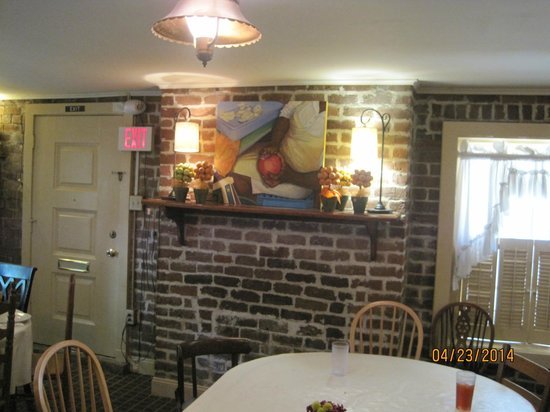
The Boarding-House Table as American Archetype
On a quiet residential block of Jones Street, in a city that has spent decades building a reputation for preserved architecture and self-aware culinary heritage, the boarding-house dining format persists in its most intact form. The approach at Mrs. Wilkes' Dining Room is structural, not stylistic: strangers are seated together at long communal tables, bowls of food arrive pre-set or passed around, and the meal operates on a fixed rhythm that predates the modern restaurant by at least a century. There is no menu to read, no server to flag, and no negotiation over what arrives. The format itself is the statement.
This kind of communal table service traces to the American South of the 19th century, when boarding houses fed travellers, workers, and residents in a single shared sitting. The genre largely disappeared as the restaurant industry standardised around individual orders, dedicated service sections, and tasting menus calibrated to a single diner's progression. Mrs. Wilkes' Dining Room at 107 W Jones Street is among the last addresses in the country where the original format remains the operating principle rather than a nostalgic gesture.
What Southern Communal Cooking Actually Means
The editorial angle that matters here is not the venue itself but the culinary tradition it embodies. Southern American cooking is one of the most consequential examples of cultural fusion in the national food record: West African techniques and ingredients brought through the Atlantic slave trade, Indigenous foodways involving native grains and vegetables, and European settler cooking patterns converged in the coastal South over roughly three centuries to produce something that belongs to none of those traditions individually. Collard greens slow-cooked with smoked pork, cornbread made from a grain the continent had grown for millennia, fried chicken techniques with documented roots in West African frying methods — each dish on a table like this carries a layered history that fine-dining interpretations often flatten.
The boarding-house format amplifies this fusion logic: food arrives as a collective spread rather than a curated sequence, which is closer to the communal meal structures of the African and Indigenous traditions that shaped the cuisine than to the plated European service model most American restaurants default to. Venues like Olamaie in Austin and Virtue in Chicago engage Southern tradition through a more contemporary single-plate format; what Jones Street preserves is something older and structurally different.
Recognition in the Cheap Eats Tier
Opinionated About Dining, which runs one of the more data-disciplined ranking systems in North American food criticism, placed Mrs. Wilkes' Dining Room at #64 on its Cheap Eats in North America list in 2023 and #74 in 2024. The OAD Cheap Eats list is distinct from its fine-dining rankings: it specifically tracks value-oriented cooking that reviewers find worth a dedicated visit on culinary merit, not merely on price. Appearing in consecutive years inside the top 75 of that list signals consistent critical attention from a community of serious eaters, not casual tourist traffic.
The positioning is worth framing against Savannah's broader dining tier. The city's more formally recognised restaurants — including The Grey, which operates in the American Regional register with a more contemporary service format, and Elizabeth's on 37th, which has held a place in the city's fine-dining conversation for decades , operate in a different price and format tier. Mrs. Wilkes' sits outside that competitive set by design. Its peer group is not Savannah's tasting-menu rooms but rather the small national cohort of historically grounded, communal-format Southern institutions that critics treat as documentation of an endangered dining format.
Savannah's Culinary Position in the American South
Savannah occupies a specific position in the regional food map that is easy to underestimate from a distance. The city's coastal location and deep trading history gave it access to rice, shellfish, and a Gullah Geechee culinary heritage that is distinct from the inland Southern cooking associated with Georgia's piedmont. The boarding-house tradition here developed alongside that coastal specificity, meaning the spread at a table like this draws from a more particular geography than generic Southern comfort food suggests.
For visitors building a broader Savannah itinerary, the contrast between Mrs. Wilkes' communal format and the more wine-driven, contemporary approach at venues like Emporium Kitchen and Wine Market illustrates how widely the city's dining options now range. Our full Savannah restaurants guide maps that range in detail, and our Savannah hotels guide, bars guide, wineries guide, and experiences guide cover the rest of the city's offering by category.
Where This Format Sits in the National Context
It is useful to hold the boarding-house model against the trajectory of American fine dining more broadly. The restaurants most often cited as the country's reference points , Le Bernardin in New York, The French Laundry in Napa, Alinea in Chicago, Lazy Bear in San Francisco, Providence in Los Angeles, Blue Hill at Stone Barns in Tarrytown, or Single Thread Farm in Healdsburg , operate from a European service lineage filtered through American terroir and technique. They represent one strand of what American cooking became. The boarding house represents a different strand: pre-industrial, community-structured, and built from a fusion of survival cuisines that happened to produce some of the country's most deeply flavoured food. Emeril's in New Orleans occupies a middle position, drawing on Gulf South tradition through a more formal service model.
The Jones Street address is not making a claim against any of those rooms. It is doing something structurally different, and the OAD recognition confirms that the critical community reads it that way too.
Planning a Visit
Mrs. Wilkes' Dining Room operates on a lunch-only schedule on weekdays, which shapes how a visit fits into a Savannah itinerary. The queue forms before the doors open, particularly on days when tourism runs high in the historic district, so arriving early is the operative strategy rather than a preference. The address , 107 W Jones Street , sits in the residential garden district blocks south of the main squares, which puts it within walking distance of the Bull Street corridor but away from the highest-traffic tourist areas. Marcia Thompson leads the kitchen, maintaining the format and the cooking tradition the room has operated on for decades. Pricing sits firmly in the Cheap Eats tier, consistent with the OAD classification, making it one of the few critical-community-recognised rooms in Savannah accessible without a reservation or a significant per-head spend.
Frequently Asked Questions
What It’s Closest To
A fast peer set for context, pulled from similar venues in our database.
| Venue | Cuisine | Awards | Notes |
|---|---|---|---|
| Mrs. Wilkes’Dining Room | Southern | Opinionated About Dining Cheap Eats in North America Ranked #74 (2024); Opiniona… | This venue |
| The Grey | Americian Regional | Americian Regional | |
| Emporium Kitchen & Wine Market | |||
| Elizabeths on 37th |
Need a table?
Our members enjoy priority alerts and concierge-led booking support for the world's most difficult tables.
Get Exclusive Access