Morena's Mexican Cuisine
Morena's Mexican Cuisine brings regional Mexican cooking to Lake Forest, California, anchoring a dining strip where ingredient provenance and neighborhood familiarity carry more weight than culinary spectacle. The kitchen works within a tradition that prizes sourced produce and house-made preparation over convenience shortcuts. For Lake Forest diners seeking honest Mexican cooking without downtown price points, it occupies a clear and useful position.
Pearl is the En Primeur Club membership app — saves, bookings, and concierge access live there. Same editors, same standards.
- Address
- 22651 Lake Forest Dr, Lake Forest, CA 92630
- Phone
- +19496246204
- Website
- opentable.com
- Directions
- Get directions
 Saves & bookings on Pearl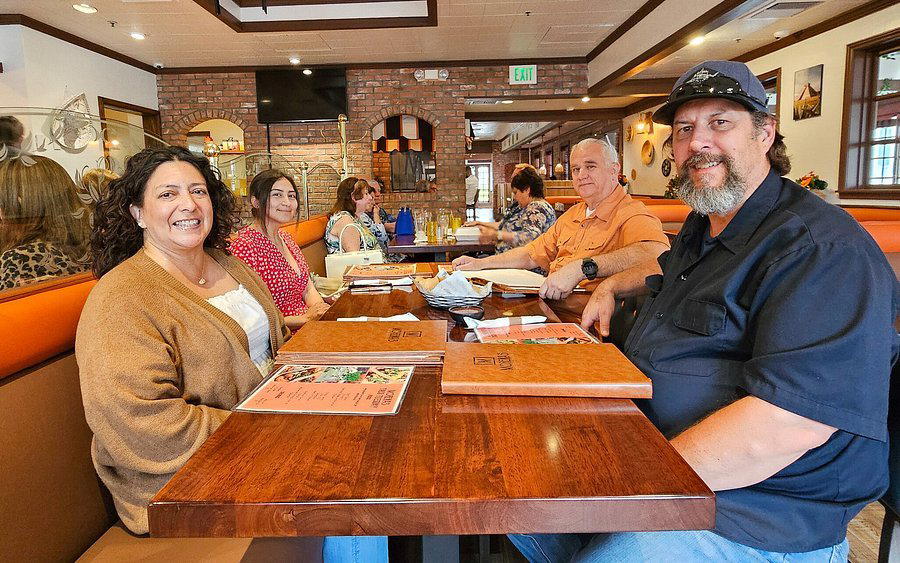
Mexican Cooking in the Southern California Suburbs: What the Setting Tells You
Southern California's suburban Mexican restaurant scene operates on a different logic than the region's high-profile urban dining corridors. In cities like Lake Forest, the dining room is often a neighborhood fixture before it is a destination, and the physical environment reflects that: practical, familiar, designed for return visits rather than first impressions. Morena's Mexican Cuisine, on Lake Forest Drive in Lake Forest, California, sits squarely in that category. The address on a commercial strip signals something important before you have looked at a menu: this is a place oriented around the community it serves, not around attracting visitors from elsewhere. That positioning shapes everything from portion sizing to the pace of service.
For context on how that compares to the broader regional conversation, consider that Southern California's most credentialed dining, places like Providence in Los Angeles or Addison in San Diego, operates in a tier defined by tasting menus, sourcing manifestos, and formal service structures. The suburban Mexican category is a different discipline entirely, one where value density and consistency across many covers often matter more than innovation per plate. Morena's competes within that suburban tier, not against the city's fine-dining circuit.
Ingredient Sourcing and the Southern California Advantage
The editorial case for Mexican cooking in Southern California has always rested partly on geography. The region sits adjacent to some of the most productive agricultural land in the country, with produce markets, specialty distributors, and cross-border supply chains that give kitchens access to ingredients that restaurants in colder, more landlocked states have to work harder to source. Dried chiles, fresh tomatillos, epazote, nopales, and quality Mexican-variety corn are not specialty items here; they are routine.
That access matters because Mexican cuisine, at its most honest, is inseparable from the quality of its raw components. A mole's complexity depends on the dried chile varieties used and their freshness. A pozole's backbone comes from the hominy and the quality of the broth built around it. A well-made carnitas relies on the cut of pork and the patience of the cook, not on technique flourishes. In this sense, the Southern California suburban Mexican kitchen has structural advantages over its counterparts in markets where these ingredients travel further and cost more. Whether any individual kitchen capitalizes on those advantages is a separate question, but the opportunity is real.
This is the frame through which ingredient-focused Mexican cooking in this region deserves to be evaluated: not against the standards of Alinea in Chicago or Le Bernardin in New York City, but against the specific question of how well a kitchen uses what its geography makes available. Sourcing fidelity in this context means working with the region's supply strengths rather than defaulting to generic commodity inputs.
The Lake Forest Dining Context
Lake Forest, in Orange County, is not a dining destination in the way that comparable California cities with concentrated food media attention tend to be. Its restaurant mix reflects a predominantly residential population, with a range that runs from fast casual to sit-down neighborhood restaurants. Within that mix, Mexican cuisine holds a prominent position, partly because of the region's demographic makeup and partly because demand for it is consistent and deeply local rather than trend-driven.
For a broader map of what Lake Forest's dining scene looks like across categories, our full Lake Forest restaurants guide covers the range. Within the city, places like Sunny Dumpling House represent the other end of the ethnic dining spectrum, showing that the city's restaurant population, while not dense, has some breadth. Morena's operates in a different register, serving a cuisine that has deep roots in this part of California and a customer base that, in many cases, has opinions about what good looks like based on years of eating it.
That audience tends to be less forgiving of shortcuts than a first-time visitor might be, which is worth noting. Regulars in this category notice when salsa is house-made versus jarred, when tortillas are pressed in-house versus pulled from a commercial stack, and when the beans taste like they spent time on a stove rather than a can opener. The community dining context, in other words, creates its own form of quality accountability that functions differently from, but is no less real than, the accountability created by critics and award bodies.
How This Category Sits Against the Farm-to-Table Tier
American farm-to-table dining, codified by places like Blue Hill at Stone Barns in Tarrytown, Single Thread Farm in Healdsburg, and The French Laundry in Napa, built its identity around making sourcing visible: named farms on menus, hyper-seasonal rotation, and a formal vocabulary around provenance. Mexican cuisine's relationship with sourcing is older and less legible to that framework, but no less real. The chile-growing regions of Oaxaca, Puebla, and Guerrero, the corn varieties that underpin masa traditions, the fermentation processes behind vinegar-cured preparations: these are sourcing stories that rarely appear on menus in the suburban American context but are nonetheless embedded in the cuisine's structure.
Kitchens at the more ambitious end of regional Mexican, including places like Causa in Washington, D.C. and the ingredient-forward approach seen at Frasca Food and Wine in Boulder applied to Italian regional cooking, have started making those sourcing stories more explicit. The suburban Mexican category has been slower to adopt that vocabulary, but the underlying sourcing intelligence is often already present in kitchens that know the cuisine deeply. The gap is more about communication than practice.
Planning a Visit
Morena's Mexican Cuisine is located at 22651 Lake Forest Drive, Lake Forest, California 92630. Given the neighborhood-restaurant format, visits during off-peak lunch hours or early weekday evenings tend to allow for a more relaxed experience and easier conversation with staff about what's being made that day. For families with children, the suburban sit-down Mexican format in this region has historically been accommodating of mixed-age groups, though specific policies are best confirmed on contact.
Continue exploring
More in Lake Forest
Restaurants in Lake Forest
Browse all →
Bars in Lake Forest
Browse all →
Hotels in Lake Forest
Browse all →

Wineries in Lake Forest
Browse all →
At a Glance
- Casual
- Lively
- Casual Hangout
- Family
- Group Dining
- Brunch
- After Work
- Standalone
- Beer Program
- Craft Cocktails
Current opening hours
- Monday
- 11 AM–8 PM
- Tuesday
- 11 AM–9 PM
- Wednesday
- 11 AM–8 PM
- Thursday
- 11 AM–8 PM
- Friday
- 11 AM–9 PM
- Saturday
- 11 AM–9 PM
- Sunday
- 9 AM–8:30 PM
Hours can change for holidays and private events. Last verified .
Casual, welcoming atmosphere with a full bar and cocktail menu; family-friendly dining environment.
Know Before You Go
- Getting there
- 22651 Lake Forest Dr, Lake Forest, CA 92630