Mixt at 70 Mission Street occupies the intersection of fast-casual format and California produce culture, bringing salad-forward cooking to San Francisco's Financial District lunch crowd. The menu draws on local-seasonal sourcing translated through disciplined, globally influenced technique. It sits in a different tier from the city's tasting-menu circuit but represents a particular strand of Bay Area food thinking made accessible at speed.
Pearl is the En Primeur Club membership app — saves, bookings, and concierge access live there. Same editors, same standards.
- Address
- 70 Mission St (at Spear St), San Francisco, CA 94105
- Directions
- Get directions
 Saves & bookings on Pearl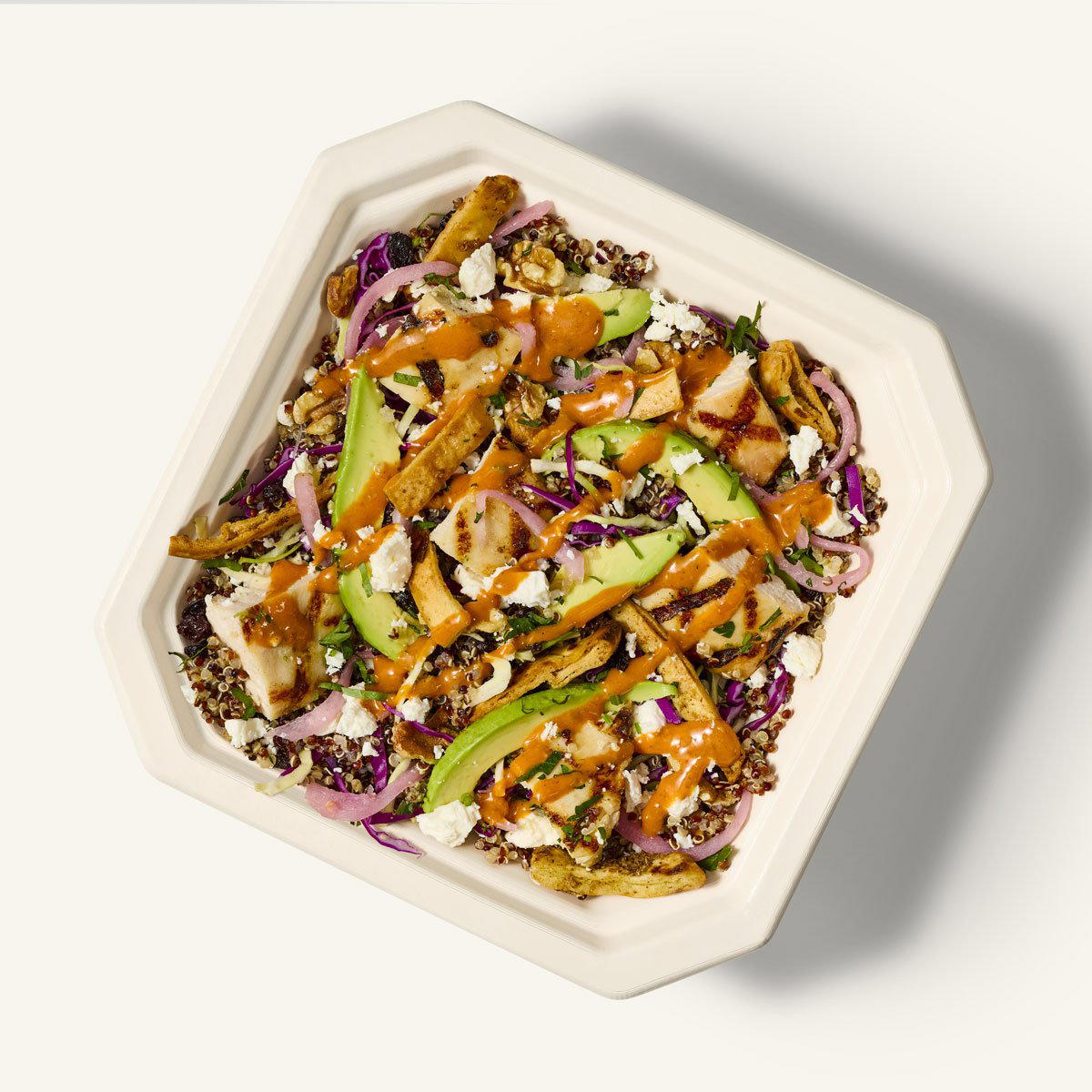
Fast-Casual Meets California Produce Culture at 70 Mission
San Francisco's Financial District runs on lunch. The stretch of Mission and Spear streets at midday functions less like a neighbourhood and more like a logistics system for feeding a dense concentration of office workers with both limited time and, relative to comparable American cities, unusually high expectations around food quality. It is in that context that Mixt occupies its particular position. The format is fast-casual, and the location at 70 Mission Street places it directly in the path of the district's daily foot traffic. But the underlying logic of the menu connects to something wider in Bay Area food culture: the idea that California's produce advantage should operate at every price point, not only at the tasting-menu counters where properties like Benu or Atelier Crenn command four-figure bills for two.
That gap between fine-dining sourcing philosophy and accessible, rapid-service execution is where Mixt makes its case. It is a gap that California, more than almost any other American food region, has the agricultural infrastructure to close. The state's year-round growing season, the density of small farms within the Bay Area's supply radius, and the cultural normalization of farmers' market thinking among urban consumers create conditions in which local-ingredient discipline is not a premium differentiator but something closer to a baseline expectation.
Local Ingredients, Global Reference Points
The editorial angle on Mixt is not about salads in isolation. It is about a broader pattern in contemporary American casual dining: the application of technique and sourcing rigour, originally developed in fine-dining kitchens, to formats that move fast and price accessibly. You see versions of this logic across the country. Blue Hill at Stone Barns in Tarrytown operates at the rarefied end of the farm-to-table spectrum. Single Thread Farm in Healdsburg builds its entire identity around a proprietary farm. At the other end of the price spectrum, concepts like Mixt attempt to apply the same sourcing discipline within a fast-casual structure where speed and margin pressure are constant constraints.
The technique dimension matters here. Dressings, grain preparations, and protein treatments in produce-led fast-casual kitchens increasingly draw on methods that migrated downward from restaurant cooking: emulsification precision, acid balance borrowed from French sauce work, grain cookery influenced by Middle Eastern and East Asian traditions. The result is a menu vocabulary that reads as globally informed even when the produce itself is hyper-local. That intersection of imported method and indigenous product is the defining characteristic of California's most coherent casual dining. It also explains why San Francisco, more than Los Angeles or New York, has been the consistent proving ground for produce-forward fast-casual concepts.
Where Mixt Sits in the San Francisco Dining Structure
San Francisco's restaurant scene stratifies sharply. At the leading sits a cluster of destination dining rooms with international recognition: Lazy Bear, Quince, Saison, and their peers operate in a $$$$ bracket where the sourcing story is inseparable from the price point. Below that tier, the city's neighbourhood restaurant culture runs deep but uneven. Fast-casual occupies its own distinct layer, shaped by the specific demands of the Financial District and SoMa workforce: quick service, portable formats, and enough quality signal to satisfy a lunch crowd that also eats at those destination restaurants on expense accounts.
Within that fast-casual layer, Mixt's positioning reflects the mature California model: the menu is not trying to approximate fine dining, but it is drawing on the same regional produce network that supplies the city's most serious kitchens. That shared supply chain is what distinguishes the better operators in this tier from purely logistics-driven competitors. For context on how that sourcing philosophy operates at higher price points and with greater formality, the work at Saison and Lazy Bear illustrates where the same regional ingredient logic arrives when given more time, more seats, and more kitchen infrastructure.
The comparison is not meant to flatten the distinction between a salad counter and a tasting-menu destination. It is meant to illustrate that the Bay Area's produce culture operates as a genuine ecosystem, not just a marketing posture. Concepts like Mixt exist because the supply infrastructure makes them viable, and because the consumer culture around food quality in San Francisco creates demand for that level of sourcing even in a fast-casual envelope.
The Broader Fast-Casual Produce Movement
Nationally, the produce-forward fast-casual category has grown considerably since 2010. Chains built around salad and grain bowls now operate in most major American cities, but the quality of execution varies enormously by market. San Francisco and New York produced particularly technically rigorous early operators; Los Angeles followed with a density of competitors. In cities like San Diego and Atlanta, the category arrived later and with less pressure from a fine-dining sourcing culture to push standards upward.
What distinguishes the Bay Area operators in this category is proximity to supply. The Central Valley, Sonoma, Marin, and the Santa Cruz mountains together constitute one of the densest concentrations of diversified small-farm production in North America. A fast-casual kitchen at 70 Mission Street can source from the same Sonoma farms supplying Single Thread or the same Marin dairy networks supporting the region's better restaurant kitchens. That is a structural advantage that operators in Chicago (Alinea's context) or New York (Le Bernardin's market) cannot replicate at the same scale or cost.
Mixt is, in that sense, a product of its geography as much as its format. The question of whether it executes that advantage well is one that the lunch queue on Mission Street answers daily.
Pricing, Compared
Comparable venues nearby, for context on price, style, and recognition.
| Venue | Cuisine | Price | Notes |
|---|---|---|---|
| MixtThis venue — the venue you are viewing | Not listed | $$ | Not listed |
| Wilder | Marina, American Comfort Food | $$ | Not listed |
| Delancey Street Restaurant | Not listed | $$ | Financial District/South Beach, American with International Influences |
| Old Skool Cafe | Not listed | $$ | Bayview Hunters Point, International Soul Food |
| Super Mensch | Marina, Modern Jewish Deli | $$ | Not listed |
| Causwells | Marina, Modern American Bistro | $$ | Not listed |
Continue exploring
More in San Francisco
Restaurants in San Francisco
Browse all →


Bars in San Francisco
Browse all →
Hotels in San Francisco
Browse all →





At a Glance
- Modern
- Trendy
- Casual Hangout
- After Work
- Open Kitchen
- Local Sourcing
- Organic
Bright, modern fast-casual atmosphere focused on fresh, healthy dining with quick service for lunch crowds.