
Tabelog 100 #37
Our verdict
Mitsuya Stand brings Kurume’s tachinomi culture into sharp focus: low ceremony, close quarters, and a sourcing-led drinking format built for quick decisions rather than long tasting menus. Its 2025 Tabelog 100 Tachinomi selection places it in a national conversation about stand-up bars, while the Kurume setting keeps the experience grounded in the city’s everyday after-work rhythm.

Pearl is the En Primeur Club membership app, where members save venues, book tables and use the concierge.
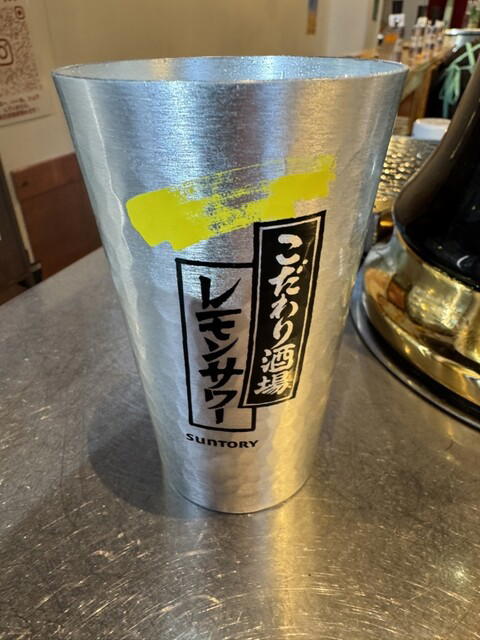
Approach a good tachinomi counter in Japan and the first signal is physical, not decorative: the room asks customers to shorten the night’s ambitions, loosen the schedule, and accept that standing changes how people drink. Kurume is better known outside Fukuoka for accessible casual eating than for bar taxonomy, but its compact city setting suits the format. Mitsuya Stand belongs to that smaller, more mobile drinking culture, where turnover, proximity, and the rhythm of the counter matter more than linen or ceremony.
The stand-up bar is often misunderstood by travellers as a budget version of an izakaya. That misses the point. Tachinomi works because it reduces friction: fewer barriers between counter and drinker; fewer delays between ordering and eating; fewer reasons to over-plan. In a regional city such as Kurume, that can make the format more revealing than a formal dinner. Local appetite shows up in what is easy to serve quickly, what pairs cleanly with alcohol, and what regulars are willing to repeat on ordinary nights.
Kurume's stand-up drinking culture rewards rhythm over theatre
Consistency is the quiet test of a small stand-up bar. Without a long tasting sequence or heavy service choreography, the offer has to carry the room in short bursts. The better version of this format is not about novelty; it is about reliable execution, fast ordering, and a menu that lets customers build a visit from fragments. That is why a tachinomi counter can feel more exacting than it looks. There is less space for distraction.
Mitsuya Stand’s selection for Tabelog 100 Tachinomi 2025 gives it a credential in a category that rarely receives the international attention given to more formal Japanese dining. The significance is not that a stand-up bar has been made formal. It is that Japan’s casual drinking formats are now being assessed with the same seriousness as higher-priced dining categories. For Kurume, that matters: the city’s food identity is often discussed through familiar casual staples, but an acknowledged tachinomi address widens the map.
Kurume’s casual dining circuit has useful contrasts. Other long-running local rooms speak to the city’s everyday eating habits, while Gyoza Nyannyan and Hitokuchi Gyoza Tenya show how named local stops can anchor late-day eating in different ways. Goju Ban sits closer to the same low-spend casual tier, which makes the comparison useful: the decision is not only what to eat, but how much structure the evening needs. A stand-up bar suits a shorter, sharper stop; another casual meal may ask for a table and a longer arc.
The value is in the format, not a long menu narrative
The appeal here is practical in the strongest sense. Stand-up drinking places the customer in direct relation to the counter, the service rhythm, and the room’s pace. In that setting, quality shows itself through repeatable categories rather than named set pieces: things that can be ordered quickly, portions suited to drinking, and a sequence designed for fast decisions. The absence of a grand menu story is not a weakness. It is the format doing its job.
Kurume’s setting also changes expectations. This is not central Tokyo, where tachinomi can become a style statement for office workers chasing the newest counter. In Kurume, the form reads more local and less performative. Mitsuya Stand’s Tabelog score of 3.38 is less important than its inclusion in a national tachinomi list; the former is a snapshot, the latter places the bar inside a defined category with broad Japanese recognition. For travellers, that distinction matters. A moderate rating can coexist with a meaningful award when the category is narrow and the format is casual.
There is a useful editorial caution here: do not approach a stand-up bar as a substitute for a full restaurant reservation. Approach it as a pressure test of a city’s everyday taste. Kurume’s stronger food personality comes from accessible formats, not only from formal dining rooms. The city’s compact eating circuit makes it easy to pair different styles in one evening, from casual local eating to a short tachinomi stop, without turning dinner into an itinerary exercise.
How to place it within a Kurume food night
Mitsuya Stand is best read as part of a route rather than a single destination dinner. Travellers building a Kurume evening can use our full Kurume restaurants guide for the wider dining field, then treat the stand-up bar as the low-ceremony drinking component. For staying nearby, our full Kurume hotels guide is the cleaner planning layer; for other drinking formats, our full Kurume bars guide keeps the night from becoming restaurant-only. The broader city pages for Kurume wineries and Kurume experiences are better used for context than as direct substitutes for this kind of counter drinking.
The larger Japan file helps clarify what Kurume is not trying to be. Specialist addresses elsewhere belong to different dining languages, while regional and city-specific entries across Japan show how varied the country’s casual and specialist dining registers have become. Abroad, diaspora drinking and snack bars underline the same point from another side: Japanese drinking and snack culture travels, but the regional counter in a city like Kurume keeps its authority through local use.
The editorial verdict is simple: this is a concise Kurume stop for travellers who care about Japanese casual formats as much as formal dining. The 2025 Tabelog 100 Tachinomi selection supplies the trust signal; the stand-up structure supplies the reason to go. Treat it as a rhythm-and-format experience, not a long dinner with a scripted progression.
Frequently asked questions
Can I bring kids to Mitsuya Stand?
Mitsuya Stand is a stand-up bar in Kurume, so it reads more naturally as an adult drinking stop than as a family venue.
What's the overall feel of Mitsuya Stand?
The feel is spare and practical: a stand-up bar in Kurume, priced at JPY 1,000–JPY 1,999. Its Tabelog 100 Tachinomi selection for 2025 gives it local credibility without adding ceremony.
Is Mitsuya Stand expensive?
Pricing at Mitsuya Stand is listed as JPY 1,000 - JPY 1,999 View spending breakdown.
What time does Mitsuya Stand open and close?
Specific opening and closing hours are not provided here; confirm current hours before visiting Mitsuya Stand in Kurume.
How It Stacks Up
Comparable venues by cuisine and price in the same metro.
| Venue | Cuisine | Price | Awards | Notes |
|---|---|---|---|---|
| Mitsuya StandThis venue (the venue you are viewing) | Japanese tachinomi standing bar | $10–20 | Tabelog 100 #37 | Not listed |
| Maruboshi Ramen | Kurume-style tonkotsu ramen | $1–10 | Tabelog 100 #90 | / Kurume |
| Tachibana Udon | Traditional Kurume udon shop | $1–10 | Tabelog 100 #8 | Higashi Aikawa / near Kurume Interchange |
| Gyoza Nyannyan | Traditional Japanese gyoza shop | $10–20 | Tabelog 100 #34 | Mutsumonmachi |
| Hitokuchi Gyoza Tenya | Kurume gyoza izakaya | $10–20 | Tabelog 100 #97 | Not listed |
| Tashu Kurumeten | Motsunabe Izakaya | $30–50 | Not listed | near Nishitetsu Kurume Station |
Recognition history
Dated appearances from independent guides and award organizations, with the underlying list record or original source where available.
Tabelog 100 #37 · No. 37
Tabelog · Tabelog 100 - Tachinomi - 2025
Continue exploring
More in Kurume
Details
- Lively
- Energetic
- Trendy
- After Work
- Casual Hangout
- Solo
- Late Night
- Standalone
- Beer Program
- Small Plates
- Counter Dining
- Beer
- Sake
- Shochu
Current opening hours
- Monday
- 4 PM–12 AM
- Tuesday
- 4 PM–12 AM
- Wednesday
- 4 PM–12 AM
- Thursday
- 4 PM–12 AM
- Friday
- 4 PM–12 AM
- Saturday
- 4 PM–12 AM
- Sunday
- 4 PM–12 AM
Hours can change for holidays and private events. Hours as of .
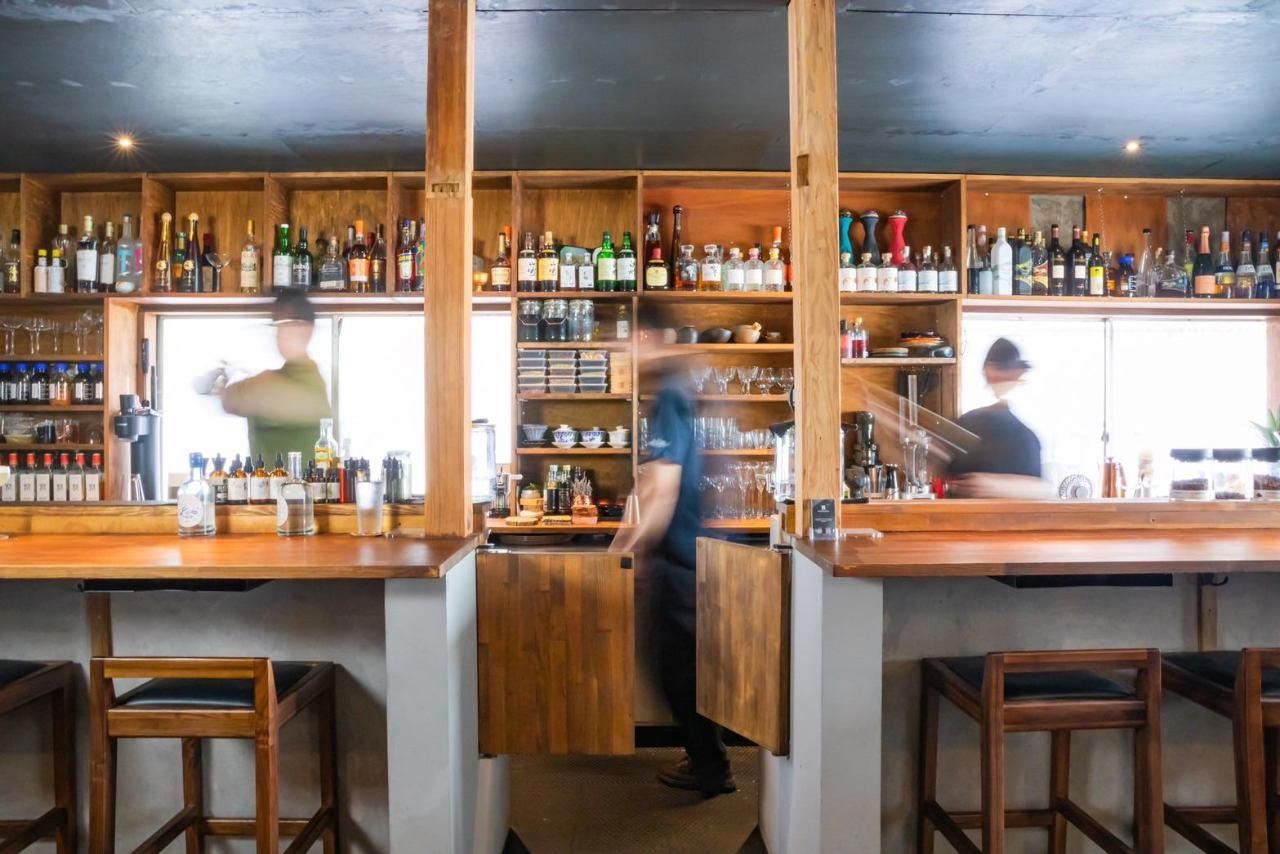
A casual tachinomi (standing) bar with a compact interior where guests stand shoulder‑to‑shoulder, creating a lively, energetic atmosphere typical of Japanese after‑work drinking spots.