Mint Tapas and Sushi 1
Our verdict
Mint Tapas and Sushi 1 sits on 700 East in Sandy, Utah, occupying the crossover territory between Japanese sushi formats and small-plate sharing culture that has gained traction across the Wasatch Front. The menu architecture combines two distinct dining traditions under one roof, making it a practical option for groups with divergent appetites. Located at 8391 S 700 E, it anchors the mid-Sandy dining corridor alongside a range of independently operated restaurants.

Pearl is the En Primeur Club membership app, where members save venues, book tables and use the concierge.
The menu
What to order
- Vulcan roll
- Mars roll
- Sexy shrimp
- Baked mussels
- Walu ceviche
- Ube ice cream
Where Two Menus Share One Kitchen
Sandy's dining strip along 700 East has developed a dependable mid-market identity, drawing residents from across the southern Salt Lake Valley who want something beyond chain formats without committing to the price tier represented by venues like La Caille. Within that corridor, Mint Tapas and Sushi 1 occupies a specific structural position: it runs two culinary traditions in parallel, a tapas format and a sushi program, inside a single dining room. That dual-menu structure is the defining architectural decision of the restaurant, and it shapes everything from how tables order to how the kitchen is organised.
The tapas-and-sushi pairing is not accidental. Across mid-market American dining over the past two decades, the small-plate format has migrated from its Iberian origins into a broadly applied restaurant strategy, used to lower the per-item commitment for diners and allow wider exploration of a menu. Japanese sushi already operates on a similar logic: individual pieces or small rolls arrive in sequence, and the meal is assembled incrementally rather than delivered as a single plate. A restaurant that runs both formats simultaneously is betting that diners respond to the shared rhythm of the two traditions, even if their culinary roots are geographically distant. Comparable experiments in larger American cities, from the izakaya-fusion formats popular in Los Angeles to the pan-Asian small-plate bars that have proliferated in New York, suggest the format has a durable audience when executed with consistency.
Reading the Menu as a Document
What a dual-format menu like this one communicates to a first-time visitor is a specific hospitality philosophy: the kitchen is not trying to be singular or austere. The approach is expansive rather than focused, which places it in a different category from the omakase-style Japanese counters or the ingredient-driven tasting menus that define the upper tier of American dining, venues such as The French Laundry in Napa, Alinea in Chicago, or Lazy Bear in San Francisco, where the menu is a tightly controlled narrative sequence. Mint Tapas and Sushi 1 operates at the opposite end of that spectrum: the diner is in charge of the sequencing, choosing from both halves of the menu, assembling a meal that might move between a hot tapas plate and a cold sushi piece without any prescribed order.
That structure has practical advantages for groups. Tables with mixed preferences, some inclined toward cooked food, others toward raw fish, can order across both sections without anyone settling for a compromise dish. The small-plate format also tends to work well for shared dining, where several people order broadly and pass plates, which is a social format that has become a default expectation in casual-to-mid restaurants across the United States. Sandy's dining culture is no exception, and venues along the 700 East corridor, including La Costa Restaurant and Les Secrets, each address the question of shared dining in different ways. Mint's answer is structural: build the menu so that sharing is the default mode.
Sandy's Mid-Market Position and What It Demands
In a city like Sandy, which sits within the broader Salt Lake metropolitan area but maintains its own neighbourhood dining identity, the mid-market restaurant faces a specific challenge. It needs to be accessible enough to draw regular custom from local residents while providing enough variety to justify a deliberate visit from diners coming from further afield. The dual-menu format is one response to that challenge: it increases the range of occasions the restaurant can serve, from a quick solo meal at the sushi section to a longer shared dinner drawing from both halves of the menu.
That range-of-occasion flexibility is something the wider Sandy dining scene addresses in varied ways. Los Cucos Mexican Cafe serves a different cultural tradition with its own internal logic, while Scelto operates within Italian formats. For a broader view of how Sandy's dining scene is structured across price tiers and cuisines, our full Sandy restaurants guide maps the territory in more detail.
Sushi in the Mountain West Context
Utah's relationship with Japanese cuisine has shifted considerably over the past fifteen years. Sushi formats that were once confined to a small number of specialist venues in Salt Lake City have migrated into suburban dining corridors throughout the Wasatch Front. What was a specialist offering has become a standard menu category across mid-market American dining, which means quality signals now matter more than novelty. A restaurant running a sushi program alongside a tapas menu is asking diners to trust the kitchen across two distinct technical traditions simultaneously. The comparable demand at the upper end of the American dining spectrum, where chefs like those at Atomix in New York City or Providence in Los Angeles work within tightly defined culinary frameworks, is different in kind but not entirely different in principle: the menu architecture is always making an argument about what the kitchen can do.
At the international level, the conversation around Japanese technique in fine dining contexts, from the kaiseki formats referenced by venues like 8 1/2 Otto e Mezzo Bombana in Hong Kong to the seafood precision of Le Bernardin in New York City, underscores how seriously the question of menu structure is taken at every level of the industry. At Mint's mid-market register, the same question applies in a more immediate, practical form: does the kitchen execute both halves of the menu with equal reliability?
Planning a Visit
Mint Tapas and Sushi 1 is located at 8391 S 700 E in Sandy, UT 84070, accessible by car from central Sandy and the wider South Salt Lake Valley in under fifteen minutes from most neighbourhoods. The dual-menu format makes the restaurant adaptable to different group sizes and dining intentions, from a short meal focused on one section to a longer shared table drawing from both. For diners planning a broader evening in Sandy that includes pre- or post-dinner activity, the 700 East corridor connects to several other independently operated venues referenced above.
Frequently asked questions
What should I expect atmosphere-wise at Mint Tapas and Sushi 1?
Mint Tapas and Sushi 1 sits along 700 East in Sandy, a corridor that runs casual-to-comfortable rather than formal. The dual tapas and sushi format signals a kitchen built for shared plates and relaxed pacing, which tends to set a social, low-pressure tone. It draws from across the southern Salt Lake Valley, so the room typically reflects a neighbourhood crowd rather than a destination-dining clientele.
Where exactly is Mint Tapas and Sushi 1?
Mint Tapas and Sushi 1 is located at 8391 S 700 E, Sandy, UT 84070, Sandy.
Does Mint Tapas and Sushi 1 work well for groups looking to share plates?
The dual tapas and sushi format at Mint Tapas and Sushi 1 is structurally well-suited to group dining, since both formats are designed around ordering multiple smaller dishes. Located at 8391 S 700 E in Sandy, the restaurant draws from across the South Salt Lake Valley, and the shared-plate model means groups can sample widely without committing to individual full-portion mains.
What do regulars order at Mint Tapas and Sushi 1?
The menu architecture at Mint Tapas and Sushi 1 runs two formats side by side: tapas-style small plates and sushi. That combination suggests regulars tend to order across both sections rather than committing to one, using the tapas side to graze and the sushi menu to anchor the meal. Given Sandy's mid-market dining norms, shareable formats at accessible price points are the expectation here.
Is Mint Tapas and Sushi 1 reservation-only?
Sandy's 700 East dining strip generally supports a walk-in-friendly model at this market tier, but contacting the venue directly at 8391 S 700 E, Sandy, UT 84070 before a visit is advisable, particularly for groups.
Reputation First
Comparable venues nearby, for context on price, style, and recognition.
| Venue | Cuisine | Price | Notes |
|---|---|---|---|
| Mint Tapas and Sushi 1This venue (the venue you are viewing) | Modern Japanese Sushi & Tapas | $50–100 | Not listed |
| Scelto | Modern Italian | $30–50 | Aspen Plaza |
| La Costa Restaurant | Authentic Mexican | $20–30 | Sandy |
| Los Cucos Mexican Cafe | Authentic Mexican | $20–30 | Sandy |
| SeventyOne | Retro American Grill | $30–50 | Snowbird |
| Les Secrets | Cocktail Bar with Small Plates | Not listed | Sandy |
Continue exploring
More in Sandy
Restaurants in Sandy
All restaurants in Sandy →
Bars in Sandy
All bars in Sandy →
Hotels in Sandy
Browse all →
Wineries in Sandy
Browse all →
Details
- Modern
- Elegant
- Trendy
- Date Night
- Special Occasion
- Group Dining
- Open Kitchen
- Private Dining
- Sake Program
- Craft Cocktails
- Small Plates
- A La Carte
- Tasting Menu
- Sake
- Craft Cocktails
- Pescatarian Friendly
Current opening hours
- Monday
- 5 PM–12 AM
- Tuesday
- 5 PM–12 AM
- Wednesday
- 5 PM–12 AM
- Thursday
- 5 PM–12 AM
- Friday
- 5 PM–12 AM
- Saturday
- 5 PM–12 AM
- Sunday
- 5–9 PM
Hours can change for holidays and private events. Hours as of .
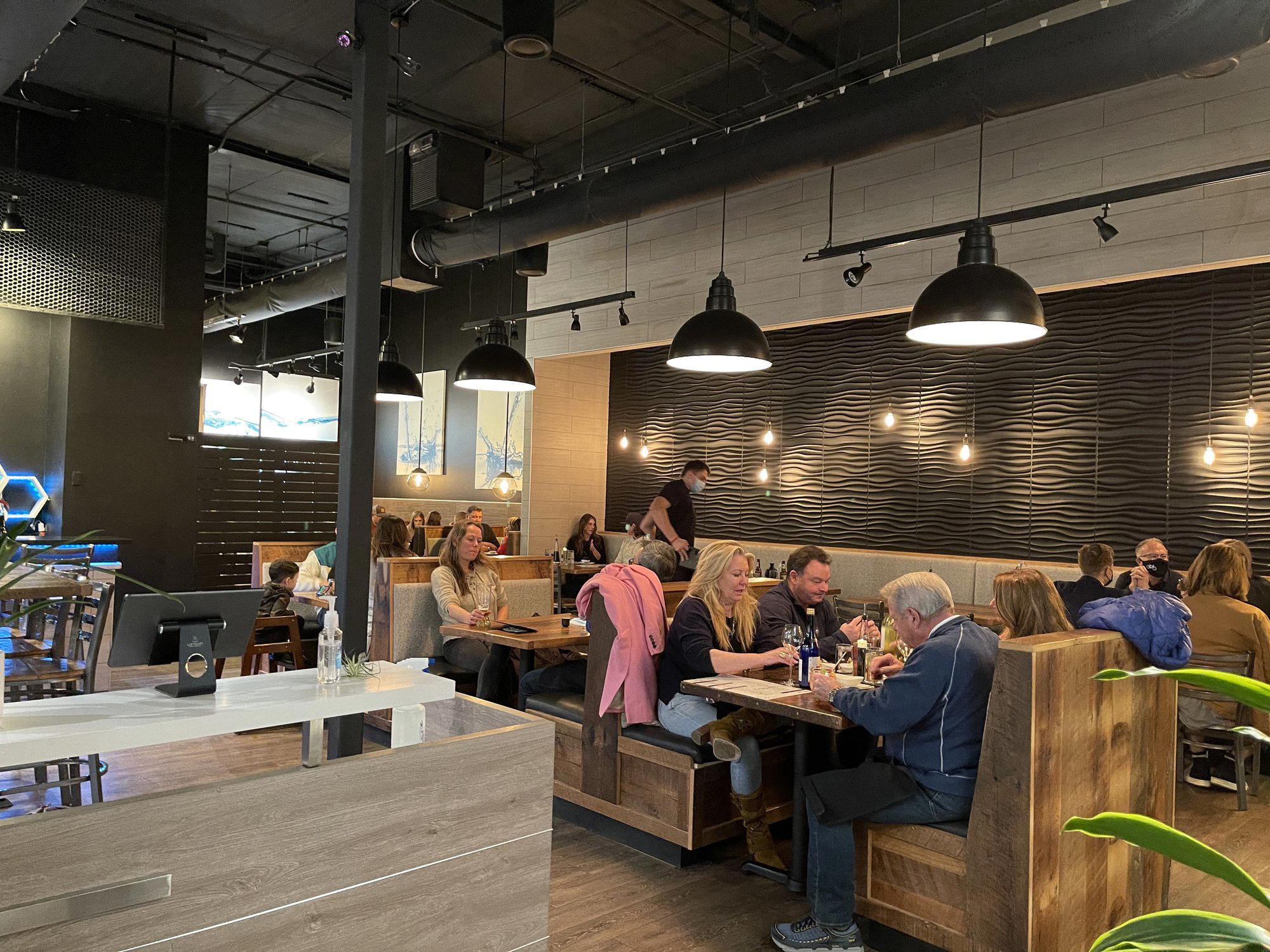
Contemporary and sophisticated dining space with modern Japanese aesthetic, designed for a polished yet approachable culinary experience.