Meena Rice Based Cuisine

Michelin Bib Gourmand
Our verdict
Meena Rice Based Cuisine serves Northern Thai Rice-Based Cuisine for lunch with a casual, leisurely pace, plus garden and waterfront views.

Pearl is the En Primeur Club membership app, where members save venues, book tables and use the concierge.
The menu
What to order
- Five-Colored Rice
- Northern-Style Spicy Minced Fish Salad
- Hang Lay Curry
Rice as the Starting Point
In Thailand's northern provinces, rice is rarely a backdrop. It is the architecture around which a meal is constructed. San Kamphaeng, the district that stretches east of Chiang Mai city proper into the foothills, has long supported a style of cooking that treats grain as a primary reference point rather than an afterthought. The kitchens here tend to source from nearby paddies, and the rhythm of the menu follows the harvest rather than a fixed seasonal rotation dictated by international trends. Meena Rice Based Cuisine operates within this tradition, in San Klang sub-district in Amphoe San Kamphaeng, placing rice at the centre of the format rather than the periphery.
This is not a model that travels well as a marketing concept, which is partly why it remains concentrated in the communities that practise it. At the counter-end of Thailand's dining spectrum, you find venues such as Sorn in Bangkok, working with regional Thai ingredients at the ฿฿฿฿ tier, or PRU in Phuket, framing provenance as a contemporary fine-dining argument. Meena occupies a different register entirely: community-anchored, ingredient-defined, and positioned well outside the Bangkok-centric fine-dining conversation.
The Grain Behind the Menu
Rice-based cuisine in northern Thailand encompasses a broader category than the term implies to visitors unfamiliar with the region. Khao niaw, glutinous rice, anchors northern and northeastern Thai tables in a way that jasmine rice does not. But the sourcing matters: rice grown in the cooler, higher-elevation paddies around the Chiang Mai basin carries a different texture and aroma profile than lowland-grown equivalents. When a kitchen describes itself as rice-based, it is signalling an orientation toward the grain as a flavour element, not merely a filler.
The San Kamphaeng district sits at the eastern edge of the Chiang Mai valley, and the agricultural character of the surrounding area gives kitchens here direct access to produce that does not pass through the city's wholesale markets. That proximity is the sourcing argument. Venues working in this format draw ingredients from a short radius, which is both a practical constraint and a quality signal. Compare this with the farm-to-table framing that has become routine in higher-budget dining: at places like AKKEE in Pak Kret, ingredient origin is an explicit part of the editorial proposition. At community-level venues in San Kamphaeng, the same logic applies without the formal framing.
San Kamphaeng as a Dining District
San Kamphaeng is better known among visitors for its handicraft markets and traditional weaving workshops than for its restaurants. That concentration of artisan production has kept the area's commercial development at a lower pitch than Chiang Mai's inner districts, which in turn has preserved the small-scale food culture that defines venues such as Meena. The route from Chiang Mai city takes approximately twenty to thirty minutes by road along Highway 1006, passing through a corridor of roadside vendors, temple gates, and orchard plots that form the agricultural context for the cooking found here.
The dining pattern in districts like San Kamphaeng differs structurally from the experience in Chiang Mai's Nimman or Old City areas. Meal times follow agricultural and market rhythms, which typically means a strong lunch service and a mid-afternoon wind-down rather than the extended dinner windows of urban venues. Visitors coming from Chiang Mai to eat at venues in this area do better arriving before early afternoon. The alternative is the Old City's denser cluster of restaurants: Loet Rot in Mueang Chiang Mai represents the kind of established local cooking that anchors that area's reputation.
For a broader picture of what the district offers across formats and price points, the EP Club San Kamphaeng restaurants guide maps the area's options in more detail.
Ingredient Provenance and the Northern Thai Kitchen
The northern Thai kitchen draws from a distinct pantry that separates it from the cuisine of the central plains. Fermented soybean paste (tua nao), dried chilies from specific highland varieties, and pork-based preparations that have no direct equivalent in Bangkok-style cooking all feature as structural elements. The rice-centred format amplifies these differences: dishes are calibrated to work with the grain, not against it, meaning seasoning levels and fat ratios follow a different internal logic.
Venues operating within this tradition rarely articulate the provenance argument explicitly. The sourcing is assumed rather than advertised, which is both the strength and the communications limitation of community-facing kitchens. Where Bangkok restaurants such as Sorn have built a formal critical apparatus around regional Thai ingredient sourcing, small-district venues in the north operate through local knowledge networks: regulars who know which days the kitchen receives fresh supply, and who understand the seasonal shifts in what appears on the table.
That said, the rice-based format itself functions as a sourcing signal. Kitchens that structure their menus around grain quality have a direct incentive to control where that grain comes from. The correlation between a rice-centred format and short-supply-chain sourcing is not accidental in this region.
How This Fits the Broader Thailand Table
Thailand's most discussed restaurants in international food media operate at the opposite end of the format and price spectrum from venues such as Meena. The ฿฿฿฿ tier dominated by Sorn, Baan Tepa, and Sühring in Bangkok represents a different kind of culinary argument: tasting menus, extended service, and a hospitality model borrowed from European fine dining applied to Thai or international ingredients. Further afield, Cherng Doi Roast Chicken in Chiang Mai illustrates how a single-product format can anchor a local reputation across decades without operating at any formal price tier.
Meena's rice-based positioning fits a third category: the specialist community venue, where the format itself is the identity and the competitive set is geographically bounded. This kind of restaurant does not compete with Sorn for the same diner; it serves a local regulars base and visitors who have done enough research to seek it out specifically. For comparison across other regional Thai formats, Krua Laew Tae R-Rom in Pattaya and Hoy Tord Chao Lay in Wattana each occupy similar community-specialist positions in their respective cities.
Planning Your Visit
San Kamphaeng is reached by private vehicle or songthaew from Chiang Mai, with the journey taking under thirty minutes in normal traffic. There is no public transport option that reaches the San Klang sub-district directly. The area around Amphoe San Kamphaeng does not have the hotel infrastructure of Chiang Mai proper, so most visitors base themselves in the city and make the trip as a daytime excursion. Arriving mid-morning gives enough time to visit the handicraft centres along the main road before eating. That also means flexibility on timing: building the meal into a broader San Kamphaeng itinerary rather than treating it as a standalone dinner destination is the more workable format.
Frequently asked questions
Is Meena Rice Based Cuisine good for families?
San Kamphaeng's community dining venues, including rice-based formats like Meena, tend to suit families by default rather than by policy. The structure of northern Thai rice-centred meals, dishes ordered around a shared grain base, produces a table format that works naturally for groups of mixed ages. The district's low-key character means the environment is relaxed rather than formal.
What's the overall feel of Meena Rice Based Cuisine?
The feel is agriculture-adjacent and unhurried, consistent with San Kamphaeng as a district better known for handicraft markets and weaving workshops than for restaurants. This is not a venue operating within Chiang Mai's international dining circuit; it functions closer to the community end of the spectrum, where the cooking is the point rather than the setting.
How far is Meena Rice Based Cuisine from central Chiang Mai, and how do you get there?
San Kamphaeng, where Meena is located in the San Klang area of Amphoe San Kamphaeng, sits under thirty minutes from central Chiang Mai by private vehicle or songthaew in normal traffic. The district is a practical half-day trip that pairs easily with San Kamphaeng's handicraft markets. No public transit runs directly to the venue, so arranging onward transport in advance is advisable.
What's the best thing to order at Meena Rice Based Cuisine?
The name signals where to focus: rice-based dishes form the structural core of the menu. In northern Thai cooking of this type, that typically means ordering around khao niaw, sticky rice, with accompanying dishes drawn from the region's distinct pantry, including fermented and dried preparations that differ markedly from central Thai cuisine. Follow what is prepared fresh on the day rather than arriving with a fixed order in mind.
At-a-Glance Comparison
Comparable venues nearby, for context on price, style, and recognition.
| Venue | Cuisine | Price | Awards | Notes |
|---|---|---|---|---|
| Meena Rice Based CuisineThis venue (the venue you are viewing) | Northern Thai Rice-Based Cuisine | $1–10 | Michelin Bib Gourmand | Not listed |
| Thapthim Krop Wat Sutthi | Thai Dessert Shop | Not listed | Not listed | Sathon |
| ปูนแดง แกงร้อน | Thai Cuisine | Not listed | Michelin Plate | Saraphi |
| โรงกลั่นเนื้อ | Thai Beef Noodle Soup | Not listed | Not listed | สัมพันธวงศ์ |
| SP Chicken | Northeastern Thai Grilled Chicken | $1–10 | Not listed | Phra Singh |
| The Ironwood | Modern Thai | $10–20 | Not listed | Mae Rim |
Recognition history
Dated appearances from independent guides and award organizations, with the underlying list record or original source where available.
Michelin Bib Gourmand
Michelin
Full recognition history (3 entries)
Michelin Bib Gourmand
Michelin
Michelin Bib Gourmand
Michelin
Continue exploring
More in San Kamphaeng
Restaurants in San Kamphaeng
All restaurants in San Kamphaeng →
Bars in San Kamphaeng
Browse all →

Details
- Rustic
- Cozy
- Scenic
- Casual Hangout
- Family
- Garden
- Farm To Table
- Local Sourcing
- Garden
- Waterfront
- A La Carte
- Vegetarian Friendly
Current opening hours
- Monday
- 10 AM–8:30 PM
- Tuesday
- 10 AM–8:30 PM
- Wednesday
- 10 AM–8:30 PM
- Thursday
- 10 AM–8:30 PM
- Friday
- 10 AM–8:30 PM
- Saturday
- 10 AM–8:30 PM
- Sunday
- 10 AM–8:30 PM
Hours can change for holidays and private events. Hours as of .
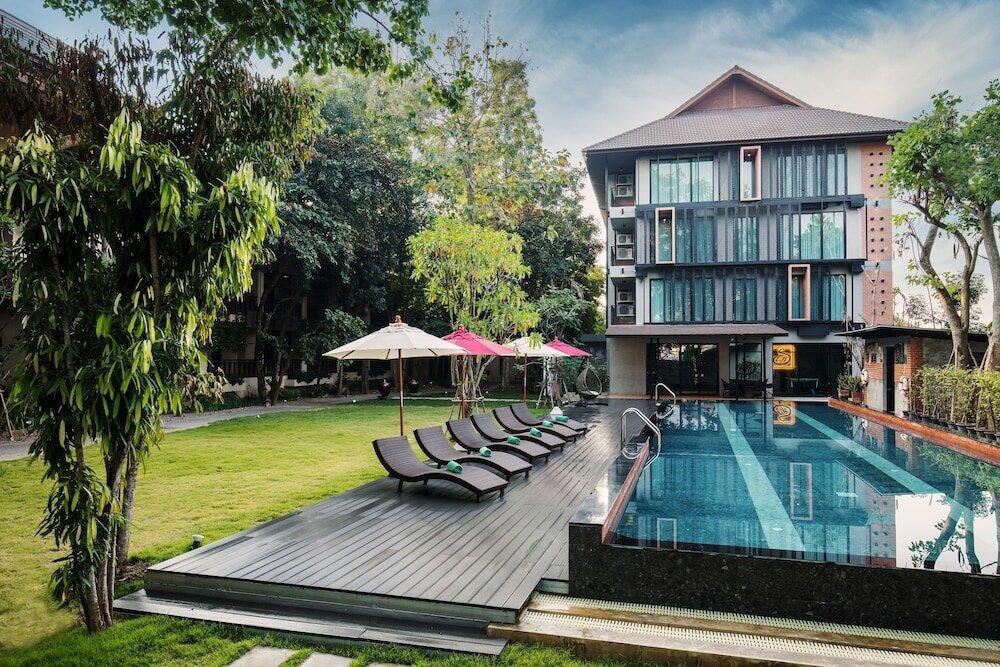
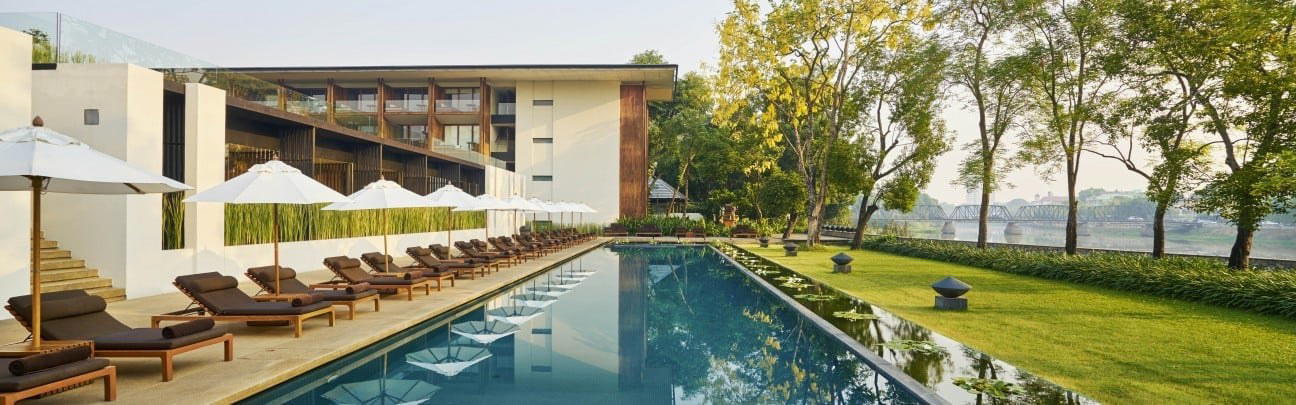
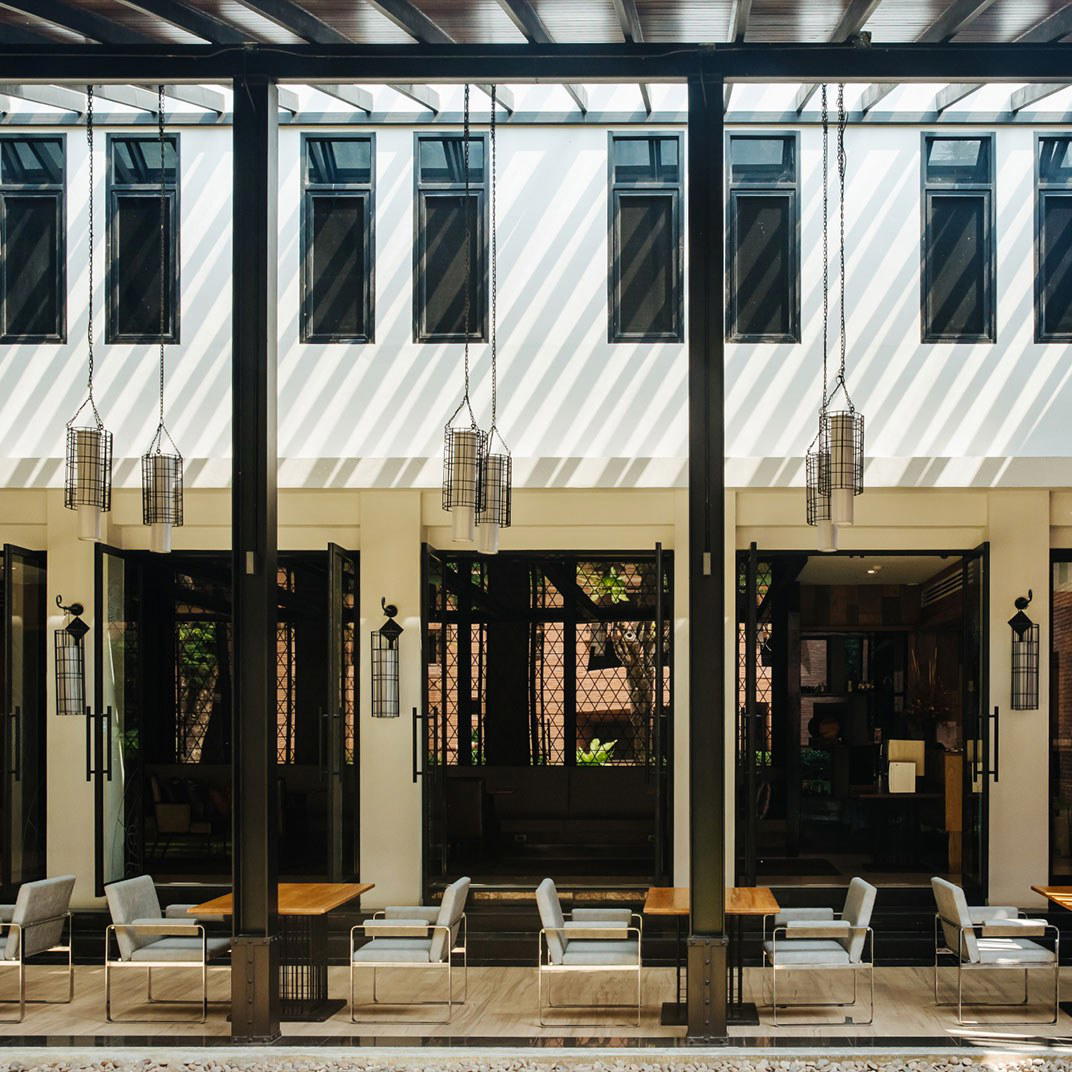
rustic Lanna-style house by the water with greenery, rice fields, cool natural air, open-air conducive to relaxed dining.