.png)

Set within the grounds of Château Capitoul outside Narbonne, Méditerranéo holds consecutive Michelin Plates for 2024 and 2025 and a 4.8 Google rating across 109 reviews. The kitchen works a Mediterranean register, with the herb-driven cooking traditions of the Languedoc coast informing a menu that sits at the €€€ price point, placing it between the accessible and the celebratory.
 Discover on Pearl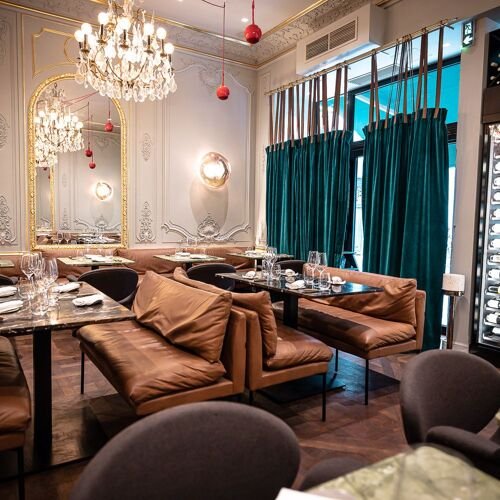
Where the Garrigue Begins on the Plate
The road from Narbonne toward Gruissan runs through a landscape that shifts abruptly from urban edge to something older and more elemental: limestone scrub, salt-tolerant grasses, and the low aromatic shrubs that define the garrigue. Thyme, rosemary, and wild oregano grow in the verges before you arrive at Château Capitoul, which means the kitchen's relationship with fresh herbs is not a stylistic choice so much as a geographic one. Mediterranean cooking in this corridor of the Languedoc has always drawn from whatever the hillside offers, and that tradition informs the register at Méditerranéo more than any individual chef's biography.
The Michelin Guide has awarded the restaurant its Plate designation in both 2024 and 2025, a signal of consistent technical quality without the pressure of star expectations. In the Languedoc context, that positioning is notable: the Plate acknowledges good cooking on its own terms, and for a château-based dining room operating at the €€€ tier, it places Méditerranéo in a competitive bracket that sits above casual regional fare and below the more theatrical creative formats you find further into the Hérault.
The shortlist, unlocked.
Hard-to-book tables, cellar releases, and concierge-planned trips.
Get Exclusive Access →Herbs as Architecture, Not Garnish
Across the Mediterranean basin, herb use splits into two broad schools. The first treats herbs as finishing notes, scattered over a completed dish. The second builds with them structurally: a thyme reduction as the base of a sauce, za'atar worked into a crust, basil emulsified rather than torn. The Languedoc tradition, rooted in centuries of transhumance cooking and proximity to both the coast and the garrigue, tends toward the latter. Herbs here do weight-bearing work.
That structural approach distinguishes the more serious Mediterranean tables in this part of southern France from venues that import a coastal aesthetic without the botanical grounding. When oregano is dried and crumbled into oil at the right moment, when thyme is added early enough to lose its sharpness and contribute depth, the result is cooking that tastes of somewhere specific. The 4.8 Google rating Méditerranéo holds across 109 reviews suggests that specificity reads clearly to guests, and not only to those already familiar with the tradition.
For comparison within Narbonne's dining tier, La Table Lionel Giraud operates at €€€€ with a creative format, while L'Art de Vivre also sits at €€€€ with a modern cuisine orientation. Méditerranéo's €€€ pricing and Mediterranean-rooted cooking represent a distinct position: more regionally anchored than the creative or modern formats, and more considered than the traditional bistro tier represented by Cave à Vin & à Manger at Maison Saint-Crescent at €€.
The Château Setting and What It Implies
Dining rooms attached to wine estates carry specific expectations. The setting at Château Capitoul, on the Route de Gruissan outside the city, positions the restaurant within a working property rather than a converted manor operated purely for hospitality. That distinction matters for the atmosphere: the relationship between the vineyard, the terroir, and what arrives on the table is legible rather than decorative. In the broader context of estate dining in southern France, that coherence is not automatic, and when it works, it changes the texture of a meal in ways that are difficult to quantify but easy to feel.
The Languedoc's wine identity is increasingly confident, and Château Capitoul is part of a generation of estates asserting regional quality against the historical dominance of Bordeaux and Burgundy appellations. A Mediterranean kitchen operating within that context, drawing on herbs and techniques native to the region, makes a coherent argument for Languedoc dining as a serious proposition rather than a southern supplement to better-known gastronomic destinations.
Where Méditerranéo Sits Against the Wider French Scene
French Mediterranean cooking is well represented at the highest levels of the country's restaurant culture. Mirazur in Menton works the alpine-Mediterranean junction at three stars. AM par Alexandre Mazzia in Marseille applies a highly personal technical lens to coastal ingredients. Across the border, La Brezza in Ascona and Arnaud Donckele at Louis Vuitton in Saint-Tropez represent the luxury end of the same tradition. These are reference points, not direct competitors, but they establish the frame within which Méditerranéo's Plate-level recognition has meaning: consistent quality in a tradition with serious national precedents.
The other end of the French dining continuum, from Alléno Paris au Pavillon Ledoyen and Troisgros in Ouches to Paul Bocuse in Collonges-au-Mont-d'Or and Auberge de l'Ill in Illhaeusern, defines classical French haute cuisine at its most codified. Méditerranéo operates in a different register entirely, one where the Mediterranean's herb-forward, climate-shaped cooking logic takes precedence over classical French technique. Neither is a lesser tradition, and the Languedoc increasingly asserts that point. Bras in Laguiole and Flocons de Sel in Megève show how strongly terrain can define a kitchen's identity in southern and mountain France; the same logic applies here, translated to limestone scrub and sea air.
Planning Your Visit
Méditerranéo sits on the Route de Gruissan outside Narbonne's centre, which makes a car the practical choice. The address at Château Capitoul places it within comfortable reach of the city, and the drive itself orients you toward the coast and the garrigue before you arrive. The €€€ price point positions the meal as a considered occasion rather than a casual stop, appropriate for the setting and the recognition level. For those building a wider trip around the city, the full range of options across dining, accommodation, and regional exploration is covered in our full Narbonne restaurants guide, alongside our Narbonne hotels guide, bars guide, wineries guide, and experiences guide.
What Regulars Order
What do regulars order at Méditerranéo - Château Capitoul?
The venue's Michelin Plate recognition across consecutive years and its 4.8 Google rating point to a kitchen that has found consistency in its Mediterranean register rather than chasing novelty. At a château-based restaurant in the Languedoc operating at the €€€ tier, the dishes that earn sustained approval typically anchor themselves in the herb and produce logic of the garrigue: preparations where thyme, basil, or oregano do structural rather than decorative work, and where local coastal and land ingredients carry the main weight. The restaurant's cuisine category is Mediterranean rather than French classic, which suggests the menu follows seasonal and regional availability rather than a fixed classical sequence. For specific current dishes, checking directly with the château is the reliable route, as Mediterranean kitchen programs at this level typically shift with the growing season.
Just the Basics
A fast peer set for context, pulled from similar venues in our database.
| Venue | Notes | Price |
|---|---|---|
| Méditerranéo - Château Capitoul | This venue | €€€ |
| La Table Lionel Giraud | Creative, €€€€ | €€€€ |
| Cave à Vin & à Manger - Maison Saint-Crescent | Traditional Cuisine, €€ | €€ |
| L'Art de Vivre | Modern Cuisine, €€€€ | €€€€ |
Need a table?
Our members enjoy priority alerts and concierge-led booking support for the world's most difficult tables.
Get Exclusive AccessThe shortlist, unlocked.
Hard-to-book tables, cellar releases, and concierge-planned trips.
Get Exclusive Access →