Mediterra
On Hulfish Street in downtown Princeton, Mediterra occupies the kind of position that Mediterranean-rooted restaurants rarely find outside major cities: a serious kitchen in a university town that draws on the sourcing discipline associated with farm-to-table dining. The cooking reads as a counterpoint to Princeton's more formal dining rooms, grounding the menu in seasonal produce and regional suppliers rather than classical European technique for its own sake.
Pearl is the En Primeur Club membership app — saves, bookings, and concierge access live there. Same editors, same standards.
- Address
- 29 Hulfish St, Princeton, NJ 08542
- Phone
- +16092529680
- Website
- mediterrarestaurant.com
- Directions
- Get directions
 Saves & bookings on Pearl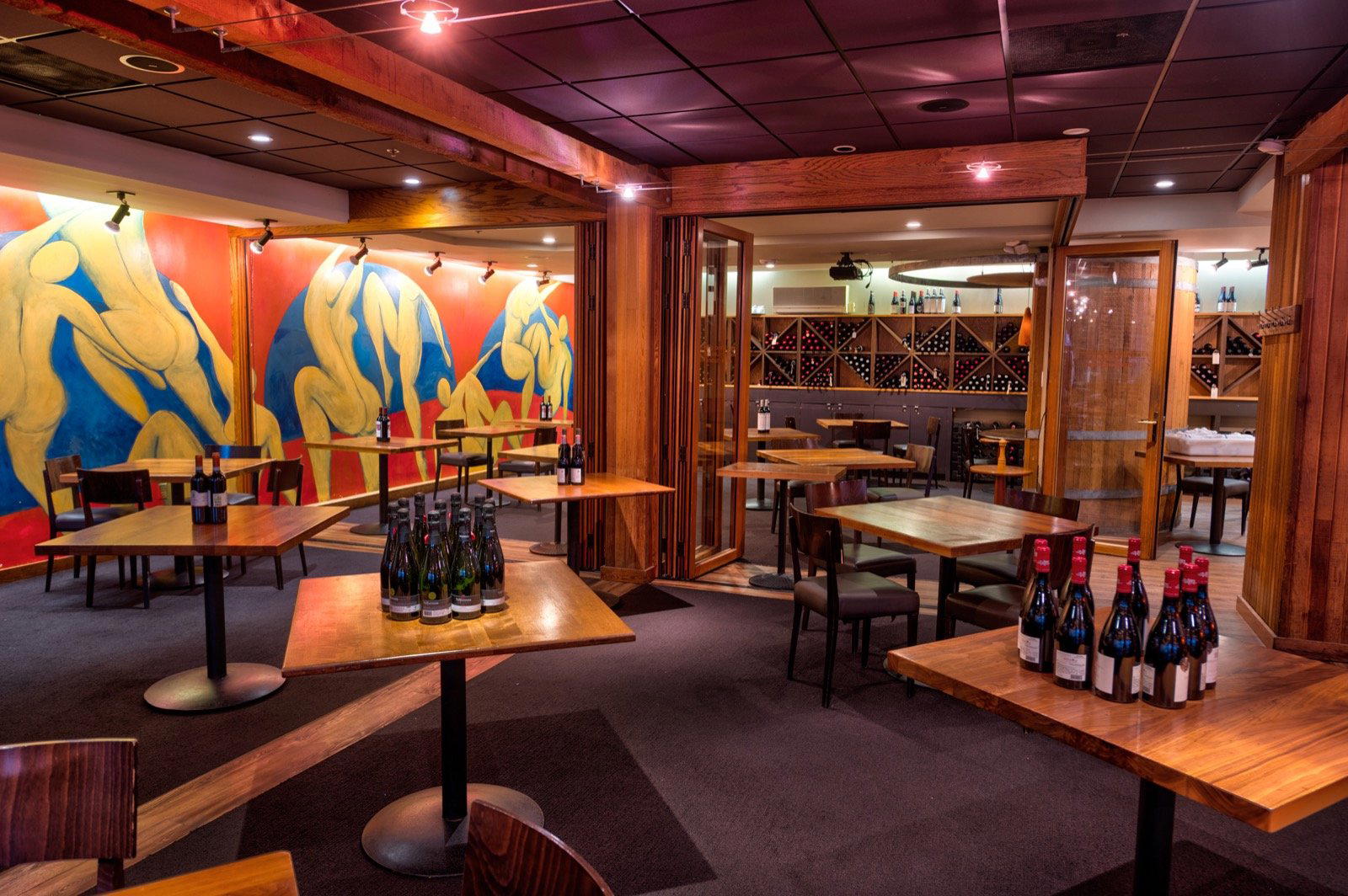
Where Princeton Meets the Mediterranean Table
Hulfish Street sits at the centre of Princeton's walkable downtown, a few minutes from Palmer Square and the university gates. The neighbourhood is compact enough that restaurant reputation travels quickly, and Mediterra has held a consistent position on that short list for years. The dining room leans toward warmth rather than formality, with the kind of interior that signals intention without demanding ceremony. You arrive expecting a meal built around the southern European pantry, and the kitchen delivers on that premise through the quality of what it sources rather than through theatrical presentation.
Mediterranean cooking in the United States occupies a wide spectrum. At one end sit white-tablecloth interpretations that read as Italian or Greek fine dining; at the other, casual trattorias and mezze spots that prioritise accessibility over depth. Mediterra operates somewhere between those poles, serving food that takes the tradition seriously without asking the diner to treat dinner as an occasion requiring a tie. That positioning has made it durable in a market where Princeton diners can choose between the neighbourhood-scale comfort of Agricola, the precise tasting-menu format of Elements, the European brasserie register of Mistral Princeton, and the inn-dining atmosphere of The Perch at Peacock Inn. Each occupies a distinct slot; Mediterra's is the one defined by sourcing over spectacle.
Sourcing as the Editorial Argument
One useful way to understand what Mediterra does is through the lens of ingredient sourcing, because that is where Mediterranean cooking either stands or falls at this level. The tradition itself, from the Ligurian coast to the Levant, has always been a cuisine of proximity: what grew nearby, what came in from the sea that morning, what the season permitted. American restaurants that claim the Mediterranean register but fill their kitchens with out-of-season imports from central distribution networks are working against the grain of the tradition they invoke.
The farm-to-table movement that reshaped American dining from the late 1990s onward gave kitchens working in this register a framework to do better. New Jersey, despite its reputation as a transit corridor, is one of the more productive agricultural states on the eastern seaboard, with a growing season that runs from late spring into October and a concentration of small farms within an hour's drive of Princeton. A kitchen drawing on those suppliers has access to summer tomatoes, stone fruit, fresh corn, and autumn squash at a quality that justifies the Mediterranean idiom rather than merely decorating it. Restaurants that commit to this sourcing model, from Blue Hill at Stone Barns in Tarrytown at the high end to smaller regional operations, share a common discipline: the menu follows the produce, not the other way around.
That principle shapes what appears on the plate at Mediterra. The cooking is not a static catalogue of Mediterranean classics; it shifts with the season and with what the suppliers are delivering. This is a different operating model from venues like Le Bernardin in New York City or The French Laundry in Napa, where the sourcing infrastructure is formidable but the culinary ambition is structured around a fixed creative identity. Mediterra's ambition is quieter and more seasonal, which suits the dining culture of a town like Princeton.
The Room and the Rhythm
The physical experience of eating at Mediterra is anchored in the Hulfish Street address, which places it within easy walking distance of the university's arts precinct and the main commercial strip of Nassau Street. The room does not try to reproduce a Provençal farmhouse or a Greek island taverna; it reads as a contemporary American dining room with Mediterranean inflections in the cooking rather than in the decor. That restraint is deliberate. It signals that the kitchen is not selling a fantasy of place but a set of ingredients and techniques with genuine roots in the tradition.
Service operates at a pace that suits the clientele, which skews toward university faculty, professionals from the surrounding suburbs, and visitors who have done their research before arriving. The room accommodates groups and couples with equal ease, and the format, with a menu that covers multiple courses without requiring a fixed tasting sequence, gives diners the kind of flexibility that suits a midweek dinner as readily as a weekend occasion.
For planning purposes, Mediterra is located at 29 Hulfish St, Princeton, NJ 08542. Given its central position and the relatively limited density of serious dining rooms in Princeton, the restaurant draws steadily across the week; booking ahead, particularly for weekend evenings, is the sensible approach. The venue sits within the same walkable downtown radius as the other restaurants that define Princeton's dining identity, making it direct to combine with an evening at McCarter Theatre or a late-afternoon visit to the Princeton University Art Museum.
Princeton in Broader Context
Princeton's dining scene punches above its scale. For a city of roughly 30,000 residents, the concentration of serious restaurants, from the ingredient-led cooking at Agricola to the ambition on display at Elements, reflects the influence of a university community with international tastes and disposable income. It also reflects proximity to New York, which raises the benchmark: diners who eat regularly in Manhattan bring those reference points with them when they sit down in Princeton.
Mediterra fits that context without straining against it. It does not try to compete with the tasting-menu formalism of Alinea in Chicago or the farm-system depth of Single Thread Farm in Healdsburg. Its competitive set is local, and within Princeton, it holds a clear position as the restaurant where the Mediterranean tradition is taken seriously at an accessible price point. For a broader view of what Princeton's dining options look like across formats and price points, our full Princeton restaurants guide maps the scene in detail.
Restaurants that sustain this kind of position over time, without the scaffolding of Michelin recognition or a media moment, tend to do so through consistency rather than novelty. The model that works in a university town is one that earns repeat visits from regulars while remaining legible to visitors arriving with no prior knowledge. Mediterra's sourcing commitment gives it a stable editorial identity that does not require reinvention each season, only adjustment to what the season permits. That discipline, quiet as it is, is what separates a restaurant with staying power from one built around a moment.
How Mediterra Princeton compares with similar nearby venues.
| Venue | Cuisine |
|---|---|
| Chatpati Delhi | Indian |
Continue exploring
More in Princeton
Restaurants in Princeton
Browse all →
Bars in Princeton
Browse all →

Hotels in Princeton
Browse all →
Wineries in Princeton
Browse all →
At a Glance
- Elegant
- Sophisticated
- Cozy
- Date Night
- Business Dinner
- Special Occasion
- Live Music
- Extensive Wine List
- Local Sourcing
- Street Scene
Current opening hours
- Monday
- 11:30 AM–9 PM
- Tuesday
- 11:30 AM–9 PM
- Wednesday
- 11:30 AM–9 PM
- Thursday
- 11:30 AM–9 PM
- Friday
- 11:30 AM–10 PM
- Saturday
- 11:30 AM–10 PM
- Sunday
- 11:30 AM–9 PM
Hours can change for holidays and private events. Last verified .
Warm and inviting atmosphere with seasonal alfresco dining overlooking Palmer Square.