Master Wei Hammersmith
On Hammersmith Road in west London, Master Wei brings the hand-pulled noodle traditions of Xi'an to a neighbourhood better known for its pub circuit than its regional Chinese cooking. The kitchen focuses on the bold, cumin-forward flavours of Shaanxi province, placing it in a different competitive register from the Cantonese-dominant Chinese dining scene across the rest of the city.
Pearl is the En Primeur Club membership app — saves, bookings, and concierge access live there. Same editors, same standards.
- Address
- 245 Hammersmith Rd, London W6 8PW, United Kingdom
- Phone
- +44 7399 211590
- Website
- master-wei.com
- Directions
- Get directions
 Saves & bookings on Pearl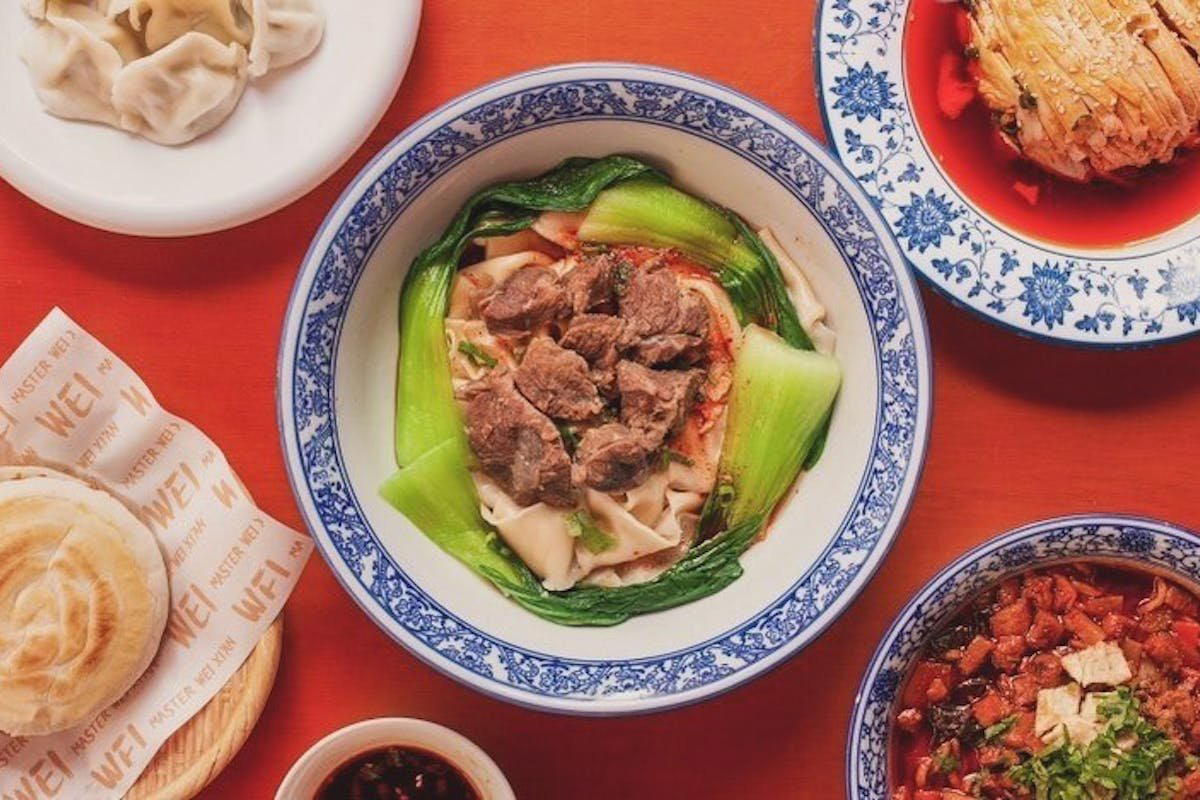
Xi'an Cooking in West London: The Regional Chinese Shift
London's Chinese restaurant scene spent decades organised around Cantonese cooking, with Soho's Chinatown setting the default register. The past fifteen years have seen that consensus fracture. Sichuan peppercorn heat arrived first, then Hunanese smokiness, then the hand-pulled and belt-cut noodle traditions of Shaanxi province. Master Wei Hammersmith, at 245 Hammersmith Rd, sits inside that last wave: a west London address committed to the Xi'an style that the original Master Wei outpost in Bloomsbury helped introduce to a broader London audience.
Xi'an cooking is worth understanding on its own terms before arriving. The city sits at the eastern end of the ancient Silk Road, and its food carries the influence of that trade history in the form of cumin, chilli, and lamb, ingredients that appear far less in southern Chinese cooking. The signature biang biang noodles are wide, hand-pulled, and served with a vinegar-and-chilli dressing that hits differently from any Sichuan sauce. The spice registers are bold but not numbing. In a city where regional Chinese diversity has expanded sharply, the Xi'an tradition occupies a specific, identifiable position.
The Hammersmith Address and Its Dining Context
Hammersmith Road is not a destination dining street in the way that Notting Hill's Ledbury Road or Marylebone High Street have become. The area functions more as a transit corridor, with the Apollo venue and the riverside pubs pulling most of the evening foot traffic. That context matters because it shapes the clientele: regulars from the surrounding residential streets rather than destination diners arriving from across town. For visitors staying nearby or passing through for a concert, the location on Hammersmith Rd W6 is direct to reach via Hammersmith tube station.
The comparison set for Master Wei Hammersmith is not the tasting-menu circuit, venues like CORE by Clare Smyth, Restaurant Gordon Ramsay, or Sketch, The Lecture Room and Library, but rather the growing tier of London restaurants making a serious case for regional Chinese cooking as a destination in itself. Within that tier, the Xi'an noodle specialists remain a small group. That relative scarcity gives Master Wei a positioning that a more crowded category would not support.
What the Menu Signals About Xi'an Tradition
Xi'an menus built around hand-pulled noodles operate on a different logic from a tasting-menu kitchen. The craft here is in the noodle itself: the length of the pull, the width of the cut, and the temperature of the dough. Biang biang noodles demand a particular wrist action that takes time to learn and cannot be replicated by machine extrusion. Restaurants committed to that tradition are, in a real sense, making a staffing and training commitment that explains why the style has not proliferated as quickly as other regional Chinese formats in London.
The broader menu context in Xi'an cooking typically includes lamb dishes seasoned with cumin in a way that reflects the Central Asian trade connections of the region, cold dishes dressed with black vinegar, and steamed or flatbread preparations that pair with the noodle formats. Across the Master Wei operation, those elements have remained consistent rather than drifting toward a more pan-Chinese or fusion positioning, a discipline that distinguishes it from Chinese restaurants that broaden their offer to reduce friction for unfamiliar diners.
Drinks and the Question of the Wine List
The editorial angle of wine-list depth rarely applies to regional Chinese specialists in the same way it does to European fine dining. At venues operating in the Xi'an tradition, the drinks offer tends toward Chinese teas, beer, and soft drinks as the primary pairings, choices that make culinary sense given the bold, vinegar-and-chilli intensity of the food. Attempting to build a sommelier-driven cellar around biang biang noodles is a different proposition from pairing Burgundy with duck at The Ledbury or matching structured European wines to the menu at Dinner by Heston Blumenthal.
Master Wei's contribution to the London dining scene runs along a different axis: cooking specificity, regional authenticity, and accessibility in a part of the city that has fewer serious restaurants per square mile than central London.
Where Master Wei Sits in the Wider UK Picture
The argument for regional specificity in cooking is well-established in the UK dining conversation. Restaurants like L'Enclume in Cartmel, Moor Hall in Aughton, and Le Manoir aux Quat' Saisons in Great Milton each built their identity around a specific place and its ingredients. The logic at Master Wei is analogous, though operating at a different price point and with a different culinary tradition: the value of the cooking lies precisely in its refusal to generalise. Xi'an food is the subject, and it is treated as a subject worth knowing. Outside the UK, venues like Le Bernardin in New York City and Atomix in New York City demonstrate what happens when a single culinary tradition is pursued at the highest level of technical investment; the principle scales down to a Hammersmith Road noodle kitchen, even if the price and format do not.
Other UK comparisons worth considering include The Fat Duck in Bray, Gidleigh Park in Chagford, and Hand and Flowers in Marlow, each operating in distinct tiers but united by a commitment to a defined culinary identity rather than a broad crowd-pleasing menu.
Planning Your Visit
Master Wei Hammersmith is located at 245 Hammersmith Rd, London W6 8PW, a short walk from Hammersmith station. Given the venue's neighbourhood positioning and its accessible price point relative to central London Chinese restaurants, walk-ins are a reasonable option during quieter mid-week periods, though weekend evenings at the Bloomsbury original have historically filled quickly enough to warrant planning ahead. Opening hours are Monday to Saturday from 12 pm to 9:45 pm, and Sunday from 12 pm to 9 pm. Reservations are recommended.
Recognition, Side-by-Side
Comparable venues nearby, for context on price, style, and recognition.
| Venue | Cuisine | Price | Notes |
|---|---|---|---|
| Master Wei HammersmithThis venue — the venue you are viewing | Authentic Xi'an Noodles | $$ | Not listed |
| Pearl Liang | Cantonese Dim Sum | $$ | Paddington |
| China City | Authentic Cantonese | $$ | Chinatown |
| Din Tai Fung Centre Point | Authentic Taiwanese Dim Sum | $$ | St Giles |
| Haozhan | Cantonese Dim Sum & Roast Meats | $$ | Chinatown |
| Canton Element | Authentic Cantonese Dim Sum | $$ | Holborn |
Recognition history
Dated appearances from independent guides and award organizations, with the underlying list record or original source where available.
Chef's Table Featured on Chef's Table
Chef's Table
Continue exploring
More in London
Restaurants in London
Browse all →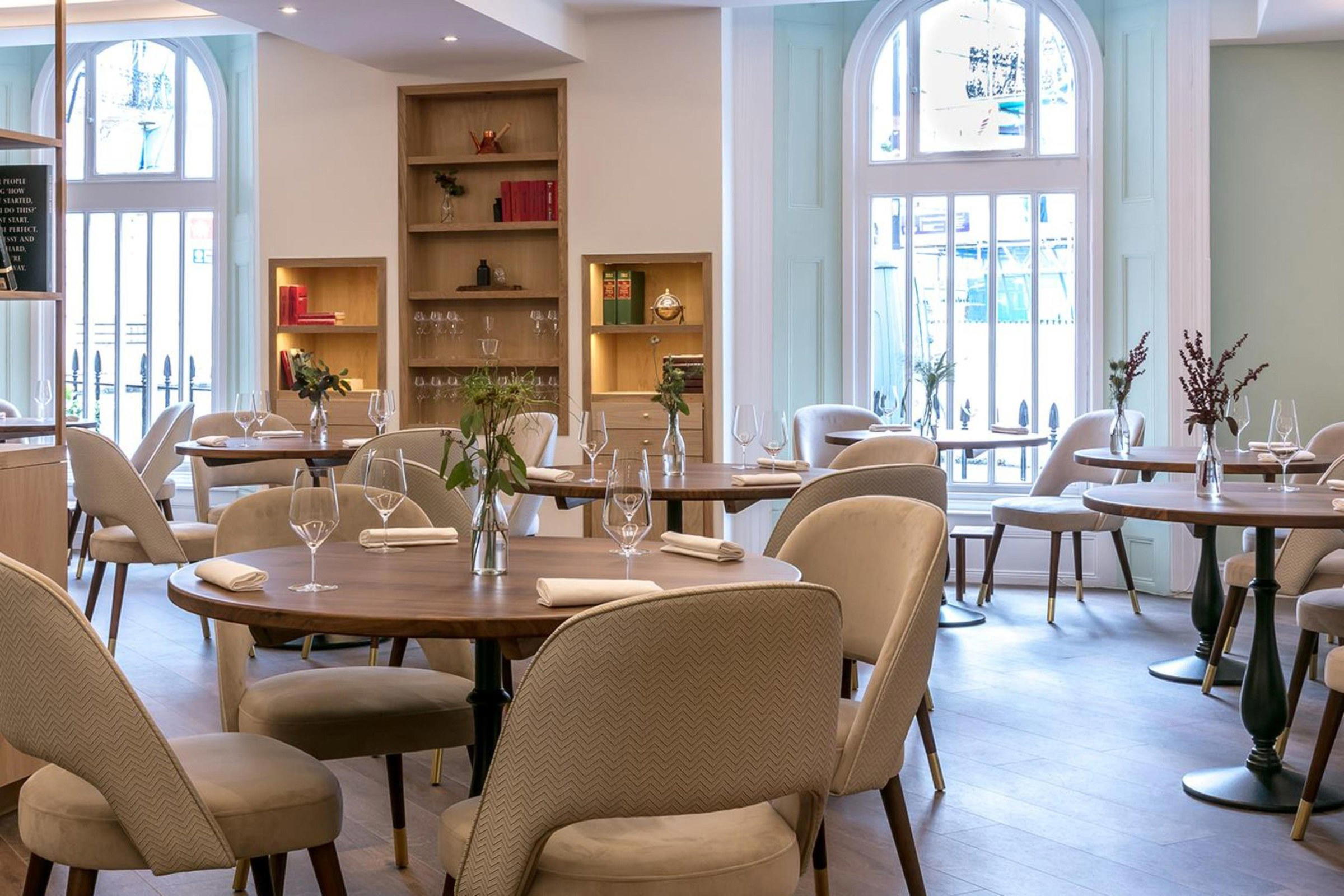
Bars in London
Browse all →
Hotels in London
Browse all →

At a Glance
- Lively
- Trendy
- Casual Hangout
- After Work
- Open Kitchen
Current opening hours
- Monday
- 12–9:45 PM
- Tuesday
- 12–9:45 PM
- Wednesday
- 12–9:45 PM
- Thursday
- 12–9:45 PM
- Friday
- 12–9:45 PM
- Saturday
- 12–9:45 PM
- Sunday
- 12–9 PM
Hours can change for holidays and private events. Last verified .
Functional canteen-style space with tightly squeezed tables, lanterns, lively atmosphere, and efficient service.