Mariscos La Tia
Our verdict
In Puerto Vallarta's 5 de Diciembre neighbourhood, Mariscos La Tia represents the kind of seafood operation that defines coastal Mexican eating: direct, ingredient-led, and rooted in the Pacific shore tradition rather than resort-strip convention. Located on Calle Honduras, it draws from the same working-class mariscos culture that shaped the city's culinary identity long before international tourism arrived. For visitors tracking where locals actually eat, this address carries weight.

Pearl is the En Primeur Club membership app, where members save venues, book tables and use the concierge.
The menu
What to order
- Tostada Consentida
- Aguachile de Camarones
- Cazuela Especial
- Marlin Tacos
- Saltapatras
5 de Diciembre and the Logic of Eating Where the Nets Come In
Puerto Vallarta's dining conversation tends to cluster around the Zona Romántica and the Malecón corridor, where restaurants like Café des Artistes and Balam Balam operate with polished service and international positioning. The 5 de Diciembre neighbourhood, sitting just north of the Río Cuale and largely off the tourist circuit, runs on different logic. The streets here are narrower, the foot traffic is local, and the restaurants that survive do so on repeat custom from residents rather than high-turnover visitor spend. Calle Honduras, where Mariscos La Tia occupies number 215, sits inside this dynamic.
That neighbourhood context matters more than it might initially appear. Coastal Mexican seafood cooking is not a single tradition but a spectrum that runs from the resort-facing ceviche bars built around foreign palates all the way to the taco de camarón operations where the tortillas are pressed to order and the salsa is calibrated for the people who grew up eating it. Mariscos La Tia sits toward the latter end of that spectrum. The address alone signals something about the intended audience and, by extension, the kitchen's priorities.
What the Pacific Shore Mariscos Tradition Produces
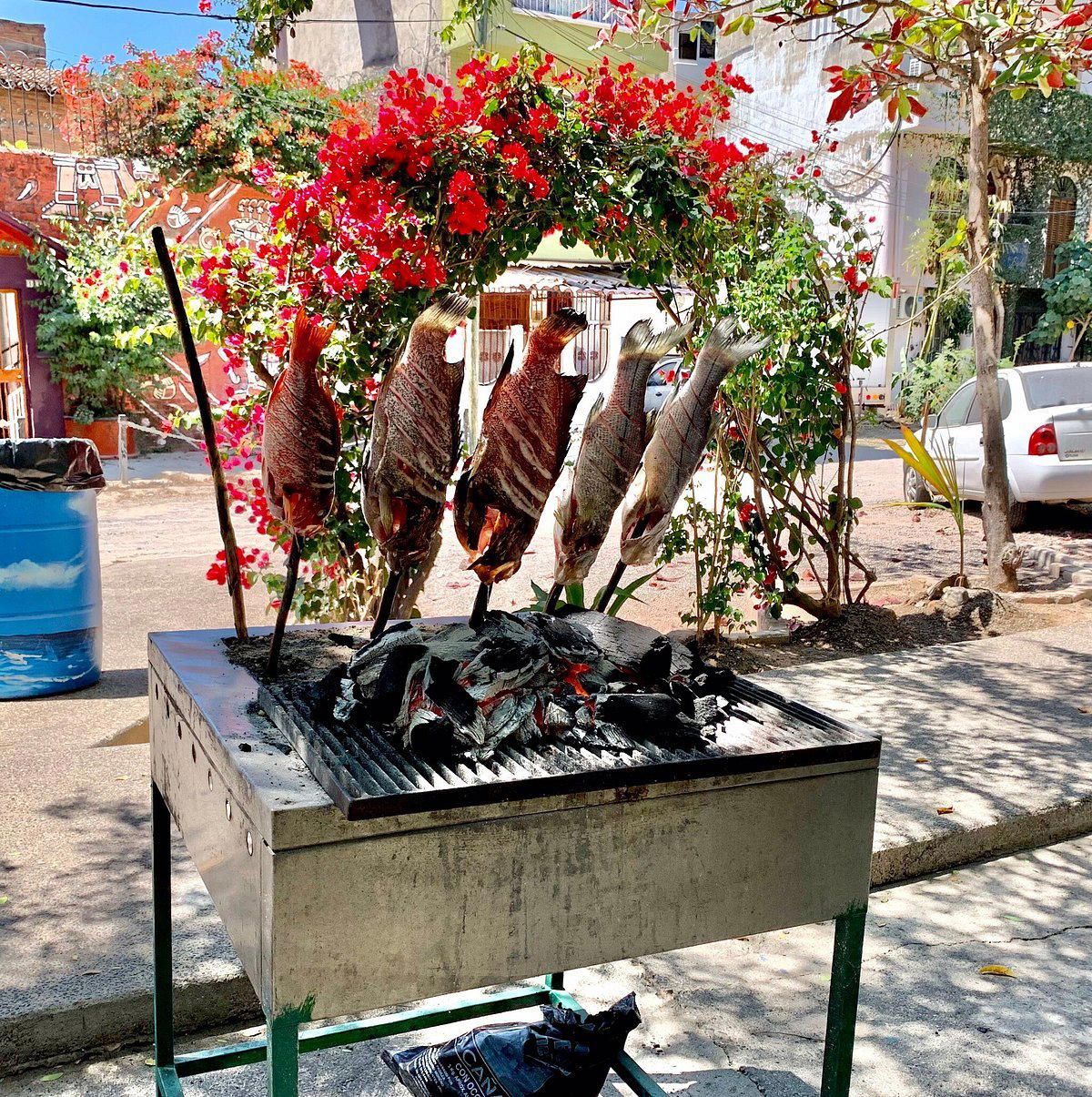
Mexico's Pacific coast mariscos culture is one of the country's most coherent regional food traditions. Along the Jalisco and Nayarit shoreline, the cooking vocabulary includes aguachile in its verde and negro forms, caldo de camarón built with dried shrimp and fresh aromatics, pescado zarandeado prepared over wood or charcoal, and the tostada de marlín that distinguishes this stretch of coast from the Gulf-facing Gulf states. These are not fusion constructs or tasting-menu adaptations; they are the functional daily food of a fishing port that has been landing Pacific species for generations.
Across Mexico's restaurant scene, the distance between this kind of neighbourhood mariscos house and the formal seafood programs at places like Le Chique in Puerto Morelos or the ingredient-sourcing ambitions of HA' in Playa del Carmen is significant. Neither approach is wrong; they are simply answering different questions. Fine dining seafood in Mexico increasingly interrogates technique and provenance. Neighbourhood mariscos operations like Mariscos La Tia ask a simpler, harder question: is this fresh, and does it taste of the sea? In a city positioned on Bahía de Banderas, getting that question right is the whole job.
For broader context on how Mexico's serious restaurant culture has developed, the tasting programs at Pujol in Mexico City or the regional sourcing work at Alcalde in Guadalajara represent one pole of the conversation. The mariscos house on a residential street represents another. Both are authentic expressions of how Mexico eats; the difference is in who is being fed and to what end.
Puerto Vallarta's Seafood Geography
Visitors oriented by the Zona Romántica find a comprehensible dining map: international restaurants, bar-forward terraces, and the kind of cafés where Calmate Cafe and Bean and Brick attract a breakfast and brunch crowd that skews expatriate and tourist. Move north into 5 de Diciembre and the register shifts. The neighbourhood has always been a working residential quarter, and its food operations reflect that: less spectacle, lower price points, stronger alignment with what the city's own population considers a normal meal.
Mariscos La Tia on Calle Honduras fits that pattern. It is the kind of operation that does not need to explain itself to its core audience. The format of a Mexican mariscos lunch, served through midday and into the early afternoon before kitchens wind down, is understood by the people who use it. Timing matters here: Pacific-coast mariscos operations across Jalisco and Nayarit follow the same general rhythm that ties eating hours to the fishing fleet's movements, and arriving well before 2pm is typically how you encounter the kitchen at full pace. Visitors arriving later in the afternoon may find reduced options.
For those mapping a broader Puerto Vallarta dining itinerary, the contrast between 5 de Diciembre mariscos and the hotel-zone cooking at Campomar Puerto Vallarta illustrates exactly how stratified the city's food culture has become. Both are worth understanding. Our full Puerto Vallarta restaurants guide maps the city across those tiers.
How This Address Fits Into Mexico's Wider Restaurant Conversation
The broader Mexican dining scene has developed remarkable depth in the past decade and a half. Operations as different as Levadura de Olla Restaurante in Oaxaca, KOLI Cocina de Origen in Monterrey, Pangea in San Pedro Garza Garcia, Lunario in El Porvenir, and Animalón in Valle de Guadalupe represent how seriously Mexico has engaged with its own culinary identity at the fine-dining level. And then, separately, the neighbourhood mariscos house has continued as it always has, without awards cycles, tasting menus, or international press coverage, feeding the same streets with the same cooking.
For the international traveller used to benchmarking restaurants against the formal tier, a Le Bernardin in New York City or an Atomix in New York City, the value proposition of a place like Mariscos La Tia operates on entirely different terms. There is no tasting structure, no wine program to assess, no multi-course architecture. The question is whether the cook's relationship to the day's catch is honest, and whether the condiments on the table are worth using. In a seaside city with direct access to Banderas Bay seafood, a kitchen that can answer both questions correctly is doing something that many formally trained restaurants cannot replicate at any price point. That is the case for this address.
Planning Your Visit
Mariscos La Tia is at Calle Honduras 215 in the 5 de Diciembre neighbourhood, a district that sits between downtown Puerto Vallarta and the northern hotel zone and is reachable from the Zona Romántica in roughly fifteen to twenty minutes on foot, or a short taxi or rideshare ride. No website or reservation system is associated with the venue in public records, which is consistent with the format: walk-in, midday-oriented operations in this neighbourhood tier do not typically require advance booking, but arriving near peak lunch hour gives you the most reliable read of the kitchen. Phone details are not available through verified channels. Dress is casual, consistent with the neighbourhood's residential character. See the full Puerto Vallarta guide for context on timing, neighbourhoods, and the wider dining tier structure across the city.
Frequently asked questions
What's the address for Mariscos La Tia?
Mariscos La Tia is located at C. Honduras 215, 5 de Diciembre, 48350 Puerto Vallarta, Jal. Mexico, Puerto Vallarta.
Where exactly is Mariscos La Tia in Puerto Vallarta, and what neighbourhood does it serve?
Mariscos La Tia is at Calle Honduras 215 in the 5 de Diciembre neighbourhood, the district that connects downtown Puerto Vallarta to the northern hotel zone. This is a residential area with a local commercial character, distinct from the tourist concentration around the Malecón and Zona Romántica. Visitors coming specifically for neighbourhood-tier seafood rather than the tourist corridor should note that 5 de Diciembre is walkable from downtown Puerto Vallarta.
What's the must-try dish at Mariscos La Tia?
The Pacific coast mariscos tradition that anchors this kitchen centres on aguachile, caldo de camarón, and tostadas built around whatever comes off local boats. These are the preparations that define the Jalisco and Nayarit shoreline, and they are the reason to come to Calle Honduras 215 rather than a tourist-corridor seafood terrace.
Should I book Mariscos La Tia in advance?
No reservation system is documented for Mariscos La Tia. Neighbourhood mariscos spots in Puerto Vallarta's 5 de Diciembre district run as walk-in operations, typically opening at lunch and serving until the day's catch runs out. Arriving early is the practical strategy, particularly on weekends when the residential crowd and visitors overlap.
What's Mariscos La Tia best at?
Mariscos La Tia sits in the neighbourhood tier that Puerto Vallarta has historically relied on for its daily seafood eating, distinct from the hotel-zone restaurants around the Malecón. The kitchen draws from the same Banderas Bay supply chain as larger operations but serves a residential audience in 5 de Diciembre, which tends to produce tighter, more consistent execution on a shorter menu. That focus on fewer preparations done repeatedly is what separates these kitchens from broader menus aimed at tourists.
Can Mariscos La Tia handle vegetarian requests?
Mariscos La Tia is structured around a Pacific coast seafood tradition where fish, shrimp, and shellfish drive the entire menu. Vegetarian-specific options are not documented for this address. Visitors with vegetarian requirements will find more adaptable kitchens elsewhere in Puerto Vallarta's Zona Romántica or Centro districts.
Is Mariscos La Tia overpriced or worth every penny?
Neighbourhood mariscos operations in 5 de Diciembre occupy the most price-accessible tier of Puerto Vallarta's seafood dining, well below the Zona Romántica restaurant corridor. That context sets expectations accurately: straightforward execution at local prices, not a fine-dining seafood experience.
A Lean Comparison
Comparable venues nearby, for context on price, style, and recognition.
| Venue | Cuisine | Price | Notes |
|---|---|---|---|
| Mariscos La TiaThis venue (the venue you are viewing) | Authentic Mexican Seafood | $20–30 | Not listed |
| Nacho Daddy | Tex-Mex | $20–30 | Zona Romantica, Tex-Mex |
| La Palapa | Tropical Mexican Fusion | $20–30 | Romantic Zone, Tropical Mexican Fusion |
| Tacos De Birria Robles | Birria Tacos | $1–10 | Zona Romantica, Birria Tacos |
| Tacos Chilo | Street Tacos | $1–10 | 5 de Diciembre, Street Tacos |
| Tacón de Marlin | Mexican Seafood Burritos | $10–20 | Cinco de Diciembre, Mexican Seafood Burritos |
Continue exploring
More in Puerto Vallarta
Restaurants in Puerto Vallarta
All restaurants in Puerto Vallarta →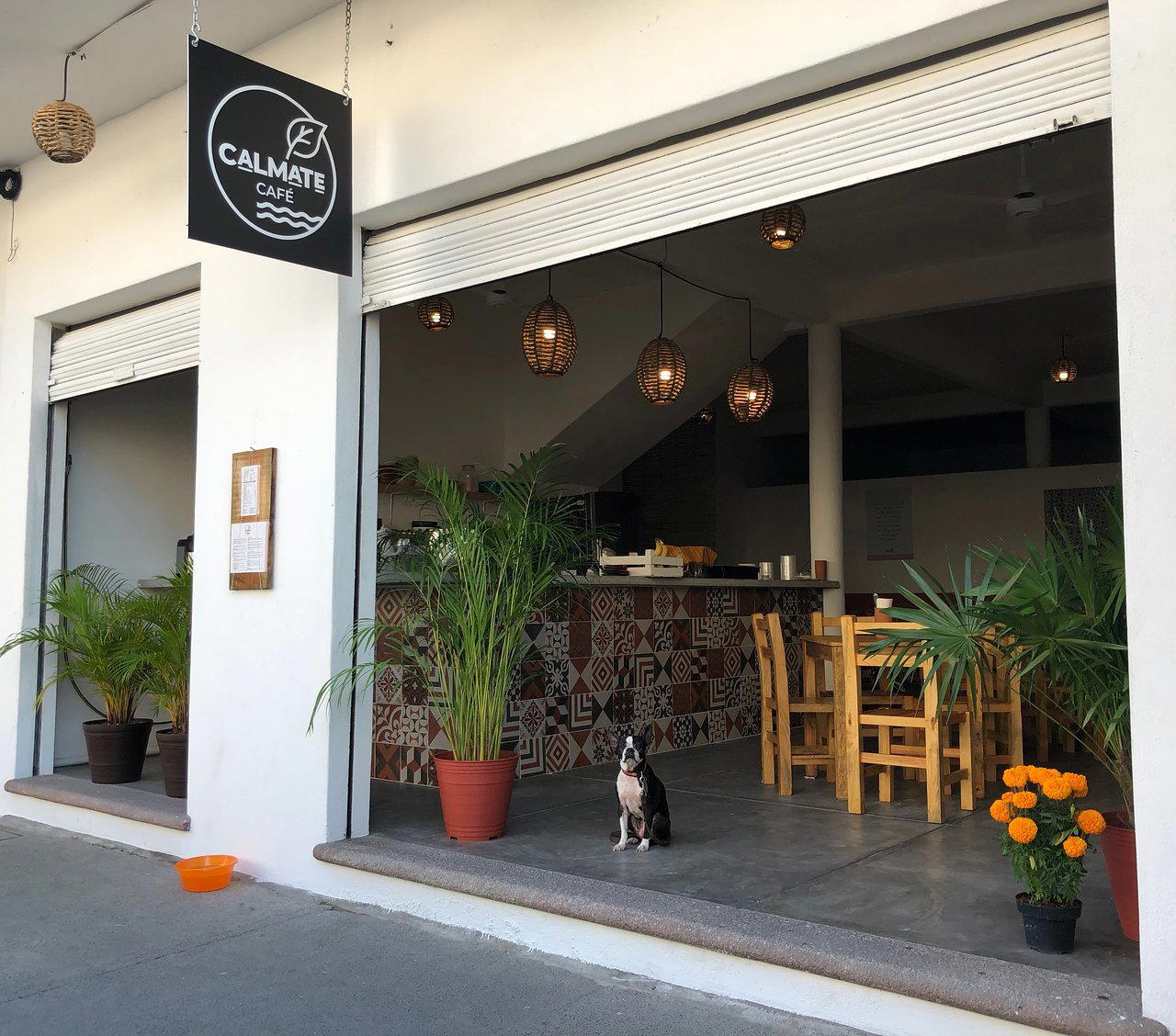
Bars in Puerto Vallarta
All bars in Puerto Vallarta →


Details
- Rustic
- Casual
- Casual Hangout
- Group Dining
- Solo
- Open Kitchen
- Beer Program
- Local Sourcing
- Sustainable Seafood
- A La Carte
- Margaritas
- Micheladas
- Agua Fresca
- Pescatarian Friendly
- Vegetarian Friendly
- Allergy Accommodating
Current opening hours
- Monday
- 12:30–9 PM
- Tuesday
- 12:30 AM–9 PM
- Wednesday
- 12:30–9 PM
- Thursday
- 12:30–9 PM
- Friday
- 12:30–9 PM
- Saturday
- 12:30–9 PM
- Sunday
- 12:30–9 PM
Hours can change for holidays and private events. Hours as of .
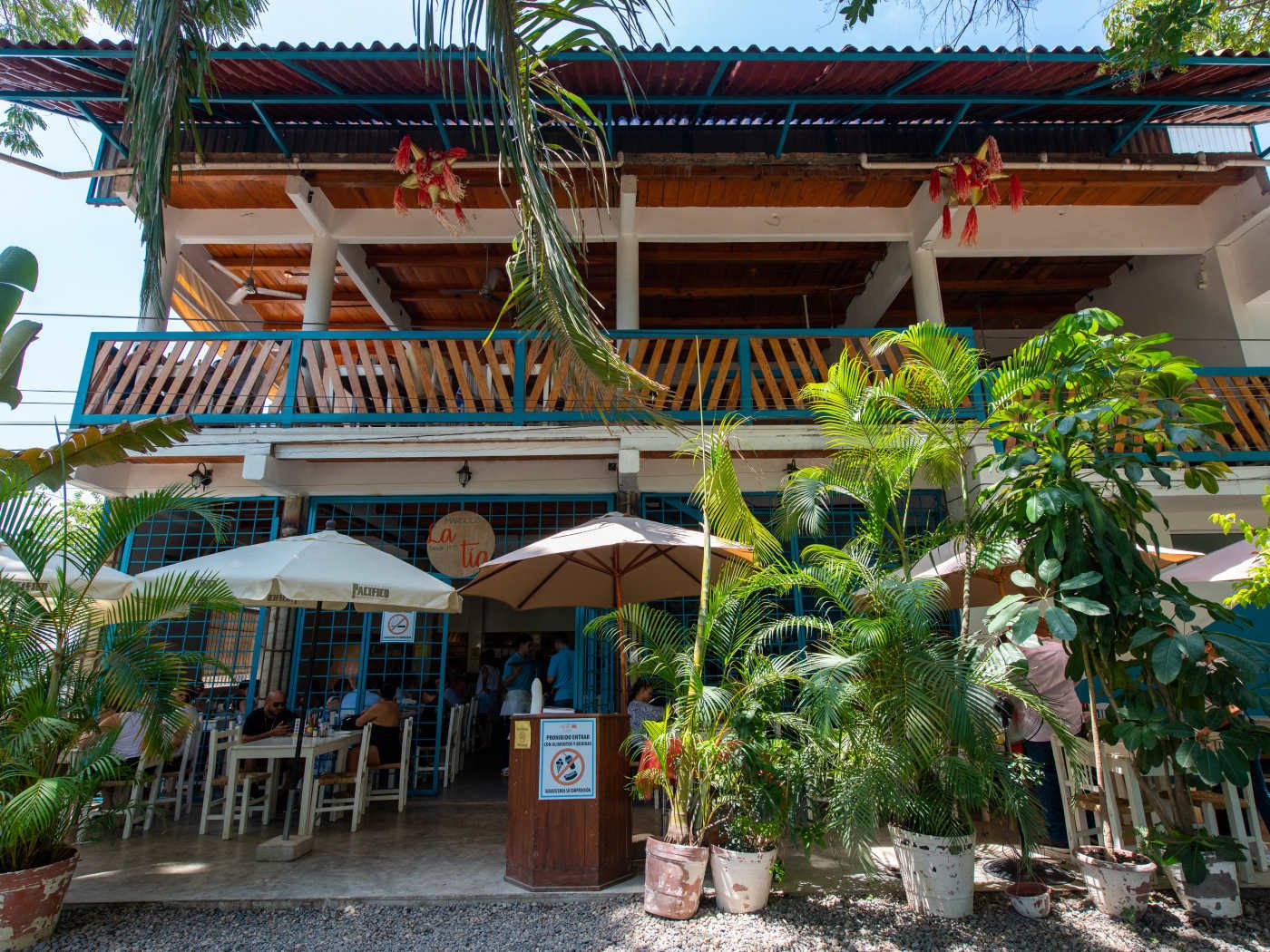
Simple, non-pretentious setting with an open kitchen stall visible from seating; rustic and casual with a local, authentic feel that emphasizes food quality over decor.