
Tabelog 100 #25
Our verdict
maison owl brings French dining into Ube’s quieter high-end register, away from the concentration of luxury tables in Japan’s larger cities. Its Tabelog French WEST “Tabelog 100” 2025 selection and small-format room place it in a serious regional category, with wine signalled as part of the experience rather than an afterthought.

Pearl is the En Primeur Club membership app, where members save venues, book tables and use the concierge.
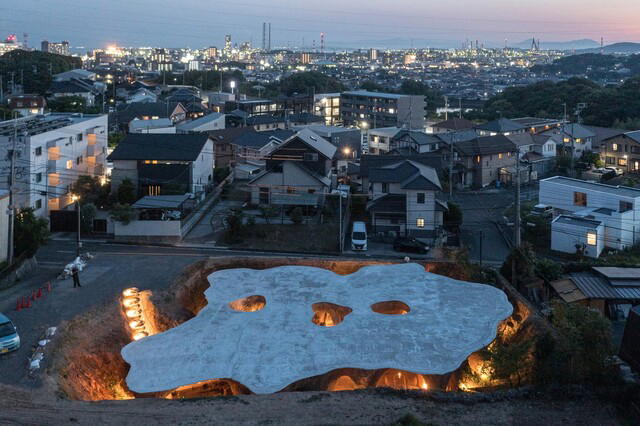
Arriving at a destination restaurant in regional Japan carries a different charge from the country’s largest dining districts. In Ube, the drama is not density, signage, or hotel-lobby theatre, but separation: a restaurant setting, a sense of occasion, and a room for diners who are not treating the meal as a metropolitan turn-and-burn stop. That context matters because French cooking in Japan has never been only imported technique. At its strongest outside the largest cities, it negotiates place, season, service discipline, and the Japanese appetite for precision.
maison owl sits in that conversation with unusual force for Ube. The restaurant is listed by Tabelog in its 2025 Hyakumeiten recognition for French, placing it within a wider field rather than simply Yamaguchi’s local dining map. For a city more often approached through industry, coastline, and transit routes than destination dining, that signal changes the frame. This is not casual French bistro territory; it belongs to the high-spend, occasion-led tier where the meal is the evening’s main event.
Regional French cooking, read through a Japanese destination format
Japan’s relationship with French cuisine has long been technical, but the regional version is often more revealing than the capital-city version. Major cities can support grand tasting counters, hotel dining rooms, and imported-name restaurants in parallel. Smaller cities have less room for duplication. A serious French address in Ube must justify itself through format and intent: a stronger sense of occasion, a clear culinary identity, and a clientele willing to travel for a dining experience that does not behave like a neighbourhood standby.
The Tabelog recognition is useful. Hyakumeiten lists group restaurants within a defined category, so inclusion places maison owl against a larger field than Ube alone. French dining in Japan is competitive at every level: classic sauce work, contemporary dégustation formats, wine-conscious service, and hybrid Japanese-French thinking sit close together. A restaurant in Yamaguchi appearing in that field signals not novelty, but regional seriousness.
Ube’s dining picture gives the distinction sharper edges. Local choices such as Tori Manma and Yakitori Nishimura speak to a more accessible local rhythm, in a different price and pacing bracket. Nearby names including アンコーラ and エヌ トロワ broaden the city’s restaurant map, but Tabelog recognition moves this address into a more competitive category. For travellers comparing styles across the city, our full Ube restaurants guide gives the cleaner overview.
A restaurant where setting and occasion carry weight
The destination-restaurant model has particular meaning in Japan. It lowers the emphasis on passing trade and raises the expectation of control. Instead of a casual stop-in meal, diners read the setting as part of the experience: quietness, service tempo, pacing, and the sense that the evening has been deliberately shaped. maison owl’s public recognition puts it closer to destination dining than to the everyday city-centre model.
That distinction is not cosmetic. French cuisine depends on sequence and temperature, while Japanese high-end service adds acute sensitivity to cadence. More controlled dining formats make that easier to maintain, and less forgiving. A destination restaurant cannot hide weak pacing behind bustle. The setting becomes part of the assessment: a special-occasion restaurant in Ube has to carry ceremony without stiffness, and feel rooted in the city rather than transplanted from a larger market.
Wine often becomes another signal in this category. In Japan, serious French restaurants can divide between food-first menus with conventional lists and rooms where pairings or cellar choices shape the evening. For an informed diner, that distinction matters less as a checklist than as a clue to register. The table is not being sold quick comfort; it is being asked to commit to a longer, more formal style of meal.
For travellers building a broader Ube itinerary, this matters because the city does not function like larger Japanese dining capitals, where restaurants can be stacked across multiple neighbourhoods in one night. A meal here will likely define the evening, with hotels, bars, and daytime plans arranged around it. The surrounding planning picture is better handled through our full Ube hotels guide, our full Ube bars guide, our full Ube wineries guide, and our full Ube experiences guide.
How to place it within Japan's wider dining map
The useful comparison is not only local. Japan’s food culture rewards hyper-specific formats, from charcoal counters to curry specialists, sake bars, and single-theme casual rooms. That range explains why a French restaurant in Ube can feel culturally Japanese without serving Japanese cuisine. The same national dining system that supports highly focused dining rooms in major cities and regional towns also makes room for regional French dining with a high formal threshold.
That breadth is central to the category. A diner moving between casual specialists, counter restaurants, and more formal destination rooms is not moving along a single ladder of luxury. They are moving through formats, each with its own rules. French in Ube belongs to the format of occasion: slower, more deliberate, and less casual than the city’s everyday dining patterns.
There is also an overseas echo. Japanese food culture abroad often exports precision through bars, rice shops, and tightly defined menus. In Ube, the direction reverses: a European culinary grammar is absorbed into Japanese expectations around quietness, detail, and occasion. That is the more interesting reading. maison owl is compelling not because French cuisine appears in an unexpected city, but because the format shows how regional Japan can make imported cuisine feel culturally settled.
Frequently asked questions
What part of town is maison owl in?
Ube.
What's the price range at maison owl?
Pricing at maison owl is listed as JPY 50,000 - JPY 59,999.
Is maison owl reservation-only?
Specific reservation requirements are not provided here. Given the high-spend, destination-style nature of the restaurant, planning ahead is sensible. Check the venue's official channels for the latest details.
What makes maison owl worth seeking out?
Its strongest credential is the 2025 Tabelog Hyakumeiten recognition for French, with a listed score of 3.88. Add dinner pricing of JPY 50,000–59,999 and its setting in Ube, and it reads as a tightly controlled occasion restaurant rather than a broad-brush French dining room.
Can maison owl adjust for dietary needs?
Those details are not published here. Any dietary request should be raised when booking. Check the venue's official channels for the latest details.
Is maison owl okay with children?
Specific guidance on children is not provided here. Check the venue's official channels for the latest details before planning a family visit.
Pricing, Compared
Comparable venues by cuisine and price in the same metro.
| Venue | Cuisine | Price | Awards | Notes |
|---|---|---|---|---|
| maison owlThis venue (the venue you are viewing) | Architectural French fine dining with wine-paired seasonal tasting menus | $300–500 | Tabelog 100 #25 | Not listed |
| エヌ トロワ | Modern French with Local Ingredients | $50–100 | Not listed | 西岐波, Modern French with Local Ingredients |
| Yakitori Nishimura | Yakitori & Wine (Kyoto Takasaka Chicken) | $50–100 | Tabelog 100 #6 | Not listed |
| COCO'S | Japanese Family Restaurant | $10–20 | Not listed | 文京町, Japanese Family Restaurant |
| アンコーラ | Italian Pizza and Pasta | $10–20 | Not listed | Kusae, Italian Pizza and Pasta |
| Tori Manma | Chicken-focused Japanese Izakaya & Yakitori | $30–50 | Tabelog 100 #56 | Not listed |
Recognition history
Dated appearances from independent guides and award organizations, with the underlying list record or original source where available.
Tabelog 100 #25 · No. 25
Tabelog · Tabelog 100 - French - WEST - 2025
Continue exploring
More in Ube
maison owl
The wine
- Wine program
- Deep wine list
- Extensive wine list
- Sommelier-led
- Zero-proof drinks
Details
- Intimate
- Elegant
- Scenic
- Sophisticated
- Special Occasion
- Celebration
- Date Night
- Business Dinner
- Private Event
- Design Destination
- Private Dining
- Hotel Restaurant
- Standalone
- Extensive Wine List
- Sommelier Led
- Zero Proof
- Garden
- Tasting Menu
- Prix Fixe
- Wine
- Champagne
- Zero Proof Pairing
- Allergy Accommodating
Dim, incandescent lighting in a sculpted cave of raw concrete with arches and stalagmite-like columns creates a hushed, contemplative atmosphere that feels like dining inside a piece of land art rather than a conventional restaurant.