Hiroshima Okonomiyaki Kokoya

Tabelog 100 #4
Our verdict
A Hiroshima-style okonomiyaki counter in Shimonoseki with Tabelog 100 Okonomiyaki recognition from 2022 through 2025. The appeal sits in the regional format: layered cabbage, noodles and teppan cooking in a city better known to visitors for seafood, at a price tier that keeps it firmly in everyday dining territory.

Pearl is the En Primeur Club membership app, where members save venues, book tables and use the concierge.
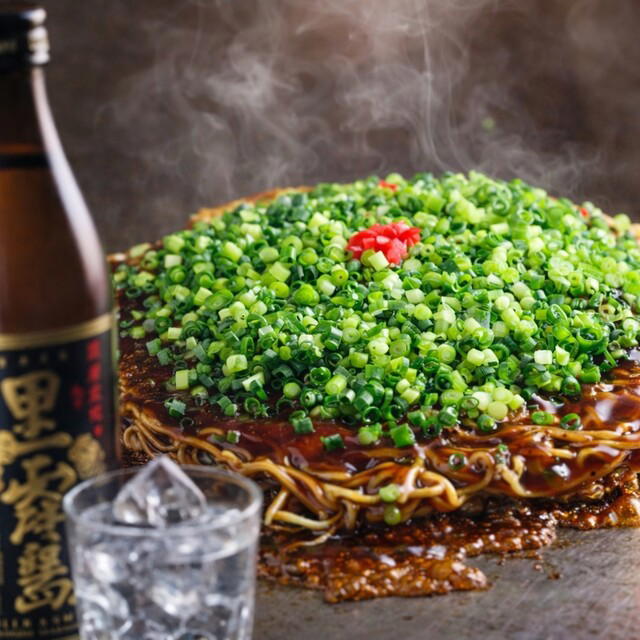
The menu
What to order
- Hiroshima okonomiyaki with crispy noodles
- Zeitaku 6-shu mori (Luxurious six-topping okonomiyaki)
- Dashi-kake dashimaki tamago
- Buta kimchi (teppan-fried pork kimchi)
The room is best understood through heat and movement: Hiroshima-style okonomiyaki cooked on a teppan, with the grill remaining part of the meal rather than background equipment. In Shimonoseki, where much of the visitor dining conversation bends toward fish, fugu and waterside meals, Hiroshima-style okonomiyaki changes the tempo. It is urban, practical and ingredient-led: cabbage, batter, noodles, sauce and the disciplined timing of a hot plate.
That format matters because Hiroshima okonomiyaki is not Kansai okonomiyaki with a regional label. The Hiroshima approach layers ingredients rather than mixing everything into the batter, and noodles give the dish its meal-like weight. Hiroshima Okonomiyaki Kokoya sits in that tradition, with okonomiyaki, teppanyaki and izakaya categories all in play, so the experience reads less like a single-dish stop and more like a compact teppan room built for repeat local use.
Layered cabbage, noodles and teppan cooking define the argument
Okonomiyaki rewards sourcing and timing in a direct way. Cabbage is not a garnish here; it carries volume, sweetness and moisture. Noodles are not a side; they set texture and structure. The teppan is not theatre alone; it controls compression, browning and pacing. Kokoya’s verified category profile points to okonomiyaki, teppanyaki and izakaya cooking, a useful signal in a category often reduced by outsiders to sauce alone. The better reading is that the dish depends on balance: vegetable mass, starch, heat, sauce and the cook’s sequencing.
The recognition gives that local format wider context. Selection for Tabelog Hyakumeiten in 2025 places the restaurant inside a national okonomiyaki conversation rather than only a neighbourhood one. Tabelog’s score of 3.71 also matters in Japan, where user scores tend to cluster tightly and small differences carry more weight than they would on many international platforms. This is not luxury dining logic. It is the logic of a regional staple being judged against other specialists.
In Shimonoseki’s dining field, that creates a useful contrast. A meal at Hiyorian operates in a different register, while Mimasu gives another view of local dining. Addresses such as RESTAURANT TAKATSU, レストラン 高津 and ヴィルセゾンうさぎ frame other sides of the city’s restaurant culture. Against that set, Kokoya is the casual specialist: focused format, strong category identity, low financial risk and a reason to leave the seafood script for one meal.
A compact Shimonoseki room built around the teppan
The appeal is easier to read through format than through decorative language. Hiroshima Okonomiyaki Kokoya is listed in categories that naturally centre the teppan, so the meal’s rhythm comes from the sequence of cooking, layering and serving rather than from formality. It is the kind of place where the grill defines the pace and where the cooking method is not hidden behind the dining room but remains the main point of attention.
Group or family suitability should be read practically rather than ceremonially. That makes Kokoya best approached as a casual Shimonoseki teppan specialist: easy to understand, affordable by destination-dining standards and built around a food form that works for repeat local use as well as for travellers who want one direct, regional meal.
The izakaya category also keeps the room from reading as a pure lunch-counter stop. It suggests a casual evening logic as much as a quick-meal one, with okonomiyaki and teppanyaki giving the food its centre of gravity. The budget range is accessible: dinner is listed at JPY 1,000 to JPY 1,999, while lunch is listed up to JPY 999. Those details matter for travellers because the category may feel old-school, but the practical cost of trying it is low.
How to place it in a Shimonoseki itinerary
Kokoya makes the strongest sense as a grounded meal between more destination-led bookings. Shimonoseki can push visitors toward seafood as default, yet a city’s everyday food culture is often clearer in small specialist rooms than in celebratory dining rooms. Hiroshima-style okonomiyaki in Shimonoseki gives that counterpoint: affordable, hot-plate driven, vegetable-heavy and built around a regional method that has travelled without losing its structure.
The practical read is simple. This is a casual specialist with national category recognition, not a formal dining room. The verified phone number is +81-83-254-4654, and the Tabelog information places the venue in a modest budget band. Expectations should follow the format: this is about layered okonomiyaki, teppanyaki cooking and the pace of a compact local restaurant, not about the choreography of a high-end dining room.
For travellers mapping a wider stay, start with Our full Shimonoseki restaurants guide, then use Our full Shimonoseki hotels guide, Our full Shimonoseki bars guide, Our full Shimonoseki wineries guide and Our full Shimonoseki experiences guide to place the meal in context. For further context, compare it with other dining in Shimonoseki generically rather than treating it as part of a single seafood-only itinerary: Kokoya’s value is that it gives the city a different, teppan-led rhythm.
Frequently asked questions
Is Hiroshima Okonomiyaki Kokoya child-friendly?
The verified venue data does not provide a detailed child-amenity list. It is best understood as a casual okonomiyaki, teppanyaki and izakaya restaurant in Shimonoseki.
What's the overall feel of Hiroshima Okonomiyaki Kokoya?
It reads as a compact, teppan-focused casual specialist rather than a formal dining spot. The Tabelog Hyakumeiten 2025 recognition and 3.71 score give it clear category credibility in Shimonoseki.
What does dinner at Hiroshima Okonomiyaki Kokoya typically cost?
Dinner at Hiroshima Okonomiyaki Kokoya is listed at JPY 1,000 to JPY 1,999; lunch is listed up to JPY 999.
What time does Hiroshima Okonomiyaki Kokoya open and close?
Verified opening hours are not provided here. For current hours, contact Hiroshima Okonomiyaki Kokoya by phone at +81-83-254-4654.
How It Stacks Up
Comparable venues by cuisine and price in the same metro.
| Venue | Cuisine | Price | Awards | Notes |
|---|---|---|---|---|
| Hiroshima Okonomiyaki KokoyaThis venue (the venue you are viewing) | Hiroshima-style okonomiyaki & teppanyaki | $20–30 | Tabelog 100 #4 | Not listed |
| ヴィルセゾンうさぎ | Modern French Fusion | $30–50 | Not listed | Kiyosue |
| レストラン 高津 | Modern French with Local Seafood | $150–200 | Tabelog Bronze #367 | 岬之町 |
| Mimasu | Traditional Shimonoseki Izakaya & Fugu | $30–50 | Tabelog 100 #85 | Takezakicho |
| Hiyorian | Japanese-European Creative Cuisine | Not listed | Tabelog 100 #22 | Maruyama-cho |
| Yamaki (弥満喜) | Traditional Japanese chicken restaurant featuring Okukuji Shamo | $10–20 | Tabelog 100 #49 | 大子町 |
Recognition history
Dated appearances from independent guides and award organizations, with the underlying list record or original source where available.
Tabelog 100 #4 · No. 4
Tabelog · Tabelog 100 - Okonomiyaki - 2025
Continue exploring
More in Shimonoseki
Restaurants in Shimonoseki
All restaurants in Shimonoseki →
Hotels in Shimonoseki
Browse all →
Details
- Lively
- Cozy
- Energetic
- Classic
- Casual Hangout
- Family
- Group Dining
- Solo
- After Work
- Late Night
- Celebration
- Chefs Counter
- Open Kitchen
- Standalone
- Beer Program
- A La Carte
- Counter Dining
- Small Plates
- Beer
- Highballs
- Chu Hai
Current opening hours
- Monday
- Closed
- Tuesday
- 11:30 AM–2:30 PM, 5:30–10 PM
- Wednesday
- 11:30 AM–2:30 PM, 5:30–10 PM
- Thursday
- 11:30 AM–2:30 PM, 5:30–10 PM
- Friday
- 11:30 AM–2:30 PM, 5:30–10 PM
- Saturday
- 11:30 AM–2:30 PM, 5:30–10 PM
- Sunday
- 11:30 AM–2:30 PM, 5:30–10 PM
Hours can change for holidays and private events. Hours as of .
Casual and welcoming with counter seats facing the teppan and traditional tatami seating, offering a lively, interactive atmosphere where guests watch their okonomiyaki cooked hot and fresh in front of them.