
Maison Léa sits on the Quai des Célestins in Lyon's second arrondissement, holding a Michelin Plate for two consecutive years and earning. It operates within the city's living brasserie tradition, serving Lyonnaise cooking at a price point that keeps the format accessible without reducing its seriousness.
Pearl is the En Primeur Club membership app — saves, bookings, and concierge access live there. Same editors, same standards.
- Address
- 11 Quai des Célestins, 69002 Lyon, France
- Phone
- +33 4 78 42 01 33
- Website
- lamaisonlea.fr
- Directions
- Get directions
 Saves & bookings on Pearl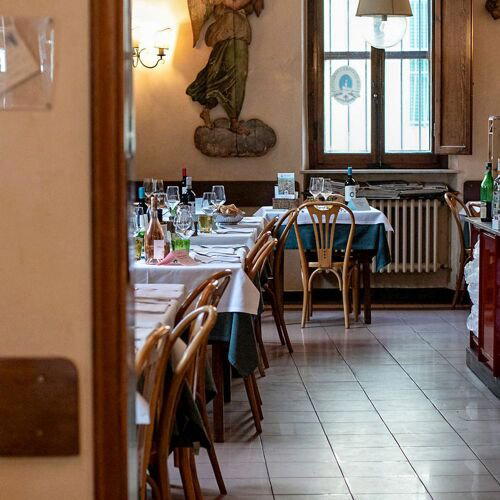
The Quai des Célestins and the Weight of Lyonnaise Institution
There is a particular quality to the dining rooms that line Lyon's quays. The Saône sits just beyond the glass, the light shifts with the hour, and the rooms themselves carry the mild formality of places that have absorbed decades of regular custom. The brasserie on the Quai des Célestins belongs to this register: stone-faced buildings, a location that positions the address squarely between the Presqu'île's commercial centre and the quieter residential stretch of the second arrondissement, and a dining culture that takes Lyonnaise cooking as a given rather than a theme.
Lyon has long maintained a tiered restaurant culture in which the grand brasserie and the neighbourhood bouchon serve structurally different purposes. The bouchon is intimate, fixed in format, and built around a short list of canonical dishes. The brasserie operates on a broader canvas, longer hours, a wider menu, a room that accommodates solo diners, business lunches, and large tables simultaneously. Maison Léa functions in that second mode, bringing the operational scope of the brasserie tradition to a neighbourhood that expects it.
A Michelin Plate Two Years Running
The Michelin Plate, awarded in both 2024 and 2025, is a credential worth reading correctly. It does not carry the starred hierarchy of properties like Paul Bocuse - L'Auberge du Pont de Collonges in Collonges-au-Mont-d'Or or Troisgros - Le Bois sans Feuilles in Ouches, nor the creative ambition of Flocons de Sel in Megève. What it does signal is consistent kitchen quality recognised by the Guide's inspectors as worth noting at a price point, €€ on a scale of four, that keeps the format genuinely accessible. In a city where Michelin has also recognised addresses such as Daniel et Denise Croix-Rousse, Daniel et Denise Créqui, and Daniel et Denise Saint-Jean across the bouchon format, the Plate at Maison Léa places it within a broader ecosystem of quality that spans multiple formats and price tiers.
A score sustained above 4.3 over that many ratings in a competitive city suggests consistent delivery rather than a single well-timed meal. In Lyon's dining culture, where regulars return frequently and hold kitchens to high standards, that breadth of positive feedback carries weight.
The Brasserie Format in Lyon's Context
France's grand brasserie tradition stretches from the Alsatian houses of the late nineteenth century through to the all-day institutions of Paris and the grandes salles of Lyon's second arrondissement. The format carries specific obligations: a room capable of turning tables across service periods, a menu that acknowledges both the classics and the season, and a service register that is attentive without being ceremonial. Brasserie Georges represents the large-scale end of that tradition in Lyon, with a dining room that seats several hundred. Maison Léa operates at a different scale, positioned closer to the neighbourhood brasserie mode than the monumental institution.
The Lyonnaise brasserie draws from a canon that overlaps with but is distinct from the bouchon. Quenelles de brochet, gratins, slow-braised meats, salads built around local charcuterie, and wine lists anchored in the Rhône Valley and Beaujolais, these are the reference points. At addresses like Cafe Comptoir Abel, the connection to historical Lyonnaise cooking is explicit and self-conscious. In the brasserie register, the same ingredients and techniques appear in a format that is less fixed and more responsive to a mixed clientele across the day.
For visitors whose Lyon itinerary includes higher-end contemporary cooking, the context is useful. Lyon's restaurant culture now spans from the Michelin three-star tier through creative contemporary addresses such as Mirazur in Menton (representative of what ambitious regional French cooking now looks like at the summit of the market) down through the Plate-level brasseries and neighbourhood bouchons. The restaurant occupies a specific position in that range: serious enough to earn and retain inspector recognition, priced for regular rather than occasional use. For a French comparison at a similarly accessible entry point in Paris, Aux Lyonnais in Paris gives a sense of how the Lyonnaise brasserie format translates to another city; Josephine Bouchon in London shows what happens when the format crosses further. Neither substitutes for the original, but both illustrate what the city's culinary export looks like at distance.
Cuisine and What to Order
The restaurant's cuisine type is listed as Lyonnaise, which in practical terms means the kitchen draws from the regional repertoire that made the city's reputation as a centre of French gastronomy. The brasserie format typically produces a menu wide enough to accommodate the classics, the braised offal dishes and slow-cooked preparations associated with the mères lyonnaises tradition, the sausages and gratins tied to the region's agricultural hinterland, and the lighter egg-based preparations that have always been part of the city's cooking. For visitors new to Lyonnaise cuisine, the honest answer to what to order is: prioritise the dishes that would not appear unchanged on a standard Paris brasserie menu. The regional specificity is the point. Quenelles, if on the menu, represent the city's most technically demanding contribution to French cooking, a poached pike preparation with a texture that no description fully conveys. Dishes drawing on local charcuterie (rosette de Lyon, saucisson brioché) locate the meal in the Presqu'île's food culture rather than a generalised French register.
The price point positions the restaurant well below the creative contemporary tier in Lyon, while addresses like Alléno Paris au Pavillon Ledoyen or Bras in Laguiole operate in an entirely different economic register. Within Lyon itself, the comparable comparable set at the Plate level includes the Daniel et Denise addresses and the neighbourhood brasseries of the Presqu'île and Croix-Rousse. The restaurant's quayside location gives it a slight premium in setting over addresses deeper in the residential arrondissements.
Planning a Visit
The address at 11 Quai des Célestins places the restaurant on the right bank of the Saône in the second arrondissement, within easy reach of the central Presqu'île. Booking in advance is advisable, particularly for weekend lunches and weekday evenings when the brasserie format draws a mixed local and visitor clientele. Reservations are recommended.
At a Glance
Comparable venues nearby, for context on price, style, and recognition.
| Venue | Cuisine | Price | Notes |
|---|---|---|---|
| Maison LéaThis venue — the venue you are viewing | Lyonnaise | $$$ | Not listed |
| L'Institut Restaurant | Not listed | $$$ | Quartier Bellecour Carnot, Contemporary French Bistronomic |
| Contre-Champ | Not listed | $$$ | Quartier Quartiers Anciens, Contemporary French Bistronomie |
| L'Alexandrin | Not listed | $$$ | Quartier Voltaire Part-Dieu, Modern French with Lyonnais Heritage |
| Chez Pimousse | Not listed | $$$ | Quartier Ouest des Pentes, Modern French Tasting Menu |
| Trèfle | Not listed | $$$ | Quartier Bellecour Carnot, Modern Vegan French Gastronomy |
Recognition history
Dated appearances from independent guides and award organizations, with the underlying list record or original source where available.
Michelin Plate
Michelin
Michelin Plate
Michelin
Michelin Plate
Michelin
Continue exploring
More in Lyon
Restaurants in Lyon
Browse all →
Bars in Lyon
Browse all →
Hotels in Lyon
Browse all →

At a Glance
- Classic
- Elegant
- Intimate
- Cozy
- Date Night
- Special Occasion
- Terrace
- Street Scene
Current opening hours
- Monday
- Closed
- Tuesday
- 12–2 PM, 7–9:30 PM
- Wednesday
- 12–2 PM, 7–9:30 PM
- Thursday
- 12–2 PM, 7–9:30 PM
- Friday
- 12–2 PM, 7–9:30 PM
- Saturday
- 12–2 PM, 7–9:30 PM
- Sunday
- Closed
Hours can change for holidays and private events. Last verified .
Intimate candlelit setting with contemporary decor and terrace overlooking the Saône river.