Magazine
Magazine sits inside the Serpentine Galleries in Hyde Park, occupying one of London's more architecturally charged dining settings. The restaurant draws a loyal crowd of gallery visitors, park regulars, and West London residents who treat it as a genuine neighbourhood fixture rather than a destination tick. Its address alone places it in a comparable set unlike any other London dining room.
Pearl is the En Primeur Club membership app — saves, bookings, and concierge access live there. Same editors, same standards.
- Address
- Serpentine Galleries, West Carriage Drive, Hyde Park, London, W2, United Kingdom
- Phone
- (020) 7298 7552
- Website
- serpentinegalleries.org
- Directions
- Get directions
 Saves & bookings on Pearl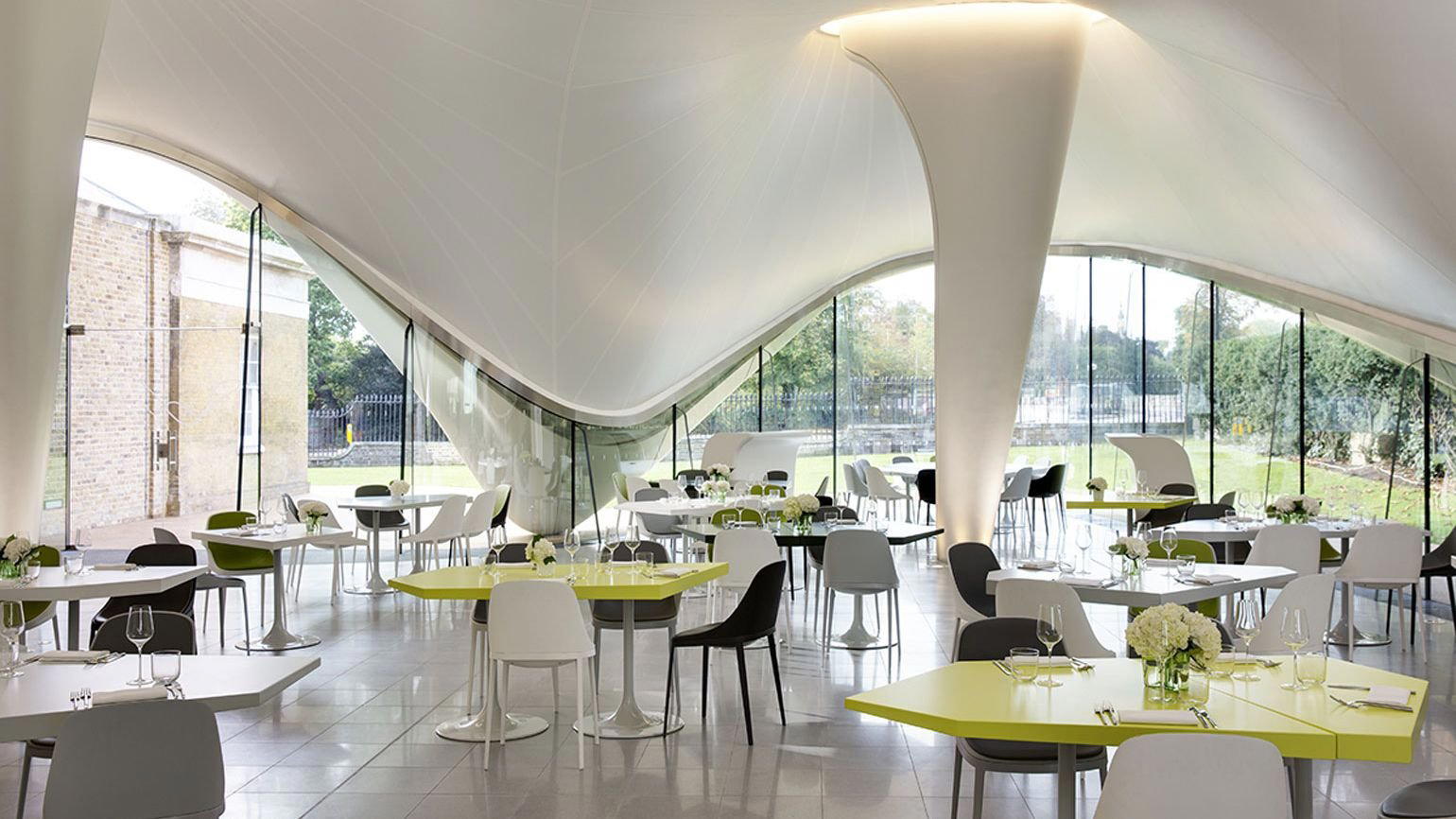
Dining Inside the Gallery: What the Setting Does to a Meal
Hyde Park's restaurant offering has always operated by different rules than the rest of London. Without the density of Mayfair or the foot-traffic economics of Soho, venues here compete on something harder to engineer: a reason to seek them out specifically. Magazine, positioned within the Serpentine Galleries on West Carriage Drive, earns that reason through its address. The Serpentine is one of the few public art institutions in London where the building itself carries curatorial weight, and a restaurant inside it inherits that gravity whether it intends to or not.
That context shapes who comes and, crucially, who comes back. The regulars at Magazine are not primarily destination diners ticking through London's Michelin circuit alongside CORE by Clare Smyth or The Ledbury. They are more likely to be gallery members, Kensington residents, and the kind of professional Londoner who treats the park as a genuine commute corridor. The loyalty here is place-loyalty as much as food-loyalty, and that combination tends to produce a more embedded, less transactional dining culture than you find in the city's formal fine-dining tier.
What Keeps the Regulars Coming Back
Venues attached to cultural institutions face a structural challenge that standalone restaurants do not: the primary draw for many visitors is the gallery, not the kitchen, which can reduce the dining room to an afterthought. The restaurants that survive and build loyal followings in these settings do so by developing an identity that functions independently of whatever exhibition is running upstairs. Magazine, based on its positioning within the Serpentine's west wing, operates in a space where the design of the building is the constant, and the food programme sits alongside it rather than competing with it.
For regulars, this creates a specific kind of comfort. The dining room's relationship to Hyde Park's light and greenery through its glazed surfaces is the kind of thing that changes with the seasons and the hour without the menu needing to do all the atmospheric work. A lunch here in late autumn reads differently than the same table in July, and that natural variability is something that a basement dining room in Mayfair cannot replicate regardless of its technical ambition. It is the kind of detail that pulls people back on their own schedule rather than waiting for a special occasion.
London's upper-tier fine dining addresses, from Restaurant Gordon Ramsay to Sketch's Lecture Room and Library, ask diners to submit to a highly controlled environment. Magazine asks something different: to eat within a living, public institution where the park and the art form the perimeter of the experience. That is a distinct offer within London dining, and it attracts a distinct kind of regular.
The Gallery Restaurant in London's Wider Dining Map
Gallery dining in London has historically underperformed its potential. For years, the formula at major institutions tended toward safe, cafeteria-adjacent food that treated dining as a logistical solution for visitors rather than a programme worth developing. That model has been in retreat. Across London's cultural venues, serious food and drinks programming has become part of the institutional identity. Magazine sits within that shift, occupying a physical space that the Serpentine built as an architectural statement and that the restaurant now inhabits as a year-round proposition.
The comparison set here is not Dinner by Heston Blumenthal at the Mandarin Oriental or any of the hotel dining rooms that anchor the Hyde Park neighbourhood at the luxury end. Those venues compete on credential and occasion. Magazine competes on integration: into the park, into the gallery's programme, and into the weekly rhythms of the people who live and work nearby. That is a narrower competitive niche but a stickier one. For the full scope of what London's dining scene covers across all price points and neighbourhoods, the EP Club London restaurants guide maps the terrain in detail.
For those travelling further across the UK for comparable experiences where the setting is as important as the plate, L'Enclume in Cartmel and Moor Hall in Aughton both demonstrate how deeply a restaurant can embed itself in a specific landscape. Le Manoir aux Quat' Saisons in Great Milton and Gidleigh Park in Chagford operate on a similar logic of place-as-programme. Even The Fat Duck in Bray and Hand and Flowers in Marlow have built their reputations partly on being worth the journey to a specific location. Magazine is doing a version of that within London itself, which is a harder argument to make in a city where the next restaurant is rarely more than a five-minute walk.
Planning a Visit
Magazine is located within the Serpentine Galleries on West Carriage Drive in Hyde Park, W2. The nearest transport is Lancaster Gate or Queensway on the Central line, or Knightsbridge on the Piccadilly line, with the gallery a moderate walk from either. Given its Hyde Park setting, Magazine is accessible from multiple directions across the park, and combining a visit with the Serpentine's current exhibition programme is one natural approach. For broader London trip planning, the EP Club London hotels guide, bars guide, and experiences guide cover the full picture across the city. Those with interests in wine should also consult the London wineries guide for the wider regional context.
At the international level, the closest analogue for what Magazine represents in structural terms, a serious restaurant embedded within a cultural institution in a major city's public space, might be found in venues like Le Bernardin in New York City or Atomix, both of which demonstrate how a restaurant's setting and institutional identity can become as integral to its following as the food itself.
Budget and Context
Comparable venues nearby, for context on price, style, and recognition.
| Venue | Cuisine | Price | Notes |
|---|---|---|---|
| MagazineThis venue — the venue you are viewing | Not listed | $$$ | Not listed |
| Toba | Not listed | $$$ | St. James's, Authentic Indonesian |
| Kudu Grill | Not listed | $$$ | Nunhead, Contemporary South African Braai |
| Amaro | Not listed | $$$ | Kensington Palace Gardens, Cocktail Bar with Light Sicilian Plates |
| The Rex Deli | Mayfair, Modern Deli & Gastropub | $$ | Not listed |
| Farm Girl | Notting Hill, Healthy Cafe Brunch | $$ | Not listed |
Continue exploring
More in London
Restaurants in London
Browse all →
Bars in London
Browse all →
Hotels in London
Browse all →


At a Glance
- Modern
- Trendy
- Elegant
- Casual Hangout
- Brunch
- Design Destination
- Open Kitchen
- Terrace
- Craft Cocktails
- Zero Waste
- Local Sourcing
- Garden
- Street Scene
Current opening hours
- Monday
- Closed
- Tuesday
- 10 AM–4 PM
- Wednesday
- 10 AM–4 PM
- Thursday
- 10 AM–4 PM
- Friday
- 10 AM–5 PM
- Saturday
- 10 AM–5 PM
- Sunday
- 10 AM–5 PM
Hours can change for holidays and private events. Last verified .
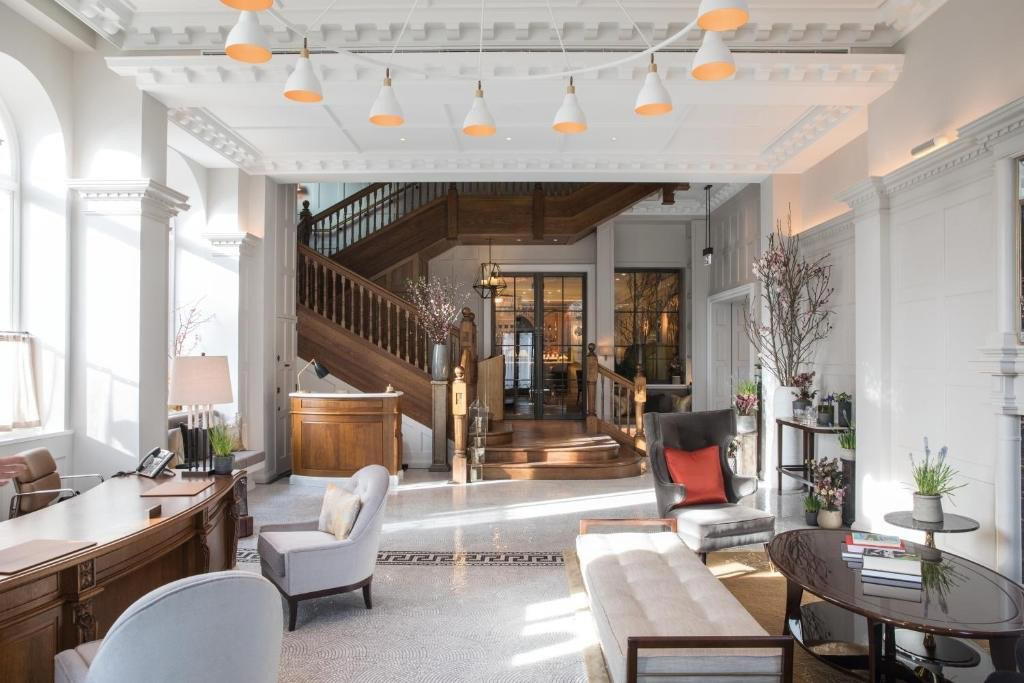
Airy and light-filled with modern white pillars, arched roof, and glass on three sides creating a spacious, stylish atmosphere.