
A Michelin-starred creative restaurant in Sarrià-Sant Gervasi, MAE Barcelona brings together Colombian, Costa Rican, and Spanish culinary traditions under a philosophy called Sincretismo, the deliberate combination of distinct ingredients and ideas. Two tasting menus anchor the experience, with courses that pair Galician clams and tarta de Santiago with Latin American chilli peppers and tepache. Google reviewers rate it 4.8 from 229 reviews.
 Discover on Pearl
Pearl is the En Primeur Club membership app — saves, bookings, and concierge access live there. Same editors, same standards.
- Address
- Carrer de Sant Elies, 22, Sarrià-Sant Gervasi, 08006 Barcelona, Spain
- Phone
- +34 645 73 62 83
- Website
- maebcn.com
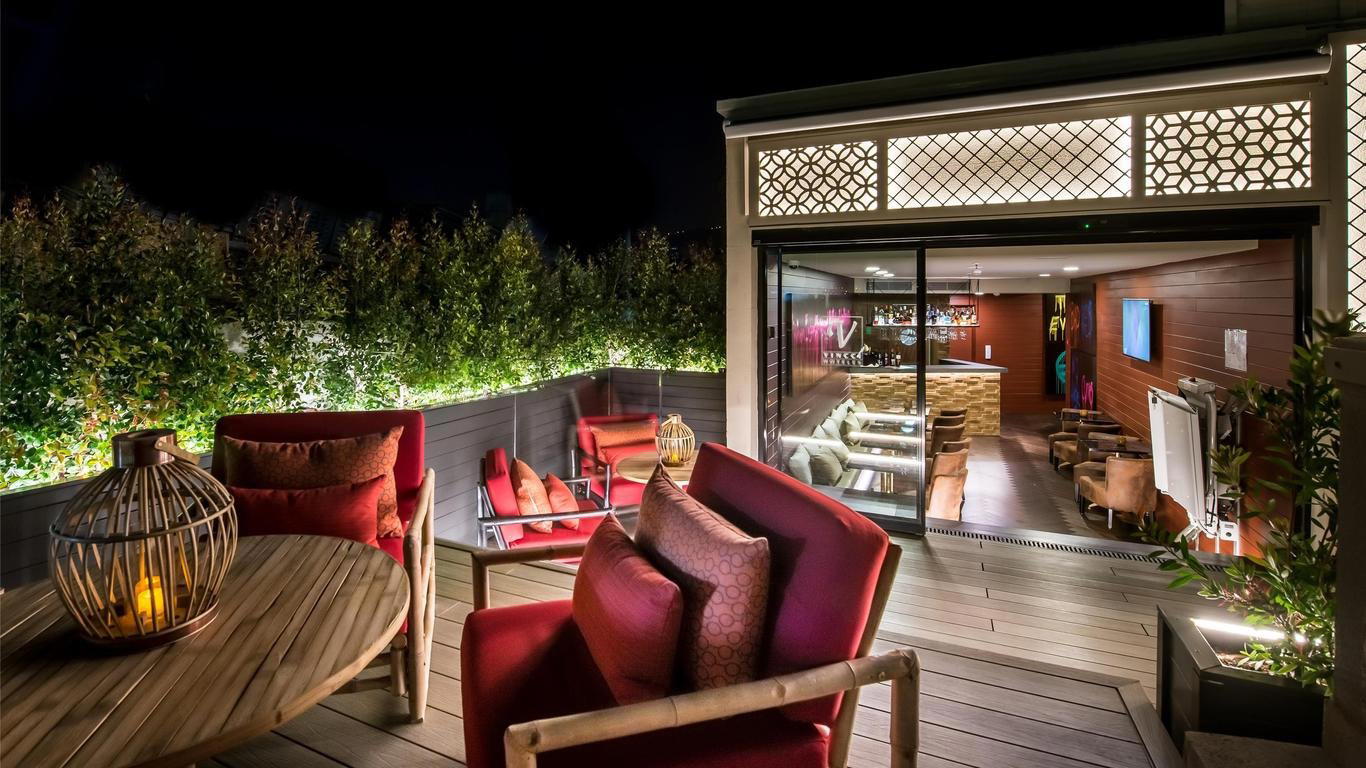
The upper residential neighbourhood of Sarrià-Sant Gervasi sits at a remove from the concentrated restaurant density of Eixample or El Born. Dining rooms here tend to serve the local population rather than international footfall, which makes the address on Carrer de Sant Elies quieter on approach than the city's more publicised creative tables. That lower visibility, and the building's inheritance from Freixa Tradició, means MAE Barcelona operates in a different register from the spectacle-heavy end of the city's creative dining scene, more focused, more contained, and awarded a Michelin star in 2024.
Where Barcelona's Creative Scene Sits in 2024
Barcelona's one-star tier has expanded in recent years, but the paths that reach it diverge significantly. The established heavy end, Cocina Hermanos Torres, ABaC, Enigma, operates at the €€€€ price point with large formats, sprawling rooms, and extended menus shaped by years of institutional recognition. MAE prices at €€€, a tier below those rooms, and achieves its star through a different proposition: a smaller creative program built on cultural synthesis.
That positioning reflects a wider shift in how Michelin has assessed Spanish creative cooking. Alongside Barcelona's upper tier, Spain's broader creative canon, El Celler de Can Roca in Girona, Arzak in San Sebastián, DiverXO in Madrid, Quique Dacosta in Dénia, Aponiente in El Puerto de Santa María, Azurmendi in Larrabetzu, has long been defined by the question of what Spanish cuisine means and where its edges lie. MAE adds another variable: what happens when the Latin American diaspora becomes a structural ingredient rather than a garnish.
Sincretismo as a Menu Architecture
The concept that organises every course at MAE is Sincretismo, drawn from the Royal Spanish Academy's definition: the combination of different theories, attitudes, or opinions. In practice, this is not a fusion exercise where Latin American flavour is applied to Spanish technique as surface decoration. The approach is more structural. Galician clams, a product with clear Atlantic identity and strong regional attachment, appear alongside aji amarillo, the Peruvian yellow chilli that carries its own deep culinary history. Tarta de Santiago, a dish rooted in Galician religious and gastronomic tradition, is brought into conversation with tepache, a fermented pineapple drink with pre-Columbian origins in Mexico and Central America. The combinations are designed to ask questions about where ingredients belong and what tradition actually means when two culinary systems share a table.
This is a significant editorial premise for a tasting menu to carry. It requires the kitchen to execute with enough command that each product reads clearly on its own terms before the combination makes its argument. At MAE, three people shape this: Mariella Rodríguez from Costa Rica manages the operation, while chefs Diego Mondragón from Colombia and Germán Espinosa from Spain share the cooking. The name itself encodes the relationship, MAE translates loosely as 'companion' or 'mate' in Costa Rican dialect.
The Arc of the Meal: MAE and Gran MAE
The tasting menu format is the appropriate vehicle for this kind of conceptual cooking. Single dishes can suggest Sincretismo; a sequence can demonstrate it. MAE offers two menus, MAE and Gran MAE, which differ in length and depth while sharing the same conceptual framework. Both menus progress through the kitchen's cross-cultural argument course by course, building an internal logic that a shorter meal could not sustain.
One course carries particular weight in that progression: Pan, a bread course built around an eighty-year-old sourdough starter inherited directly from Freixa Tradició, the restaurant that previously occupied the same premises. The starter is a physical link to a previous culinary generation. Sourdough starters are maintained and passed on in professional kitchens across Europe, they represent accumulated microbial and institutional memory, and MAE's inherited starter sits at that intersection of tradition and transformation that Sincretismo proposes.
The molluscs with tomato and aji amarillo course is the sequence's most direct expression of the menu's premise. Molluscs are as Iberian as any Spanish product, the country's Atlantic and Mediterranean coastlines define its shellfish culture, and aji amarillo is one of the defining flavour elements of Peruvian cooking, cultivated and used there for centuries. The pairing is neither accidental nor decorative: it is the argument in miniature.
The Room and Its Inheritance
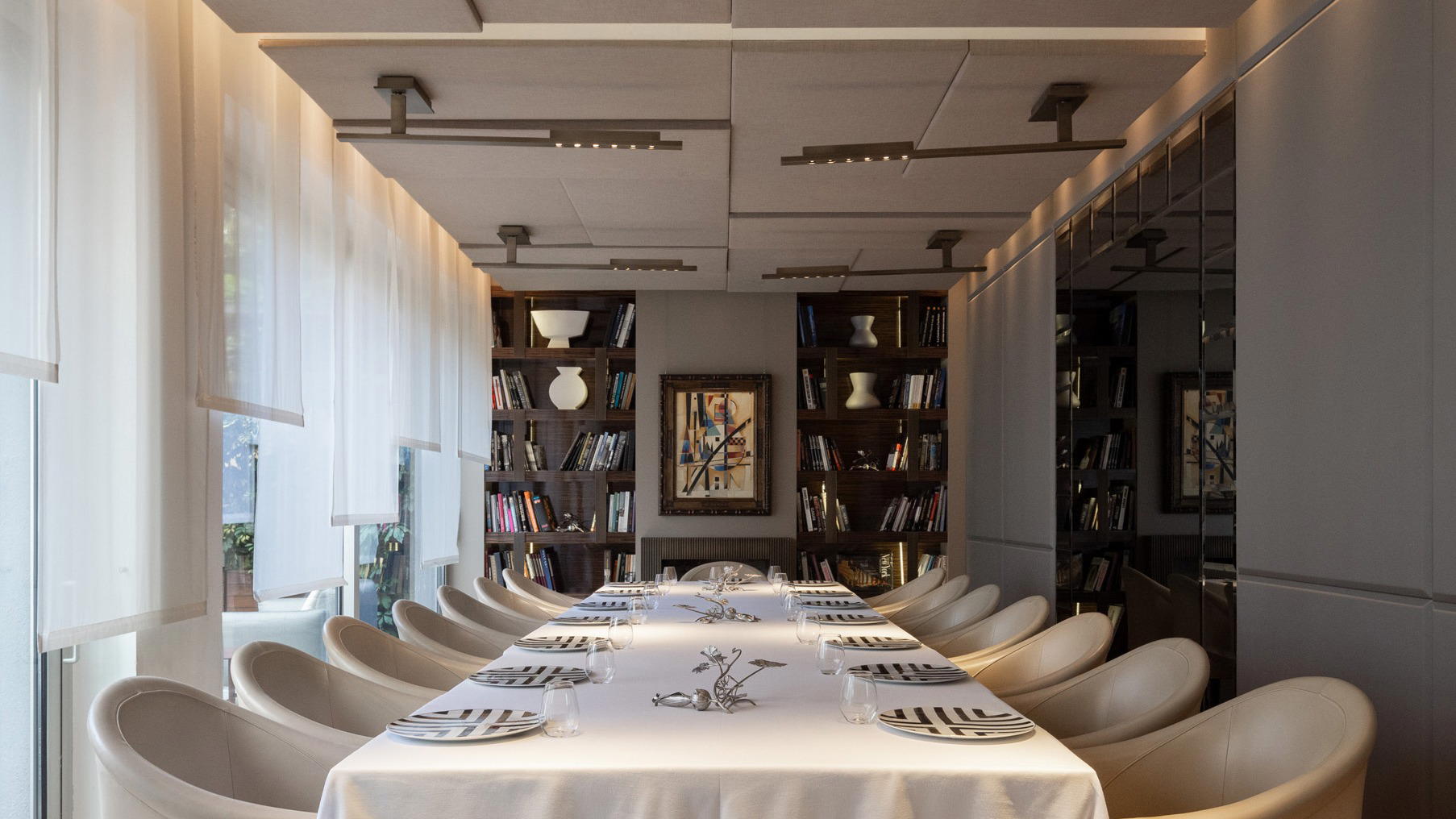
The dining room at Carrer de Sant Elies 22 was redesigned when MAE took over from Freixa Tradició. The interior is described as designer in character. What the room inherits is a neighbourhood reputation: Freixa Tradició was a respected local address, and the building carries that association even as the cooking inside has moved in a different direction. In Sarrià-Sant Gervasi, where the dining scene tends toward well-established neighbourhood institutions rather than destination restaurants aimed at inbound visitors, MAE occupies an unusual position, a conceptually ambitious Michelin-starred table embedded in a residential quarter that doesn't primarily orient itself toward dining tourism.
Service Hours and When to Go
MAE operates on a tightly defined schedule: lunch and dinner Wednesday through Saturday, with Sunday and Monday and Tuesday closed. Service runs from 1 PM to 3 PM for lunch and 8 PM to 10 PM for dinner on operating days. The condensed week means the kitchen concentrates its output across four days rather than spreading across a seven-day format. For visitors to Barcelona, this creates a specific planning requirement: the restaurant is not available at weekends beyond Saturday, and early-week plans need to account for the closure. The Google review score of 4.8 from 282 reviews suggests consistent execution.
Know Before You Go
- Address: Carrer de Sant Elies, 22, Sarrià-Sant Gervasi, 08006 Barcelona, Spain
- Price range: €€€
- Awards: Michelin 1 Star (2024)
- Hours: Wednesday to Saturday, lunch 1 PM–3 PM, dinner 8 PM–10 PM; closed Sunday, Monday, Tuesday
- Google rating: 4.8 from 229 reviews
- Menus: MAE (shorter) and Gran MAE (extended tasting menu)
Recognition Snapshot
Comparable venues nearby, for context on price, style, and recognition.
| Venue | Cuisine | Price | Awards | Notes |
|---|---|---|---|---|
| MAE BarcelonaThis venue — the venue you are viewing | Mediterranean-Latin American Fusion | $$$ | Michelin 1 Star | |
| Prodigi | Modern Catalan Fine Dining | $$$$ | Michelin 1 Star | la Dreta de l'Eixample |
| Suto | Modern Japanese Omakase | $$$$ | Michelin 1 Star | Sants |
| Vivanda | Contemporary Catalan | $$$ | Bib Gourmand | Sarria |
| SCAPAR | Modern Japanese Kaiseki Fusion | $$$$ | Michelin 1 Star | Sant Gervasi - Galvany |
| Capet | Modern Catalan | $$$ | Michelin Plate | Barri Gotic |
Continue exploring
More in Barcelona
Restaurants in Barcelona
Browse all →
Bars in Barcelona
Browse all →
Hotels in Barcelona
Browse all →

At a Glance
- Elegant
- Sophisticated
- Modern
- Intimate
- Date Night
- Special Occasion
- Celebration
- Open Kitchen
- Standalone
- Extensive Wine List
- Sommelier Led
- Local Sourcing
Sober, minimalist space with visual harmony created by greens and whites, warm and intimate lighting, with an open kitchen bar in the center of the room where diners can observe preparation.