
Tabelog 100 #73
Our verdict
Maa Boya brings Sichuan and tantan-men cooking into Ukiha’s small-city lunch circuit, with a sub-¥999 average price and recognition in Tabelog’s Chinese WEST “Tabelog 100” for 2026 and 2023. The draw is not ceremony but focus: a house-restaurant setting, table seating, take-out, and a category that connects regional Japanese dining to a sharper Chinese vocabulary.

Pearl is the En Primeur Club membership app, where members save venues, book tables and use the concierge.
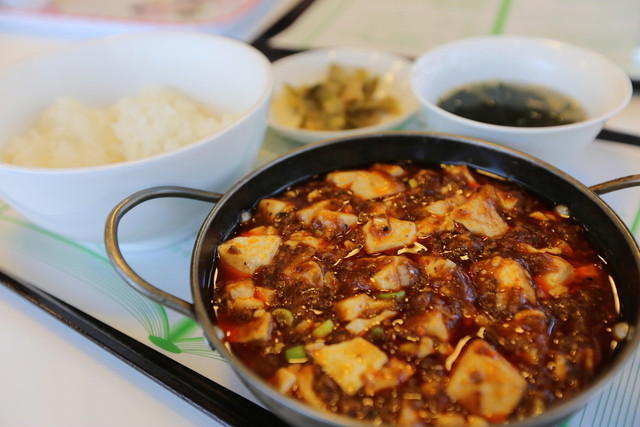
Approaching Maa Boya in Ukiha changes the tempo before the first order. Ukiha is better known to many travellers for fruit, river valleys, and small-city Fukuoka texture than for destination Chinese cooking, which is why the restaurant reads differently from its metropolitan counterparts. The point is not urban polish but scale, locality, and how an everyday restaurant can make a category feel rooted in Ukiha rather than imported from a larger dining market.
Maa Boya sits in that lane: Sichuan, tantan-men, and Chinese cooking, priced for everyday eating rather than special occasions. Its inclusion in Tabelog’s Hyakumeiten recognition in 2026, alongside a listed score of 3.68, gives the restaurant a signal beyond local affection. In western Japan, Chinese restaurants on that kind of list can range from modest noodle-focused places to more formal dining rooms; this venue belongs to the everyday side, where repeatability matters as much as range.
Sichuan cooking in Ukiha's produce country
Ukiha’s food identity is agricultural: orchards, roadside fruit stands, water-fed rice fields, and seasonal output. Sichuan cooking is often discussed through heat, oil, and spice. The more interesting reading is their meeting point. In rural Fukuoka, Chinese cooking must justify itself not by theatre but by clarity: noodles, sauces, aromatics, and vegetables need enough definition to hold attention without relying on the infrastructure of a large dining room.
The category listing matters. Tantan-men in Japan is not simply a Sichuan transplant; it has its own Japanese evolution, moving between soup, sesame, chilli, minced meat, and noodle texture. A restaurant marked by both Sichuan and tantan-men sits at that intersection rather than in a broad “Chinese restaurant” category. For travellers mapping Fukuoka dining beyond Hakata ramen and seafood, that specificity is the reason to pay attention.
The price bracket sharpens the picture. At - JPY 999, the meal belongs to the practical world of everyday noodle counters and local lunch rooms, not the luxury-Chinese format of major hotels. Among comparison venues in the broader out-of-metro set, Mendoriya, Tachibana Udon, and Maruboshi Ramen occupy a similarly casual conversation, while Dharmasagara and Ichiban Dori sit in different registers. Maa Boya’s award recognition is more telling because the signal is generated at low average spend, not by premium ingredients or tasting-menu architecture.
An everyday setting changes the way the category feels
Chinese dining in Japan often splits into two formats: the neighbourhood chuka room, fast, affordable, and built around set meals or noodles; and the formal Chinese restaurant with private rooms, banquets, and polished service. A restaurant in Ukiha with an everyday listed price point fits closer to the casual side, while the award listing pulls it into a wider regional conversation about where serious Chinese cooking can happen outside large cities.
The setting also changes expectations around sourcing. Surrounded by farmland and small producers, a restaurant need not advertise a grand farm-to-table thesis for locality to matter. The local context is already in the dining economy: short supply lines, weekday lunch habits, family use, and a customer base that treats restaurants as daily life rather than itinerary punctuation. That is why this Chinese cooking can feel more grounded in Ukiha than a more elaborate format would.
The format has practical discipline. The available public facts point less to spectacle than to category focus: Sichuan, tantan-men, and Chinese cooking at an accessible listed price. Those details place the restaurant close to community dining rather than destination-only dining. It is not a stage for ceremony or a banquet narrative, but a Ukiha venue where Sichuan-inflected everyday cooking carries the argument.
How to place it in a wider Japan itinerary
For a traveller building a Fukuoka or Kyushu route, this stop makes most sense when Ukiha itself is already part of the plan. The city’s rural scenery, rail-linked pacing, and fruit-country rhythm give the meal context that would be lost as a detached detour. The area rewards slower pacing rather than a rushed in-and-out meal.
The stronger editorial move is to read Maa Boya against Japan’s national pattern of serious casual dining. Inexpensive places can earn intense followings because specialization carries weight: a noodle, a sauce, a preparation style, a focused menu category. That is why a - JPY 999 Chinese restaurant in Ukiha can sit in the same conversation as more expensive out-of-metro peers without needing their service model.
For city-level planning, start with Our full Ukiha restaurants guide, then widen the trip through Our full Ukiha hotels guide, Our full Ukiha bars guide, Our full Ukiha wineries guide, and Our full Ukiha experiences guide. Readers comparing Japanese casual formats can also scan other dining rooms in Japan and abroad, but Maa Boya is best understood through the Ukiha lens: a specific category, a modest price point, and a regional recognition signal that makes the restaurant stand out without needing a luxury frame.
The reason to care is precise: a low-priced Sichuan and tantan-men restaurant in a rural Fukuoka city has earned Tabelog Hyakumeiten recognition. That combination says something larger about Japan’s food culture. Serious cooking is not confined to expensive rooms, central districts, or tasting-menu formats; sometimes the more revealing venue is an everyday restaurant where the category, town, and daily price point all pull in the same direction.
Frequently asked questions
Is Maa Boya a family-friendly restaurant?
Maa Boya is an everyday-priced restaurant in Ukiha. Check the venue's official channels for the latest details on children, seating, and current service policies.
What kind of setting is Maa Boya?
Maa Boya is a restaurant in Ukiha. Its listed categories are Sichuan, tantan-men, and Chinese cooking.
What price level is Maa Boya?
Pricing at Maa Boya is listed as - JPY 999.
What's the address for Maa Boya?
Ukiha.
Should I book Maa Boya in advance?
Publicly provided booking details are limited. Check the venue's official channels for the latest details before visiting.
Fast Comparison
Comparable venues by cuisine and price in the same metro.
| Venue | Cuisine | Price | Awards | Notes |
|---|---|---|---|---|
| Maa BoyaThis venue (the venue you are viewing) | Sichuan Mapo Tofu & Tantanmen | $1–10 | Tabelog 100 #73 | Not listed |
| 北口亭 | Numazu Gyoza | Not listed | Not listed | 杉崎町 |
| Chuka Sensai Renge | Chinese noodles and Tantan-men | Not listed | Tabelog 100 #49 | Nishi |
| 虎ノ門PAIRON | Taiwanese Gyoza Izakaya | $20–30 | Not listed | Toranomon |
| Kanro | Chinese Noodle House | $1–10 | Tabelog 100 #4 | Shianbashi |
| Din Tai Fung (鼎泰豊) | Taiwanese Dim Sum | $20–30 | Not listed | Shimogyo-ku |
Recognition history
Dated appearances from independent guides and award organizations, with the underlying list record or original source where available.
Tabelog 100 #73 · No. 73
Tabelog · Tabelog 100 - Chinese cuisine - WEST - 2026
Continue exploring
More in Ukiha
Restaurants in Ukiha
All restaurants in Ukiha →




Details
- Cozy
- Casual
- Solo
- Family
- Casual Hangout
- Group Dining
- Standalone
- A La Carte