Lusco's
Bourdain ate: the special salad with Italian vinaigrette, steak, shrimp, onion rings, and pompano.
- Address
- 722 Carrollton Ave, Greenwood, MS 38930
- Phone
- +1 662 832 8203
- Website
- luscos.restaurant
- Directions
- Get directions
A Dining Room That Time Has Treated Carefully
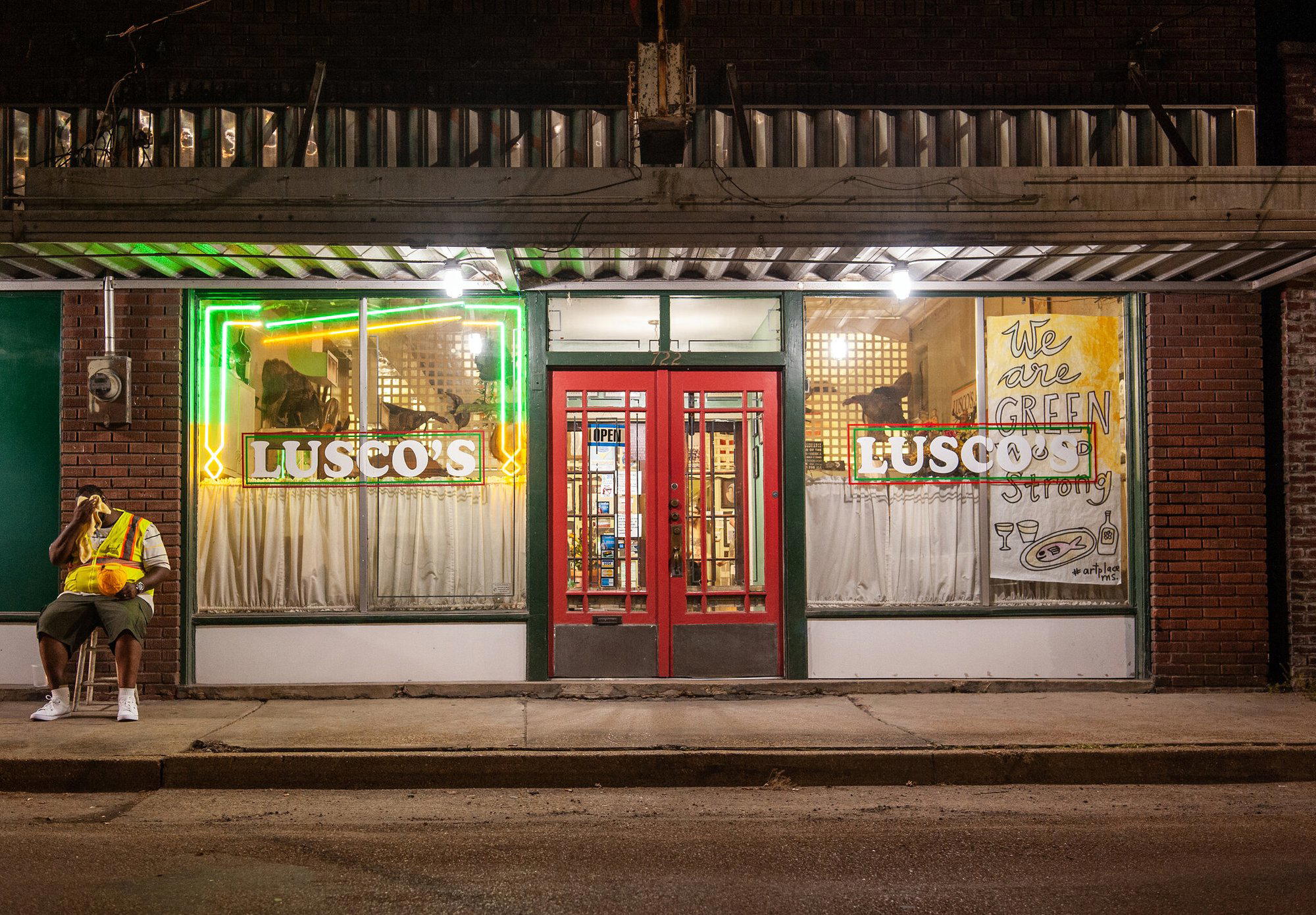
On Carrollton Avenue in Greenwood, Mississippi, the approach to Lusco's prepares you for something that most American restaurant culture has stopped producing: a room with genuine patina. The building carries the quiet authority of a place that has not needed to reposition itself for successive waves of dining trends. Inside, private curtained booths have long defined the experience, creating a degree of seclusion that was practical in the mid-twentieth century South and has since become the architectural signature that distinguishes Lusco's from every other dining room in the Mississippi Delta.
Greenwood sits at the agricultural heart of the Delta, a region whose culinary identity is shaped by the same flat, alluvial land that made it among the more productive cotton and farming corridors in the country. That relationship between land and table is not incidental to understanding what Lusco's represents. The Delta's dining tradition has always drawn from what the surrounding geography provides: catfish from the rivers and farm ponds, shrimp from the Gulf coast a few hours south, produce from the rich Delta soil. These are not locally-sourced talking points for a contemporary menu description; they are the baseline from which this style of cooking was built, decades before farm-to-table became a marketing category.
Ingredient Provenance in a Pre-Trend Context
The broader American fine dining conversation about sourcing, traceability, and regional specificity has been ongoing since at least the 1970s, gaining institutional momentum through places like Blue Hill at Stone Barns in Tarrytown and Single Thread Farm in Healdsburg, where the farm-to-table connection is codified and publicly foregrounded. At the coastal end of the spectrum, restaurants like Le Bernardin in New York City and Providence in Los Angeles have built their identities around sourcing relationships with specific fisheries and suppliers.
What places like Lusco's represent is an older version of the same logic, one that predates the vocabulary. Gulf shrimp, Delta catfish, and seasonal produce were on these tables not because of a philosophy but because they were what the region produced and what the kitchen knew how to cook. The sourcing was structural, not performative. Understanding that distinction matters when you are deciding where the restaurant fits in the wider American dining picture. It is not a farm-to-table restaurant in the contemporary sense. It is something earlier and less self-conscious: a regional house that built its menu around what was geographically available and has not found a reason to deviate.
For context on how dramatically the premium end of American dining has shifted toward codified sourcing programs, consider restaurants like Smyth in Chicago, Lazy Bear in San Francisco, or Addison in San Diego, where the sourcing narrative is central to the dining room conversation and the menu changes with supply. The restaurant operates in a different register entirely: consistency over seasons, a fixed repertoire rooted in place rather than a rotating expression of it. Neither approach is superior; they answer different questions about what a restaurant is for.
Greenwood's Dining Position and Lusco's Role Within It
Greenwood has a small but considered dining scene relative to its size. Alongside the restaurant, the city has restaurants like Revery, Stone Creek - Greenwood, and Verde, each addressing a different segment of local and visiting demand. For a fuller picture of where to eat in the city, the full Greenwood restaurants guide provides broader coverage.
What the restaurant holds in that context is the position of the historical anchor: the restaurant that has been operating long enough to have fed multiple generations of Greenwood families and to have become a destination for visitors making a deliberate trip through the Delta. That kind of longevity is not automatic. Restaurants at the regional institution level, from Emeril's in New Orleans to The Inn at Little Washington, survive across decades by maintaining a core identity while absorbing enough change to stay operationally viable. The restaurant case is distinctive because it has done this in a small Mississippi city rather than a major metropolitan market, which means its survival is less about volume and more about the loyalty of a specific, geographically defined community.
The Booths, the Occasion, and the Pace
The curtained booth format at the restaurant is not a design affectation. It reflects a social logic that was common in Southern dining rooms of a certain era, where privacy at table mattered and the meal was understood as an extended social occasion rather than a transaction. That pace and format sit at the opposite end of the spectrum from the open, communal, counter-seating direction that defines much of contemporary American dining, including places like Atomix in New York City or the chef's table formats at The French Laundry in Napa. The architectural choices at the restaurant encode a different theory of hospitality, and the dining room still delivers on it.
For visitors arriving from outside Greenwood, the restaurant sits at 722 Carrollton Avenue. The Delta itself, with its music history, agricultural landscape, and distinct cultural character, rewards the kind of slow travel that a dinner at the restaurant implicitly encourages.
Where It Sits in the American Regional Dining Conversation
American regional dining has attracted renewed critical attention in recent years, with food writers and editors increasingly acknowledging that the country's most interesting culinary traditions are not concentrated exclusively in its largest cities. The Delta is a clear example of a region with a coherent, historically grounded food culture that operates largely outside the award circuits that define recognition for restaurants like Frasca Food and Wine in Boulder, The Wolf's Tailor in Denver, or Atelier Moessmer Norbert Niederkofler in Brunico.
The restaurant does not accumulate the kind of credentials that appear on shortlists for national dining awards. Its authority comes from a different source: duration, community embeddedness, and the specific culinary geography of the Mississippi Delta. That is a harder thing to quantify than a Michelin star, but it is not a lesser form of distinction.
Planning Your Visit
The restaurant is a recommended reservation, smart casual, price tier 3 restaurant with an estimated $40 per person. The restaurant's address is 722 Carrollton Avenue, Greenwood, MS 38930. Arriving with a reservation is advised.
At-a-Glance Comparison
Comparable venues nearby, for context on price, style, and recognition.
| Venue | Cuisine | Price | Notes |
|---|---|---|---|
| Lusco'sThis venue — the venue you are viewing | Steakhouse & Seafood with Italian-Creole influences | $$$ | Not listed |
| Shapley's Restaurant | Steakhouse & Seafood | $$$ | Ridgeland |
| Nick Wallace Culinary | Modern Mississippi Cuisine | $$$ | downtown |
| Doe's Eat Place | Classic American Steakhouse & Delta Tamales | $$$ | historic downtown |
| Mesquite Chop House | Mesquite-Grilled Steakhouse | $$$ | Southaven |
| Scarlet's Steaks & Seafood | Steakhouse & Gulf Seafood | $$$ | D'Iberville |
At a Glance
- Historic
- Intimate
- Rustic
- Well Known
- Date Night
- Special Occasion
- Group Dining
- Private Dining
- Historic Building
- Byob
- Local Sourcing
Gold-filtered lighting in curtained private alcoves creating a cozy, historical, and laidback atmosphere.