
1 Michelin Star
Our verdict
A Michelin-starred chalet on the edge of a Jura pond, L'Étang du Moulin earns its one-star recognition through deep regional sourcing: morel mushrooms from local forests, autumn game, Charolais beef, and seasonal seafood presented by chef Jacques Barnachon in a dining room framed by timber and a direct view of the kitchen.

Pearl is the En Primeur Club membership app, where members save venues, book tables and use the concierge.
The menu
What to order
- Foie gras with Montbéliard sausage
- John-Dory with walnut brandade
- Rabbit with herbs at 63°C
- Morel ragoût
- Game dishes with autumn fruits
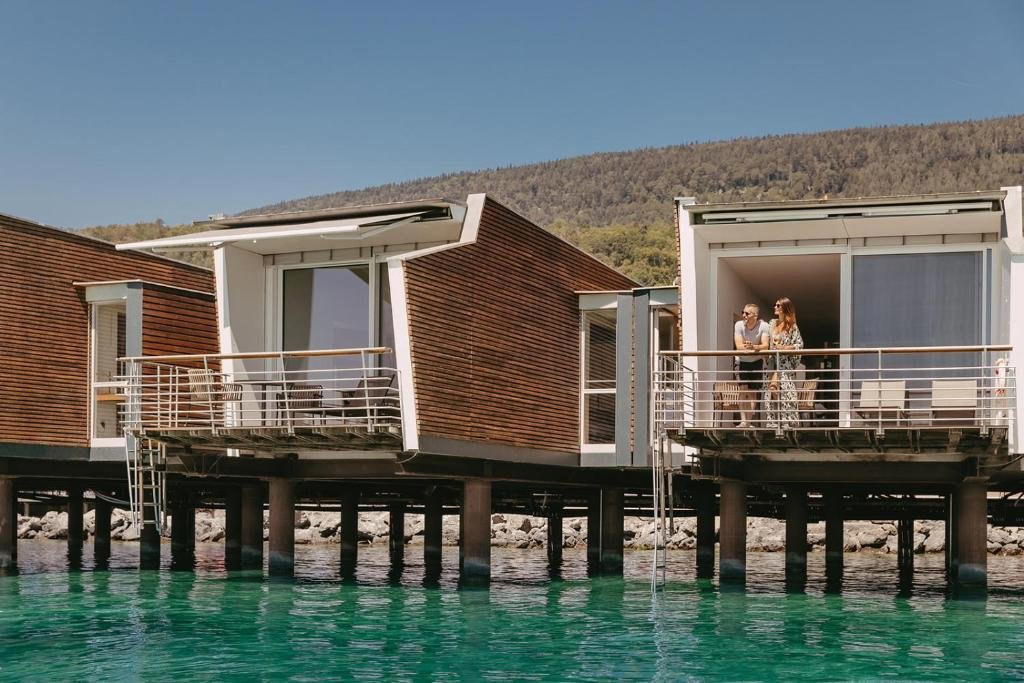
Arrive at L'Étang du Moulin in the Doubs department and the setting does preliminary work before the menu has a chance to speak. A pond catches whatever light remains after the Jura forest absorbs most of it; in winter, snowshoe tracks lead to the door and the chalet's timber frame holds the kind of silhouette that belongs on a calendar you'd actually buy. In summer, the water reflects the tree line and the air carries the particular mineral cool of high-altitude forest. The building and its surroundings are not incidental to the cooking here. They are its supply chain.
Ingredient Sourcing as Editorial Stance
Rural French fine dining has always maintained a closer relationship with its immediate terrain than city-based starred restaurants, and the Jura is a particularly strong case for that argument. The plateau running through Franche-Comté sits above 900 metres in places, supporting forests dense enough to sustain serious wild mushroom populations, rivers cold enough for trout, and pastures that finish Charolais cattle to a different specification than lowland equivalents. A Michelin-starred table operating inside that geography has a structural advantage: the distance between field or forest and kitchen is short, and the products themselves carry regional character that would cost a Parisian chef considerable effort to replicate. For comparison, consider that ambitious addresses like Alléno Paris au Pavillon Ledoyen work at three-star level partly through the scale of their sourcing networks. At L'Étang du Moulin, the sourcing network is essentially the surrounding plateau.
Jacques Barnachon's menu reflects that geography with a specificity that goes beyond seasonal gesturing. The Jura's morel season runs from March through May, and the mushroom occupies a signature position on the menu in the form of a ragoût. Morels are among the more technically demanding ingredients in French cooking: hollow-stemmed, prone to retaining grit, and requiring precise heat management to develop their earthy, almost smoky depth without losing structural integrity. Making them a signature dish rather than a garnish signals a kitchen that is confident in its technique and its access to supply. Barnachon is identified in the restaurant's Michelin citation as a specialist in the morel, which is a meaningful credential in a region where foraging knowledge runs generationally.
The Menu's Regional Logic
The menu at L'Étang du Moulin follows a seasonal structure that maps directly onto what the Jura plateau produces at different points in the year. Autumn brings game, the most terrain-specific of French protein categories, where the quality of the ingredient depends almost entirely on the habitat it came from. Spring and summer open the sourcing range toward coastal produce: John-Dory and lobster appear on the menu, representing the kind of French kitchen thinking that treats regional identity as a foundation rather than a constraint. Fillet of Charolais beef is a year-round anchor, linking the restaurant to Burgundy's famous cattle breed while staying within the broader eastern French culinary corridor.
This approach sits within a tradition of rural Michelin-starred restaurants that treat their location as a competitive specification rather than a limitation. Bras in Laguiole has built a three-star reputation around the Aubrac plateau's volcanic terroir. Flocons de Sel in Megève anchors its alpine identity to mountain ingredients at a comparable price tier to L'Étang du Moulin. Both demonstrate that the strongest argument for destination dining outside major cities is usually ingredient provenance rather than technique alone. L'Étang du Moulin operates on the same premise, with the Jura's forests and farms providing the editorial logic of every menu change.
The Dining Room
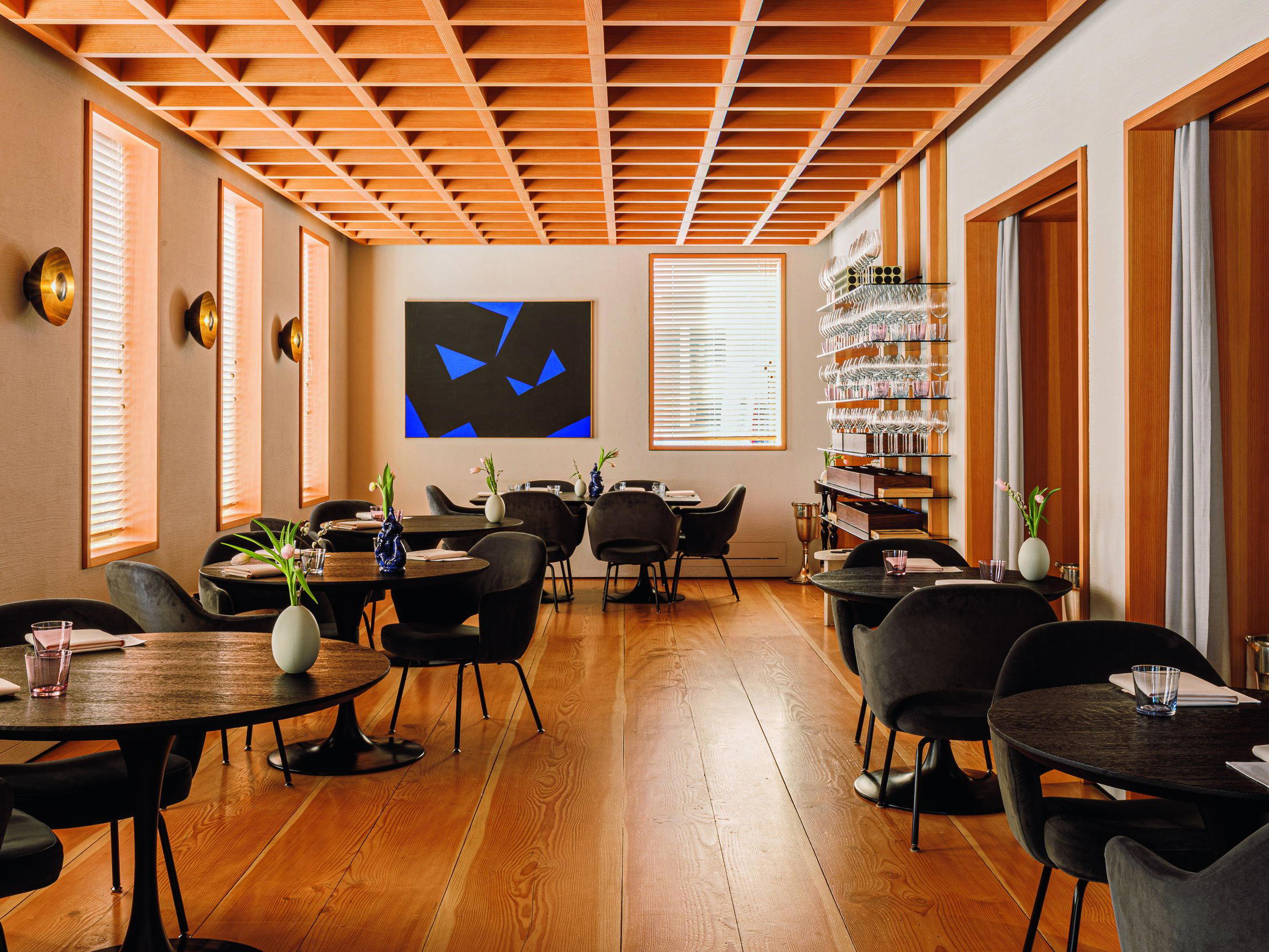
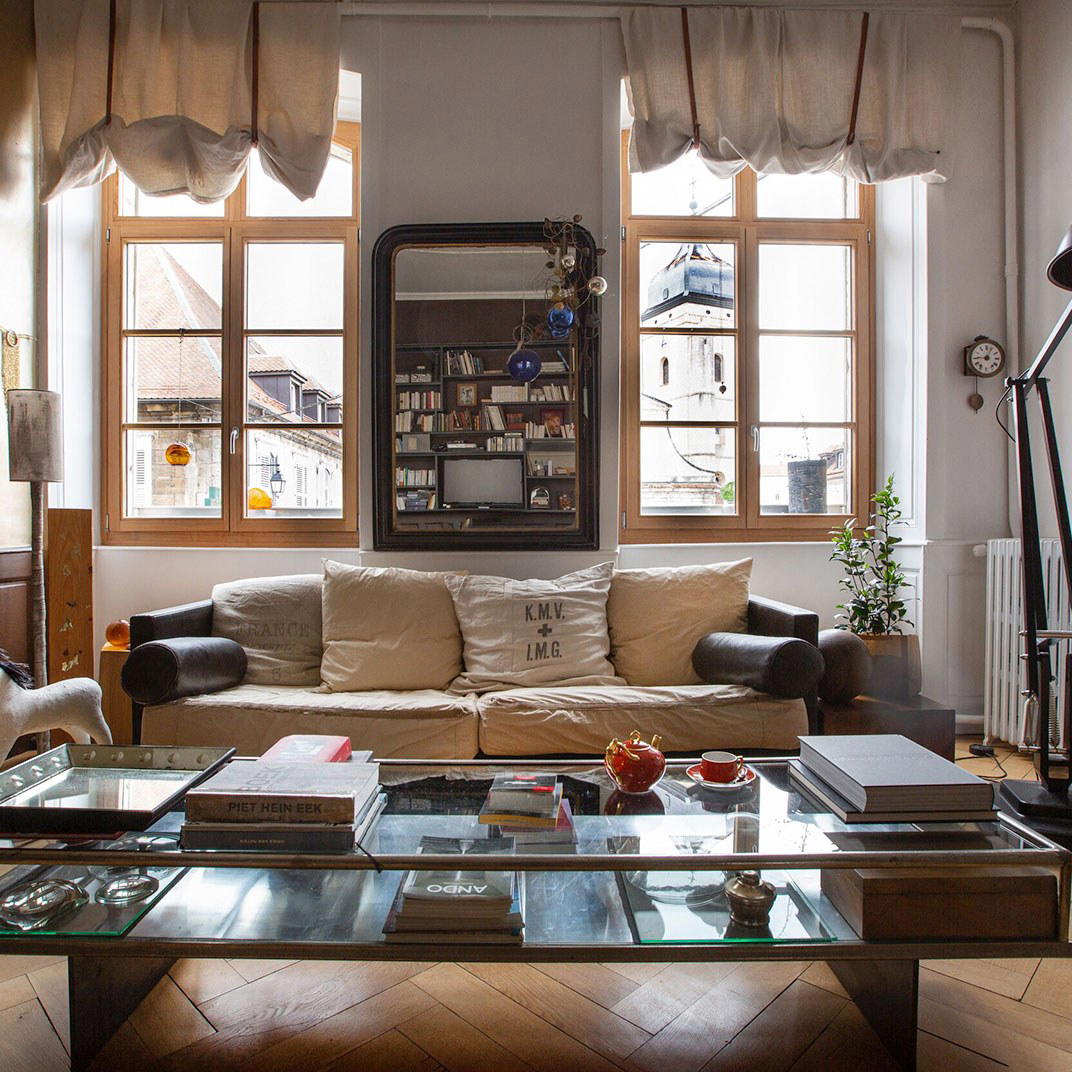
The interior follows the material logic of the exterior. Wood dominates the dining room in the way it dominates traditional Jura architecture, and the kitchen is visible from the tables, an arrangement that functions as both a confidence signal and a spatial connection between production and consumption. Kitchens on display in starred restaurants have become something of a standard feature over the past decade, but in a rural chalet setting the sight line to the stove carries a different meaning: it reinforces the directness of the operation, the short chain from sourcing to service.
The wine list is noted as interesting, which in the context of a Franche-Comté restaurant suggests a serious engagement with the Jura's appellation system. The Jura produces some of France's most distinctive wines: vin jaune from Château-Chalon, oxidative Chardonnays from Arbois, and light Pinot Noir equivalents under the Poulsard and Trousseau varieties. A list that takes these seriously would be a natural complement to a kitchen rooted in the same plateau. The price tier sits at €€€€, which is consistent with one-star rural French tables that operate full tasting structures or substantial à la carte menus.
Where It Sits in French Fine Dining
France's Michelin one-star tier outside Paris and Lyon covers an enormous range of formats, from urban bistros to mountain chalets, from coastal tables to village inns. L'Étang du Moulin occupies a particular sub-tier within that range: the rural destination restaurant where the journey is part of the proposition. Bonnétage is not a city with a dining scene. It is a small commune in the Doubs, reachable as a day trip from Besançon or as part of a longer stay in the Jura region. That rating carries more weight as a result.
For context on eastern France's starred dining tradition, Auberge de l'Ill in Illhaeusern represents the Alsatian strand of that tradition at three-star level, while Au Crocodile in Strasbourg sits within the same regional corridor. Both operate in the register of serious French classical and regional cooking that L'Étang du Moulin also belongs to, albeit at different scale and recognition levels. Further afield, Troisgros - Le Bois sans Feuilles in Ouches and Mirazur in Menton demonstrate the range of what terrain-led cooking can become in France at the highest award tier. L'Étang du Moulin's one-star standing places it well below those addresses in the Michelin hierarchy, but the sourcing logic is structurally similar: the restaurant's identity comes from where it is.
For other perspectives on modern cuisine at altitude and in European natural settings, Frantzén in Stockholm and FZN by Björn Frantzén in Dubai represent the northern European strand of terrain-attentive fine dining at a very different price point. AM par Alexandre Mazzia in Marseille and Assiette Champenoise in Reims offer further reference points for how starred kitchens across France use regional identity as a structural argument. Paul Bocuse - L'Auberge du Pont de Collonges in Collonges-au-Mont-d'Or remains the most legible example of the French destination restaurant as a cultural institution in its own right.
Planning a Visit
L'Étang du Moulin is at 5 chemin de l'etang du moulin, 25210 Bonnétage. The €€€€ price tier and one-star standing suggest advance booking is advisable, particularly during morel season in spring and during the summer hiking period when the Jura forests draw visitors to the region. Autumn is the game season and a logical window for anyone whose priority is the regional sourcing logic at its most season-specific. For those combining the visit with broader exploration of the area, Le Bistrot in Bonnétage provides a traditional cuisine counterpoint at a different price point. The surrounding area offers further context through our full Bonnétage hotels guide, our full Bonnétage bars guide, our full Bonnétage wineries guide, our full Bonnétage experiences guide, and our full Bonnétage restaurants guide.
Frequently asked questions
What's L'Étang du Moulin's location?
L'Étang du Moulin is located at 5 chemin de l'etang du moulin, 25210 Bonnétage, France, Bonnétage.
Comparable Spots, Quickly
| Venue | Cuisine | Price | Awards | Notes |
|---|---|---|---|---|
| L'Étang du MoulinThis venue (the venue you are viewing) | Michelin-Starred French Regional Gastronomy | $100–150 | 1 Michelin Star | Not listed |
| Alléno Paris au Pavillon Ledoyen | Modern French Fine Dining | $150–200 | 3 Michelin Stars · World's 50 Best #79 | Creative |
| Kei | Contemporary French, Modern Cuisine | Not listed | Michelin 3 Star | Not listed |
| L'Ambroisie | Classic French Haute Cuisine | $300–500 | 2 Michelin Stars · World's 50 Best #23 | French, Classic Cuisine |
| Le Cinq - Four Seasons Hôtel George V | Modern French Fine Dining | $300–500 | 3 Michelin Stars · World's 50 Best #24 | French, Modern Cuisine |
| Plénitude | Modern French Sauce-Led Fine Dining | $300–500 | 3 Michelin Stars · World's 50 Best #14 | Contemporary French |
Recognition history
Dated appearances from independent guides and award organizations, with the underlying list record or original source where available.
Michelin 1 Star
Michelin
Full recognition history (3 entries)
Michelin 1 Star
Michelin
Michelin 1 Star
Michelin
Continue exploring
More in Bonnétage
Restaurants in Bonnétage
All restaurants in Bonnétage →
Bars in Bonnétage
Browse all →
Hotels in Bonnétage
Browse all →

Details
- Romantic
- Scenic
- Cozy
- Elegant
- Quiet
- Date Night
- Special Occasion
- Celebration
- Business Dinner
- Hotel Restaurant
- Waterfront
- Garden
- Open Kitchen
- Terrace
- Panoramic View
- Sommelier Led
- Local Sourcing
- Farm To Table
- Waterfront
- Garden
- Mountain
- A La Carte
- Prix Fixe
- Tasting Menu
- Wine
- Gluten Free Options
- Vegetarian Friendly
- Allergy Accommodating
Warm, peaceful, and refined; wood-dominated dining room with views of the kitchen and surrounding forest; modern decor with traditional Franc-Comtois touches; soft lighting creating an intimate, restorative atmosphere.