L'Ostal

L'Ostal holds a Michelin star earned in both 2024 and 2025, placing it among Clermont-Ferrand's most consistent fine dining addresses. Chef Jared Sippel leads a modern cuisine menu at the €€€€ tier, drawing. For the Auvergne region, where serious cooking has historically played second fiddle to the volcanic landscape's reputation, that track record carries weight.
Pearl is the En Primeur Club membership app — saves, bookings, and concierge access live there. Same editors, same standards.
- Address
- 16 Rue Claussmann, 63000 Clermont-Ferrand, France
- Phone
- +33 4 73 27 77 86
- Website
- lostal-restaurant.fr
- Directions
- Get directions
 Saves & bookings on Pearl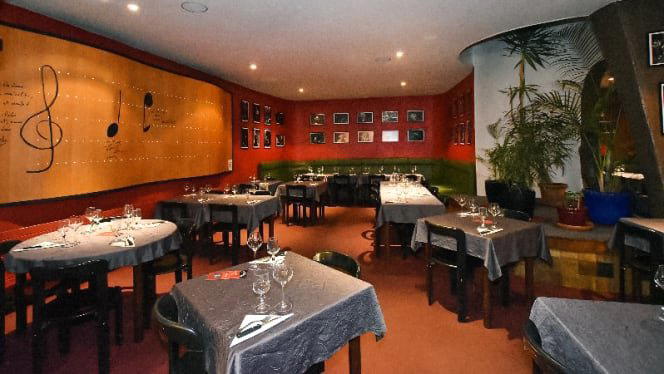
A Room That Sets Its Own Terms
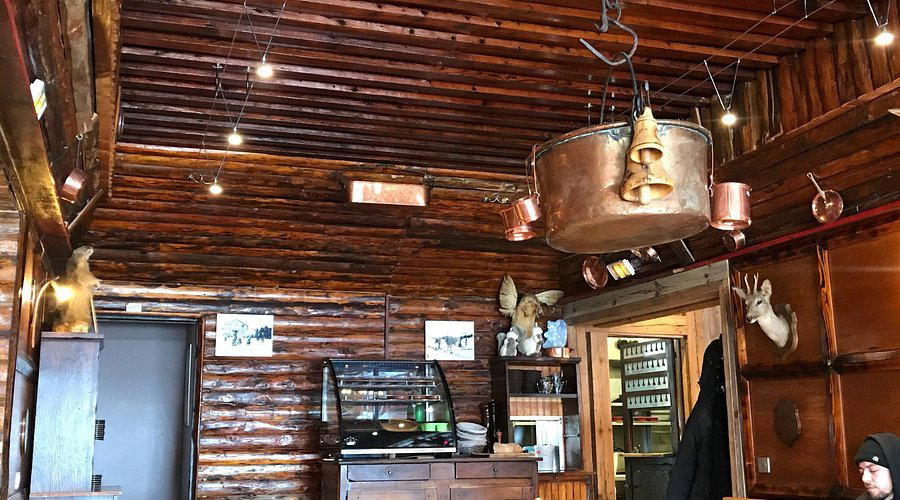
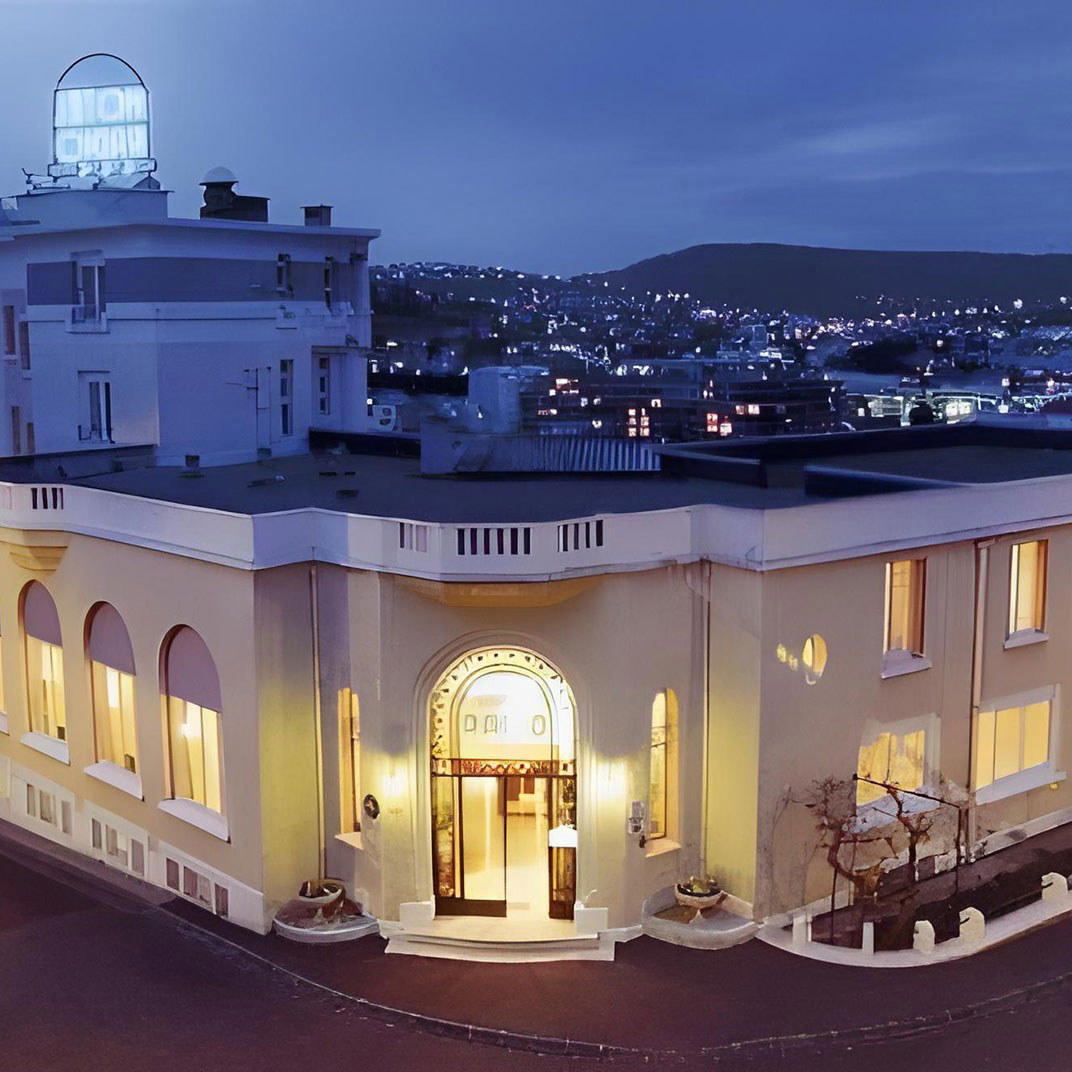
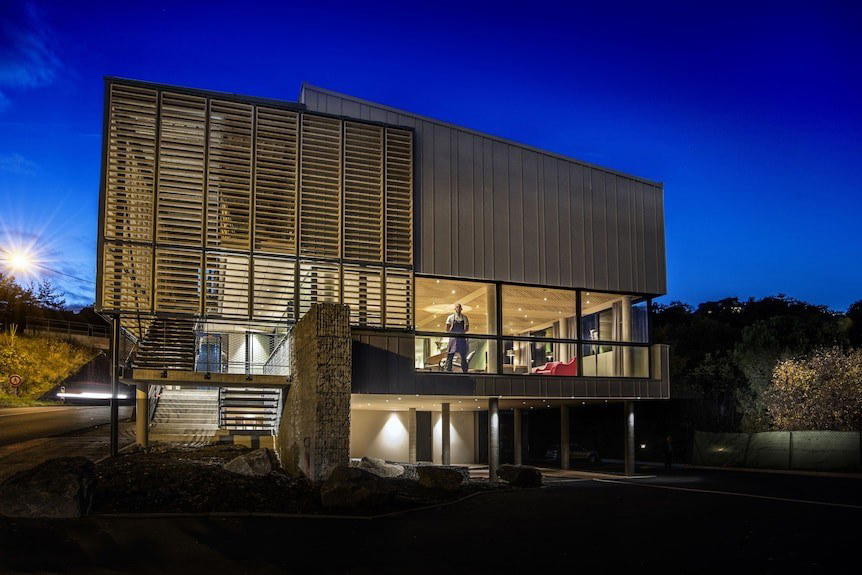
Rue Claussmann is not the address most visitors to Clermont-Ferrand would find instinctively. The city's volcanic-stone cathedral and the commercial pull of Place de Jaude tend to absorb first-time attention, leaving the quieter residential and mixed-use streets to those who already know where they are going. L'Ostal occupies this kind of address: a room that rewards intention rather than accident. The physical approach signals restraint before you sit down, which turns out to be a fair preview of what follows inside. In a French provincial city where fine dining has sometimes leaned on tradition as a substitute for point of view, that positioning is a choice with consequences.
Where L'Ostal Sits in Clermont-Ferrand's Fine Dining Structure
Clermont-Ferrand's top-tier restaurant scene is compact but increasingly serious. Le Pré by Xavier Beaudiment operates at the two-Michelin-star level, setting the ceiling for the city. Below that, a cluster of one-star addresses competes for a similar diner: someone travelling with purpose, or a local resident who tracks the national conversation around French modern cuisine. L'Ostal sits in that one-star cohort alongside Apicius, with both restaurants priced at the €€€€ tier. For broader context on where the city's dining options range across price points and styles, the full Clermont-Ferrand restaurants guide maps the field from bistro level upward.
What makes L'Ostal's position particularly readable is consistency. A Michelin star earned once can reflect a strong year or a committee's optimism. Retained across two consecutive editions, 2024 and 2025, it becomes a structural signal: the kitchen is not producing at an exceptional level occasionally, it is producing at that level as a matter of course.
For visitors also planning time at Jean-Claude Leclerc, L'Instantané, L'En-but, or L'Écureuil, L'Ostal occupies a distinct tier: it is where the city's fine dining case is being made at the highest current level below Le Pré.
How the Menu Is Built, and What That Reveals
Modern cuisine at the Michelin one-star level in provincial France typically resolves into one of two approaches. The first treats the region as primary material: terroir-led cooking where the Auvergne's volcanic soils, lentils from Le Puy, and Salers cattle define the creative limits as well as the ingredients. The second uses the region as a point of departure rather than a boundary, applying technique and a broader frame of reference while remaining anchored to place by sourcing discipline rather than strict thematic loyalty.
L'Ostal, under chef Jared Sippel, operates closer to the second model. The designation of the cuisine as modern rather than regional or terroir-focused is a deliberate signal about where the menu's logic lives. Modern cuisine at this tier is a format that prioritises technique and composition over the declarative regionalism that older French fine dining relied on as its organising principle. The menu architecture likely follows a progression format: a sequence of courses that builds in intensity and complexity, each plate functioning as an argument for what the kitchen can do rather than as an illustration of a fixed culinary tradition.
What that format demands of the kitchen is significant. A progression menu at the €€€€ price point requires each course to justify its place in the sequence, not simply to be well-executed in isolation. The transitions between courses, the balance of textures and temperatures across the arc of the meal, and the coherence of the overall composition all become legible to a Michelin inspector in a way they are not in à la carte formats. Earning the star twice in succession suggests those demands are being met with a degree of reliability that the format makes very difficult to fake.
For points of comparison outside the Auvergne, the same structural logic applies at very different scales: Mirazur in Menton, Flocons de Sel in Megève, and Troisgros - Le Bois sans Feuilles in Ouches each demonstrate how French fine dining menus encode a chef's conceptual position as much as their technical ability. Further afield, Frantzén in Stockholm and FZN by Björn Frantzén in Dubai show how the modern tasting format travels across culinary cultures while retaining the same underlying architectural principles. Closer to home in France's long fine dining lineage, Auberge de l'Ill in Illhaeusern, Bras in Laguiole, and Alléno Paris au Pavillon Ledoyen each represent different answers to how a French kitchen structures its argument across a meal.
Chef Jared Sippel and the Geography of Ambition
An American-named chef holding a Michelin star in a mid-sized French provincial city is not the most predictable configuration, and it is worth noting the broader context that makes it legible. French fine dining has become more internationally staffed at the senior level over the past two decades, partly as a consequence of culinary school pipelines and stage cultures that move young cooks across borders in both directions. A non-French chef earning sustained Michelin recognition in France is no longer an anomaly; it is a marker of how the system has shifted its criteria toward execution and concept rather than pedigree and nationality.
What the chef's background does not tell you, without more data, is which specific culinary lineage L'Ostal is in conversation with. What the Michelin recognition does confirm is that whatever the kitchen's reference points, they are being translated into a coherent and sustained output at the level the guide requires.
Planning a Visit: What to Know
L'Ostal is at 16 Rue Claussmann in central Clermont-Ferrand, within reach of the city's main transport links and a reasonable walk or short taxi from either the train station or the cathedral district. At the €€€€ price tier with a retained Michelin star, this is a restaurant where advance booking is strongly advisable; the cohort of diners that tracks Michelin one-star addresses in French provincial cities is small but organised, and availability at tables this sought-after tends to compress. Specific hours and booking methods are not listed in the available venue data, so confirming current opening days and reservation process directly before planning travel is the practical step.
For visitors building a fuller stay around the meal, the Clermont-Ferrand hotels guide covers accommodation across the city's range. Those wanting to extend their time around Auvergne's drinking culture should consult the bars guide and the wineries guide, and for programming beyond restaurants, the experiences guide maps what the city and wider region offer.
A Quick Peer Check
| Venue | Cuisine | Price | Awards |
|---|---|---|---|
| L'OstalThis venue — the venue you are viewing | Modern Cuisine | €€€€ | Michelin 1 Star |
| Le Pré - Xavier Beaudiment | Creative | €€€€ | Michelin 2 Star |
| Apicius | Modern Cuisine | €€€€ | Michelin 1 Star |
| Le 62 | Modern Cuisine | €€ | Modern Cuisine, €€ |
| Il Visconti | Italian | €€ | Italian, €€ |
| Le Duguesclin | Modern Cuisine | €€€ | Modern Cuisine, €€€ |
Recognition history
Dated appearances from independent guides and award organizations, with the underlying list record or original source where available.
Michelin 1 Star
Michelin
Michelin 1 Star
Michelin
Michelin 1 Star
Michelin
Continue exploring
More in Clermont-Ferrand
Restaurants in Clermont-Ferrand
Browse all →
Bars in Clermont-Ferrand
Browse all →
At a Glance
- Romantic
- Elegant
- Cozy
- Sophisticated
- Intimate
- Date Night
- Special Occasion
- Historic Building
- Extensive Wine List
- Local Sourcing
Current opening hours
- Monday
- Closed
- Tuesday
- Closed
- Wednesday
- 12–1:15 PM, 7:30–8:30 PM
- Thursday
- 12–1:15 PM, 7:30–8:30 PM
- Friday
- 12–1:15 PM, 7:30–8:30 PM
- Saturday
- 12–1:15 PM, 7:30–8:30 PM
- Sunday
- Closed
Hours can change for holidays and private events. Last verified .
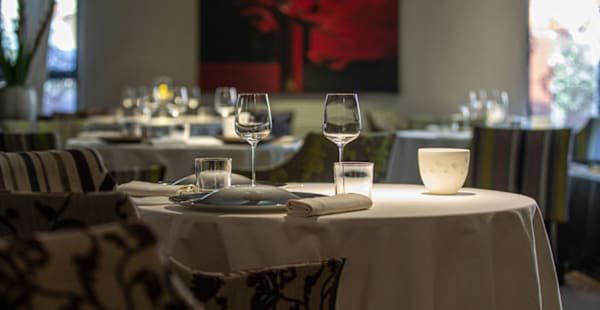
Intimate and refined atmosphere with decor inspired by lava and volcanoes, featuring orange seats evoking molten lava, black sculpted stone tables, volcanic stone, wood, and warm, elegant lighting.