Lorenzo California

LA Times 101 Best Restaurants #65
Our verdict
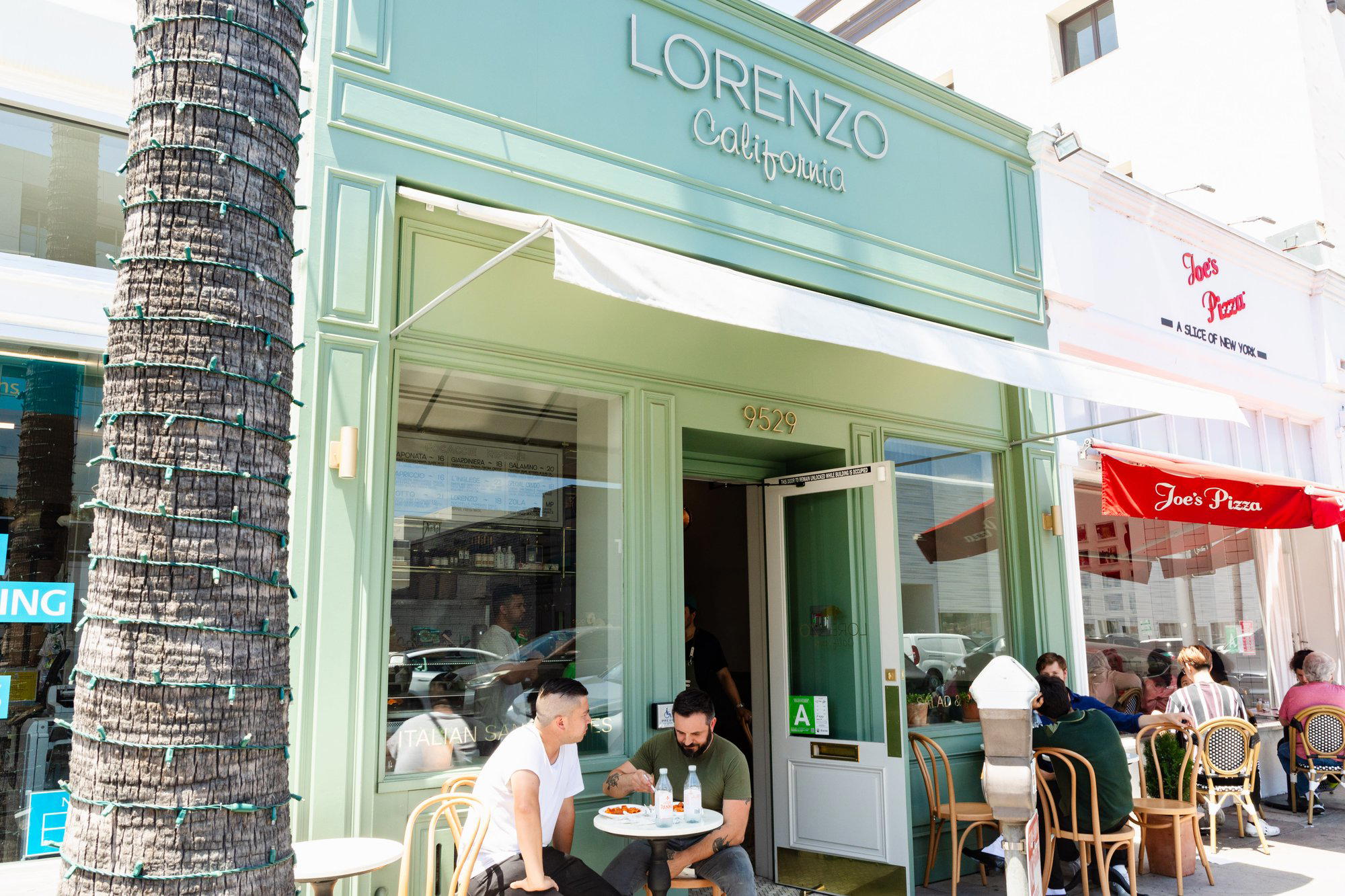
Los Angeles's first Florentine sandwich shop brings the schiacciata and focaccia tradition of central Italy to Beverly Hills, with handcrafted sandwiches, pasta, and cold salads built around imported Italian ingredients. Lorenzo California sits at a specific point in the city's Italian dining spectrum: not the white-tablecloth end occupied by places like Osteria Mozza, but the category of serious, ingredient-led casual eating that Florence does better than almost anywhere.

Pearl is the En Primeur Club membership app — saves, bookings, and concierge access live there. Same editors, same standards.
The menu
What to order
- Lorenzo sandwich with mortadella and roasted red peppers
- Caponata focaccia
- Fusilli pasta
Florence's Sandwich Tradition Arrives in Beverly Hills
The Florentine schiacciata sandwich has a clearer identity than most people outside Tuscany realise. Built on flatbread baked with olive oil until the crust blisters and the interior stays soft, it belongs to a specific local tradition: quick, standing, eaten at a counter, underpinned by the quality of a few key ingredients rather than elaboration. When Lorenzo California opened at 9529 S Santa Monica Boulevard in Beverly Hills, it carried that tradition into a city that, until that point, had no direct equivalent. Los Angeles has Italian food in abundance, from the Osteria Mozza tier of serious regional Italian cooking to neighbourhood trattorias and pizza counters. What it lacked was a Florentine sandwich shop operating with the specificity that the form demands.
That specificity begins with the bread. Lorenzo California bakes focaccia fresh on-site, and the sandwiches are assembled to order on it. The cold salads and pasta dishes alongside them draw on the same supply logic: imported products from Italy form the ingredient base, which is the standard Florentine shops hold themselves to when the local supply chain is built around DOP-certified producers and regional cured meats. In a city where the sourcing story behind a dish is frequently gestured at rather than substantiated, that commitment to provenance carries weight.
Where It Sits in the Los Angeles Italian Picture
Los Angeles's Italian dining has diversified considerably over the past decade. At the leading end, places like Osteria Mozza anchor a tier of regionally serious Italian cooking with wine programs and kitchen credentials to match. Below that, a broader category of Italian casual has expanded to include Neapolitan pizza specialists, pasta-focused counters, and now, with Lorenzo California, a Florentine sandwich format with real specificity. The city's food scene rewards exactly this kind of category precision: Los Angeles diners, particularly in areas like Beverly Hills and West Hollywood, have shown sustained appetite for international casual formats when they are executed with fidelity to source.
Beverly Hills itself is an instructive location for this kind of operation. The neighbourhood's dining tends toward the formal and the expensive, which makes a counter-service Italian sandwich shop something of a counterpoint. It occupies a different register from the $$$$ end of the market represented by Kato or Hayato, and it isn't trying to compete there. The comparison set for Lorenzo California is closer to the serious European casual formats that have taken root in other American cities: the kind of operation that sits outside the award economy but earns its reputation through ingredient integrity and format discipline.
The Sourcing Model and Why It Matters
The emphasis on imported Italian products is not incidental to what Lorenzo California does; it is the structure of the whole offering. Florentine food culture has always been more conservative than, say, Roman or Neapolitan cooking. Florence's sandwiches are not about invention or fusion. They are about the quality of the prosciutto, the character of the cheese, the texture of the bread. When a shop sources those components from Italy rather than substituting American equivalents, it is making a specific claim about what the food should taste like.
This sourcing model also connects to a broader conversation happening across American fine-casual dining about the ethics and logistics of ingredient chains. Shops that build menus around imported, certified products from specific producers are, in effect, maintaining shorter decision chains between the farm or curing house and the counter. The traceability that comes with DOP-protected products — Prosciutto di Parma, Parmigiano-Reggiano, Pecorino Toscano — is a form of supply chain transparency that larger operations find difficult to replicate at scale. Lorenzo California operates at a scale where that traceability is achievable, which is part of what makes the format credible.
For the broader Los Angeles dining conversation, this matters because the city has tended to celebrate sourcing stories most loudly at the fine-dining tier. Operations like Providence, with its long-standing focus on sustainably sourced seafood, or Single Thread Farm in Healdsburg, which integrates farm production with the restaurant kitchen, represent the high-investment version of ingredient integrity. Lorenzo California represents the casual version of the same instinct: a small format where the sourcing argument is legible in every sandwich.
The Menu Structure
The menu at Lorenzo California organises around three pillars: focaccia sandwiches, pasta, and cold salads. This is a deliberately narrow scope. Florentine lunch spots in Italy tend not to overextend; the discipline of a short menu is what keeps the quality consistent. The focaccia is baked in-house, which means the bread quality is a variable the kitchen controls directly rather than outsourcing to a supplier. Pastas and salads fill out the offer without pulling the kitchen's focus away from its core.
The sandwich format itself rewards direct construction. A well-made Florentine sandwich is not complex in the architectural sense that, say, a New York deli sandwich might be. It is built on the assumption that two or three exceptional ingredients, between good bread, do not need augmentation. That philosophy, applied with imported Italian products, is the entire proposition.
Planning a Visit
Lorenzo California is located at 9529 S Santa Monica Boulevard in Beverly Hills, accessible by car from most parts of central Los Angeles and within reach of the West Side's concentration of restaurants and hotels. For context on where to stay during a visit to the city, see our full Los Angeles hotels guide. Those planning a wider tour of the city's drinking culture will find our Los Angeles bars guide and Los Angeles wineries guide useful companions, and the full picture of what Los Angeles dining looks like at every price point is mapped in our Los Angeles restaurants guide. For those building a wider California itinerary, The French Laundry in Napa and Lazy Bear in San Francisco represent the state's fine-dining range at the other end of the formality spectrum.
Because Lorenzo California operates as a casual counter format rather than a reservation-based dining room, advance booking is not part of the normal visit structure. Timing a visit outside the midday peak, when Beverly Hills lunch traffic is at its highest, is the practical advice for those who want to eat without waiting.
Frequently asked questions
Is Lorenzo California Michelin-listed?
Lorenzo California has received recognition including: Lorenzo California is the first Florentine sandwich shop in Los Angeles, specializing in authentic Italian cuisine, including handcrafted sandwiches on freshly baked focaccia, pastas, and cold salads. It honors tradition by using the finest….
What part of town is Lorenzo California in?
Lorenzo California is located at 9529 S Santa Monica Blvd, Beverly Hills, CA 90210, Los Angeles.
What should I eat at Lorenzo California?
The core of the menu is handcrafted sandwiches on freshly baked focaccia, which is the format the shop was built around. Pasta and cold salads round out the menu, giving a clear Florentine structure to the three-section offering. All preparations draw on imported Italian products, so the sandwiches are the most direct expression of what the kitchen is doing.
How hard is it to get a table at Lorenzo California?
Lorenzo California operates as a sandwich shop rather than a full-service restaurant, so the format is closer to a counter or casual drop-in than a reservations-required dining room. The Beverly Hills address on S Santa Monica Boulevard means foot traffic can build at lunch. Arriving outside peak midday hours is the most reliable way to avoid a wait.
What's the standout thing about Lorenzo California?
It is the first Florentine sandwich shop in Los Angeles, which places it in a specific category rather than the broader Italian deli scene. The schiacciata-style focaccia and the reliance on directly imported Italian ingredients distinguish it from domestically sourced Italian-American operations. That sourcing model is the structural commitment, not a marketing claim.
Do they accommodate allergies at Lorenzo California?
Given the menu centres on bread-based sandwiches and pasta, guests with gluten sensitivities should check the venue's official channels at 9529 S Santa Monica Blvd, Beverly Hills before visiting. The cold salad section of the menu may offer the most flexibility for dietary restrictions.
Is Lorenzo California the only place in Los Angeles serving authentic Florentine schiacciata sandwiches?
According to the venue's own documentation, Lorenzo California is the first Florentine sandwich shop in Los Angeles, making it the only dedicated schiacciata-format counter in the city at the time of opening. Florentine schiacciata differs from standard focaccia in its oil content and thin, crisp texture, a distinction that matters to anyone familiar with the original street-food context in Florence. That specificity of regional identity is what separates it from the broader Italian sandwich options available across the city.
Where the Accolades Land
Comparable venues nearby, for context on price, style, and recognition.
| Venue | Cuisine | Price | Awards | Notes |
|---|---|---|---|---|
| Lorenzo CaliforniaThis venue (the venue you are viewing) | Authentic Florentine Sandwiches & Pasta | $10–20 | LA Times 101 Best Restaurants #65 | Not listed |
| Osteria Florence | Authentic Tuscan Osteria | $50–100 | Not listed | Beverly Grove |
| Superfine Playa | Cal-Italian Osteria with Pizza | Not listed | Not listed | Playa Vista |
| Divino | Authentic Regional Italian | $30–50 | Not listed | Brentwood |
| Bianca | Italian, French & Argentine | $30–50 | Wine Spectator Award of Excellence | Culver City |
| Terra | Wood-Fired Italian Grill | $30–50 | Not listed | Westwood |
Recognition history
Dated appearances from independent guides and award organizations, with the underlying list record or original source where available.
LA Times 101 Best Restaurants #65
LA Times