Local Kyrgyz Stall
Our verdict
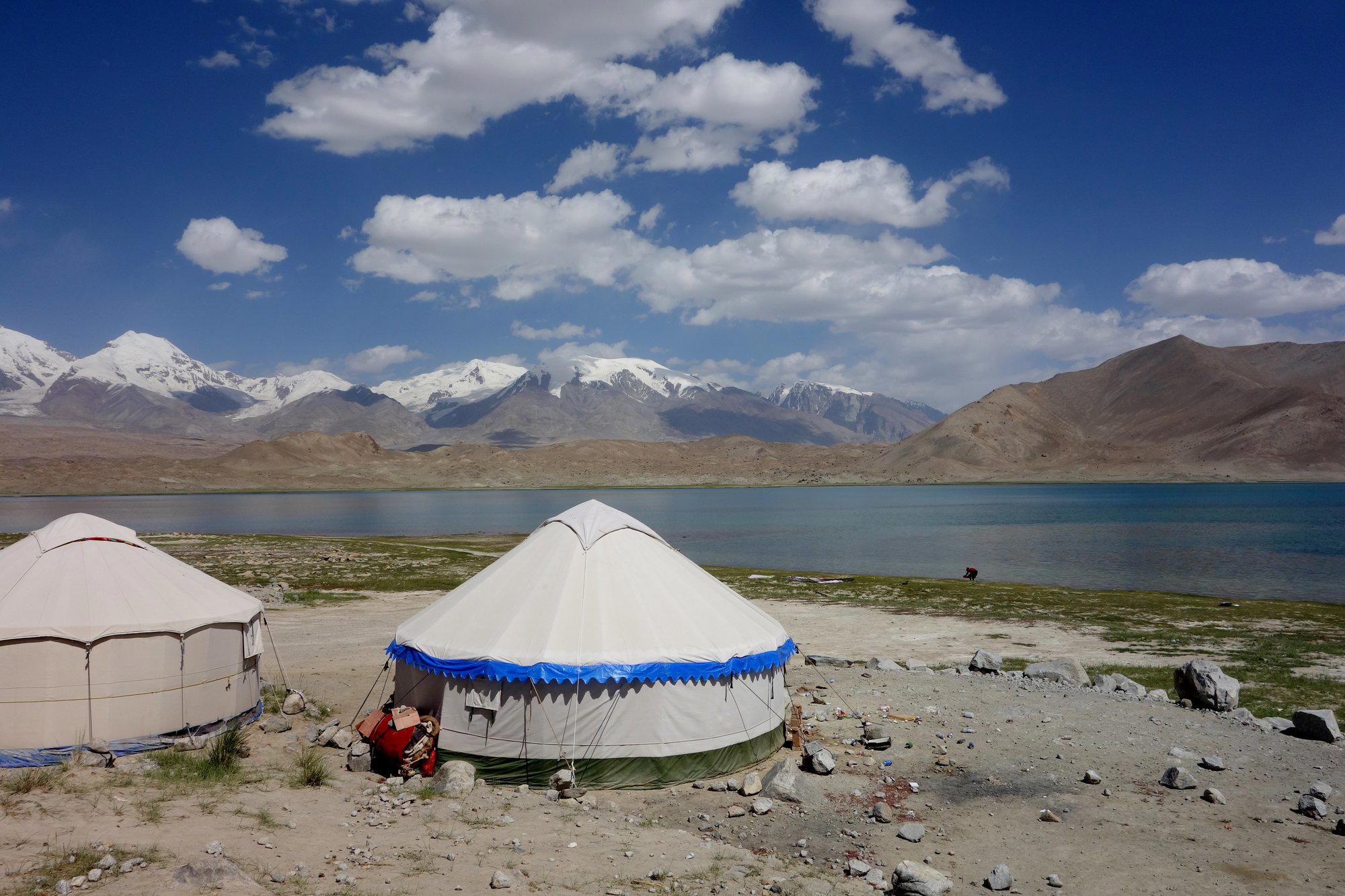
At the edge of Karakul Lake, with the Pamir plateau stretching in every direction, a Kyrgyz food stall offers what formal restaurants in China's interior cannot: ingredients sourced directly from the herders and small producers who have worked this high-altitude terrain for generations. The food is spare, honest, and rooted in a pastoral economy that still functions largely outside industrial supply chains.

Pearl is the En Primeur Club membership app — saves, bookings, and concierge access live there. Same editors, same standards.
Where the Food Comes From First
The Pamir plateau sits at elevations above 3,600 metres, and the land around Karakul Lake imposes its own logic on what can be grown, raised, and eaten. There are no greenhouse operations here, no refrigerated distribution networks threading up the Karakoram Highway to restock a commercial kitchen overnight. What appears on a Kyrgyz stall's table at this altitude arrives because someone nearby raised it, milked it, or carried it in from a neighbouring valley. That constraint, which would frustrate a chef in a city, is precisely what makes eating here different from anywhere else on China's dining map. For context on the range of Chinese dining traditions, from Michelin-recognised rooms like Xin Rong Ji (Xinyuan South Road) in Beijing to neighbourhood-rooted places like Local Old Town Home in Kashgar, see our full Karakul Lake restaurants guide.
The Plateau as Pantry
Kyrgyz pastoralism in the Pamirs centres on sheep and yak, and both animals shape the food economy of any stall operating along this stretch of the Karakoram Highway. Mutton is the dominant protein: animals graze on high-altitude grasses across a short seasonal window, which produces meat with a mineral depth that flatland-raised livestock rarely achieves. Dairy products, particularly the fermented varieties that function as both food and drink in nomadic Kyrgyz culture, come from yaks and sheep milked by the same families who pitch their yurts within sight of the lake. The supply chain, if you can call it that, is measured in walking distance rather than freight kilometres.
This is the ingredient sourcing model that urban restaurants in China spend considerable effort trying to simulate. Restaurants like 102 House in Shanghai and Ru Yuan in Hangzhou have built reputations in part around traceable provenance; here, provenance is simply the default condition of operating in a place this remote. There is no alternative supply model available.
Approaching the Stall
Karakul Lake sits roughly 195 kilometres south of Kashgar along the G314 highway, close to the Tajikistan border. The approach by road crosses some of the most exposed high-altitude terrain in China: bare scree slopes, seasonal snowfields, and the lake itself appearing as an improbable cobalt surface against the browns and greys of the Pamir range. A Kyrgyz food stall in this setting is not a destination chosen from a booking platform. It is encountered, often at the edge of a yurt settlement where travellers stop and local herders take a break from seasonal work.
The physical environment frames the meal before any food arrives. Open sky, wind off the lake, and the absence of anything resembling urban infrastructure establish an atmosphere that no formal restaurant can manufacture. Compared to the controlled environments of, say, Chef Tam's Seasons in Macau or Ensue in Shenzhen, this is eating stripped of every designed element except the food itself and the company of whoever has stopped alongside you.
What the Food Represents
Kyrgyz cuisine at this latitude is not a regional variation on Chinese cooking. It belongs to a Central Asian pastoral tradition that stretches from Xinjiang westward through Kyrgyzstan and Kazakhstan, sharing ingredients and techniques with communities across the steppe. Bread, slow-cooked meat, dairy ferments, and rice or grain dishes cooked with animal fat form the structural vocabulary. The cooking methods are adapted to altitude and to fuel sources available in a landscape with limited wood: open fire, coal, and the retained heat of cast-iron cookware.
That heritage sits at a significant cultural distance from the Chinese culinary traditions represented by Cantonese rooms like Imperial Treasure Fine Chinese Cuisine in Guangzhou or Dai Yuet Heen in Nanjing. For travellers moving through Xinjiang, encountering Kyrgyz food at Karakul Lake is an introduction to a food culture that operates outside the frameworks most visitors bring with them. It rewards that displacement.
Planning a Stop
Karakul Lake is a day trip or overnight stop from Kashgar for most travellers. The road is open seasonally; winter conditions and occasional border-area permit requirements can affect access, so confirming current conditions before departure from Kashgar is advisable. Stalls and yurt guesthouses near the lake typically operate during the summer and early autumn months when herder families are at higher pastures. Payment is cash-only in this part of Xinjiang, and Chinese yuan is the working currency. Expect to eat what is available rather than choosing from a fixed menu: the day's provisions determine what can be prepared.
For those building a broader eating itinerary across China's regions, the contrast between a stall at Karakul Lake and the more structured dining found at Xin Rong Ji in Chengdu, Dingshan·Jiangyan in Suzhou, or Fleurs Et Festin in Xiamen is instructive. The country's dining range runs from Michelin-tier tasting menus in coastal cities to roadside fires on the Pamir plateau, and both ends of that range have serious claims on a traveller's attention. See also Jiangnan Wok·Rong in Fuzhou, Shang Palace in Yangzhou, and, for international comparison, Le Bernardin in New York City and Atomix in New York City.
Frequently asked questions
Does Local Kyrgyz Stall work for a family meal?
The roadside format at Karakul Lake suits families travelling the G314 between Kashgar and the Tajikistan border. Food here follows a pastoral tradition built around shared dishes of sheep and yak, which makes it practical for groups eating together. There are no set menus or formal seating requirements to account for.
What should I expect atmosphere-wise at Local Kyrgyz Stall?
Karakul Lake sits above 3,600 metres on the Pamir plateau, and the setting defines the atmosphere more than any interior decor. This is an open-road stop, not a restaurant in the conventional sense — the lake, the surrounding mountain terrain, and the Kyrgyz pastoral context are the frame for the meal. Expect functional, no-ceremony service typical of highway food stops along the G314.
Is Kyrgyz food at Karakul Lake part of Chinese or Central Asian cuisine?
Kyrgyz cuisine at this latitude belongs to a Central Asian pastoral tradition, not to Chinese regional cooking. The food reflects a culture shaped by sheep and yak herding across the Pamirs, a tradition that stretches from Xinjiang into Tajikistan and Kyrgyzstan. Karakul Lake, sitting close to the Tajikistan border at over 3,600 metres, is one of the few places in China where this distinction is immediately apparent at the table.
What do regulars order at Local Kyrgyz Stall?
The food economy of Kyrgyz stalls along this stretch of the Karakoram Highway centres on sheep and yak, the two animals central to Pamir pastoralism. Dishes tend to follow Central Asian pastoral tradition rather than Chinese regional cooking. Specific menu items vary by season and availability at this altitude.
Is Local Kyrgyz Stall reservation-only?
Roadside stalls at Karakul Lake do not operate on a reservation basis. The G314 route is open seasonally, and access to the area is subject to border-area travel permits and road conditions, so planning around those factors matters more than booking a table.
How It Stacks Up
| Venue | Cuisine | Price | Awards | Notes |
|---|---|---|---|---|
| Local Kyrgyz StallThis venue — the venue you are viewing | Kyrgyz | Not listed | Not listed | Not listed |
| Fu He Hui | Modern Seasonal Vegetarian Fine Dining | $200–300 | 2 Michelin Stars · World's 50 Best #11 | Vegetarian |
| Aji | Asian Bistronomy (Nikkei Fusion) | $50–100 | 1 Michelin Star · Wine Spectator Best of Award of Excellence | Nikkei, Innovative |
| Five Foot Road | Modern Sichuan Fine Dining | Not listed | 1 Michelin Star · La Liste Top Restaurants | Sichuan |
| Jing | Modern French with Asian Influences | $300–500 | 1 Michelin Star · Black Pearl 1 Diamond | French Contemporary |
| Lai Heen | Michelin-Starred Cantonese | $50–100 | 1 Michelin Star · Forbes 5-Star | Cantonese |
Details
- Rustic
- Scenic
- Casual Hangout
- Waterfront
- Mountain
- Waterfront
- A La Carte
rustic yurt atmosphere amid spectacular mountain and lake scenery