.png)
In the Savoie hinterland village of Dullin, Les Quatre Saisons sits inside a traditional beamed dining room where Peruvian-born chef Antonio Gérard Quintanilla produces distinctly French cooking with an assertive flavour profile and a clear affinity for foraged and forest ingredients. The Saint-Béron chicken with Albufera sauce is the dish that defines the kitchen's register. Guestrooms are available for those who want to stay the night.
 Discover on Pearl
Pearl is the En Primeur Club membership app — saves, bookings, and concierge access live there. Same editors, same standards.
Where the Forest Comes to the Table
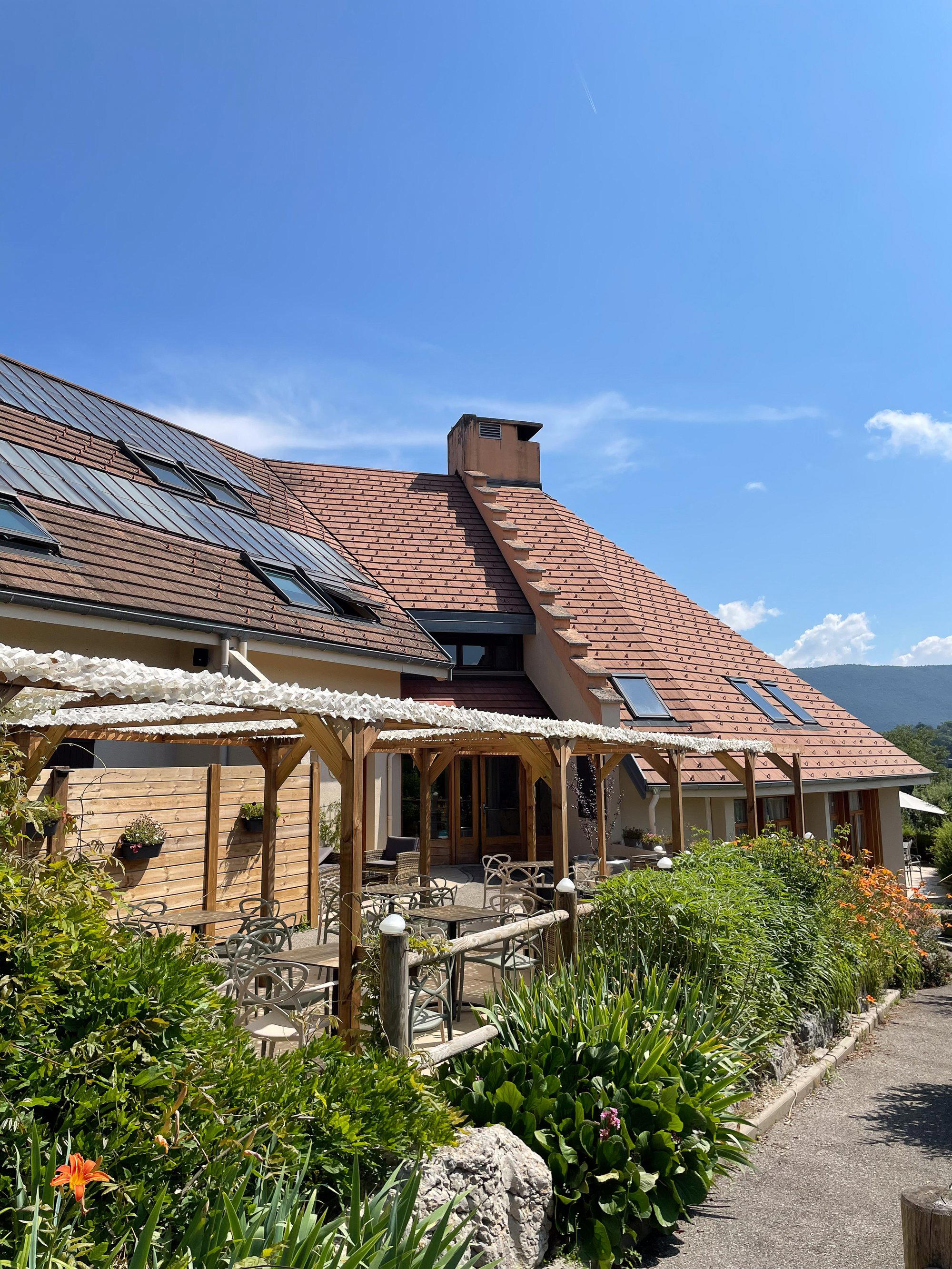
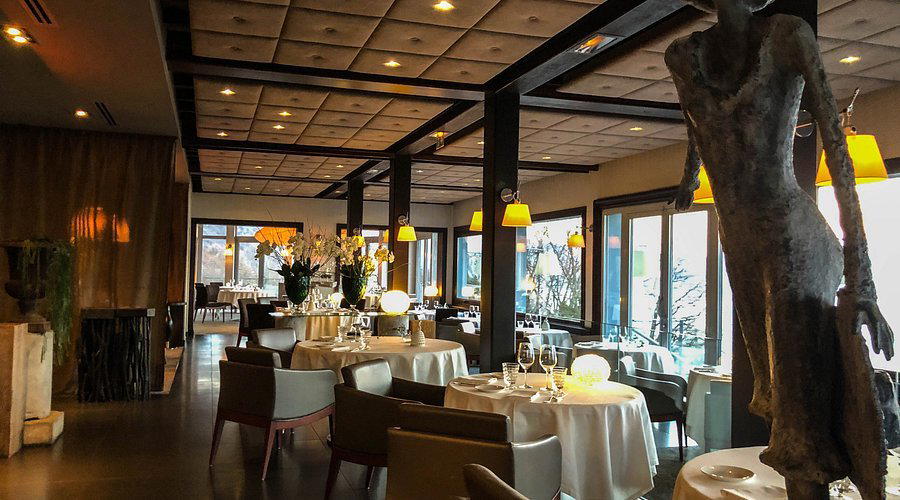
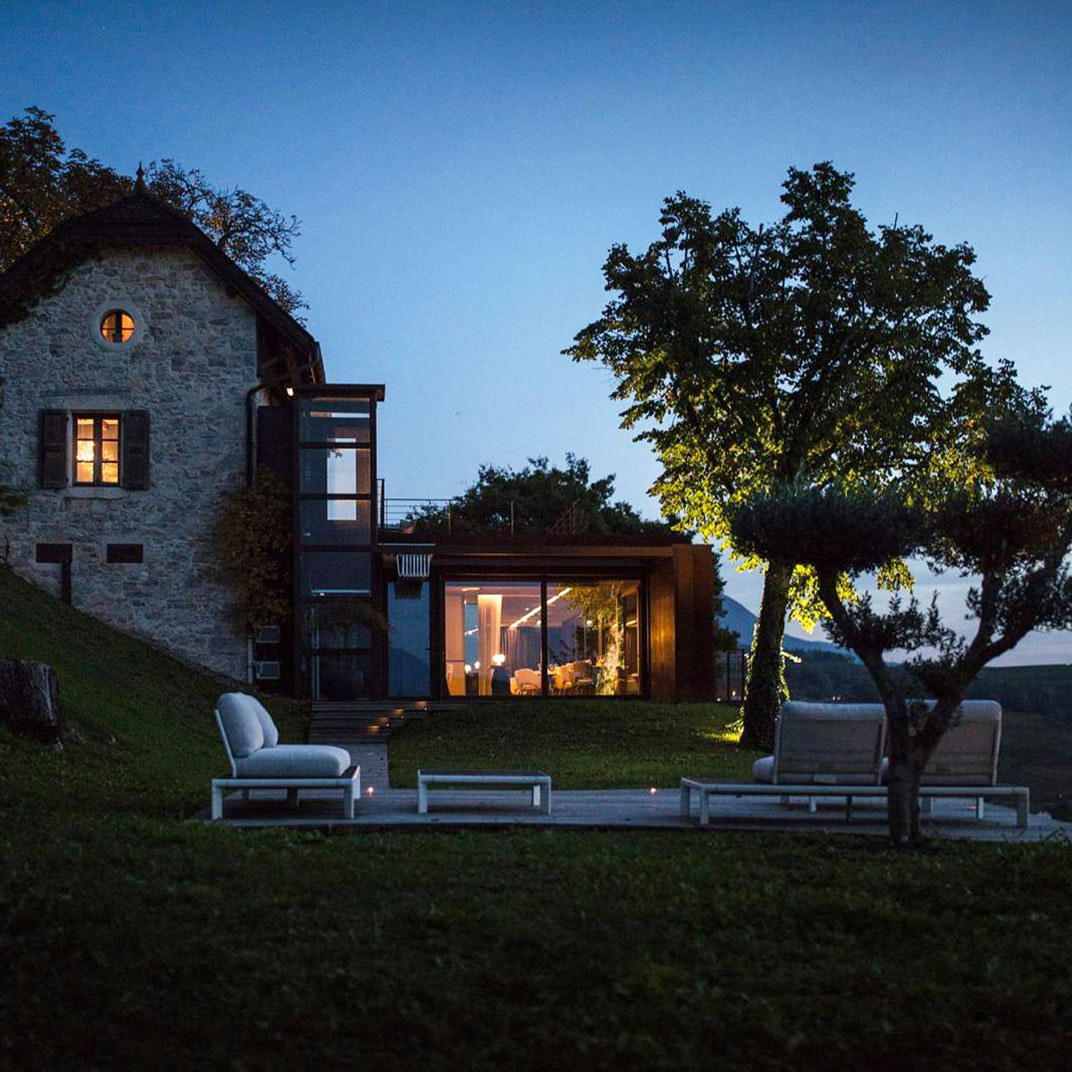
Arriving at Les Quatre Saisons along the route de la Mairie in Dullin, the building announces itself in the language of rural Savoyard architecture: heavy timber, stone, and a roofline that belongs to the mountain villages of the Chartreuse and Belledonne ranges rather than to any chef's personal branding exercise. Inside, antler chandeliers hang from beamed ceilings, and wide picture windows frame the surrounding countryside in something close to a living panorama. This is the aesthetic grammar of the auberge tradition, and the room earns it without affectation.
Dullin itself sits in a quiet fold of the Savoie hinterland, well removed from the resort circuit that defines the region in most visitors' imaginations. The village sees none of the seasonal ski economy of Megève or Val d'Isère, which means the cooking here is addressed to locals, regional travellers, and those willing to seek out the restaurant on its own terms. That positioning gives the kitchen a certain freedom.
The Source Logic Behind the Menu
The ingredient sourcing argument in Savoie cooking has long centred on altitude and terroir: mountain pasture milk, lake fish, cured meats from pigs raised on chestnut feed. Les Quatre Saisons works within that regional pantry but adds a distinct foraging register. The kitchen's pronounced leaning toward mushrooms, referenced explicitly in the kitchen's reputation, connects directly to what the surrounding forests of the pre-Alpine zone produce across the seasons. This is not a decorative garnish relationship with wild ingredients; the mushroom element functions as a structural component of the flavour architecture.
The Savoyard countryside around Dullin is forested at lower elevations with the kind of mixed deciduous and conifer cover that supports cépes, chanterelles, and other woodland varieties through late summer and autumn. A kitchen that builds identity around forest fungi in this geography is drawing from the most immediate and seasonally honest source available. It is the same logic that drives Bras in Laguiole toward the wild plants of the Aubrac plateau, or that grounds Auberge du Vieux Puits in Fontjoncouse in the garrigue herbs of the Corbières. Regional specificity expressed through what the land nearest to the kitchen actually produces, rather than through imported prestige ingredients, is the more demanding and more honest form of terroir cooking.
French Technique, South American Instinct
Chef Antonio Gérard Quintanilla's Peruvian background operates as a seasoning on the plate rather than as a categorical statement. The cooking is classified as French, and the framework is recognisably classical: the Saint-Béron chicken with Albufera sauce is a direct reference to one of the great preparations of the Escoffier canon, a sauce built on supreme de volaille stock, Madeira, and foie gras butter, demanding both technical precision and access to quality birds. Saint-Béron is a commune in Savoie, which means the poultry sourcing has a local address, and the combination of regionally raised chicken with a technique-intensive classical French sauce is exactly the kind of detail that separates a kitchen with genuine French training from one applying French vocabulary loosely.
The bold flavour orientation that characterises the menu is worth registering separately from the Peruvian association. South American cooking traditions, and Peruvian cuisine specifically, tend to operate at higher seasoning intensities than the restraint-forward register currently fashionable in Paris fine dining. The result in Quintanilla's kitchen is French dishes that read with more assertiveness than the muted, ingredient-first minimalism that has come to define the capital's critical darlings. Les Quatre Saisons operates at a different register: rooted, technically grounded, and without anxiety about whether its flavours are fashionable.
This puts the kitchen in a lineage that includes the great provincial auberges of France rather than the metropolitan fine dining circuit. The cooking at Auberge de l'Ill in Illhaeusern or Troisgros in Ouches represents the formal end of that tradition; Quintanilla's room in Dullin represents its more accessible, less ceremonial expression, though the technical ambition appears to be aligned.
The Room and Its Logic
The dining space functions as a coherent argument for a particular kind of experience. Traditional Savoyard interiors of this type, with exposed timber and hunting references, can tip into kitsch when handled carelessly. Here, the picture windows do the critical work: the view of the surrounding countryside keeps the room honest, anchoring the décor in its actual geography rather than allowing it to become a stage set. The proportions of the space, suggested by the character of the building, are domestic in scale rather than institutional, which affects pacing and noise levels in ways that a larger room could not replicate.
Guestrooms are available on site, which suits the traditional auberge model and makes particular sense given Dullin's remove from larger towns. Staying overnight allows for a dinner-to-breakfast arc that few urban restaurants can offer.
Planning Your Visit
Les Quatre Saisons is located at 54 route de la Mairie in Dullin, in the Savoie department of France. The village is accessible by road from Chambéry, which sits roughly 25 kilometres to the south and provides the nearest rail and motorway connections. Given the rural setting and the kitchen's growing profile, booking ahead is advisable, particularly during autumn when the region's foraging season is at its height and the menu's mushroom-centred dishes are at maximum relevance. The auberge format, with rooms available for overnight stays, makes a midweek dinner-stay combination a practical option for those travelling from further afield.
Comparison Snapshot
Comparable venues nearby, for context on price, style, and recognition.
| Venue | Cuisine | Price | Awards | Notes |
|---|---|---|---|---|
| Les Quatre SaisonsThis venue — the venue you are viewing | Modern French Fine Dining | $$$$ | Michelin Plate | |
| La Table de l'Annapurna | Traditional French Regional Fine Dining | $$$$ | Michelin Plate | Courchevel (Commune Non Irisée) |
| L'Arborescence | Modern French Gastronomic | $$$$ | Michelin Plate | Cruseilles |
| Chavant | Classic French Fine Dining | $$$$ | Michelin Plate | Bresson |
| Monsieur P | Modern French Gastronomic | $$$$ | Michelin Plate | Quartier Bellecour Cordeliers |
| Chalet Flachaire | Modern French Mountain Gastronomy | $$$$ | Michelin Plate | Abondance |
Continue exploring
More in Dullin
Restaurants in Dullin
Browse all →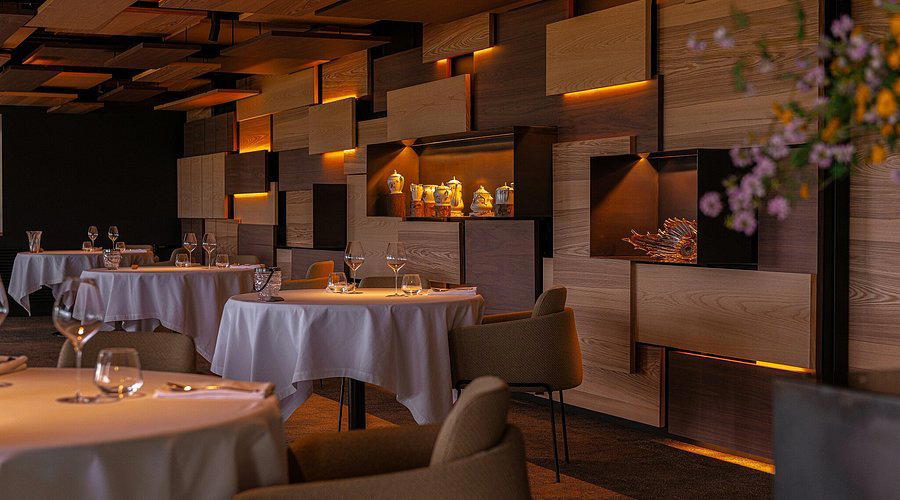
Bars in Dullin
Browse all →
Hotels in Dullin
Browse all →
Wineries in Dullin
Browse all →
At a Glance
- Classic
- Elegant
- Cozy
- Scenic
- Date Night
- Special Occasion
- Celebration
- Hotel Restaurant
- Historic Building
- Extensive Wine List
- Local Sourcing
- Mountain
Traditional style with beams and antler chandeliers, warm and pleasant atmosphere enhanced by wide picture windows offering expansive mountain and lake views.[1][2][3]