
Le Zinc occupies a focused position in Grenoble's mid-range dining scene, recognised by Star Wine List with a White Star for its wine program. The address on Rue Auguste Gaché places it in a city where the Alps shape both the produce and the appetite, and where a well-considered wine list signals a kitchen that takes its sourcing seriously. For visitors mapping Grenoble's restaurants, Le Zinc sits in the tier between casual bistro and formal table.
Pearl is the En Primeur Club membership app — saves, bookings, and concierge access live there. Same editors, same standards.
- Address
- 5 Rue Auguste Gaché, 38000 Grenoble, France
- Phone
- +33 4 76 03 07 44
- Website
- lezincbar.com
- Directions
- Get directions
 Saves & bookings on Pearl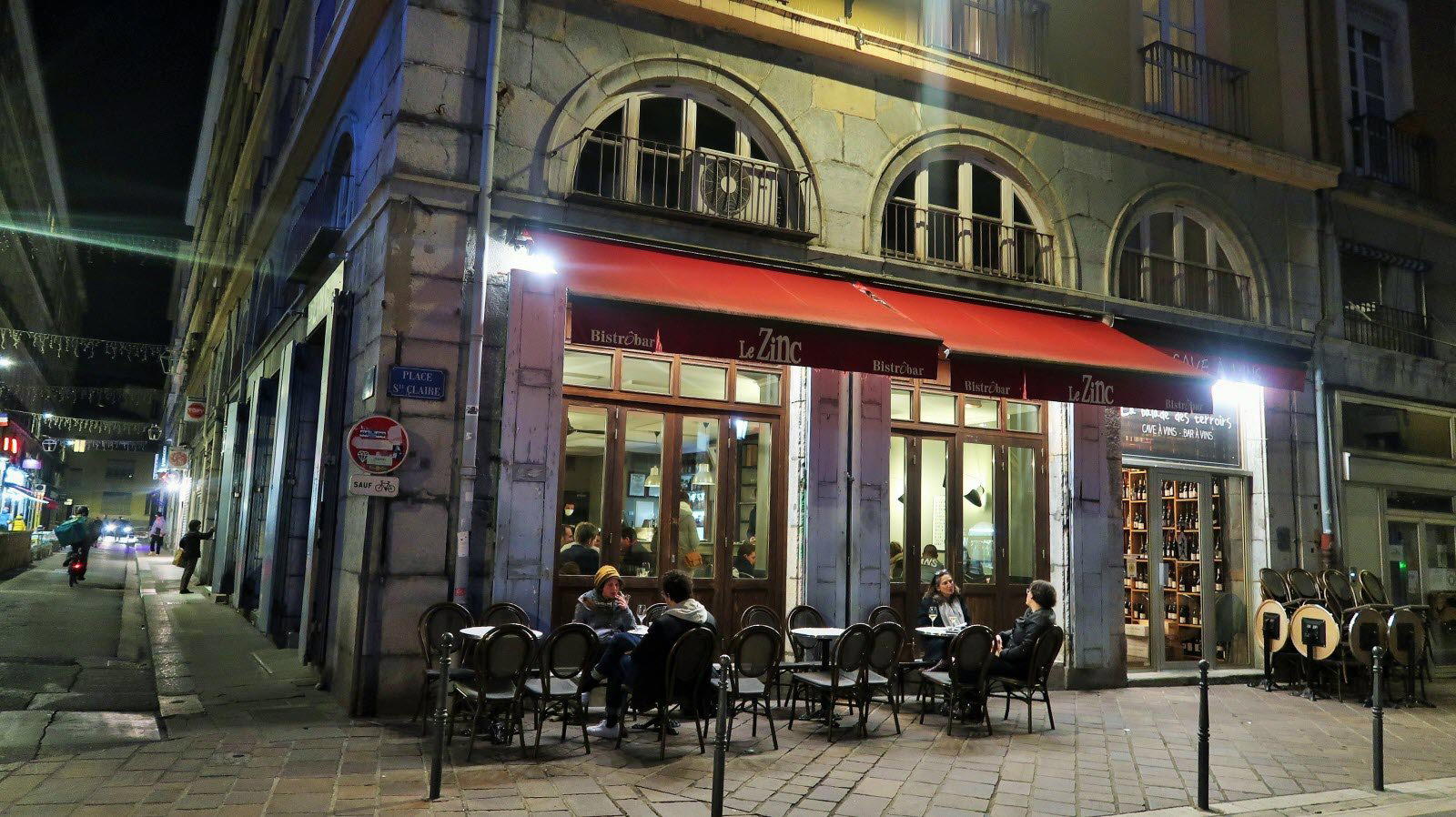
A Corner of Grenoble Where the Wine List Does the Talking
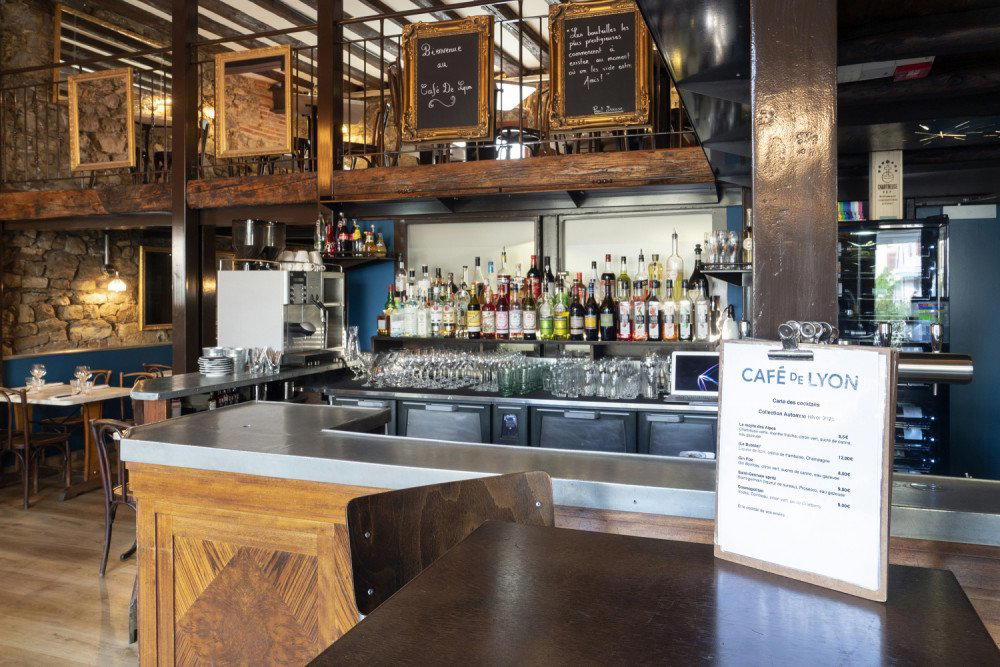
Rue Auguste Gaché runs through a quarter of Grenoble that has none of the pedestrian tourist gloss of the old town and all of the neighbourhood ease that makes a city worth returning to. Arriving at Le Zinc, the name itself signals a particular French tradition: the zinc counter, that long horizontal fact of the classic French bar-bistro, where a glass of something regional arrives before you have finished reading the room. That tradition of the zinc, the standing counter, the unhurried carafe, is the architectural and social grammar of a certain French dining experience, and it anchors a different set of expectations than the white-tablecloth formality that dominates the higher price tiers in this city.
Wine Recognition in an Alpine Context
The verifiable credential attached to Le Zinc is its White Star from Star Wine List, awarded following a December 2021 publication. In the Star Wine List framework, the White Star designates restaurants whose wine programs meet a standard of curation and depth worth seeking out independently of the food. That designation places Le Zinc in a specific and smaller peer group within Grenoble, distinct from restaurants that simply carry a serviceable list to accompany the menu. It is a signal that the buying here reflects considered selection rather than default distributor relationships.
Grenoble sits at a crossroads of French wine geography that rewards exactly this kind of attention. The Northern Rhône appellations, Crozes-Hermitage, Saint-Joseph, and Cornas, are within reasonable sourcing range to the south. Savoie wines, produced in a scattered set of small appellations across the Alpine foothills, are one locally specific option: Jacquère-based Apremont, the rare Mondeuse rouge from Arbin, and the oxidative whites of Roussette de Savoie occupy a niche that most French restaurants outside the region overlook entirely. A wine program in Grenoble that earns external recognition has likely engaged with at least some of this regional geography, though the specific list at the restaurant is not publicly detailed in a way that allows for precise mapping.
For comparison, Grenoble's higher-register dining addresses like Le Fantin Latour, helmed by Stéphane Froidevaux, operate at the €€€€ tier with creative menus built around produce that commands attention in its own right. The restaurant's White Star suggests a house focused on what is in the glass as much as what is on the plate, which is a different editorial proposition and a different value calculation for the diner.
Sourcing Logic in a City Between Mountains and Rivers
Grenoble's position at the confluence of the Isère and Drac rivers, enclosed on three sides by the Vercors, Chartreuse, and Belledonne massifs, creates a supply environment unlike any flat-country French city. Producers in the surrounding valleys have historically supplied the city with dairy from the Chartreuse, walnuts from the Grenoble AOC, and mountain-cured charcuterie that travels poorly and tastes leading within 80 kilometres of production. The Grenoble walnut, with its protected designation, is one of the more distinctive regional ingredients in French cooking, used in both savoury preparations and desserts with a frequency that reflects genuine terroir rather than menu decoration.
Restaurants in the €€ mid-range tier in Grenoble, which includes addresses like Tohu Bohu, Brasserie Chavant, and L'Amélyss, tend to split between those that source regionally and those that operate on the same national supply chains as comparable establishments in Lyon or Paris. The former approach produces food that reads differently on the plate: less polished in presentation sometimes, more specific in flavour. A bistro with a wine list sharp enough to earn external recognition is often also the kind of address where the kitchen buys from the Tuesday morning market at Place Sainte-Claire rather than from a broadline distributor.
This sourcing logic matters for a city like Grenoble, which lacks the culinary destination status of Lyon, 100 kilometres to the north, but sustains a population of researchers, students, and technical professionals with genuinely high standards for what sits in front of them. The city's dining scene is built more on repeated local use than on destination visits, which tends to create restaurants that earn their place through consistency rather than spectacle. That context is worth holding when reading a recognition like the Star Wine List White Star: it reflects a standard maintained over time, not a single notable evening.
Where Le Zinc Sits in the Grenoble Picture
Grenoble is not a city that positions itself alongside the multi-starred tables of the French Alpine restaurant circuit. Flocons de Sel in Megève, Mirazur in Menton, or the Loire and Burgundy grandees like Troisgros and Auberge de l'Ill occupy a separate category of French dining altogether, as do landmark addresses further afield such as Bras in Laguiole or Paul Bocuse's Auberge du Pont de Collonges. The restaurant does not compete in that register, and its recognition is not that kind of recognition.
What the White Star signals is a restaurant that has built its identity around wine selection with sufficient seriousness to warrant specialist attention. In a mid-range Grenoble context, that is a meaningful differentiator. Visitors who arrive via Le Bernardin in New York or Emeril's in New Orleans will find the restaurant operating at a different register entirely, but that comparison itself clarifies what it is: a neighbourhood address with a wine program taken seriously, in a city where the surrounding geography justifies exactly that seriousness.
Planning a Visit
The restaurant is at 5 Rue Auguste Gaché, 38000 Grenoble. Grenoble's central tram network connects most arrival points to the city centre, and the address is walkable from the main pedestrian quarters.
Comparison Snapshot
Comparable venues nearby, for context on price, style, and recognition.
| Venue | Cuisine | Price | Notes |
|---|---|---|---|
| Le ZincThis venue — the venue you are viewing | French Natural Wine Bar | $$ | Not listed |
| Au Clair de Lune | French Bistro with Vegan Options | $$ | hyper-centre |
| L'Inattendu | Modern French Seasonal | $$ | near Bastille telepherique |
| LULU | Bistronomie | $$ | Centre-ville |
| Restaurant La Petite Grenobloise | French Bistro with Local Organic Specialties | $$ | Quai Xavier Jouvin |
| L'Aiguillage | Healthy Seasonal French | $$ | Berriat |
Recognition history
Dated appearances from independent guides and award organizations, with the underlying list record or original source where available.
Star Wine List
Star Wine List
Continue exploring
More in Grenoble
Restaurants in Grenoble
Browse all →
Bars in Grenoble
Browse all →
Hotels in Grenoble
Browse all →

At a Glance
- Cozy
- Lively
- Trendy
- Casual Hangout
- Date Night
- After Work
- Wine Cellar
- Extensive Wine List
- Natural Wine
- Sommelier Led
- Local Sourcing
- Natural Wine
Current opening hours
- Monday
- 6–10 PM
- Tuesday
- 6 PM–12 AM
- Wednesday
- 6 PM–12 AM
- Thursday
- 6 PM–1 AM
- Friday
- 6 PM–1 AM
- Saturday
- 6 PM–1 AM
- Sunday
- Closed
Hours can change for holidays and private events. Last verified .