
Positioned on Place du Vieux-Marché in the heart of Rouen's old city, Le P'tit Zinc holds a White Star recognition from Star Wine List, signalling a wine program that operates above the neighbourhood bistro baseline. The setting places it squarely in Normandy's produce-driven tradition, where the Seine valley and surrounding farmland define what arrives on the plate. A reference point for visitors wanting serious wine alongside regional cooking.
 Discover on Pearl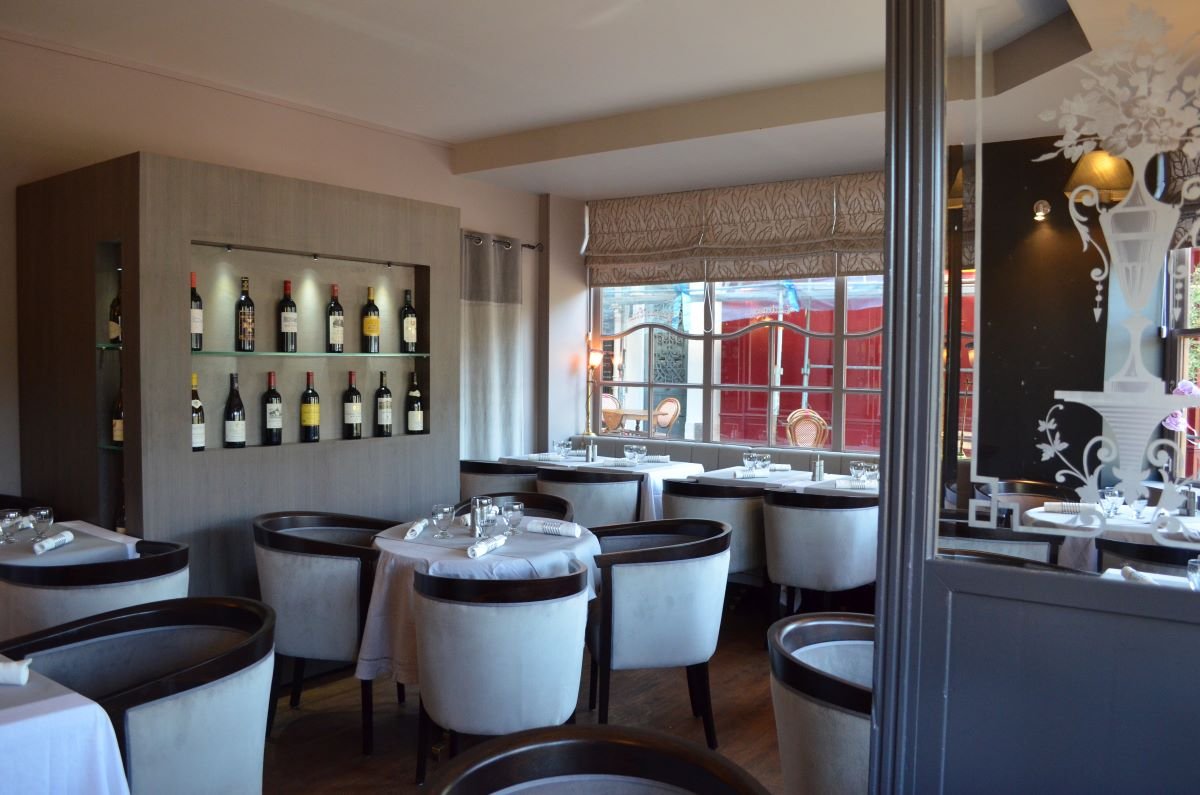
Place du Vieux-Marché and the Weight of Where You Eat
Rouen's Place du Vieux-Marché carries a particular kind of gravity. The square is where Joan of Arc was burned at the stake in 1431, and the modern church built on that site ensures no one forgets it. Restaurants around the square operate in that context whether they intend to or not: the setting does half the work, framing every meal inside a city that has been arguing about its own significance for centuries. Le P'tit Zinc sits at number 20 on that square, and the address alone positions it inside Rouen's most historically charged dining corridor. For visitors arriving from the timber-framed streets of the old city, the transition from cobblestone to table feels like a natural continuation rather than a shift in register.
In a French provincial city of Rouen's stature, the restaurants clustering around a focal square like this tend to split into two categories: those playing to tourist footfall with broad, safe menus, and those using the address as a platform for something more considered. Le P'tit Zinc's White Star recognition from Star Wine List, published in December 2021, places it in the second camp. That designation is awarded to establishments where the wine program demonstrates genuine selection depth, not just a functional list assembled to cover minimum expectations. In a city where most neighbourhood bistros treat wine as a secondary concern, this matters.
The shortlist, unlocked.
Hard-to-book tables, cellar releases, and concierge-planned trips.
Get Exclusive Access →Normandy's Larder and the Logic of Ingredient-Led Cooking
Norman cooking is one of France's most geographically coherent regional traditions. The Seine valley, the apple orchards of the Pays d'Auge, the dairy farms producing the butter and cream that define the region's sauces, the fishing ports of Dieppe and Fécamp within reach to the northwest: the raw materials available to a Rouen kitchen are both specific and high-quality. Dishes built around Normandy's produce have a logic that travels poorly when the sourcing drifts. Sole from the English Channel, duck from the Vallée d'Auge, Neufchâtel cheese from the Bray plateau — these are ingredients with defined provenance, and a kitchen drawing on them properly has an immediate advantage over one using generic supply chains.
This regional specificity is what separates the stronger entries in Rouen's restaurant scene from the merely functional. Across the city's dining range, from the creative register of L'Odas to the more traditional French framing at Gill, the kitchens that hold critical attention are consistently those treating Norman produce as the central argument rather than a decorative claim on the menu. Le P'tit Zinc operates within that tradition, and the Star Wine List recognition adds a layer that most bistros in this category do not carry: the suggestion that the cellar is being curated with the same attentiveness as the kitchen.
Wine in a Norman Context
Normandy produces no wine of consequence, which creates an interesting dynamic for restaurants in the region. Without a local appellation to default to, wine directors in Rouen must make more deliberate choices about where to look. The natural move for a classically oriented French bistro is toward the Loire Valley to the south, Burgundy to the east, or Bordeaux further south again. A more exploratory program might reach into the Jura, the Rhône's southern appellations, or natural wine producers scattered across the country. The White Star from Star Wine List indicates the list at Le P'tit Zinc has enough coherence and quality of selection to warrant formal recognition, but the specific shape of that program is something to assess on arrival.
For context on what serious wine programs look like at the highest end of French restaurant culture, compare the cellar ambitions at tables like Alléno Paris au Pavillon Ledoyen or the Alpine focus at Flocons de Sel in Megève. The White Star tier is below those multi-star cellar operations, but in a provincial bistro context it signals something genuinely above the regional baseline. Within Rouen's own dining scene, this positions Le P'tit Zinc differently from Au Flaméron and the modern cuisine formats at L'epicurius and OKTO, none of which carry the same wine-specific recognition.
Rouen in the Wider French Dining Conversation
France's most discussed restaurants tend to sit either in Paris or in the gastronomically celebrated provinces: the Rhône corridor, the Basque Country, Alsace, and the Côte d'Azur where tables like Mirazur in Menton operate. Normandy sits slightly outside this reflex shortlist, despite having genuine culinary assets. The region's cooking lacks the global media footprint of, say, Troisgros in Ouches or the multigenerational prestige of Auberge de l'Ill in Illhaeusern, but the raw ingredients available in the region are competitive with almost anywhere in France. What Rouen's better restaurants offer is access to that produce at a price point that Paris cannot match, in a city with genuine architectural and historical density.
For visitors building a France itinerary around serious eating and drinking, Rouen functions as a credible northern anchor. The city sits roughly 130 kilometres from Paris, accessible by direct train from Gare Saint-Lazare in under ninety minutes. That proximity makes it a viable day trip from the capital, though the accumulation of good restaurants across different registers — see the full Rouen restaurants guide , justifies an overnight stay. The city's bar and drinking culture is documented separately in the Rouen bars guide, and accommodation options across different price tiers are covered in the Rouen hotels guide.
Planning a Visit
Le P'tit Zinc's position on Place du Vieux-Marché means it draws from both the local lunch trade and the tourist flow moving through the square. The practical implication is that booking ahead, particularly for weekend evenings, is advisable rather than optional. The square is walkable from Rouen's main rail station, Rouen-Rive-Droite, in around fifteen minutes through the old city's pedestrianised streets. Those combining the meal with broader exploration of Rouen should note that the Cathédrale Notre-Dame, which Monet painted repeatedly from the 1890s, is a ten-minute walk northeast of the square. Further resources on what to do across the city are available in the Rouen experiences guide.
For those whose France travels are oriented primarily around wine, the Rouen wineries guide provides additional context on the regional wine scene, and the Star Wine List recognition at Le P'tit Zinc makes it a logical starting point for an evening built around the cellar rather than the menu.
Frequently Asked Questions
- Is Le P'tit Zinc good for families?
- For a French bistro on one of Rouen's busiest squares, it is a reasonable option for families , the setting is informal enough and the city's mid-range price tier makes it accessible without the formality of the city's higher-end tables.
- What kind of setting is Le P'tit Zinc?
- It is a bistro on Place du Vieux-Marché, Rouen's most historically significant central square. The White Star recognition from Star Wine List, published December 2021, places its wine program above the standard neighbourhood bistro level, while the address keeps the atmosphere tied to the old city's character rather than fine-dining formality.
- What should I eat at Le P'tit Zinc?
- Normandy's regional produce , Channel fish, local duck, dairy-rich sauces , defines the strongest plates in Rouen's bistro register. Given the Star Wine List recognition, pairing the food with guidance from whoever is running the floor on wine is worth doing; the cellar has been formally assessed as having real selection depth.
For further reference across French fine dining, Bras in Laguiole represents the terrain-driven end of the French tradition, while the transatlantic reach of French technique is visible at tables like Le Bernardin in New York City and Emeril's in New Orleans.
Quick Comparison
These are the closest comparables we have in our database for quick context.
| Venue | Cuisine | Price | Awards | Notes |
|---|---|---|---|---|
| Le P’tit Zinc | Le P’tit Zinc is a restaurant in Rouen, France. It was published on Star Wine Li… | This venue | ||
| L'Odas | Creative | €€€ | Michelin 1 Star | Creative, €€€ |
| Paul-Arthur | Modern Cuisine | €€ | Modern Cuisine, €€ | |
| Gill | French | French | ||
| Au Flaméron | ||||
| L'epicurius | Modern Cuisine | €€ | Modern Cuisine, €€ |
Need a table?
Our members enjoy priority alerts and concierge-led booking support for the world's most difficult tables.
Get Exclusive AccessThe shortlist, unlocked.
Hard-to-book tables, cellar releases, and concierge-planned trips.
Get Exclusive Access →