On Rue Bernard in Outremont, Le Petit Italien occupies a stretch of the street that has long balanced neighbourhood ease with genuine culinary ambition. The room reads Italian in the way that actually matters — through what arrives at the table — placing it alongside the modest, ingredient-focused trattorias that define the more serious end of Montreal's Italian dining tier. Worth knowing before you go, and worth booking ahead.
Pearl is the En Primeur Club membership app — saves, bookings, and concierge access live there. Same editors, same standards.
- Address
- 1265 Rue Bernard O, Outremont, QC H2V 1V8, Canada
- Phone
- +15142780888
- Website
- petititalien.com
- Directions
- Get directions
 Saves & bookings on Pearl
Rue Bernard and the Case for Neighbourhood Italian
Outremont's Rue Bernard has a particular kind of personality among Montreal's dining streets. It is residential enough to feel unhurried, yet dense enough with serious restaurants to sustain a full evening's comparison. The cafes give way to wine bars, which give way to rooms that take their cooking more seriously than their signage suggests. Le Petit Italien sits at 1265 Rue Bernard Ouest in that continuum — a modest address in a neighbourhood that rewards the kind of dining culture where the food is expected to carry the room, not the other way around. For context on the full street, our full Outremont restaurants guide maps the neighbourhood's dining character in detail.
Italian cooking in Montreal occupies a longer and more layered history than in most Canadian cities. The city's Italian-immigrant communities established food traditions that predated the current wave of contemporary trattorias by generations. What that means, practically, is that Montrealers have a calibrated sense of what Italian food should taste like — they can tell when a kitchen is working from real technique and when it is working from approximation. That pressure tends to separate the restaurants that endure from those that rely on atmosphere. Le Petit Italien operates in a neighbourhood with exactly that kind of informed clientele.
The Sourcing Argument at the Centre of Italian Cooking
The editorial case for ingredient sourcing as the defining measure of Italian cooking is not a recent invention. Italian culinary tradition is built around the logic that the raw material is the dish. A tomato sauce made from San Marzano tomatoes grown in volcanic soil near Naples behaves differently from one made from greenhouse fruit, and that difference is not subtle, it shows in acidity, sweetness, and how the sauce clings to pasta. Similarly, the quality of a pasta kitchen depends on the flour, the egg yolk content, and the hydration ratios more than on technique alone. Technique can be learned; ingredients have to be sourced. This is the standard against which any serious Italian restaurant, whether in Rome, New York, or Outremont, is ultimately measured.
Across Canada's more ambitious Italian dining tier, from Biagio's Kitchen + Catering in Ottawa to Bonimi in Etobicoke, the kitchens that hold consistent reputations tend to be those that have built supplier relationships rather than simply ordering from a broadline distributor. In Quebec, that sourcing conversation has become more sophisticated over the past decade, partly because of the influence of restaurants like Tanière³ in Quebec City, which placed rigorous Quebec provenance at the centre of its identity and drew national attention to what the province's producers can offer. The model has filtered outward, and neighbourhood restaurants along Rue Bernard are not immune to that expectation.
Quebec's agricultural output gives local Italian kitchens something genuinely useful to work with. The province's dairy production, in particular, supports high-quality local cheese and cream that can substitute meaningfully for imported Italian equivalents. Seasonal vegetables from the Laurentian and Montérégie regions bring timing specificity to any kitchen willing to follow the harvest. The question, for any restaurant operating in this tradition, is whether the sourcing decisions are legible on the plate or whether they remain an operational detail invisible to the diner.
Where Le Petit Italien Sits in the Montreal Italian Tier
Montreal's Italian restaurants occupy a wide range. At the formal end, rooms like Jérôme Ferrer - Europea in Montreal operate with tasting-menu architecture and brigade kitchens that price accordingly. At the neighbourhood end, which is where Le Petit Italien belongs, the comparison set is defined by consistency, sourcing integrity, and the ability to deliver a satisfying plate without the scaffolding of ceremony. That is a harder target than it sounds. The margins are tighter, the menu has to work without the drama of a multi-course format, and regulars return often enough to notice when anything slips.
On Rue Bernard, the immediate competitive context includes Chez Leveque and Myers, both of which represent different facets of what serious neighbourhood dining looks like in Outremont. The Italian category, specifically, has fewer direct competitors at the street level, which means that a kitchen executing well within the tradition occupies a relatively clear position. Beyond Montreal, the Canadian restaurants that have built reputations on restrained, sourcing-led cooking, Alo in Toronto, AnnaLena in Vancouver, Restaurant Pearl Morissette in Lincoln, The Pine in Creemore, and Eigensinn Farm in Singhampton, share a common logic: the sourcing decision precedes the technique decision. Le Petit Italien, operating in a format more accessible than any of those, applies the same underlying logic at a neighbourhood scale.
For comparison against international Italian references, the contemporary Italian category globally, exemplified by operations as different as Le Bernardin in New York City in terms of precision-dining ambition and Atomix in New York City in terms of the supplier-relationship model, reinforces that sourcing transparency has become a baseline expectation at any restaurant asking for sustained attention. Beyond Montreal, operations like Narval in Rimouski, Barra Fion in Burlington, and Aux Anciens Canadiens in Quebec demonstrate that this standard has moved well beyond major urban centres. Even Bearspaw Golf Club in Calgary reflects how ingredient provenance has entered dining conversations once dominated by format and atmosphere alone.
Planning Your Visit
Le Petit Italien is located at 1265 Rue Bernard Ouest in Outremont, a street leading reached by the Outremont metro station on the blue line, with the walk taking under ten minutes. The neighbourhood rewards arriving early enough to assess the room without the pressure of a full house, and Rue Bernard's mixed residential and commercial character means the street is quietest on weekday evenings. As with most serious neighbourhood restaurants in Montreal that have built a local following, advance planning is advisable, walk-in tables exist but are not guaranteed on weekends. Given the absence of a booking platform listed publicly, visiting the restaurant directly or calling ahead is the practical approach. Italian restaurants in this category tend to run tighter seatings on Thursday through Saturday evenings, with more flexibility mid-week. The room's format and price point place it in the neighbourhood bistro tier, appropriate for a relaxed dinner rather than a formal occasion.
Continue exploring
More in Outremont
Restaurants in Outremont
Browse all →
Bars in Outremont
Browse all →





At a Glance
- Cozy
- Intimate
- Classic
- Date Night
- Group Dining
- Family
- Terrace
- Extensive Wine List
- Craft Cocktails
- Street Scene
Current opening hours
- Monday
- 11:30 AM–10 PM
- Tuesday
- 11:30 AM–10 PM
- Wednesday
- 11:30 AM–10 PM
- Thursday
- 11:30 AM–10 PM
- Friday
- 11:30 AM–10 PM
- Saturday
- 5–10 PM
- Sunday
- 5–10 PM
Hours can change for holidays and private events. Last verified .
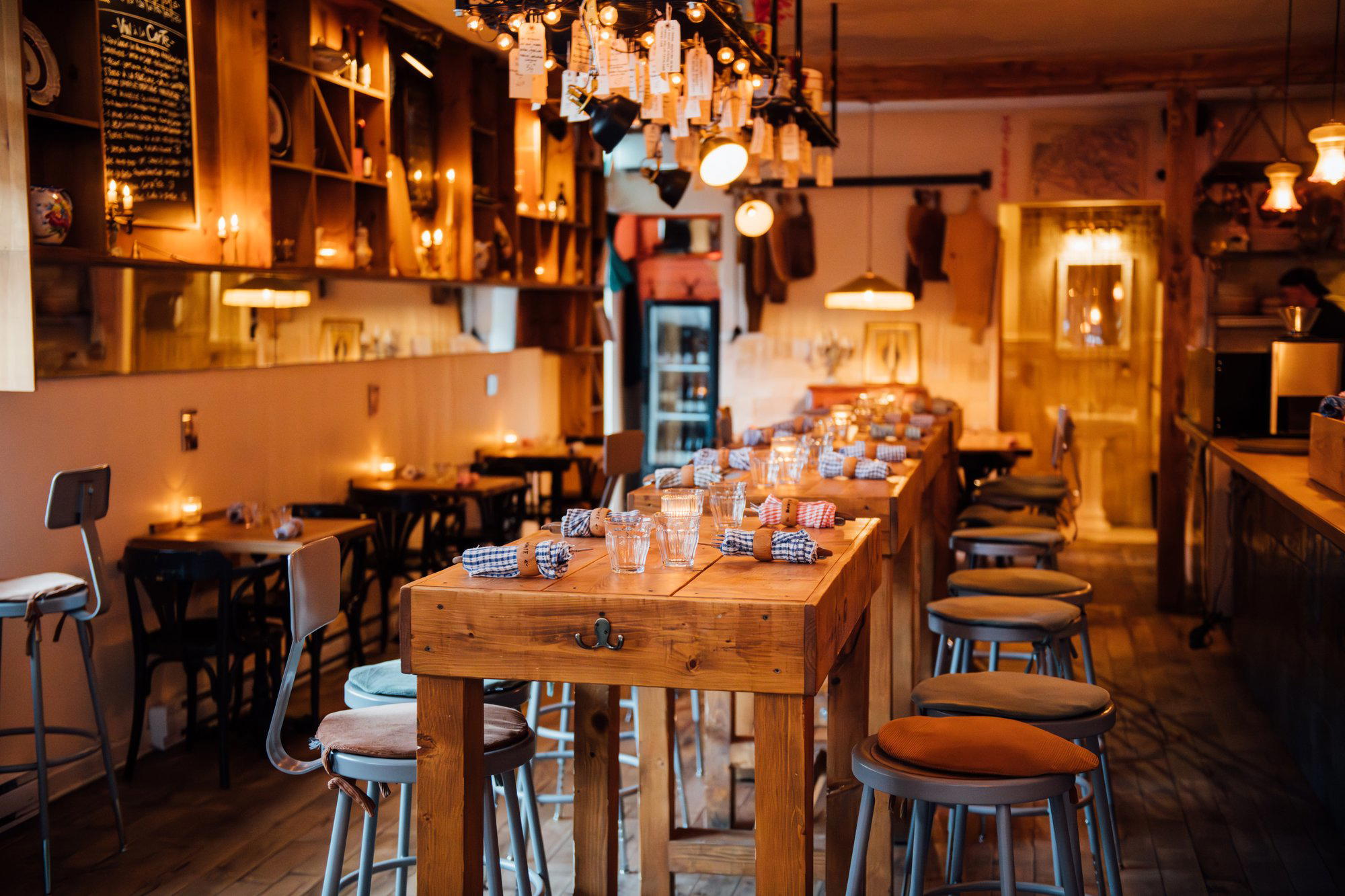
Warm and relaxed with a distinctive decor and décontractée ambiance.
Know Before You Go
- Getting there
- 1265 Rue Bernard O, Outremont, QC H2V 1V8, Canada