Le Brasero
.png)
A Michelin Plate-recognised grill house on Avenue des Cerisiers in Woluwe-Saint-Lambert, Le Brasero holds a 4.4 Google rating across more than 600 reviews. Priced in the mid-range bracket, it sits within a neighbourhood dining scene that leans toward approachable formats with serious cooking credentials. For fire-led cuisine in eastern Brussels, this is one of the more consistent addresses.
 Discover on Pearl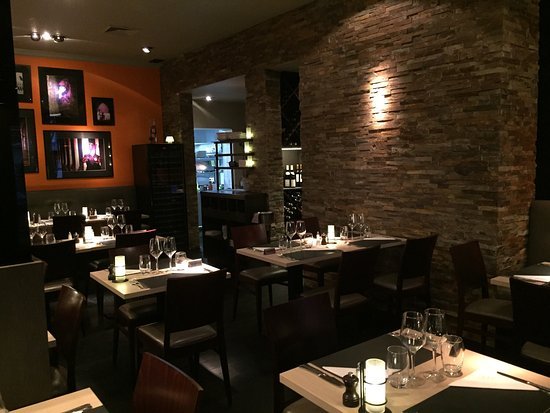
Fire and Patience: How Woluwe-Saint-Lambert's Grill Scene Earns Its Credentials
Brussels' eastern communes have spent the last decade quietly developing a dining identity distinct from the grand-café formalism of the city centre. Woluwe-Saint-Lambert, in particular, has assembled a neighbourhood restaurant scene that favours craft over spectacle — a residential quarter where locals return weekly rather than once a year for an occasion. Within that context, grill-focused cooking has found a natural home. The format rewards patience and technique over elaborate plating, and it appeals to a clientele that knows what well-handled fire can do to a cut of meat.
Le Brasero, at Avenue des Cerisiers 166, belongs to this tradition. A Michelin Plate in both 2024 and 2025 signals consistent cooking that Michelin's inspectors consider worthy of attention without placing it in the starred tier alongside Belgium's more celebrated tables — venues like Hof van Cleve in Kruishoutem or Boury in Roeselare. The Plate is a different kind of trust signal: it marks a restaurant that cooks with care at a price point the neighbourhood can sustain. At €€, Le Brasero sits alongside mid-range peers in Woluwe-Saint-Lambert such as De Maurice à Olivier and Le Coq en Pâte, and below the premium tier occupied by Da Mimmo, which operates at the €€€€ level with a Lombardian kitchen.
The shortlist, unlocked.
Hard-to-book tables, cellar releases, and concierge-planned trips.
Get Exclusive Access →The Case for Dry-Aging in a Mid-Range Grill
The editorial argument for dry-aging as a technique worth taking seriously at any price point rests on what it actually does to protein. Controlled moisture loss concentrates flavour while enzymatic breakdown tenderises the muscle without any mechanical intervention. At longer durations , from three weeks through to several months, depending on the cut and the desired result , the surface develops a deep, almost nutty character that distinguishes well-aged beef from commodity product. The technique is common among premium steakhouses, but its application in accessible neighbourhood grill formats is where the more interesting story lies.
Grill-focused kitchens that commit to an aging programme carry a structural cost: dedicated cold storage, refined product loss from trimming, and longer capital cycles before a cut reaches the pass. When a mid-range house absorbs that overhead while keeping prices in the €€ bracket, the kitchen is making an argument that quality sourcing and patience are non-negotiable, even at accessible price points. That commitment is part of what Michelin's Plate recognises: not the flash of a starred performance, but the discipline of consistent execution at a format that could easily cut corners.
Across Europe's more serious fire-led restaurants, the grill itself functions as a statement of intent. At venues like Humo in London or A de Totó in Trasmonte, the proximity of flame to aged product is treated as a precise variable, not an afterthought. The same logic applies at the neighbourhood level. What separates a serious grill from a basic steakhouse is usually the sourcing chain and the temperature discipline, not the size of the room or the length of the wine list.
Reading the 603 Reviews
A 4.4 Google score across 603 reviews is a statistically stable signal in a way that a handful of early ratings cannot be. At that volume, the score reflects repeated visits from a local base rather than a spike of opening-night enthusiasm. For a neighbourhood restaurant in a residential commune, consistent scoring at that level suggests the kitchen performs reliably across different days and different covers , the kind of dependability that mid-range dining in Brussels requires to sustain a loyal clientele. It also places Le Brasero comfortably above the average for its district, which is a more meaningful comparison than benchmarking against the starred tables at Zilte in Antwerp or Bozar Restaurant in Brussels.
Where Le Brasero Sits in the Wider Belgian Grill Picture
Belgium's fire-cooking tradition does not receive the international attention that Flemish fine dining commands, but it has deep roots. The brasero format itself , from the Spanish word for a vessel holding burning coals , points to a style of cooking that prioritises the heat source as the primary flavouring agent. In the Brussels commuter belt, that tradition intersects with the French-influenced bistro culture of the French-speaking communes, producing restaurants that take their product seriously without the ceremony of a formal dining room.
Within that peer group, Michelin Plate recognition two years running is a meaningful differentiator. The 2025 retention of the Plate confirms this is not a one-cycle recognition, and it positions Le Brasero as the address in Woluwe-Saint-Lambert most directly validated by an independent critical body. For visitors using Belgium's broader restaurant map as a reference, the context is useful: the country's top-tier tables , venues with starred recognition in Bruges, Ghent, or Antwerp, or coastal addresses like Bartholomeus in Heist or Willem Hiele in Oudenburg , operate in a different category and at a different price point. Le Brasero's Plate marks it as the disciplined mid-range entry in its immediate neighbourhood, which is a distinct and legitimate tier.
For French-speaking Belgium's wider dining context, the comparison extends further. Addresses like d'Eugénie à Emilie in Baudour and L'Eau Vive in Arbre represent Wallonia's serious mid-register cooking. Le Brasero occupies an equivalent position in the Brussels commuter zone, bringing Michelin-flagged consistency to a neighbourhood that does not typically attract the critical attention directed at the capital's centre.
Planning a Visit
Avenue des Cerisiers lies in the residential heart of Woluwe-Saint-Lambert, accessible from central Brussels by metro or tram via the eastern lines that serve the commune. The €€ pricing makes Le Brasero a realistic option for weeknight dinners as well as longer weekend meals. Given the Michelin Plate recognition and the volume of repeat reviewers signalled by 603 Google ratings, booking ahead is the practical approach, particularly for Friday and Saturday evenings when the neighbourhood grill format draws its highest demand. Specific hours and booking methods are not published in the EP Club database at this time; checking directly through the venue's local listings is advisable before travelling.
For a fuller picture of what Woluwe-Saint-Lambert offers beyond this address, the EP Club Woluwe-Saint-Lambert restaurants guide covers the full dining map. The neighbourhood's offer extends across a bar scene, a selection of hotels, wineries, and local experiences that round out a stay in this quieter eastern quarter of the Brussels capital region.
The shortlist, unlocked.
Hard-to-book tables, cellar releases, and concierge-planned trips.
Get Exclusive Access →Frequently Asked Questions
Price Lens
A compact peer snapshot based on similar venues we track.
| Venue | Price | Awards | Notes |
|---|---|---|---|
| Le Brasero | €€ | Michelin Plate (2025); Michelin Plate (2024) | This venue |
| Da Mimmo | €€€€ | Michelin 1 Star | Lombardian, Italian Contemporary, €€€€ |
| De Maurice à Olivier | €€ | Classic Cuisine, €€ | |
| Le Coq en Pâte | €€ | Italian, €€ |
Need a table?
Our members enjoy priority alerts and concierge-led booking support for the world's most difficult tables.
Get Exclusive AccessThe shortlist, unlocked.
Hard-to-book tables, cellar releases, and concierge-planned trips.
Get Exclusive Access →