
Michelin Plate
Our verdict
Perched on the 28th floor above the city’s glittering skyline, Lassù seduces with a rare union of haute Italian technique and the vibrant bounty of Brazil’s regions. Floor-to-ceiling vistas cast a cinematic glow over a polished dining room and sculptural bar, setting the stage for signature plates—like an ethereal cod brandade crowned with black olive farofa and a silken “lasagna ristorantino” laced with black truffle. For those who prize privacy and spectacle, the Lassù Rooftop Club hosts bespoke celebrations, while Saturdays come alive with a convivial feijoada buffet and live music—each experience carefully orchestrated to linger on the palate and in memory.

Pearl is the En Primeur Club membership app — saves, bookings, and concierge access live there. Same editors, same standards.
- Address
- R. Conselheiro Saraiva, 207 - Santana, São Paulo - SP, 02037-020, Brazil
- Phone
- +55 11 2373-7717
- Hours
- Mon–Fri 12–3 PM, 6 PM–12 AMSat 12–4 PM, 6 PM–12 AMSun 12–5 PM
- Website
- lassurestaurante.com.br
- Directions
- Get directions
- Booking
- Book on the venue's website
The menu
What to order
- Cod brandade with black olive farofa
- Lasagna ristorantino with black truffle
Twenty-Eight Floors Above Zona Norte
São Paulo's dining scene has long been concentrated in the southern and central zones, where most Michelin-starred and critically recognized kitchens cluster in neighborhoods like Pinheiros, Itaim Bibi, and Vila Madalena. Lassù sits at a deliberate remove from that geography. Occupying the 28th floor of the Edifício K1 in Santana, a residential and commercial district in the Zona Norte, it operates as one of the few fine-dining destinations that asks guests to travel toward a view rather than toward a familiar address. The reward for that detour is a 270-degree panorama of the city, a sight that reframes São Paulo's scale in a way that ground-level dining rarely allows.
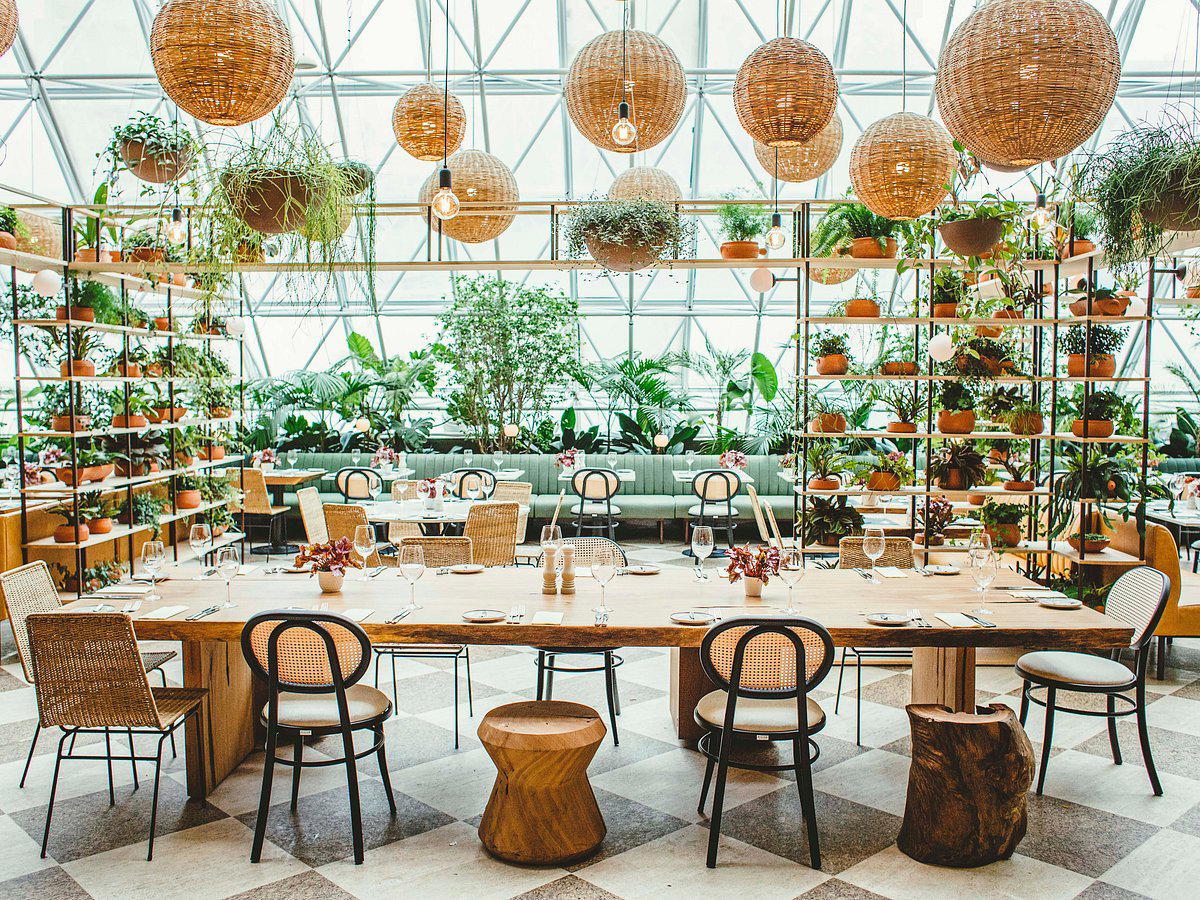
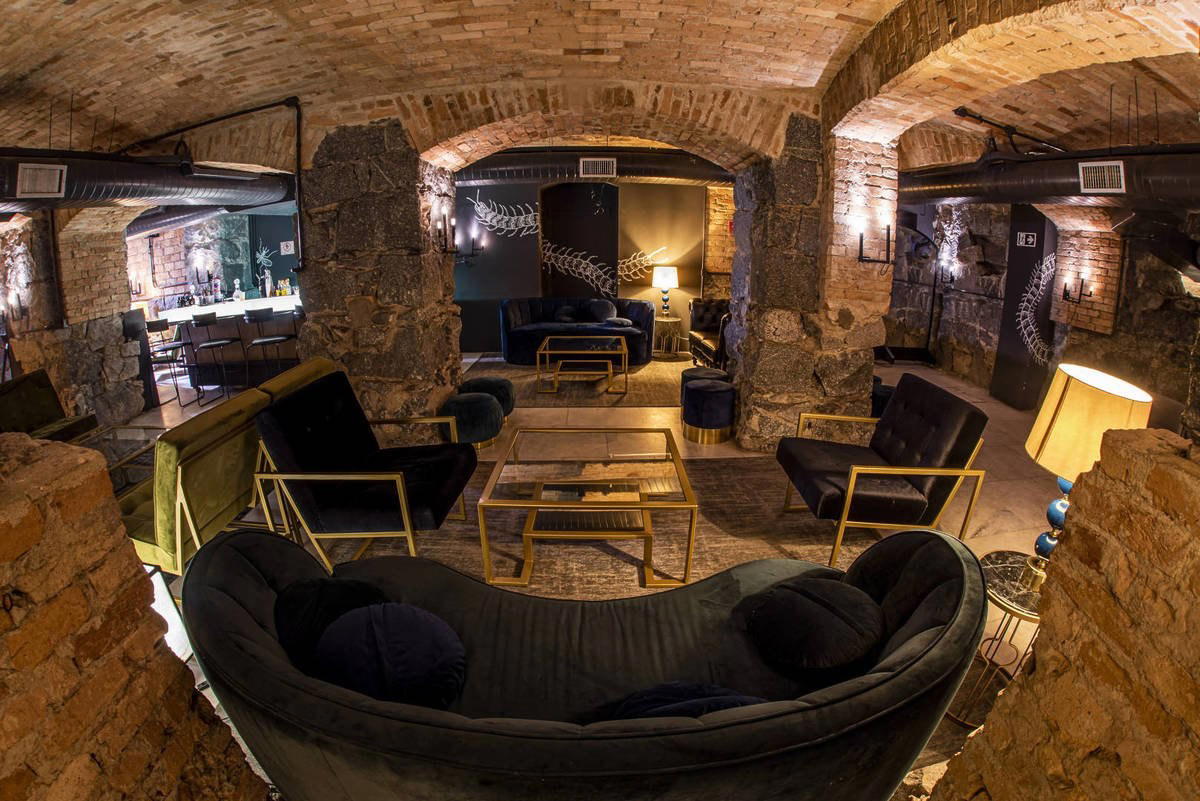
The dining room works with that height rather than simply capitalizing on it. Refined lighting keeps the interior from competing with the city's glow outside, and a bar on one side of the room serves as both a practical prelude and a reason to arrive before your reservation rather than on the dot. Tables positioned toward the perimeter carry the most expansive sightlines, and the difference between a central table and a window seat is significant enough to mention when booking.
The Booking Reality
Planning a visit to Lassù involves more deliberate coordination than its Zona Norte address might initially suggest. The restaurant holds a Michelin Plate for 2025, which places it in the recognized tier of São Paulo dining without the acute booking pressure of the city's starred addresses. For comparison, tables at Evvai (Contemporary Italian, Modern Cuisine) or D.O.M. (Modern Brazilian, Creative), both holders of multiple Michelin stars, require substantially more lead time. Lassù sits a bracket below that level of demand, though the combination of a recognized kitchen and a rooftop event space means that availability on weekend evenings should not be assumed.
The Saturday feijoada buffet with live music operates as a distinct format from the main dinner service, attracting a different booking pattern. If the a-la-carte Italian-Brazilian menu is the primary draw, a weekday dinner or weekend lunch reservation gives more flexibility to engage with the space at a considered pace. The Lassù Rooftop Club, used for private and exclusive events, occasionally affects general availability; it is worth confirming the venue's configuration when you book. No online booking portal appears in the venue's public record, so direct contact by phone or through the restaurant's official channels is the path most likely to yield a confirmed table.
A Kitchen at the Intersection of Two Traditions
Contemporary Italian cooking in São Paulo exists on a spectrum that runs from trattoria-style neighborhood restaurants through to high-technique fine dining. At the upper end of that range, kitchens like Evvai work with a rigorous modernist sensibility informed by Italian foundations. Lassù occupies a different position on that spectrum, one where Italian culinary structure meets Brazilian regional ingredients in a register that is refined but not austere.
The approach is grounded in a geographic logic that São Paulo's size makes possible. Brazil's regions produce ingredients that carry genuine distinction: Amazonian fish, northeastern farofa traditions, highland truffles cultivated in the south. Lassù's kitchen uses those materials within Italian frameworks, a combination that could easily become a novelty exercise but, at its finest, produces dishes that feel considered rather than forced. Cod brandade served with black olive farofa places a Portuguese-inflected Italian preparation beside a technique with deep Brazilian roots. The lasagna ristorantino with black truffle sits closer to Italian classical cooking, using a premium ingredient to anchor a comfort-format dish in a fine-dining context.
This approach to Italian-Brazilian hybridization connects to broader patterns across the city's restaurant scene. Kitchens like Maní (Brazilian - International, Creative) and Tuju (Creative) have developed their own frameworks for positioning Brazilian ingredients within international culinary languages, though both operate at a higher price tier and with greater critical visibility. Within the specifically Italian register, Fame Osteria offers a different point of comparison, bringing a more traditionally Italian character to São Paulo's dining conversation.
For readers who want to place Lassù against Italian Contemporary cooking in other geographies, the approach has parallels with kitchens in Europe that adapt Italian technique to local ingredient availability. Agli Amici Rovinj in Rovinj and L'Olivo in Anacapri represent how Italian Contemporary cooking is practiced at the source, providing a useful reference for how Lassù's São Paulo interpretation diverges and where it holds firm to the tradition.
What the Price Tier Signals
At the $$$ price range, Lassù positions itself in the same bracket as Maní, a tier below the $$$$ level occupied by Evvai and D.O.M.. That positioning matters because the 28th-floor setting and Michelin Plate recognition can create an expectation of higher-end pricing that the restaurant does not fully impose. For a venue with this view asset, the $$$ tier represents reasonable value when measured against São Paulo's fine-dining market. The Plate designation from Michelin, which indicates a kitchen producing food of a good standard rather than the starred tier, is consistent with that price point and sets appropriate expectations about the level of technical ambition versus the level of hospitality and setting.
Getting There and Planning the Visit
Santana is accessible from São Paulo's central and southern zones by metro, with the Santana station on Line 1 providing the most direct public transport connection. The Edifício K1's height means the journey to the 28th floor is itself a brief orientation, and arriving in daylight allows for a pre-dinner appreciation of the view before the city's lights take over the visual register at night. Evening reservations, particularly around sunset, give the fullest version of the visual experience the restaurant offers.
For visitors building a broader São Paulo itinerary, the full picture of the city's dining, drinking, and hospitality options is covered in our full São Paulo restaurants guide, our full São Paulo hotels guide, our full São Paulo bars guide, our full São Paulo wineries guide, and our full São Paulo experiences guide. Travelers moving between Brazilian cities will find relevant dining contexts in Lasai in Rio de Janeiro, Manga in Salvador, and Orixás North Restaurant in Itacaré. For those spending time in southern Brazil, Primrose in Gramado, Castelo Saint Andrews in Gramado, and Mina in Campos do Jordão provide reference points in cooler-climate Brazilian dining destinations.
What to Eat at Lassù
The kitchen's public record highlights two preparations that illustrate the Italian-Brazilian synthesis. The cod brandade with black olive farofa works because both elements are built around preservation and texture: brandade is a salt-cod emulsion with deep Mediterranean and specifically Portuguese roots, while farofa is a toasted manioc flour preparation that appears across Brazilian cuisine as a finishing texture. Together they read as a dish that knows its references rather than stumbling into a cross-cultural accident. The lasagna ristorantino with black truffle is a more straightforwardly Italian proposition, using a classical pasta format as the vehicle for a premium ingredient. It represents the end of the menu where Italian tradition dominates and Brazilian adaptation recedes. Between those two poles, the kitchen maps the range of what this particular Italian Contemporary address is attempting in São Paulo.
Accolades, Compared
| Venue | Cuisine | Price | Awards | Notes |
|---|---|---|---|---|
| LassùThis venue — the venue you are viewing | Contemporary Italian with Brazilian Influences | Not listed | Michelin Plate | Not listed |
| Evvai | Modern Italian-Brazilian Fusion | $200–300 | 3 Michelin Stars · World's 50 Best #95 | Contemporary Italian, Modern Cuisine |
| D.O.M. | Modern Brazilian Amazonian Fine Dining | $150–200 | 2 Michelin Stars · World's 50 Best #74 | Modern Brazilian, Creative |
| Maní | Modern Creative Brazilian | $50–100 | 1 Michelin Star · World's 50 Best #67 | Brazilian - International, Creative |
| Jun Sakamoto | Japanese Omakase | $100–150 | 1 Michelin Star · La Liste Top Restaurants | Sushi, Japanese |
| A Casa do Porco | Modern Brazilian Pork-Centric | $30–50 | Michelin Bib Gourmand · World's 50 Best #25 | Regional Brazilian, Brazilian |
Recognition history
Dated appearances from independent guides and award organizations, with the underlying list record or original source where available.
Michelin Plate
Michelin
Full recognition history (2 entries)
Michelin Plate
Michelin
Continue exploring
More in São Paulo
Restaurants in São Paulo
Browse all →
Bars in São Paulo
Browse all →
Details
- Elegant
- Sophisticated
- Romantic
- Scenic
- Modern
- Date Night
- Special Occasion
- Business Dinner
- Rooftop
- Panoramic View
- Open Kitchen
- Extensive Wine List
- Local Sourcing
- Skyline
- A La Carte
Current opening hours
- Monday
- 12–3 PM, 6 PM–12 AM
- Tuesday
- 12–3 PM, 6 PM–12 AM
- Wednesday
- 12–3 PM, 6 PM–12 AM
- Thursday
- 12–3 PM, 6 PM–12 AM
- Friday
- 12–3 PM, 6 PM–12 AM
- Saturday
- 12–4 PM, 6 PM–12 AM
- Sunday
- 12–5 PM
Hours can change for holidays and private events. Last verified .
Refined and elegant with subtle lighting, charming bar, and cozy yet sophisticated atmosphere.