Laree Adda
Laree Adda on Grove Street brings South Asian cooking into Jersey City's increasingly varied dining corridor, operating in a neighbourhood that has absorbed a generation of restaurant openings without losing its residential feel. The name itself signals intent: 'laree adda' translates roughly to a gathering point along the way, the kind of place where people stop, eat, and linger.
Pearl is the En Primeur Club membership app — saves, bookings, and concierge access live there. Same editors, same standards.
- Address
- 287 Grove St, Jersey City, NJ 07302
- Phone
- +12014354900
- Website
- lareeadda.com
- Directions
- Get directions
 Saves & bookings on Pearl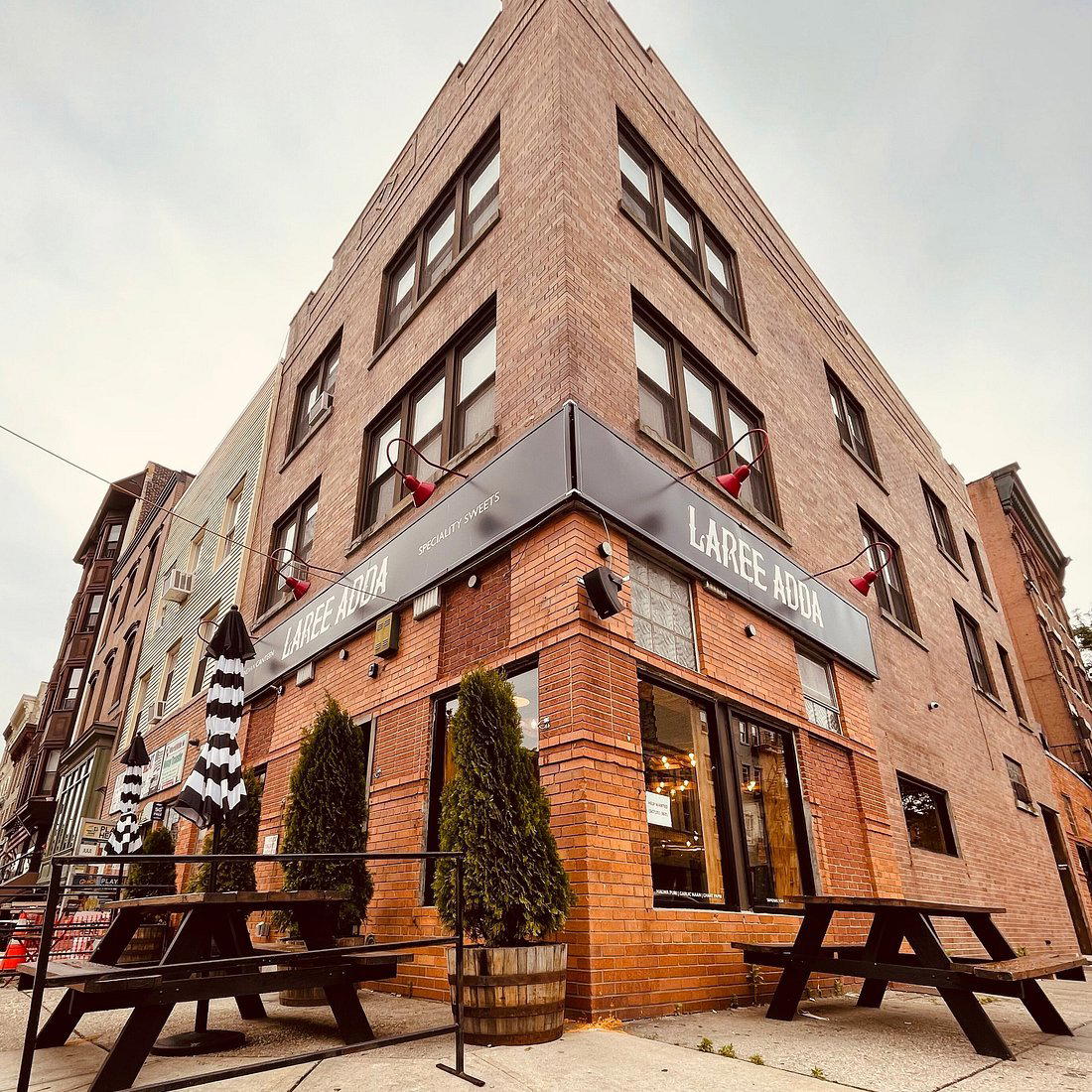
Grove Street and the South Asian Table
Jersey City's Grove Street corridor has spent the better part of a decade absorbing restaurant openings from a wide range of traditions, from French bistro cooking at Bistro La Source to Mediterranean grilling at Efes Mediterranean Grill, and the neighbourhood now functions as a genuine alternative to crossing the Hudson for a serious meal. South Asian cuisine occupies a meaningful slice of that mix. The city's Indian restaurant population extends well beyond the tourist-facing curry houses that cluster around PATH stations; it includes places drawing from Punjabi dhaba culture, Bangladeshi home-cooking traditions, and the street-food registers of Lahore and Karachi. Laree Adda is an Authentic Halal Pakistani & Indian restaurant at 287 Grove St, Jersey City, NJ 07302. Laree Adda, at 287 Grove Street, positions itself within that last category.
The name is a clue to the concept. In Urdu and Hindi, an adda is a gathering place, a social node, the kind of corner tea stall or roadside stop where regulars congregate without ceremony. The 'laree' prefix evokes the mobile cart or row of stalls that defines street-food culture across Pakistan and northern India. Together the name signals a register that is deliberately less formal than the white-tablecloth subcontinental restaurants that dominated Western perceptions of Indian cooking through the 1980s and 1990s, and more aligned with the dhaba-to-restaurant pipeline that has reshaped how diaspora communities eat in American cities over the past fifteen years.
What Dhaba Culture Means at the Table
Dhaba cooking is a distinct tradition within South Asian food, and understanding it matters for reading a menu in this register. Dhabas originated as roadside eateries serving truck drivers and travellers on the Grand Trunk Road and its tributaries across Punjab, Haryana, and into what is now Pakistan. The cooking is unapologetically direct: heavy use of ghee and mustard oil, long-cooked dal, tandoor-fired bread, and meat preparations that prioritise depth of spice over decorative plating. Karahi dishes, cooked in the wok-like vessel that gives them their name, are a dhaba staple, as are seekh kebabs finished over charcoal and the slow-braised nihari that remains among the more technically demanding preparations in the Mughal-influenced canon.
American cities with substantial South Asian populations have seen dhaba-style cooking move from purely community-facing spots into broader dining circuits over the past decade. Jersey City's proximity to one of the largest South Asian communities in the Northeast, anchored partly in Hudson County itself and partly in the surrounding region, gives restaurants in this tradition a deep and opinionated local audience. That audience is often harder to satisfy than a general diner: they are eating the food against a personal reference point, whether a family kitchen in Lahore, a specific neighbourhood restaurant in Jackson Heights, or a memory of the original dhaba format.
Where Laree Adda Sits in the Local Field
Jersey City's South Asian restaurant field is more stratified than it might appear from outside. At one end are the subcontinental spots that have operated for decades and built their reputations on consistency and volume. At the other end, a newer cohort of restaurants is attempting more specific regional positioning, whether Bangladeshi coastal cooking, South Indian vegetarian traditions, or the Pakistani street-food register that Laree Adda occupies. Clove Garden of India represents a different point on that spectrum, and the two operate as contrasting rather than competing options for the South Asian-leaning diner in Jersey City.
That specificity of register matters to how a restaurant is evaluated. A karahi and a korma are not simply variations on the same dish; they come from different culinary lineages, different regional geographies, and different social contexts. Reviewing a dhaba-format restaurant against the expectations of a broader Indian-restaurant category produces category errors. Comparing across those registers illuminates nothing about either.
For diners calibrating Jersey City against the larger American dining field, the city's mid-market and neighbourhood-format restaurants punch above their price tier in categories where community demand is high and the audience is exacting. That applies to South Asian cooking in Jersey City the way it applies to Italian-American cooking in specific New York neighbourhoods: the community acts as a continuous quality filter. The same logic operates at different price points across the country, from the neighbourhood-specific traditions that define places like Blue Hill at Stone Barns in Tarrytown to the Korean fine dining format of Atomix in New York City, where a specific culinary tradition carried by a demanding audience sets the standard.
The Broader Jersey City Dining Context
Grove Street functions as one of several dining corridors in a city that has diversified faster than most food media has tracked. The steakhouse tradition is covered by Edward's Steakhouse; the cocktail bar scene has evolved toward technically-minded venues like dullboy. South Asian cooking occupies its own corridor within this, with the community audience ensuring that restaurants in this tradition face more precise scrutiny than newer openings in categories with less established local reference points.
Jackson Heights remains the primary reference for Pakistani street-food cooking in the metro area, and any restaurant in Jersey City is implicitly positioned against that neighbourhood's density and pricing. What Jersey City offers is a shorter trip from certain ZIP codes, and a neighbourhood restaurant context that Manhattan's higher-overhead environment makes increasingly difficult to sustain.
Planning Your Visit
The restaurant is located at 287 Grove St, Jersey City, NJ 07302, within walking distance of the Grove Street PATH station, which connects directly to lower Manhattan in under ten minutes. The Grove Street PATH stop makes this one of the more accessible South Asian dining options in the metro area for Manhattan-based diners. Given the dhaba-format positioning and neighbourhood restaurant scale, this is not the setting for the kind of formal occasion that might send a diner toward Le Bernardin in New York City or the tasting menu architecture of Alinea in Chicago or The French Laundry in Napa. It is, by contrast, the kind of place suited to a direct, unfussy meal where the cooking is the point. The restaurant is open Mon-Sat 9 AM-1 AM and Sun 9 AM-10 PM. It is walk-in friendly, with a casual dress code and an estimated price of about $20 per person.
- Dum Chicken Biryani
- Nihari
- Karahi
- Shikari Lamb Chops
- Paneer Tikka Masala
- Garlic Naan
Price and Recognition
Comparable venues nearby, for context on price, style, and recognition.
| Venue | Cuisine | Price |
|---|---|---|
| Laree AddaThis venue — the venue you are viewing | Not listed | $$ |
| Skinner's Loft | Downtown, Contemporary American | $$ |
| Korai Kitchen | Journal Square, Authentic Bangladeshi | $$ |
| Meximodo - Jersey City | Jersey City, Modern Mexican Cocina | $$ |
| Vu | Exchange Place, Contemporary American | $$ |
| The Table | West Side, Polished American Classics | $$ |
Continue exploring
More in Jersey City
Restaurants in Jersey City
Browse all →
Bars in Jersey City
Browse all →
Hotels in Jersey City
Browse all →






At a Glance
- Casual
- Lively
- Energetic
- Casual Hangout
- Group Dining
- Family
- Celebration
- Open Kitchen
Current opening hours
- Monday
- 9 AM–1 AM
- Tuesday
- 9 AM–1 AM
- Wednesday
- 9 AM–1 AM
- Thursday
- 9 AM–1 AM
- Friday
- 9 AM–1 AM
- Saturday
- 9 AM–1 AM
- Sunday
- 9 AM–10 PM
Hours can change for holidays and private events. Last verified .
Casual counter-service dining with a warm, welcoming atmosphere focused on authentic South Asian flavors and communal dining experience.