Located on Rue Abbé Grégoire in central Grenoble, L'Aiguillage occupies a city where Alpine proximity shapes what ends up on the plate. The restaurant sits within a dining scene that increasingly positions itself around regional sourcing, placing it alongside a peer group that draws on Dauphiné produce, mountain herbs, and the Isère valley's agricultural depth. Reservations are advised.
Pearl is the En Primeur Club membership app — saves, bookings, and concierge access live there. Same editors, same standards.
- Address
- 14 Rue Abbé Grégoire, 38000 Grenoble, France
- Phone
- +33438128705
- Website
- aiguillage.fr
- Directions
- Get directions
 Saves & bookings on Pearl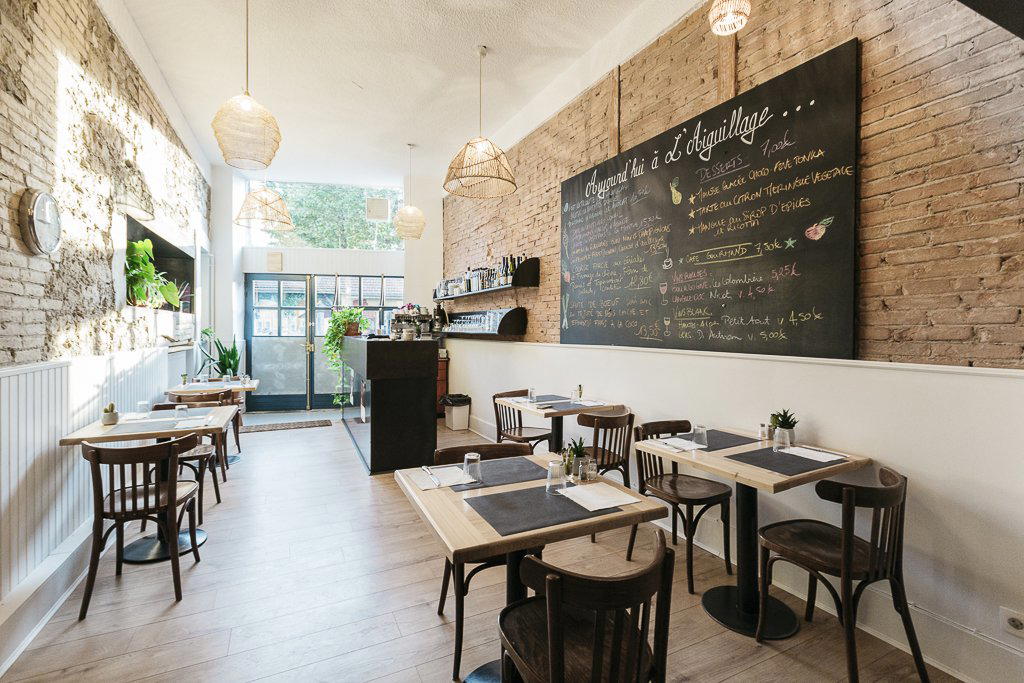
Where the Alps Feed the Table
Grenoble's position matters more than its size. Ringed by three mountain ranges and sitting at the confluence of the Isère and Drac rivers, the city has access to an ingredient map that few French urban centres can match: high-altitude cheeses from Chartreuse and Vercors, walnuts with AOC protection, Royans crayfish when the season allows, and lamb from plateau farms that do not appear on lowland menus. The restaurants that pay attention to this geography produce food with a character distinct from Lyon or Paris, and L'Aiguillage, at 14 Rue Abbé Grégoire in the 38000 district, occupies a city in the middle of that productive territory.
Grenoble's dining scene has consolidated around a recognisable split. On one side sit the formal, destination-oriented addresses like Le Fantin Latour - Stéphane Froidevaux, a creative house operating at the higher end of the price tier. On the other, a cluster of neighbourhood-anchored bistros and contemporary French addresses serve a local clientele that expects quality without ceremony. Brasserie Chavant represents the traditional end of that bracket, while Camillo and Et Si work a more contemporary register. L'Aiguillage sits within this wider Grenoblois conversation, on a street close enough to the city's university quarter to draw a mixed room of professionals and academics, but specific enough in address to suggest an established rather than transient following.
The Sourcing Logic Behind Alpine French Cooking
Understanding why ingredient provenance matters in this part of France requires some geography. The Dauphiné region, of which Grenoble is the historic capital, sits at a culinary crossroads: Savoyard influence from the north, Provençal warmth from the south, and the productive Isère valley below. This positioning has historically meant that the leading tables here did not need to look far for quality material. The walnut, for instance, is not incidental to the region. The Noix de Grenoble holds AOC status, the only walnut in the world to do so, and its presence on a dessert or cheese course signals a kitchen that understands local hierarchy rather than one defaulting to imported alternatives.
Seasonal discipline matters too. At altitude, seasons compress. The window for certain mountain mushrooms, wild garlic from the Vercors forest edges, or spring trout from cold-water streams is measured in weeks, not months. Restaurants in the region that take sourcing seriously build menus around these windows rather than papering over them with year-round imports. This is a different model from the one operating at destination houses like Flocons de Sel in Megève, where the sourcing ambition is Alpine but the price tier and format are categorically different, or at Mirazur in Menton, where the garden-to-table logic operates on a different scale entirely. At the neighbourhood level in Grenoble, sourcing is less a philosophy statement and more a practical commitment that shows up in what is and is not on the menu in any given month.
The Room and the Register
Rue Abbé Grégoire is a residential-commercial street in central Grenoble, the kind of address that rewards a deliberate decision to visit rather than a passing impulse. The name L'Aiguillage, a railway switching term that describes the point where tracks diverge, carries a local specificity worth noting: Grenoble has long been a rail junction, the point where lines separate toward the Alps, and the name places the restaurant within a tradition of working-city identity rather than mountain-resort aspiration. That distinction matters in how the room likely reads. This is not a ski-lodge aesthetic or a tourist-facing alpine cliché. It is a city restaurant, in a city that has its own dense professional and academic life independent of the peaks above it.
Grenoble's restaurant culture is better understood alongside its French regional peers than against the Parisian template. The city's dining ambition sits closer to Lyon in orientation, prioritising serious cooking at controlled prices, than to the destination-resort model operating further up the valley. This places L'Aiguillage within a tradition of addresses like Au Clair de Lune, where the proposition is French cooking with regional grounding rather than a tasting-menu performance.
Grenoble in the Wider French Dining Map
France's provincial dining has undergone a quiet rebalancing over the past decade. The grandes maisons that defined the country's culinary reputation internationally, from Troisgros - Le Bois sans Feuilles in Ouches to Auberge de l'Ill in Illhaeusern and Paul Bocuse in Collonges-au-Mont-d'Or, still anchor the national identity, but the day-to-day quality of mid-tier regional cooking has risen substantially. Cities like Grenoble now sustain multiple addresses capable of serving food that would have required a Parisian trip a generation ago. Bras in Laguiole showed that a deeply rooted regional sensibility could operate at the highest level; at the city scale, Grenoble's better tables demonstrate the same logic at a less rarefied register.
The comparison set outside France is instructive too. The kind of sourcing discipline and regional fidelity that characterises the better Grenoblois tables has parallels in how ambitious chefs at AM par Alexandre Mazzia in Marseille or Assiette Champenoise in Reims treat their respective ingredient territories. The specificity of place is the argument. Internationally, the conversation about terroir-driven cooking at the city restaurant level runs through addresses as different as Au Crocodile in Strasbourg, Le Bernardin in New York City, and Atomix in New York City, though those comparisons operate at a different scale and price tier. At Alléno Paris au Pavillon Ledoyen, ingredient sourcing becomes an architectural concern; in Grenoble, the same instinct operates at street level.
Planning a Visit
The restaurant is located at 14 Rue Abbé Grégoire, 38000 Grenoble, in the city's central district and reachable on foot from the tram network. Grenoble is approximately 1 hour 50 minutes by TGV from Paris Gare de Lyon, making it a viable day-trip or short-stay destination from the capital. For visitors combining dining with the mountain access the city provides, timing matters: the shoulder seasons of late spring and early autumn tend to bring interesting regional produce to city tables, as high-altitude ingredients become available before the summer tourist peak reshapes priorities. Specific hours are Tue to Fri, 12 to 2 PM and 7:30 to 9 PM, with reservations recommended.
Peers in This Market
Comparable venues nearby, for context on price, style, and recognition.
| Venue | Cuisine | Price | Notes |
|---|---|---|---|
| L'AiguillageThis venue — the venue you are viewing | Healthy Seasonal French | $$ | Not listed |
| Au Clair de Lune | French Bistro with Vegan Options | $$ | hyper-centre |
| Une Semaine sur Deux | French Bistronomic | $$$ | Championnet |
| LULU | Bistronomie | $$ | Centre-ville |
| L'Inattendu | Modern French Seasonal | $$ | near Bastille telepherique |
| Restaurant Katmandou | Authentic Nepali & Tibetan | $$ | Centre Grenoble |
Continue exploring
More in Grenoble
Restaurants in Grenoble
Browse all →
Bars in Grenoble
Browse all →
Hotels in Grenoble
Browse all →

At a Glance
- Cozy
- Rustic
- Intimate
- Casual Hangout
- Open Kitchen
- Natural Wine
- Local Sourcing
- Organic
Current opening hours
- Monday
- Closed
- Tuesday
- 12–2 PM, 7:30–9 PM
- Wednesday
- 12–2 PM, 7:30–9 PM
- Thursday
- 12–2 PM, 7:30–9 PM
- Friday
- 12–2 PM, 7:30–9 PM
- Saturday
- Closed
- Sunday
- Closed
Hours can change for holidays and private events. Last verified .
Meticulous decor highlighting natural materials creating an unpretentious, cozy atmosphere.