
On a narrow Left Bank street in the 5th arrondissement, La Truffière has cultivated a following among serious wine drinkers who treat its cellar as the real attraction. The kitchen serves classical French cooking with an emphasis on the truffle, the ingredient that names the house, while the wine list has earned a reputation that circulates well beyond the Quartier Latin.
Pearl is the En Primeur Club membership app — saves, bookings, and concierge access live there. Same editors, same standards.
- Address
- 4 Rue Blainville, 75005 Paris, France
- Phone
- +33 1 46 33 29 82
- Website
- la-truffiere.fr
- Directions
- Get directions
 Saves & bookings on Pearl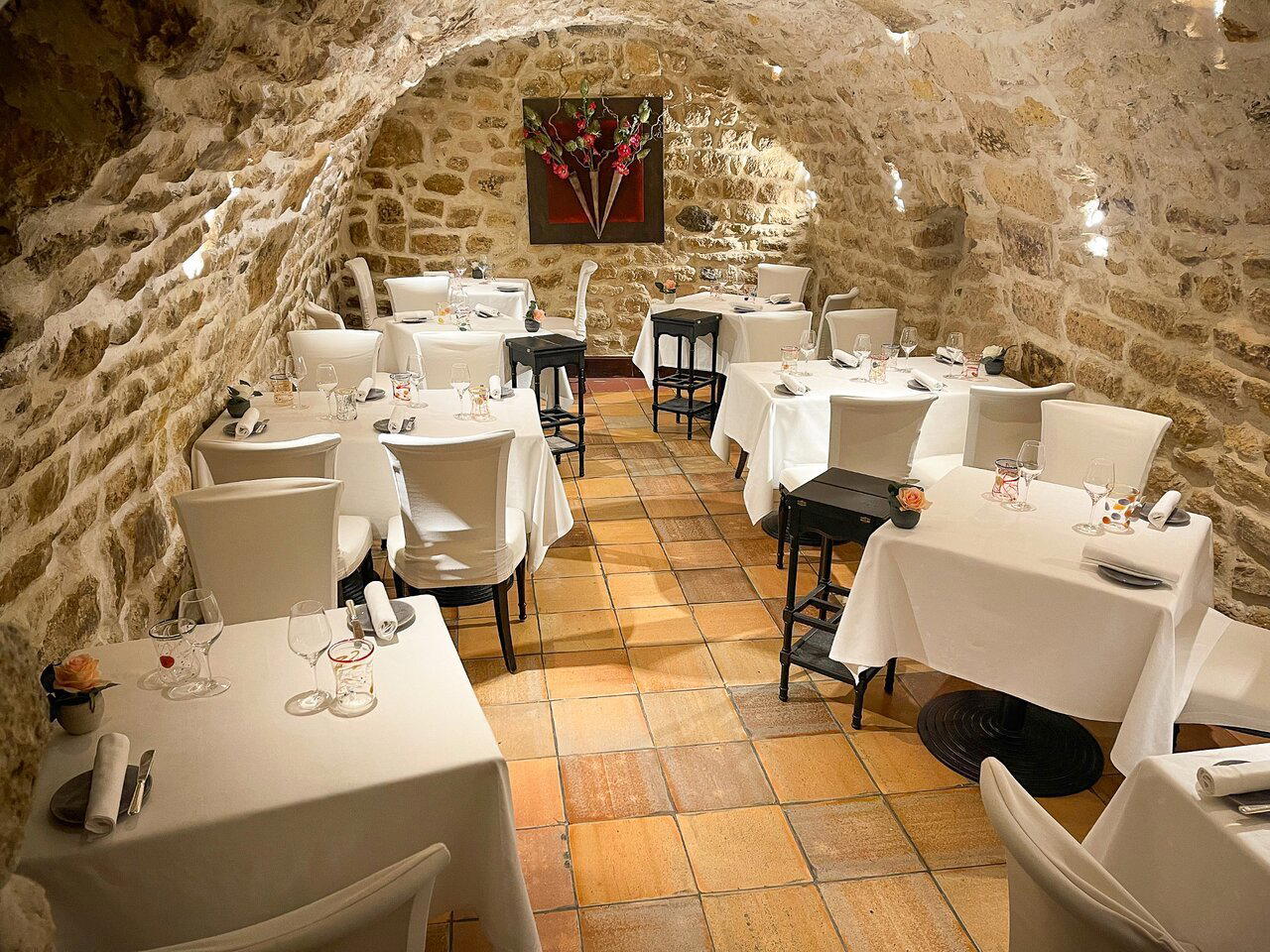
A Street in the 5th That Wine People Know
Rue Blainville sits in the dense residential grid of the Latin Quarter, a few blocks south of the Panthéon and a long way, atmospherically, from the grand dining rooms of the 8th arrondissement. The buildings here are narrow and stone-fronted, the street mostly quiet in the way that older Paris neighborhoods tend to be once you move off the tourist axes. La Truffière occupies one of those buildings at number four, and the approach gives no hint of spectacle, which is, for a certain kind of diner, exactly the point.
Paris dining at the upper end has long divided between two competing ideas: the palatial room where the occasion is announced by the architecture, and the tucked-away address where the food and wine do the persuading without architectural assistance. The first category includes places like Le Cinq at the Four Seasons Hôtel George V, where the room itself is part of the proposition, and Alléno Paris au Pavillon Ledoyen. La Truffière belongs firmly to the second category. Its reputation travels through word of mouth among people who know what they are looking for, specifically, a wine list with serious depth and classical cooking that doesn't compete with it.
The Ingredient That Defines the Kitchen
The truffle is one of those ingredients that either organizes a menu or decorates it. The difference matters. In much of restaurant cooking, black or white truffle appears as a finishing gesture, shaved over a dish at the table, present primarily as a price signal. At La Truffière, the name is not a marketing gesture. The kitchen has built its identity around classical French preparations in which the truffle functions as a structural element rather than an addition.
This approach connects to a long tradition in French regional cooking, particularly from Périgord and the Quercy, where black truffle has historically been treated as a primary flavor rather than a luxury accent. The Périgord Noir, the variety harvested in the Dordogne between November and February, has a more insistent, earthy character than its more expensive Italian white counterpart, and it performs better in preparations involving heat. Sauces, braises, and roasted birds from this tradition are built to carry that flavor rather than showcase it in a raw or barely-touched state. The emphasis on the ingredient as organizing principle aligns with the classical sourcing model in which seasonal availability shapes the menu's rhythm. Truffle season peaks between December and March, which is when the restaurant's core proposition is at its fullest expression.
Traditional French cooking at this level draws from a network of named regional producers and market relationships that is largely invisible to the diner but determines what arrives at the table. This sourcing infrastructure underpins the classical repertoire at restaurants like L'Ambroisie on the Place des Vosges just as much as it does at smaller addresses like La Truffière. The difference is that at the palatial end of the market, sourcing credentials are part of the public narrative. At restaurants that operate more quietly, those same relationships are simply assumed.
The Wine Cellar as the Real Point of Difference
The restaurant's standing among wine drinkers in Paris is the detail that most sharply distinguishes it from its comparable set on the Left Bank. The restaurant is known for a wine list that justifies the visit independently of the food. That is a relatively rare position to occupy. Most restaurants in this price tier maintain lists that are competent and broad; fewer have lists with the kind of depth and curation that attract collectors or serious amateurs as the primary audience.
The connection between truffle-focused kitchens and serious cellars is not accidental. Truffle, particularly the black Périgord variety, is one of the more difficult ingredients to match with wine, it amplifies tannin in some reds, overwhelms delicate whites, and tends to work leading with wines that have age and texture. A kitchen organized around truffle essentially demands a serious cellar. Burgundy, both red and white, is the classical pairing reference, mature Pinot Noir from the Côte de Nuits, or aged white Burgundy with sufficient reduction to stand against the earthiness. Older Rhône reds and aged white Bordeaux are also well within range. A wine list built to serve that kind of cooking will, by design, skew toward age and depth rather than breadth across regions.
For comparison, the wine programs at Arpège and Kei are built to serve menus with different flavor priorities, vegetable-forward at the former, Franco-Japanese at the latter, and attract a different profile of wine drinker. The restaurant's list is oriented toward the classical French table, which means it sits closer in spirit to the cellar traditions of Auberge de l'Ill in Illhaeusern or Troisgros in Ouches than to the modernist programs in the 8th.
Positioning and the Latin Quarter Context
The 5th arrondissement has never been Paris's primary dining address, that designation belongs to the 8th, where tasting-menu restaurants with significant investment behind them cluster around the major hotels and the Champs-Élysées gardens. The Left Bank's dining identity has historically been organized around intellectual culture rather than financial display, which produces a different kind of restaurant: less concerned with the visual register of luxury, more interested in the substance of what is on the plate and in the glass.
The restaurant operates within that tradition. It is not competing with Paul Bocuse's Auberge du Pont de Collonges or Mirazur in Menton for the destination-dining audience that travels across France for a single table. Its audience is more local and more specific: Parisians and visitors who know the Quartier Latin well enough to seek out a restaurant that doesn't announce itself, and who come primarily because the cellar gives them access to bottles they want to drink alongside food that will do those bottles justice.
Internationally, the classical French tradition that restaurant represents has parallels at Le Bernardin in New York and Emeril's in New Orleans, though with distinct regional identities.
The restaurant is located at 4 Rue Blainville in the 5th arrondissement, reachable on foot from Place Monge or Cardinal Lemoine metro stations in under five minutes. Reservations are recommended, especially during truffle season.
Quick Comparison
Comparable venues nearby, for context on price, style, and recognition.
| Venue | Cuisine | Price | Notes |
|---|---|---|---|
| La TruffièreThis venue — the venue you are viewing | Truffle-Focused Mediterranean Fine Dining | $$$$ | Not listed |
| Peninsula | French Hotel Bistro | $$$$ | Avenue Kléber |
| Palais Royal Restaurant Paris | Contemporary French with Mediterranean Influences | $$$$ | 1st Arrondissement |
| Maison de l'Amerique Latine | French Seafood | $$$$ | Saint-Germain-des-Prés |
| Orgueil | Modern French Bistronomy | $$$$ | 11th arrondissement |
| Le Georges | Modern French Fusion with Rooftop Views | $$$$ | 4th arrondissement |
Recognition history
Dated appearances from independent guides and award organizations, with the underlying list record or original source where available.
Star Wine List
Star Wine List
Continue exploring
More in Paris
Restaurants in Paris
Browse all →
Bars in Paris
Browse all →
Hotels in Paris
Browse all →
At a Glance
- Romantic
- Cozy
- Elegant
- Classic
- Intimate
- Date Night
- Special Occasion
- Historic Building
- Wine Cellar
- Private Dining
- Extensive Wine List
- Sommelier Led
- Local Sourcing
Current opening hours
- Monday
- Closed
- Tuesday
- 6:30–9:15 PM
- Wednesday
- 6:30–9:15 PM
- Thursday
- 12–1:15 PM, 6:30–9:15 PM
- Friday
- 12–1:15 PM, 6:30–9:15 PM
- Saturday
- 12–1:15 PM, 6:30–9:15 PM
- Sunday
- Closed
Hours can change for holidays and private events. Last verified .
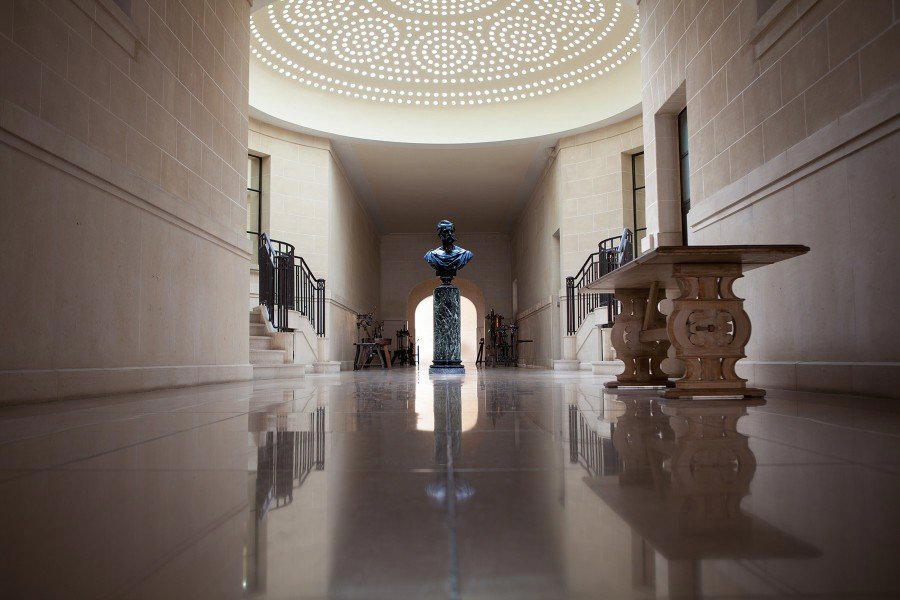
Warm and cozy decor in vaulted stone cellars and fireplaced salons, creating a romantic and historic atmosphere.