
Inside a 13th-century château in the Savoie wine village of Jongieux, La Table 1625 operates below Les Morainières as a more accessible counterpart to the main restaurant. The cellar setting, with exposed stone and a communal table among barrels, frames weekly-changing set menus built around lake fish, Savoie trout, mushrooms, herbs, and slow-cooked cuts that reflect the region's larder directly.
Pearl is the En Primeur Club membership app — saves, bookings, and concierge access live there. Same editors, same standards.
- Address
- 391 route de la Charvaz
- Phone
- +33 4 79 96 09 84
- Website
- chateaudelamar.fr
- Directions
- Get directions
 Saves & bookings on Pearl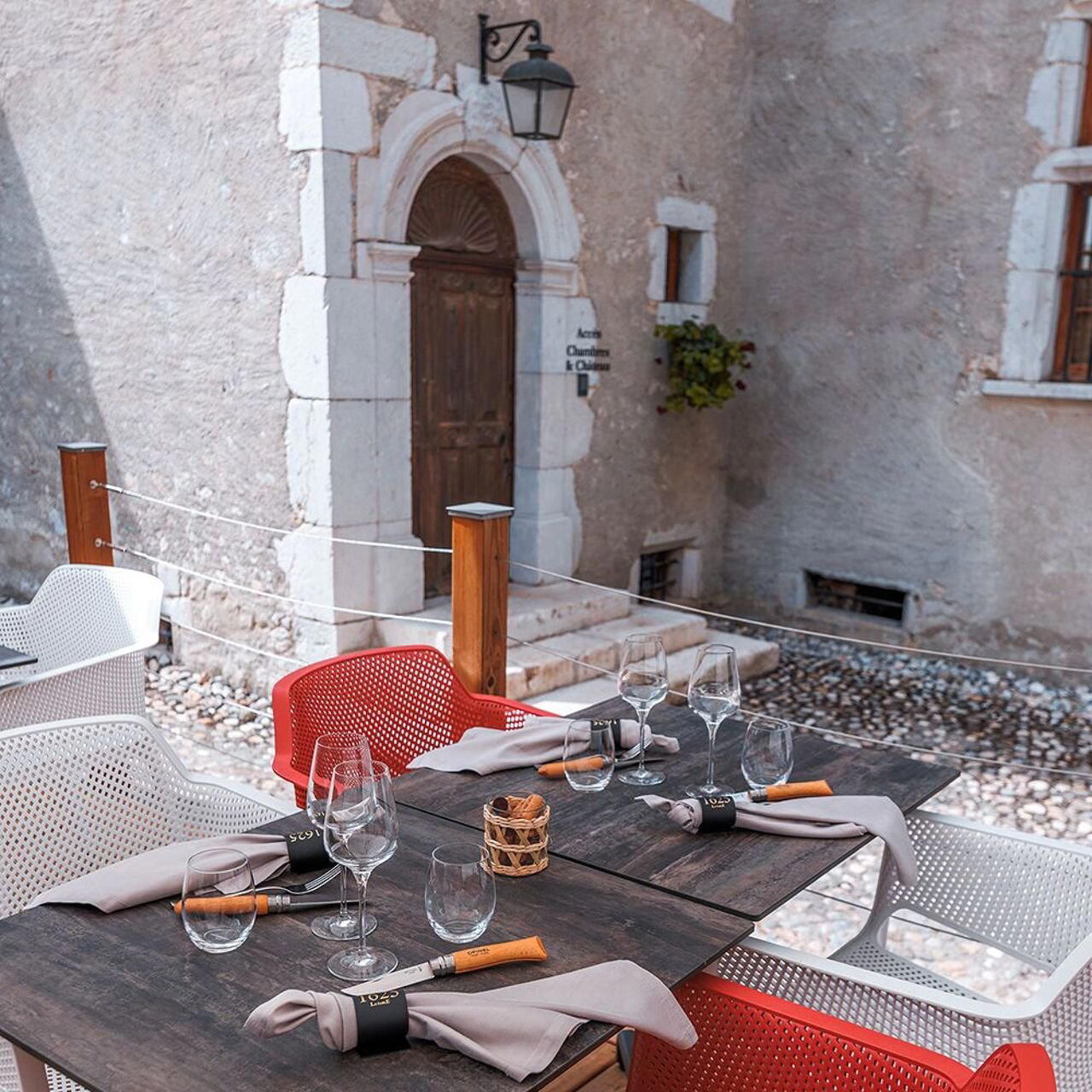
Stone, Barrels, and the Savoie Table
The approach to Château de la Mar already signals what kind of meal lies ahead. Thirteenth-century stone walls enclose vineyards that stretch toward the Lac du Bourget, and the building's weight and age set expectations before a single dish arrives. La Table 1625, positioned in the cellars directly below Les Morainières (Contemporary French, Creative), operates in a register quite different from the floor above. The decor is stripped to its essentials: wooden tables against exposed stone, the low ceiling of a working cellar, and a large communal table d'hôte standing between the barrels. It is the kind of room that removes all decorative ambition and lets the architecture carry the atmosphere entirely.
This model, where a serious kitchen maintains a less formal, lower-stakes dining room alongside its flagship, has precedents throughout provincial France. What defines the better versions of it is not a diluted kitchen but a recalibrated one, applying the same sourcing discipline and technical attention to a shorter, more direct format. At La Table 1625, the weekly-changing set lunch menu and a concise à la carte are the vehicles for that recalibration. The brevity of the menu is part of the proposition: fewer dishes, better executed, with raw materials that reflect the immediate geography.
Where the Ingredients Come From
Savoie's larder is specific. The lakes, the Alpine pastures, the forests, and the short growing windows of high altitude combine to produce a set of ingredients that do not travel well and are rarely found at this quality outside the region. Lac du Bourget, the largest natural lake in France, sits within striking distance of Jongieux, and its fish, including the local trout, form a recurring presence on the menu. Lake fish in this corner of France occupies a distinct category from coastal seafood: the flavours are gentler, the textures more delicate, and the cooking window narrower. Getting them right requires proximity, which La Table 1625 has by geography rather than effort.
Mushrooms and herbs from the surrounding terrain appear alongside the fish, grounding the menu in the forested hillsides above the Rhône valley. These are not garnishes; in Alpine kitchens that take their sourcing seriously, foraged and cultivated fungi carry genuine weight on the plate. The kitchen's use of what the records describe as "on-point jus" alongside these ingredients points to classical French technique applied to a local pantry, rather than the kind of pan-European fusion that has diluted regional identity elsewhere.
The meat dishes extend the regional logic: Savoie trout appears by name, while slow preparations such as a 10-hour confit veal shank and a pork chop with polenta reflect the Alpine preference for long cooking and sturdy accompaniment. Polenta in Savoie is not a concession to Italian influence across the border; it has been a staple of the region's mountain communities for centuries, and its presence here is a statement of local fidelity rather than trend-following. An Angus steak with chips completes the à la carte offering, sitting comfortably alongside the slower cuts as a direct answer to a different kind of appetite.
The Cellar Format as a Dining Tradition
Dining in a working cellar has a specific European tradition, most developed in wine regions where the production environment becomes the hospitality environment. The barrels at the restaurant are not props; the château produces wine in the Jongieux appellation, and the table d'hôte arrangement places guests physically inside that production context. This is a format that appears across France's serious wine villages, from Burgundy to Alsace, and which carries a particular honesty: the wine and the food share the same building, the same soil, and in the leading cases, the same sensibility.
For visitors exploring the Savoie wine corridor, the restaurant sits within a broader programme of discovery.
Positioning in French Regional Dining
The restaurant's format, a cellar bistro beneath a serious kitchen, represents one end of a broad spectrum in French regional dining. At the other end sit multi-course tasting experiences at addresses such as Flocons de Sel in Megève, where Alpine ingredients meet extended creative menus, or the coastal precision of Mirazur in Menton. France's most decorated regional kitchens, from Bras in Laguiole to Auberge de l'Ill in Illhaeusern, have built their identities on deep rootedness in a single terroir, and the restaurant operates with a version of that same logic, scaled to a lunch format and a cellar room rather than a grand dining room.
The comparison is not about equivalence in scale or ceremony. It is about the underlying principle: that a kitchen's quality shows most clearly in how it treats the immediate landscape. At Jongieux, that landscape includes a medieval château, a working vineyard, an Alpine lake, and the slow rhythms of a wine village. The restaurant translates those elements into a set menu that changes each week, a detail that matters more than it might appear. Weekly rotation requires genuine engagement with what is available rather than menu inertia, and it keeps the kitchen accountable to the season in a way that longer-running menus rarely do. For further reference in French fine dining tradition, Troisgros - Le Bois sans Feuilles in Ouches, Alléno Paris au Pavillon Ledoyen in Paris, and Paul Bocuse - L'Auberge du Pont de Collonges each represent different expressions of how French kitchens have balanced tradition and evolution. Internationally, Le Bernardin in New York City and AM par Alexandre Mazzia in Marseille show how sourcing discipline and technical rigour operate across different contexts, while Assiette Champenoise in Reims, Au Crocodile in Strasbourg, and Emeril's in New Orleans each illustrate the range of ways a regional identity can anchor a restaurant's identity over time.
Planning a Visit
The restaurant sits at 391 route de la Charvaz in Jongieux, within the Château de la Mar. The format is lunch-focused, with a set menu that changes weekly and a short à la carte alongside it. Booking is recommended. Jongieux is accessible by car from Chambéry, roughly 20 kilometres to the south-east.
Side-by-Side Snapshot
Comparable venues nearby, for context on price, style, and recognition.
| Venue | Cuisine | Price | Awards | Notes |
|---|---|---|---|---|
| La Table 1625This venue — the venue you are viewing | Traditional French Bistronomie | $$$ | Michelin Plate | Not listed |
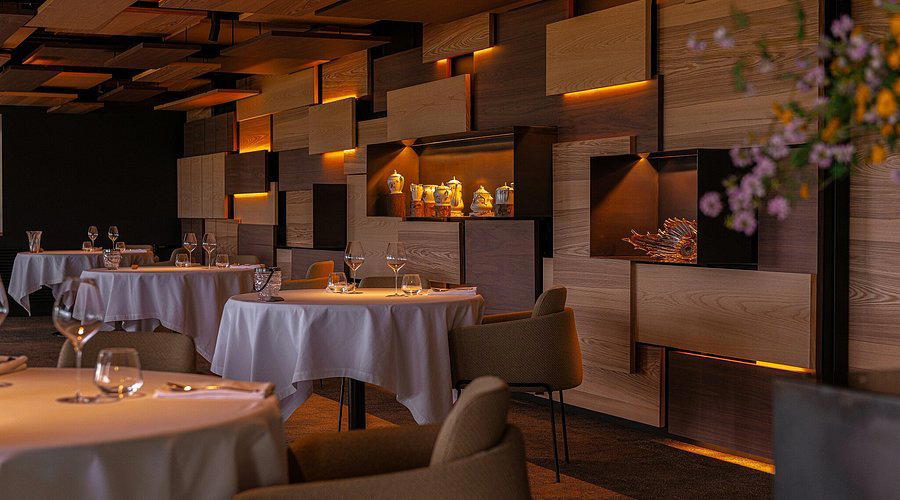
| Les Morainières | Modern Savoyard Fine Dining | $$$$ | Michelin 2 Star | Jongieux, Avant-Pays Savoyard |
| La Fine Fourchette | Modern French Fine Dining | $$$ | Michelin Plate | Virignin |
| Milprée | Creative Seasonal French Bistro | $$$ | Michelin Plate | Quartier Saxe Roosevelt |
| La Petite Chartreuse | French Bistronomique | $$$ | Michelin Plate | La Tronche |
| Bec | Modern French Savoie Cuisine | $$$ | Michelin Plate | Duingt |
Recognition history
Dated appearances from independent guides and award organizations, with the underlying list record or original source where available.
Michelin Plate
Michelin
Continue exploring
More in Jongieux
Restaurants in Jongieux
Browse all →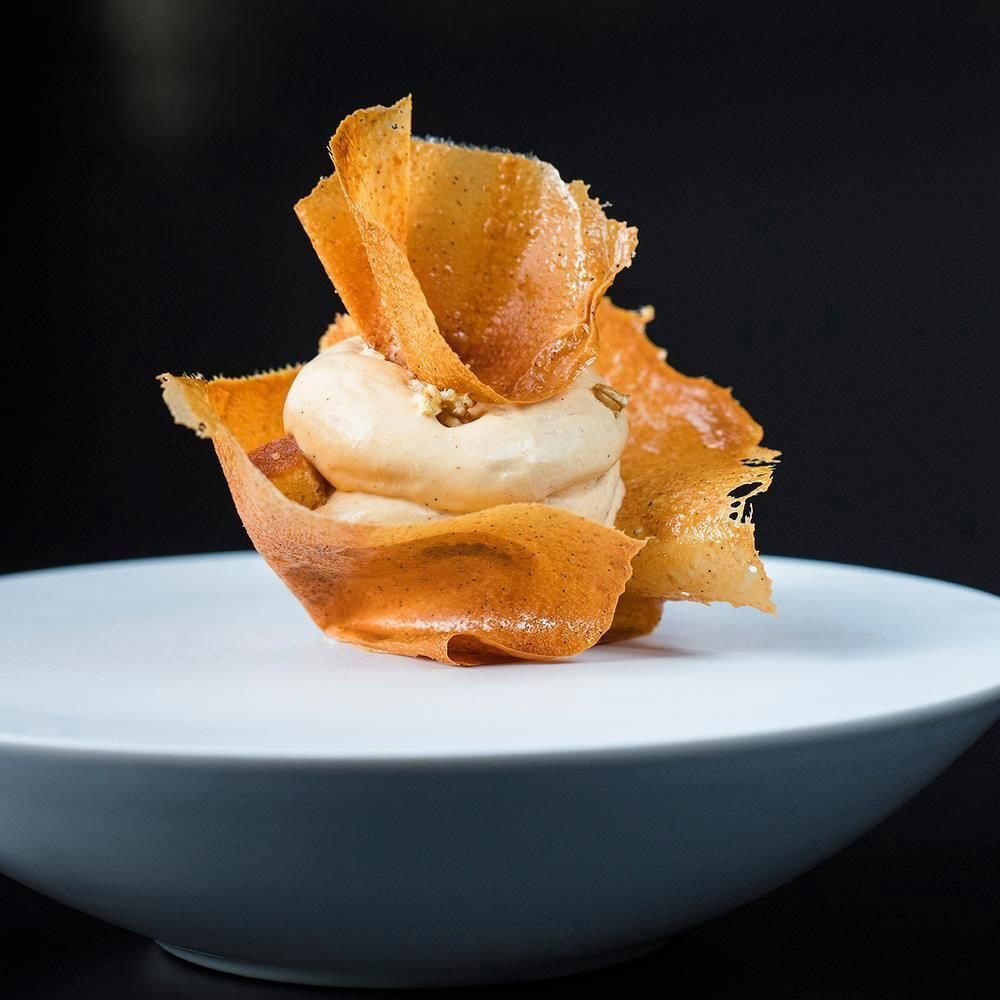
Bars in Jongieux
Browse all →
Hotels in Jongieux
Browse all →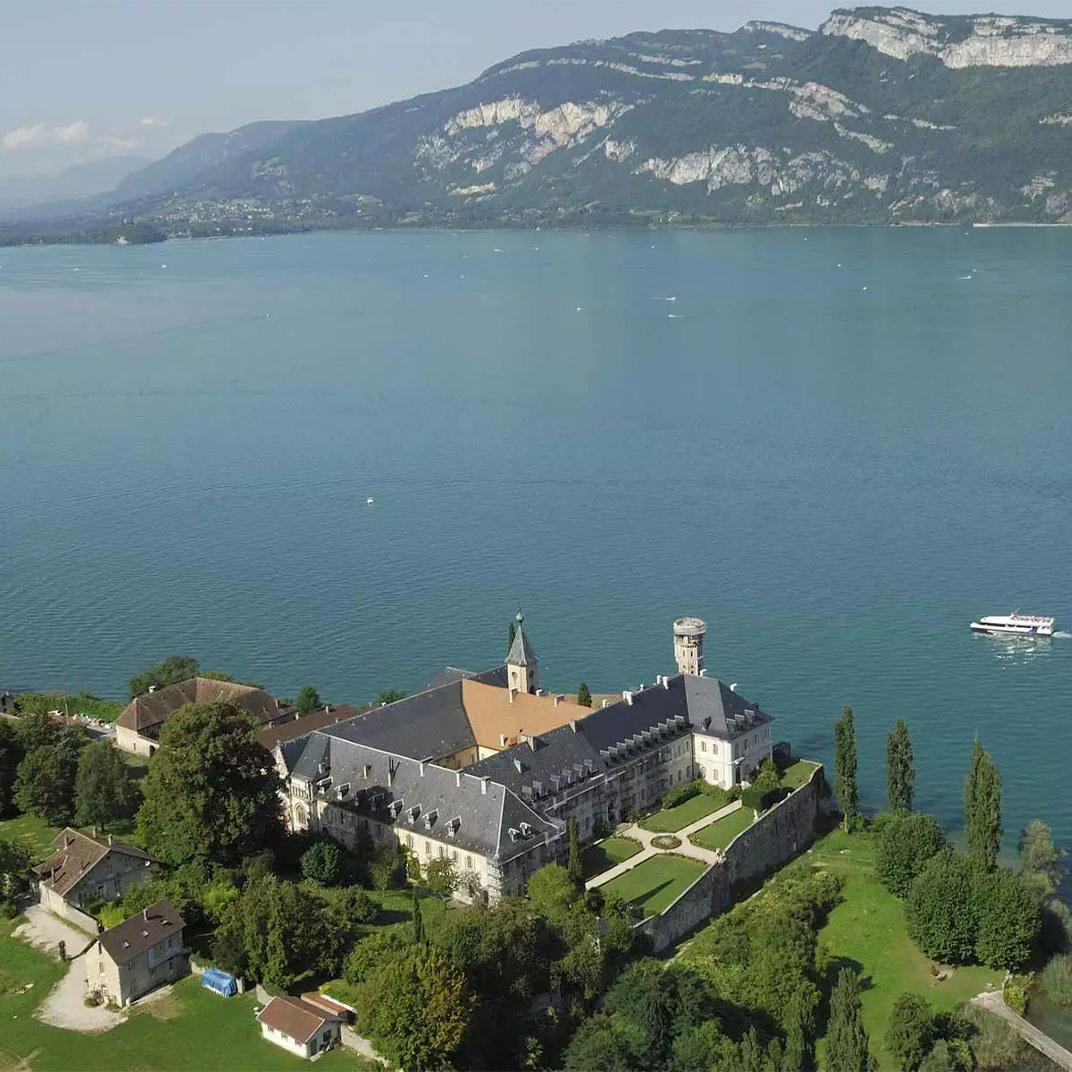

At a Glance
- Elegant
- Rustic
- Intimate
- Scenic
- Special Occasion
- Date Night
- Historic Building
- Wine Cellar
- Extensive Wine List
- Local Sourcing
- Vineyard
Current opening hours
- Monday
- 12:15–1:15 PM, 7–9 PM
- Tuesday
- 12:15–1:15 PM, 7–9 PM
- Wednesday
- 12:15–1:15 PM, 7–9 PM
- Thursday
- 12:15–1:15 PM, 7–9 PM
- Friday
- 12:15–1:15 PM, 7–9 PM
- Saturday
- Closed
- Sunday
- Closed
Hours can change for holidays and private events. Last verified .
Minimalist decor with wooden tables against exposed stone walls and a large table d'hôte among wine barrels in the castle cellar.