.png)
A Michelin Plate-recognised address on Calle Boticas in Zafra, La Rebotica operates from a converted pharmacy and holds its focus tightly on Extremaduran and Aragonese tradition: borage, mushrooms, slow-stewed albóndigas, and Ternasco de Aragón PGI roast lamb. Priced at the accessible €€ tier, it draws a loyal local following and scores 4.7 across 539 Google reviews.
Pearl is the En Primeur Club membership app — saves, bookings, and concierge access live there. Same editors, same standards.
- Address
- Boticas, 12, 06300 Zafra, Badajoz, Spain
- Phone
- +34 924 55 42 89
 Saves & bookings on Pearl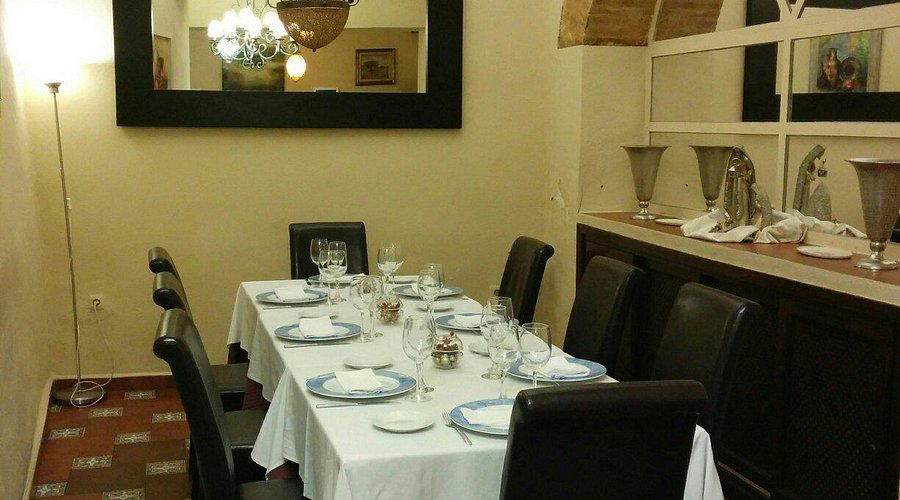
A Former Pharmacy, a Provincial Tradition
La Rebotica is a restaurant in Zafra, Badajoz, serving Modern Spanish Regional cooking at a price around $35 per person. Zafra itself, a modest town in Extremadura's Badajoz province, sits well outside the circuits that connect the high-profile kitchens of Arzak in San Sebastián, El Celler de Can Roca in Girona, or DiverXO in Madrid. That distance is, in its own way, the point. La Rebotica occupies a converted pharmacy, a former botica, which gives the place its name, and the building's domestic bones are still visible: what were once the pharmacist's bedrooms now serve as dining rooms, each with the low ceilings, stone detailing, and uneven floor plans of a private house rather than a designed restaurant space. You arrive through a doorway marked with a Spanish saying about bread, cheese, and wine making the journey easier. It is an unambiguous declaration of intent.
The Cultural Weight of the Table in Rural Spain
Spain's current restaurant conversation is dominated by the creative and the progressive. The country holds more three-Michelin-star kitchens than almost anywhere in Europe, from Azurmendi in Larrabetzu to Aponiente in El Puerto de Santa María and Mugaritz in Errenteria, and the bandwidth devoted to avant-garde technique is significant. But parallel to that conversation, a quieter tradition of regional cooking has maintained its ground, anchored in products that carry Protected Geographical Indication status, in recipes passed through commercial kitchens without substantial editorial revision, and in a philosophy that treats the archive of Spanish food culture as something to be served rather than deconstructed.
La Rebotica belongs firmly to that second tendency. Its Michelin Plate recognition in 2025 places it within the Guide's acknowledgement of kitchens producing good cooking without the apparatus of innovation-led gastronomy. The Plate, in Michelin's own framing, signals quality at the ingredient and execution level rather than conceptual ambition. At the €€ price tier, it functions as the kind of address that regional guides have always depended upon: somewhere a returning visitor would book without debate, and somewhere a newcomer to Extremadura would leave understanding the local table considerably better than before.
Aragón on an Extremaduran Table
The kitchen at La Rebotica operates with what the venue describes as a strong Aragonese flavour, which requires a moment of geographical context. Extremadura and Aragón are not neighbouring regions, and the connection between them here is more about culinary sensibility than proximity: both traditions share a commitment to slow cooking, to vegetables that do not need theatrical preparation to justify their presence, and to lamb as a central protein rather than an occasional option.
The Ternasco de Aragón PGI is the clearest example. Ternasco is a young lamb, slaughtered before 90 days and weighing no more than 13 kilograms, which gives the meat a delicacy that older lamb cannot reproduce. The PGI designation imposes breed, feed, and production-region criteria that make it a specific and traceable product, and the kitchen at La Rebotica prepares it in its own named style. That named style is not described in further detail in the available record, but the fact that the venue has developed a house version of this protected product signals a seriousness about the ingredient that goes beyond sourcing it and adding heat.
Broader menu as described runs to borage, mushrooms, and potatoes as primary vegetable components, and to slow-stewed albóndigas as the kind of anchor dish that tests kitchen patience more than technical showmanship. Borage, worth noting, is a vegetable that northern Spain treats with considerably more respect than much of the rest of Europe, and its presence here alongside mushrooms suggests a kitchen that thinks about vegetables as subjects in their own right rather than accompaniments. These are not dishes that benefit from being rushed. They are dishes that require time to work correctly, and their inclusion at a modest price point reflects a deliberate commercial decision to stay loyal to format regardless of margin pressure.
The Dining Room and What It Signals
Conversion of a domestic property into a restaurant almost always tells you something about the operator's priorities. Purpose-built restaurant spaces are designed for service efficiency and volume. Converted houses impose constraints: rooms of different sizes, no clear sightlines from kitchen to floor, natural acoustics that soften a room rather than fill it with the manufactured energy of an open-plan space. La Rebotica's rustic dining rooms, distributed across what were once private bedrooms, produce an environment that is closer to a large private home than to the kind of restaurant where the room itself is performing for the diner. The result is an informality that reinforces the food's position rather than competing with it.
With 539 Google reviews at a 4.7 average, the venue has accumulated a volume of feedback that goes well beyond a loyal core. That rating across that sample size is a data point worth taking seriously in a town of Zafra's scale, where the number of high-frequency dining options is limited and where consistency matters more than novelty. For comparison, the broader Zafra dining scene covered in our full Zafra restaurants guide includes acebuche, a fusion-led option at the same price tier that takes a different direction entirely. The two represent the range that a small Extremaduran town can sustain: tradition and adaptation existing without conflict.
Where La Rebotica Sits in a Broader Context
Across Europe, the restaurants that preserve regional cooking in its less-modified form occupy an increasingly specific role. Kitchens like Auga in Gijón and Auberge Grand'Maison in Mûr-de-Bretagne represent the same tendency in different national contexts: an investment in tradition as a form of quality rather than a default. Michelin's acknowledgement of these kitchens through the Plate designation reflects a recognition that the Guide's role is not solely to map innovation but to identify where good cooking is being done with integrity.
La Rebotica earns its place in that company. The address on Calle Boticas, the converted pharmacy rooms, the Aragonese-inflected menu, the Ternasco de Aragón PGI prepared in a house style, these are not selling points arranged for effect. They are the actual content of the restaurant. Whether you are arriving from within Extremadura or from further afield, accommodation in Zafra is worth planning around the meal rather than the other way around.
Planning a Visit
La Rebotica is at Boticas, 12, 06300 Zafra, Badajoz. At the €€ price tier it sits at a point accessible to a wide range of visitors, and the kitchen's focus on PGI-certified lamb and slow-cooked dishes means the menu carries seasonal and sourcing rhythms that are worth factoring into when you go. The venue's wine programme draws on local Spanish producers. Reservations are recommended.
Price and Positioning
Comparable venues nearby, for context on price, style, and recognition.
| Venue | Cuisine | Price | Awards | Notes |
|---|---|---|---|---|
| La ReboticaThis venue — the venue you are viewing | Traditional Cuisine | $$$ | Bib Gourmand | |
| acebuche | $$ | Bib Gourmand | Zafra old town, Extremaduran-Argentine Fusion | |
| Miga | $$$ | Bib Gourmand | Centro-Casco Antiguo, Modern Extremaduran Spanish | |
| Aires de Doñana | $$$ | Bib Gourmand | El Rocío, Traditional Spanish Marshland Cuisine | |
| Macarraca | $$$ | Bib Gourmand | Villanueva de la Serena, Modern Extremaduran Spanish | |
| El Espejo | $$$ | Bib Gourmand | Barrio Alto, Modern Spanish with Local Sanlúcar Products |
Continue exploring
More in Zafra
Restaurants in Zafra
Browse all →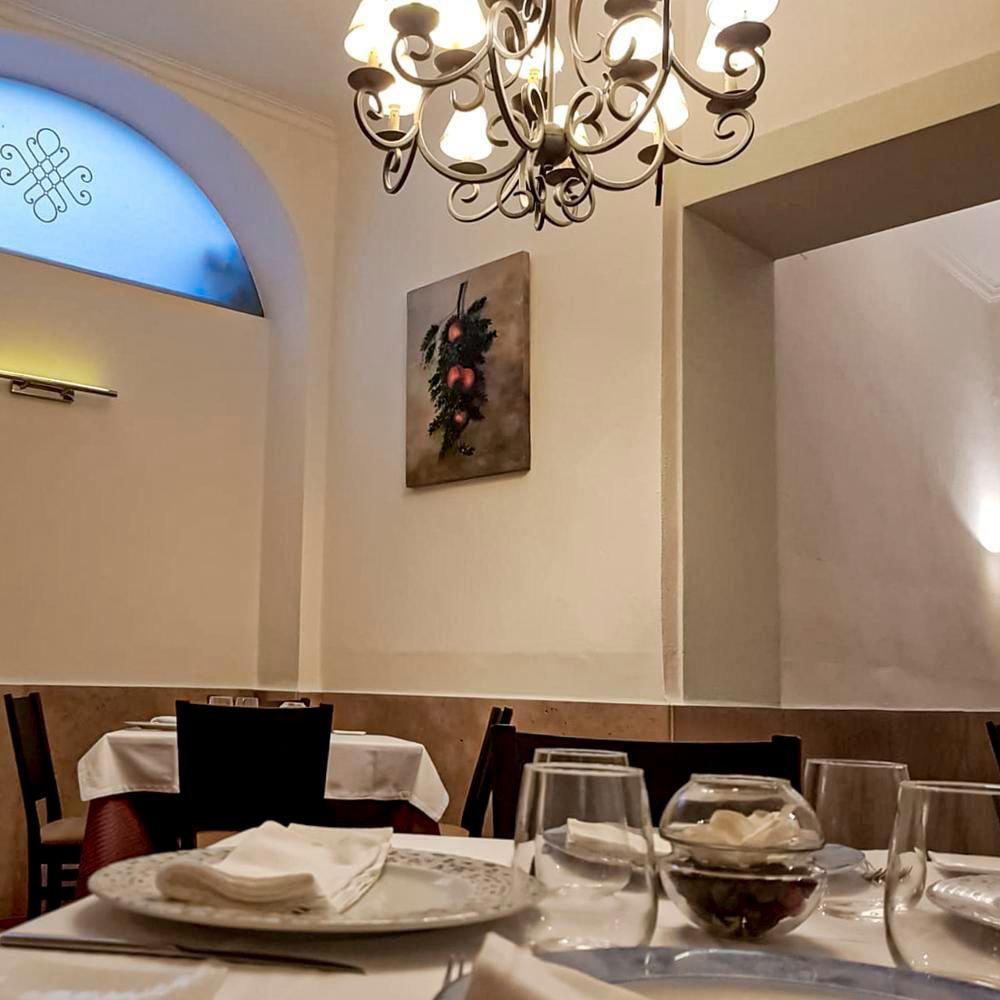
At a Glance
- Rustic
- Cozy
- Intimate
- Elegant
- Date Night
- Special Occasion
- Business Dinner
- Historic Building
- Extensive Wine List
- Local Sourcing
Welcoming rusticity in an old house with cozy, intimate dining room and tasteful modern touches.