La Fromagerie du Passage
Our verdict
La Fromagerie du Passage focuses on French Cheese & Wine Bistro cooking, with a sommelier-led extensive wine list, terrace and wine cellar, and a leisurely pace for lunch or dinner.

Pearl is the En Primeur Club membership app — saves, bookings, and concierge access live there. Same editors, same standards.
- Address
- 55 Cours Mirabeau, Pass. Agard, 13100 Aix-en-Provence, France
- Phone
- +33442229000
- Hours
- Daily 9:30 AM–9:30 PM
- Website
- lafromageriedupassage.com
- Directions
- Get directions
- Booking
- Book on Zenchef
The menu
What to order
- Camembert rôti
- Goat cheese salad
- Cheese boards
- Mont d'or pommes vapeur
- Morbier burger
A Passage Through Provençal Cheese Culture
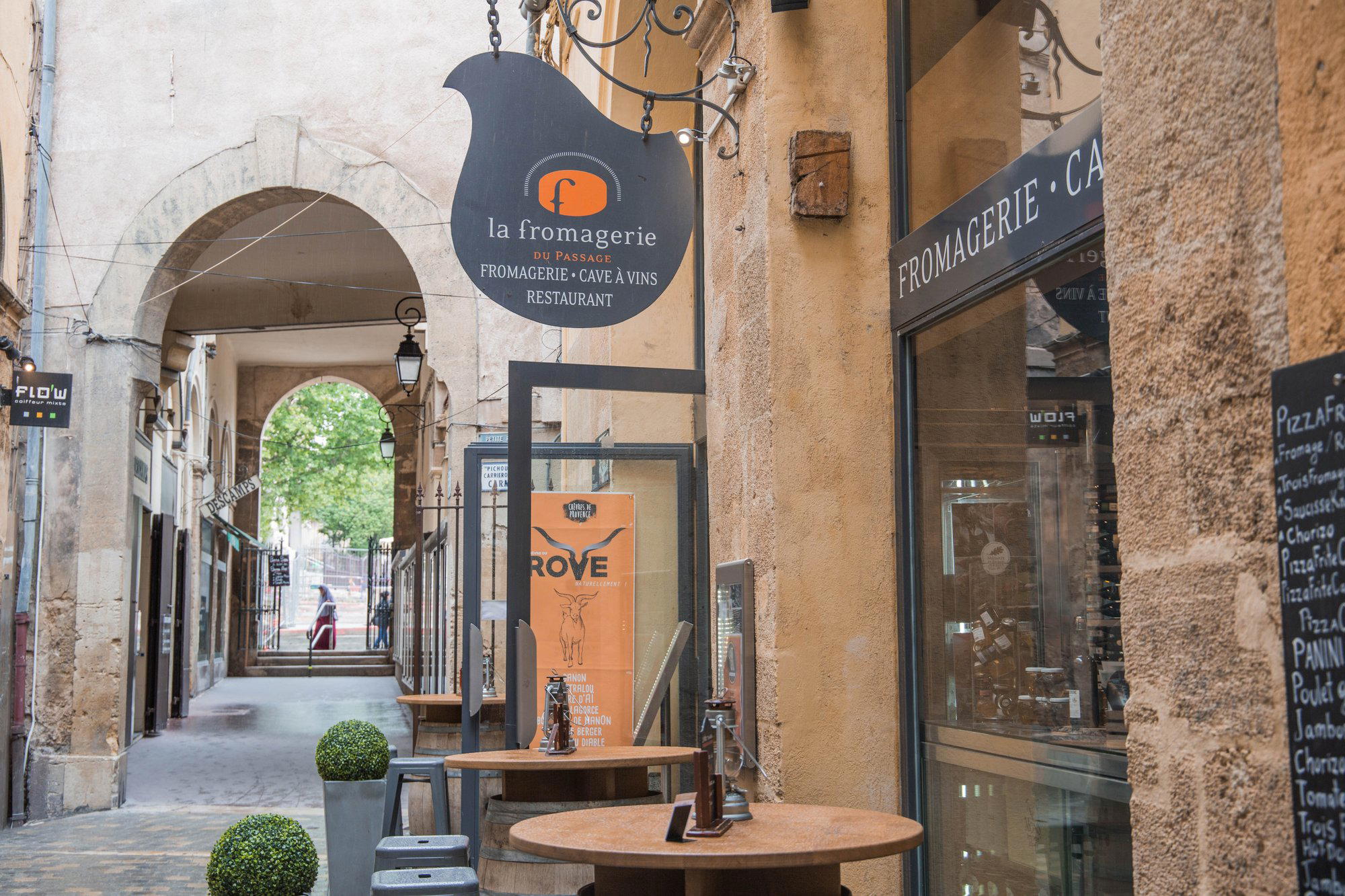
The Passage Agard cuts off Cours Mirabeau like a parenthetical thought: a narrow, glass-roofed arcade that shelters a handful of specialist shops from the midday sun and the tourist current of Aix-en-Provence's most-photographed boulevard. It is the kind of covered passage that French provincial cities used to build as a matter of civic habit, and that most have since allowed to fade into souvenir-shop territory. The ones that survive as genuine retail destinations tend to do so because of one anchor tenant. At Passage Agard, that anchor is La Fromagerie du Passage.
Fromageries occupy a specific cultural position in French food life that has no clean equivalent elsewhere. They are part specialist retailer, part educator, part curator of a national conversation about terroir that stretches back to the AOC legislation of the 1920s. France currently protects more than 45 cheeses under AOP designation, from Roquefort in the Aveyron to Époisses in Burgundy, and the fromagerie is the institution through which those designations reach consumers. A well-run fromagerie does not simply stock cheese; it tracks ripeness, advises on pairings, and functions as a standing argument that the gap between a properly aged Comté and a factory-cut approximation is not marginal but fundamental.
Aix-en-Provence and the Southern Cheese Tradition
Aix sits in a region better known for olive oil, rosé, and the herbal registers of Provençal cooking than for dairy traditions, which makes the presence of a serious fromagerie here more interesting than it might first appear. Provence's own cheese identity is anchored in fresh and semi-fresh formats: banon, wrapped in chestnut leaves and tied with raffia, is the region's most recognisable AOP cheese; picodon, just over the border into the Drôme, represents the southernmost Rhône Valley chèvre tradition. These are cheeses made for warm climates, for eating young, for cutting against the sharpness of local herbs rather than for extended cellar aging.
A fromagerie in Aix therefore operates in a particular tension: it serves a city with its own regional dairy identity while also acting as a conduit for the full range of French cheesemaking, from the washed-rind traditions of Alsace to the blue-veined caves of the Massif Central. That curatorial role matters. The cities in which specialist cheese culture thrives tend to be those where a mix of resident population, culinary infrastructure, and visitor interest sustains both the demand and the margin for careful affinage. Aix, with its student population, its proximity to Marseille's food scene, and its role as a staging point for visitors heading into the Luberon, has all three.
Where La Fromagerie du Passage Sits in the Local Scene
Aix's restaurant scene has grown noticeably more ambitious over the past decade. Pierre Reboul represents the city's creative fine dining register, while Le Art holds the modern cuisine position at the higher price bracket alongside it. At the more traditional end, Côté Cour and Château de la Pioline anchor the French classical register. BACK to BAC represents a more casual counterpoint to the city's formal dining. What connects these kitchens, at different price points, is a reliance on well-sourced primary ingredients, and a fromagerie with genuine affinage capability feeds directly into that ecosystem. The cheese course at a serious Provençal restaurant is not an afterthought; it is the transitional movement between the main plate and the dessert, and its quality depends almost entirely on what the city's specialist suppliers can deliver.
Relative to the broader French gastronomic circuit, Aix sits in a productive region. AM par Alexandre Mazzia in Marseille, some thirty kilometres to the south, holds three Michelin stars and operates at the extreme creative edge of southern French cooking. The proximity means Aix's food culture is shaped partly by Marseille's ambition without being absorbed by it. For cheese specifically, that proximity also means access to the same Provençal suppliers and market networks that supply the coast.
The Broader French Fromagerie Context
France's fromagerie culture operates on a spectrum from the grande maison affineurs, some of which supply cheeseboards to restaurants listed in our full Aix-en-Provence restaurants guide and beyond, to neighbourhood shops maintaining local supply chains. The most referenced names in French affinage tend to be concentrated in Paris and Lyon, but the provincial fromagerie has historically been where daily purchasing decisions shape the market. Across France, the fromageries that hold the most reputational weight are those that maintain direct relationships with small producers, age their own stock, and adjust their selection seasonally rather than maintaining a static rotation.
That seasonal dimension matters particularly in southern France, where the shift from spring chèvre to autumn washed-rind reflects actual changes in the milk supply and the animals' feed rather than arbitrary commercial rotation. A fromagerie operating in this register is connected to an agricultural calendar that stretches back well before any modern food movement claimed it. The same principle of terroir that distinguishes a Bandol from a generic southern rosé applies to a properly sourced Provençal banon versus a commodity approximation.
For context on what serious cheese culture looks like when embedded in fine dining institutions, it is instructive to look at what the great French restaurant addresses have maintained. Auberge de l'Ill in Illhaeusern, Troisgros in Ouches, and Bras in Laguiole have each sustained exceptional cheese programs as integral to their identity as the kitchen itself. Paul Bocuse's Auberge du Pont de Collonges treated the cheese trolley as theatre. These are the institutional precedents against which serious provincial fromageries are implicitly measured.
Planning a Visit
La Fromagerie du Passage is located at 55 Cours Mirabeau, within the Passage Agard arcade in central Aix-en-Provence. Cours Mirabeau runs from the Rotonde fountain at its western end toward Place Forbin to the east, and the Passage Agard entrance is accessible directly from the boulevard. Aix-en-Provence's centre is walkable from the TGV station at Aix-en-Provence TGV, roughly twelve kilometres south, by shuttle or taxi. The city's compact historic core means the fromagerie is within walking distance of the main visitor accommodation cluster. Given the nature of a specialist cheese shop, visiting earlier in the day typically allows for better conversation with staff and fuller stock; the Provençal lunch hour creates a natural break in city-centre foot traffic that can make mid-morning the most productive window. No booking is required for a retail visit, but those seeking specific guidance on selection for a dinner or picnic should allow time rather than arriving in a rush.
Frequently asked questions
Where do I go for La Fromagerie du Passage?
La Fromagerie du Passage is located at 55 Cours Mirabeau, Pass. Agard, 13100 Aix-en-Provence, France, Aix-en-Provence.
Can you buy cheese to take home from La Fromagerie du Passage, and is it suitable for travel?
Specialist fromageriers in France routinely vacuum-pack or wrap cheeses for travel, and staff at counters like the one in Passage Agard are accustomed to advising on which varieties travel best over short to medium distances. Hard and semi-hard cheeses generally hold better than soft-ripened varieties on a journey from Aix-en-Provence. EU regulations govern the import of dairy products into non-EU countries, so travellers heading beyond Europe should check customs rules before purchasing for export.
What do people recommend at La Fromagerie du Passage?
The shop's position inside the Passage Agard on Cours Mirabeau places it squarely in the southern French tradition, where regional Provençal selections sit alongside a broader range of French cheeses. Regulars tend to seek out the counter selections suited to pairing with local rosé or the herbal-forward produce of the region. Specific current offerings are best confirmed directly at the shop, as fromagerie stock rotates with season and supplier availability.
Should I book La Fromagerie du Passage in advance?
La Fromagerie du Passage is a retail fromagerie in the Passage Agard arcade at 55 Cours Mirabeau, not a seated dining venue, so advance reservations are not standard practice. That said, Aix-en-Provence draws significant visitor traffic particularly in summer, and the arcade's specialist shops can be busy during peak market hours. Arriving earlier in the day generally means more attentive counter service and fuller stock.
What's La Fromagerie du Passage best at?
The shop's defining quality is its setting and specialisation: a dedicated cheese counter inside one of Aix's few surviving covered arcades, on the city's central boulevard. In a region where dairy has historically played second role to olive oil and wine, a fromagerie of this focus represents a deliberate editorial choice about what belongs on a Provençal table. The counter format allows for guided selection across both local and national French varieties.
Is La Fromagerie du Passage allergy-friendly?
A fromagerie by definition centres on dairy, so guests with lactose intolerance or milk allergies will find very limited options. French cheesemakers are required to label allergen information under EU regulation, so staff should be able to identify specific allergens on request. Anyone with severe dairy or mould-related allergies should confirm directly with the shop before visiting, as cross-contact in a specialist cheese environment is inherent.
Is La Fromagerie du Passage overpriced or worth every penny?
Pricing data is not published for La Fromagerie du Passage, so a direct comparison is not possible here. French fromageries in prime city-centre locations, particularly those in arcade or covered-market settings, typically sit above the large supermarket tier but remain competitive with comparable specialist shops. The value proposition at a counter like this is largely about access to curated selection and counter expertise, not just the cheese itself.
Budget Reality Check
Comparable venues nearby, for context on price, style, and recognition.
| Venue | Cuisine | Price | Awards | Notes |
|---|---|---|---|---|
| La Fromagerie du PassageThis venue — the venue you are viewing | French Cheese & Wine Bistro | $20–30 | Not listed | Not listed |
| Il Etait une Fois | Contemporary French Bistronomic | $50–100 | Not listed | Centre Ville, Contemporary French Bistronomic |
| Le Petit Verdot | Provençal Bistro | $30–50 | Opinionated About Dining Casual in Europe | Centre Ville, Provençal Bistro |
| Les Caves Henri IV | Modern Provençal French | $50–100 | Not listed | Centre Ville, Modern Provençal French |
| MOMENT | Mediterranean Bistro | Not listed | Not listed | Centre Ville, Mediterranean Bistro |
| Naruto | Traditional Japanese Izakaya | $30–50 | Not listed | Centre Ville, Traditional Japanese Izakaya |
Continue exploring
More in Aix-en-Provence
Restaurants in Aix-en-Provence
Browse all →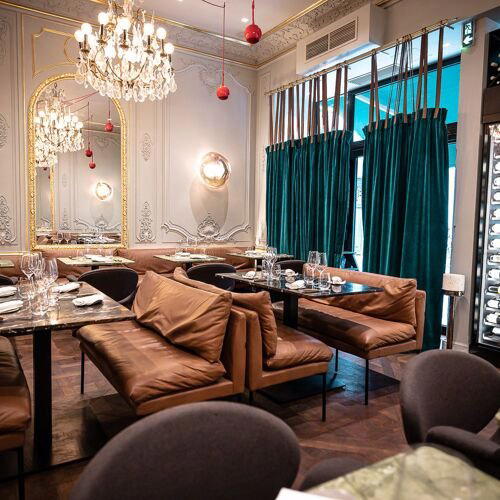
Bars in Aix-en-Provence
Browse all →
Hotels in Aix-en-Provence
Browse all →

La Fromagerie du Passage
The wine
- Wine program
- Exceptional wine program
- Extensive wine list
- Sommelier-led
Details
- Cozy
- Elegant
- Sophisticated
- Casual Hangout
- Date Night
- Group Dining
- Special Occasion
- Rooftop
- Terrace
- Wine Cellar
- Extensive Wine List
- Sommelier Led
- Local Sourcing
- A La Carte
- Small Plates
- Wine
- Natural Wine
- Vegetarian Friendly
Current opening hours
- Monday
- 9:30 AM–9:30 PM
- Tuesday
- 9:30 AM–9:30 PM
- Wednesday
- 9:30 AM–9:30 PM
- Thursday
- 9:30 AM–9:30 PM
- Friday
- 9:30 AM–9:30 PM
- Saturday
- 9:30 AM–9:30 PM
- Sunday
- 9:30 AM–9:30 PM
Hours can change for holidays and private events. Last verified .
Warm and inviting with a delightful blend of fine deli aesthetics on the ground floor transitioning to intimate dining rooms and an airy rooftop terrace on upper levels; sophisticated yet approachable.