La Forge

Michelin Plate
Our verdict
La Forge sits inside a former Cistercian abbey outbuilding in Le Subdray, earning a Michelin Plate in 2025 with modern cuisine built almost entirely on local produce. Chef William Blondel brings international experience to Berry's agricultural larder, producing combinations that push against expectation without losing regional grounding.

Pearl is the En Primeur Club membership app — saves, bookings, and concierge access live there. Same editors, same standards.
- Address
- 1 Rue de la Brosse, 18570 Le Subdray, France
- Phone
- +33 2 48 59 64 31
- Hours
- Mon–Tue ClosedWed 12–1 PMThu–Fri 12–1 PM, 8–8:30 PMSat 8–8:30 PMSun 12:30–1 PM
- Directions
- Get directions
The menu
What to order
- Mackerel Cauliflower & Coffee Jus
- Garden Beet Tartare
A Former Abbey, a Local Larder, and Cooking That Refuses to Be Predictable
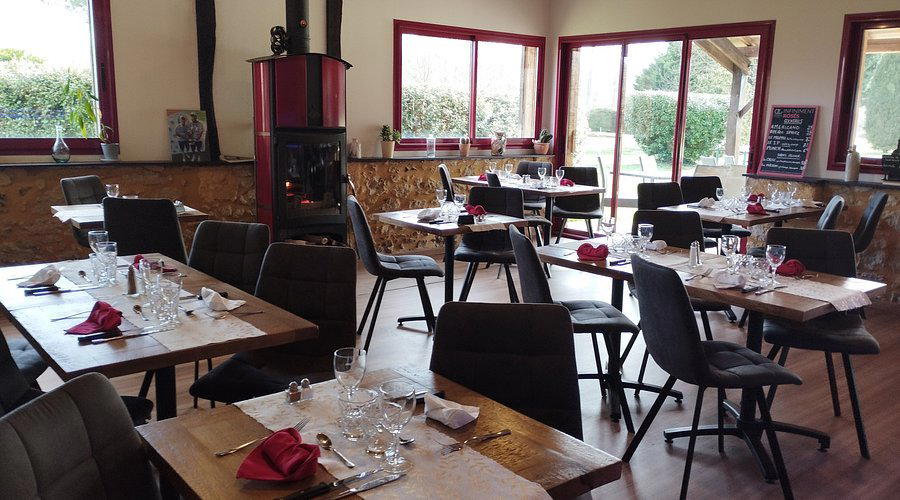
The Centre-Val de Loire is not short of historic stone buildings repurposed into restaurants, but the setting at La Forge carries particular weight. The dining room occupies a former outbuilding of a Cistercian abbey, a structure that once served the textile manufacturing operations that made this corner of Berry economically significant in the nineteenth century. The building material is the story before a plate arrives: thick walls, muted light, and the kind of proportional calm that French rural ecclesiastical architecture tends to produce. Approaching from the road at 1 Rue de la Brosse in Le Subdray, the immediate context is a pond and tree line rather than a village square, which puts the experience firmly outside the category of market-town bistro.
That physical remove matters because it frames what the kitchen is doing. Restaurants housed in working agricultural or industrial heritage tend to anchor their identity in provenance, and La Forge follows that logic with consistency. The sourcing priority is local, drawn from the agricultural produce of the Berry region, a plateau between the Loire and the Massif Central that has supplied grain, livestock, and vegetables to central France for centuries. What separates La Forge from a direct farm-to-table proposition is what happens after the sourcing decision: the kitchen applies modern and creative technique to those regional inputs rather than presenting them in their most traditional form.
Where the Produce Comes From and Why It Defines the Menu
Berry's agricultural character is specific. The Creuse and Cher river valleys produce freshwater fish; the plateau supports sheep and cattle; market gardens in the communes around Bourges supply vegetables across long growing seasons. A restaurant committed to sourcing locally in this zone is working with a larder that resists monotony across a calendar year, though it also demands genuine technique to make the transitions between seasons coherent on the plate.
The menu at La Forge reflects that commitment to local raw material while layering it with interventions that owe more to contemporary French cooking than to regional tradition. The Michelin Plate awarded in 2025 signals that the approach has reached a level of consistency worth marking, placing La Forge inside the wider conversation about how provincial French restaurants handle the tension between terroir loyalty and creative ambition. That tension runs through many of France's most discussed kitchens: Bras in Laguiole built an entire philosophy around Aubrac plateau ingredients; Auberge du Vieux Puits in Fontjoncouse made Corbières produce the backbone of three-Michelin-star work. La Forge operates at a different scale and price tier, but it is engaged with the same fundamental question about what local sourcing actually requires from a cook.
The Michelin inspectorate's own note on the restaurant is candid about what to expect: cooking that is sometimes unsettling, always resolving. The example cited, mackerel with cauliflower and a coffee-based sauce, is instructive. Mackerel is an assertive fish; cauliflower can read as neutral in the wrong hands; coffee as a sauce component pushes into bitter register territory that most mainstream French restaurants avoid entirely. The combination reads as a coherent risk taken with ingredients that the kitchen knows rather than an experimental gesture for its own sake.
The Kitchen's International Reference Points
Modern French cooking at the provincial level increasingly draws on chef trajectories that extend well beyond France. The pattern is visible across the country's more progressive regional kitchens: time in Japan, Scandinavia, or further afield tends to produce a different relationship with texture, fermentation, and contrast than a career spent in classical French brigades. Chef William Blondel's documented experience extends as far as New Zealand, a detail that places his reference library outside European norms without making the cooking fusion in any reductive sense. The local produce stays central; what shifts is the range of techniques and flavour logic applied to it.
This positions La Forge alongside a generation of French regional restaurants that sit between classical tradition and the kind of creative intensity associated with destination kitchens like Mirazur in Menton or Flocons de Sel in Megève. Those restaurants operate at higher price points and carry heavier award weight, but the underlying creative logic, using a specific geography's produce as the constraint that generates invention, connects them to what La Forge is attempting at a €€ price range that makes the cooking accessible to a far broader audience.
Google's 4.7 rating from 389 reviewers is a trust signal worth reading carefully. Ratings in that band, sustained over a significant volume of responses, tend to reflect reliable execution rather than polarising ambition. They suggest that the kitchen's more challenging combinations land consistently rather than occasionally, which is harder to achieve than a single memorable dish.
Planning Your Visit to La Forge
La Forge sits in Le Subdray, a commune south of Bourges in the Cher department. Bourges itself is served by direct rail from Paris Austerlitz, with journey times under two hours on faster services, making the restaurant reachable as a day trip from the capital for those willing to organise onward transport to Le Subdray. The price range of €€ places it well below the investment required for France's Michelin-starred destination restaurants; for comparison, the three-starred tier represented by Alléno Paris au Pavillon Ledoyen or Assiette Champenoise in Reims operates at a substantially higher price point for tasting menus alone.
Booking ahead is advisable given the abbey setting, which limits covers and makes walk-in availability unpredictable, particularly at weekends. The evergreen search interest in the menu at La Forge Le Subdray suggests consistent demand from visitors planning excursions from Bourges and the broader Centre-Val de Loire region. For those building a wider itinerary, our full Le Subdray restaurants guide covers the local scene, and our Le Subdray hotels guide handles accommodation options for an overnight stay. Guides to bars, wineries, and experiences in Le Subdray round out the planning picture.
For those contextualising La Forge within French modern cuisine more broadly, the domestic conversation ranges from technically ambitious provincial kitchens through to the full creative intensity of AM par Alexandre Mazzia in Marseille, Au Crocodile in Strasbourg, or the generational legacy restaurants like Auberge de l'Ill in Illhaeusern and Paul Bocuse - L'Auberge du Pont de Collonges. International reference points for the same creative modern approach include Frantzén in Stockholm and FZN by Björn Frantzén in Dubai, where the local-sourcing-plus-global-technique model operates at a higher price tier. Troisgros - Le Bois sans Feuilles in Ouches offers another model of how deep provincial French cooking can reach when it commits to place.
Frequently asked questions
Can I bring kids to La Forge?
The €€ price range and rural setting in a converted abbey outbuilding point toward a relaxed environment rather than a formal fine-dining room. The Michelin Plate recognition reflects cooking quality rather than service formality, so the atmosphere is likely compatible with family visits, though confirming directly with the restaurant before booking with young children is advisable.
What kind of setting is La Forge?
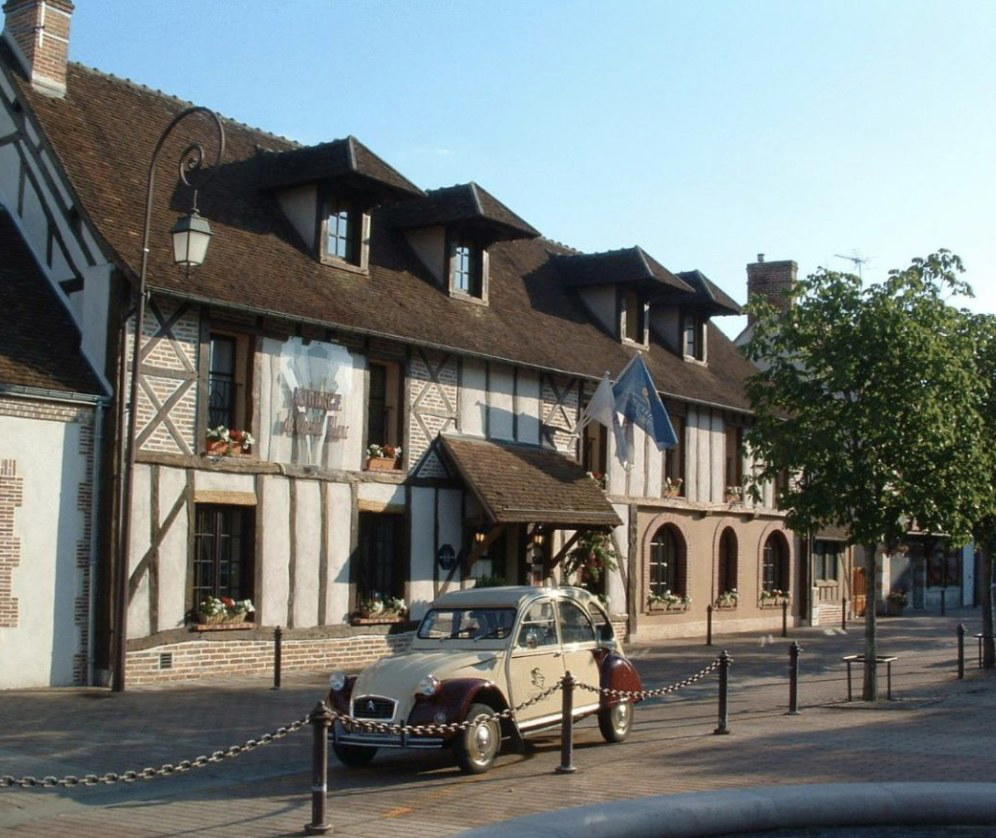
La Forge occupies a former outbuilding of a Cistercian abbey in Le Subdray, a rural commune in the Cher department south of Bourges, overlooking a pond and forest. The building has a documented connection to 19th-century textile manufacturing, which gives it a layered industrial-agricultural character distinct from the typical maison bourgeoise restaurant setting in the region. The address is 1 Rue de la Brosse, 18570 Le Subdray.
What distinctions does La Forge have?
La Forge has received recognition including: Michelin Plate (2025); Fontaine Daniel is the epitome of a French country village steeped in history and the birthplace of the famous toiles de Mayenne fabrics. Overlooking a pond and the forest, this restaurant is housed in a former outbui….
What should I eat at La Forge?
The kitchen, which earned a 2025 Michelin Plate, works from a base of local Berry produce and applies modern, creative technique to regional ingredients. Michelin's own notes single out a dish combining mackerel, cauliflower, and a coffee-based sauce as representative of chef William Blondel's approach: familiar local ingredients pushed into unexpected combinations. The menu sits in the €€ price range.
What's the pricing like at La Forge?
Pricing at La Forge is listed as €€.
Where is La Forge in Le Subdray?
La Forge is located at 1 Rue de la Brosse, 18570 Le Subdray, France, Le Subdray.
Side-by-Side Snapshot
| Venue | Cuisine | Price | Awards |
|---|---|---|---|
| La ForgeThis venue — the venue you are viewing | Modern French Garden-Led | $50–100 | Michelin Plate |
| Alléno Paris au Pavillon Ledoyen | Creative | Not listed | Michelin 3 Star |
| Kei | Contemporary French, Modern Cuisine | Not listed | Michelin 3 Star |
| L'Ambroisie | French, Classic Cuisine | Not listed | Michelin 3 Star |
| Le Cinq - Four Seasons Hôtel George V | French, Modern Cuisine | Not listed | Michelin 3 Star |
| Plénitude | Contemporary French | Not listed | Michelin 3 Star |
Recognition history
Dated appearances from independent guides and award organizations, with the underlying list record or original source where available.
Michelin Plate
Michelin
Full recognition history (3 entries)
Michelin Plate
Michelin
Michelin Plate
Michelin
Continue exploring
More in Le Subdray
Restaurants in Le Subdray
Browse all →
Hotels in Le Subdray
Browse all →

Details
- Cozy
- Elegant
- Rustic
- Intimate
- Scenic
- Date Night
- Special Occasion
- Garden
- Terrace
- Extensive Wine List
- Sommelier Led
- Local Sourcing
- Farm To Table
- Garden
- Prix Fixe
- Tasting Menu
- Vegetarian Friendly
Current opening hours
- Monday
- Closed
- Tuesday
- Closed
- Wednesday
- 12–1 PM
- Thursday
- 12–1 PM, 8–8:30 PM
- Friday
- 12–1 PM, 8–8:30 PM
- Saturday
- 8–8:30 PM
- Sunday
- 12:30–1 PM
Hours can change for holidays and private events. Last verified .
Cozy interior with rustic textures, stone, timber, and warm lighting overlooking a tranquil pond, creating an intimate and serene atmosphere.