
Tabelog 100 #48
Our verdict
A 14-seat Jiyugaoka basement address gives Tokyo yoshoku a tighter, bistro-leaning frame: familiar Western-derived dishes, Japanese calibration, and enough Tabelog recognition to place it in the city’s serious comfort-food conversation. L'Atelier Plus is selected for Tabelog 100 Yoshoku EAST 2025, with lunch and dinner budgets that keep it below Tokyo’s formal French tier while asking for more attention than casual neighborhood dining.

Pearl is the En Primeur Club membership app, where members save venues, book tables and use the concierge.
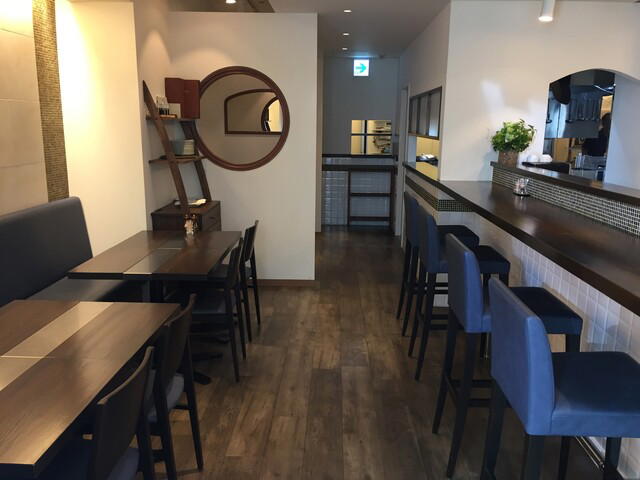
Tokyo changes register quickly: polished shopping streets, quieter residential pockets a few turns away, and compact dining rooms that feel built for regulars rather than spectacle. In that setting, yoshoku makes particular sense. The genre is not French cuisine translated directly into Japanese, nor is it Western food in a nostalgic costume. At its serious end, it is Tokyo’s long-running argument that demi-glace, cutlets, croquettes, stews, meunière, salads, rice, bread, and sauce work differently once they pass through Japanese portioning, timing, and restraint.
L'Atelier Plus belongs to that serious end. Its selection for Tabelog 100 Yoshoku EAST 2025 matters because yoshoku is a crowded category in Tokyo, and the award separates restaurants that treat the form as craft from places that merely serve familiar lunch sets. The Tabelog score of 3.66 is not a Michelin-style signal, but within Japan’s user-driven restaurant culture it places the restaurant in a watched tier, especially for diners looking beyond the city’s most obvious luxury-dining circuits.
Yoshoku in a bistro register, not a nostalgia act
The useful way to read this kitchen is through format. The categories attached to the restaurant are yoshoku, bistro, and French, which explains the tension: a Japanese Western-cooking base with enough bistro structure to support a meal that feels more composed than a quick lunch stop. That distinction matters in Tokyo, where yoshoku can mean anything from simple everyday plates to formalized sauce work. Here, the price band and award category point toward a room where comfort-food grammar is handled with adult pacing.
The appeal of the format is that it can carry range without needing theatrics. Yoshoku’s family tree runs through French sauces, café salads, Japanese set-meal logic, and Western dining-room staples made compact enough for Tokyo. L'Atelier Plus is best understood within that lineage rather than as a pure French restaurant or a casual Western diner. The point is the translation: familiar forms shaped by Japanese timing, portioning, and attention to sauce.
Wine is a useful way to think about the meal, but not because the restaurant needs to be treated as a cellar destination. The more interesting point is compatibility. Tokyo’s bistro-yoshoku rooms often reward a drinker who thinks in sauce weight rather than prestige labels: richer plates ask for structure, lighter preparations ask for freshness, and salad-led starts keep the meal from becoming heavy. In a city where wine can become ceremonial, the better move is to treat it as a supporting instrument for browned butter, cutlet crust, cream, and stock-based sauces rather than the center of the evening.
Tokyo gives the room its scale
Tokyo is not a neutral backdrop. The city has long supported patisserie, cafés, small restaurants, and polished everyday consumption alongside destination dining as performance. That helps explain why a yoshoku-bistro address can carry weight here. Comparison points within the allowed Tokyo map show the range: patisserie Paris S'eveille, Cafe Enseigne Dangle Jiyuugaoka ten, Kaneda, and El Pescador all point to different ways of eating in the city. Against that spread, L'Atelier Plus sits in a middle-to-upper Tokyo tier, less expensive than a grand French night, more considered than a quick café meal.
The format sharpens the experience. Rather than treating yoshoku as a broad, catch-all convenience category, L'Atelier Plus reads closer to Tokyo’s specialist culture. That changes expectations: pacing, group size, and the way diners inhabit the meal become part of the social contract. It is also why yoshoku works here. The cuisine is familiar enough to relax the room, but the format still asks diners to pay attention.
Compared with central Tokyo’s most formal French restaurants, the value equation is different. Dinner at JPY 6,000 to JPY 7,999 and lunch at JPY 1,000 to JPY 1,999 place the restaurant below the city’s formal tasting-menu economy, while the Tabelog 100 Yoshoku EAST 2025 selection keeps it from being read as merely convenient. For travelers, that is the draw: this is a Tokyo meal category that often says more about the city’s everyday sophistication than another luxury counter.
How to place it in a Tokyo food itinerary
Tokyo dining itineraries tend to overcorrect toward sushi, wagyu, tempura, and ramen, leaving yoshoku as an afterthought. That is a mistake. Yoshoku is one of the clearest ways to understand how Japan absorbed Western dining forms and made them local without treating them as museum pieces. In the same trip, a diner might compare unnamed seafood grills, neighborhood dining rooms, skewer counters, visual café culture, and curry specialists across the city. L'Atelier Plus adds the Western-Japanese bistro chapter to that map.
For broader planning, use Our full Tokyo restaurants guide alongside Our full Tokyo hotels guide, Our full Tokyo bars guide, Our full Tokyo wineries guide, and Our full Tokyo experiences guide. Japan-wide comparisons can widen the lens further through unnamed dining rooms in other cities, while transpacific Japanese drinking and casual formats can be considered generically. The key is not to turn L'Atelier Plus into a trophy stop, but to place it among Tokyo restaurants that make everyday formats feel exacting.
Credentials Lens
Comparable venues at the same tier for side-by-side context.
| Venue | Cuisine | Price | Awards | Notes |
|---|---|---|---|---|
| L'Atelier PlusThis venue (the venue you are viewing) | Japanese-style Western (yoshoku) bistro | $30–50 | Tabelog 100 #48 | Not listed |
| Hassho | Hiroshima-style okonomiyaki | $30–50 | Tabelog 100 #42 | Setagaya |
| Sora to Mugi to | Organic Vegan Bakery & Café | $10–20 | Tabelog 100 #51 | Shibuya |
| Ebisu no Yasubee | Kochi‑style gyoza izakaya | $20–30 | Tabelog 100 #31 | Shibuya |
| CENTRE THE BAKERY Aoyama ten | Japanese shokupan bakery | $10–20 | Tabelog 100 #75 | Shibuya |
| Horumon Masaru | Horumon & Yakiniku Izakaya | $30–50 | Tabelog 100 #74 | Minato |
Recognition history
Dated appearances from independent guides and award organizations, with the underlying list record or original source where available.
Tabelog 100 #48 · No. 48
Tabelog · Tabelog 100 - Yoshoku - EAST - 2025
Continue exploring
More in Tokyo
Restaurants in Tokyo
All restaurants in Tokyo →

Bars in Tokyo
All bars in Tokyo →





Details
- Cozy
- Classic
- Intimate
- Solo
- Date Night
- Family
- Casual Hangout
- After Work
- Standalone
- Set Menu
- A La Carte
- Prix Fixe
Current opening hours
- Monday
- 11:30 AM–2 PM, 6–10 PM
- Tuesday
- 11:30 AM–2 PM, 6–10 PM
- Wednesday
- Closed
- Thursday
- 11:30 AM–2 PM, 6–10 PM
- Friday
- 11:30 AM–2 PM, 6–10 PM
- Saturday
- 11:30 AM–2 PM, 6–10 PM
- Sunday
- 11:30 AM–2 PM, 6–10 PM
Hours can change for holidays and private events. Hours as of .