The Sourcing Logic Behind Cornish Coastal Cooking
The Lizard Peninsula produces a specific set of ingredients that recur across the region's better kitchens: crab from Cadgwith, lobster worked by small-boat fishermen out of Porthleven and Mullion, Newlyn-landed white fish, and vegetables from farms on the warmer, sheltered inland sections of the peninsula. This is not a short supply chain by convention; it is short by necessity and proximity. The harbour at Porthleven is one of the few on the south Cornish coast with a working fish market infrastructure, which means restaurants positioned here have a logistical advantage over those in less connected coastal villages.
The leading British coastal restaurants operating at a serious level share a common discipline: they publish what is available rather than what is expected. At destination-level addresses like Gidleigh Park in Chagford or L'Enclume in Cartmel, the sourcing relationship with local producers is treated as a cornerstone of the identity, not a supporting note. The same principle applies at Cornish waterfront level, where the lack of a Michelin infrastructure does not diminish the sourcing rigour; it simply means the story is told through the plate rather than through accolades.
For comparison, kitchens like Moor Hall in Aughton and Ynyshir Hall in Machynlleth have built substantial reputations on exactly this kind of hyper-local sourcing discipline applied at a higher technical level. The principles that govern their menus — seasonal constraint, producer-first thinking, proximity as quality signal — are the same principles that make a well-run harbour restaurant in Porthleven more interesting than a generic seafood address.
The Porthleven Scene and Where Kota Kai Sits Within It
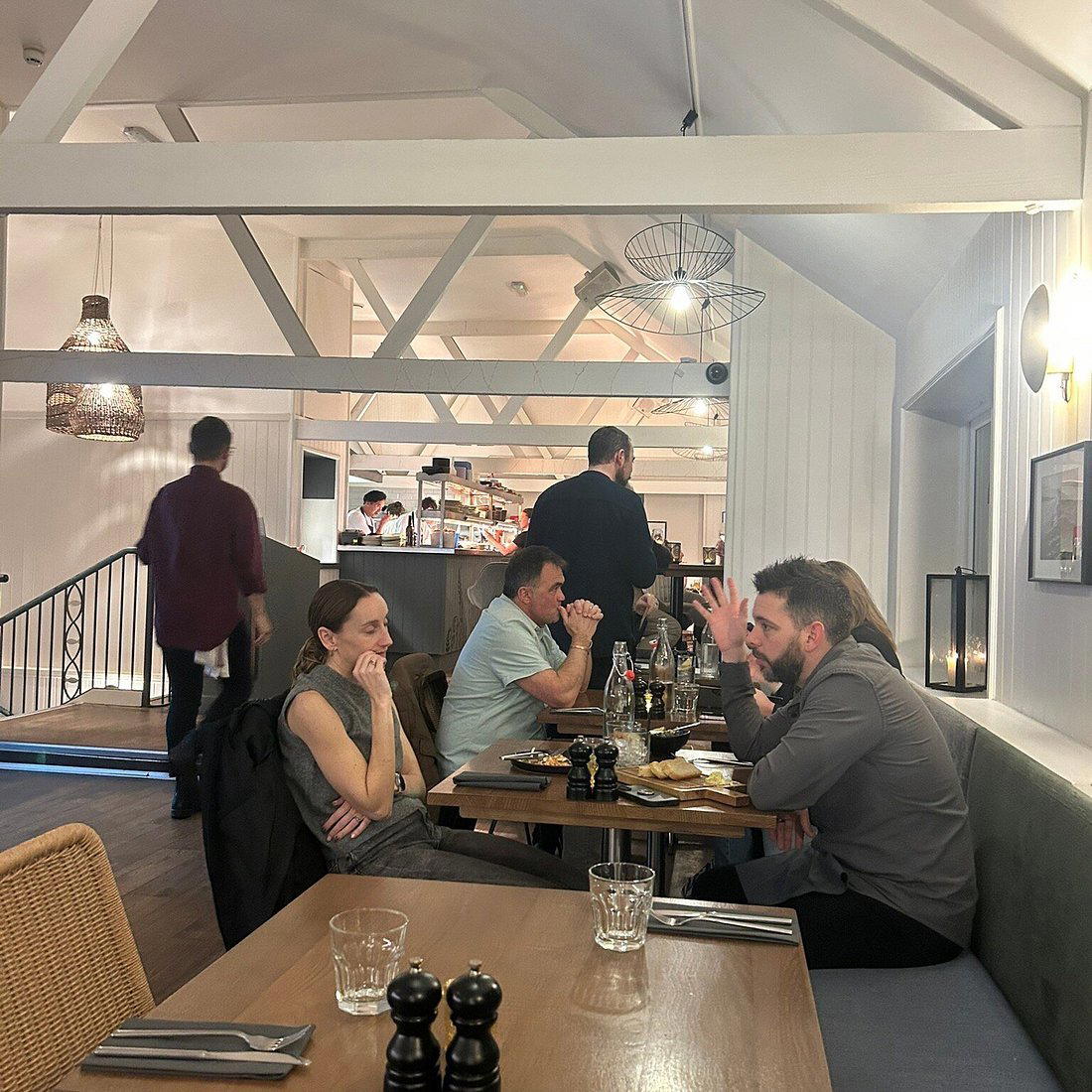
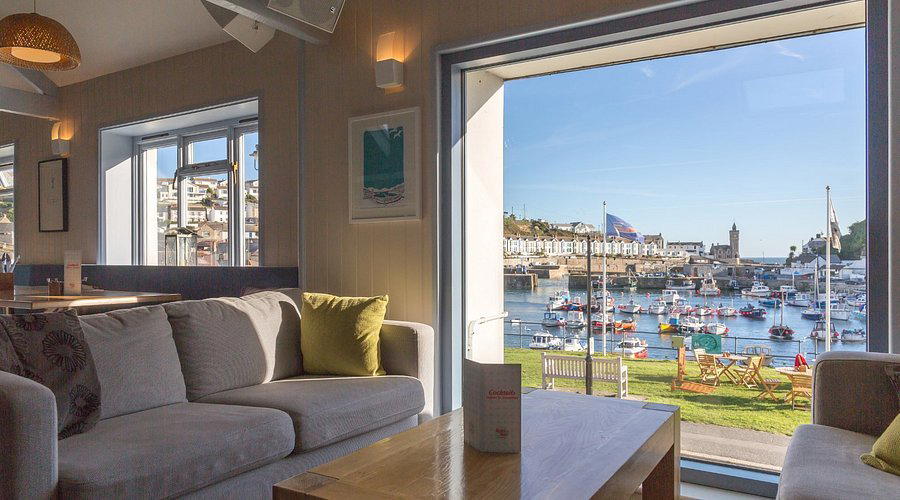
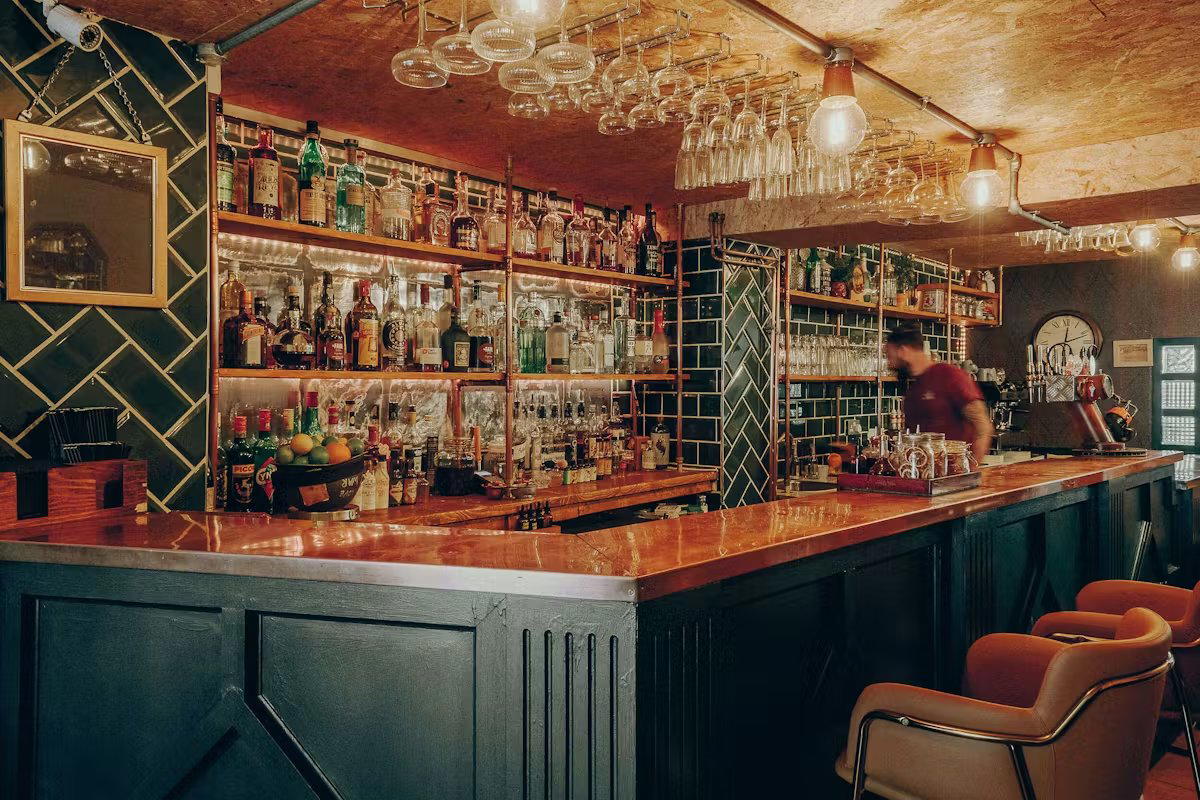
Porthleven has become one of the more competitive small dining destinations on the south Cornish coast, which is a relatively recent development. A decade ago, the harbour was a pleasant stop rather than a destination in its own right. Now it draws visitors who plan their visit around the restaurant choices, not the other way around. The Shipyard conversion, which brought Kota Kai into a building with genuine industrial character, reflects a wider pattern in British coastal towns: the repurposing of harbour-adjacent structures for food and hospitality, trading on authenticity of place rather than interior design theatrics.
This positions Kota Kai within a cohort of British restaurants that derive much of their identity from the specificity of their location. It is a different competitive logic from, say, CORE by Clare Smyth in London or Le Manoir aux Quat'Saisons in Oxford, where the draw is a named kitchen reputation that travels independently of place. Here, the place is inseparable from the proposition. Remove the Porthleven address and the sourcing story becomes generic; with it, the geography does real editorial work.
The Helston area more broadly is an underused base for serious dining exploration on the Lizard. Visitors who use Helston or Porthleven as a base rather than passing through can access a cluster of producers and kitchens that would take days to cover properly. For context on how this compares to other regional dining destinations across Britain, the range runs from hide and fox in Saltwood to Restaurant Sat Bains in Nottingham and Midsummer House in Cambridge, each of which anchors a regional dining identity in a way that repays planned visits.
Planning a Visit to Kota Kai
Porthleven is reached most directly from Helston, approximately three miles to the northeast, via the B3304. There is no train access to Porthleven itself; the nearest rail link is Redruth or Truro, from which driving or a taxi transfer is the practical option. The village has limited parking in high season, and the harbour area fills quickly on summer weekends, so arriving outside peak hours is the more considered approach. Cornwall's tourist season is compressed into a relatively short window between late June and early September, and during that period Porthleven operates at a different pace entirely; planning ahead, including booking well in advance, is the only reliable approach during those months.
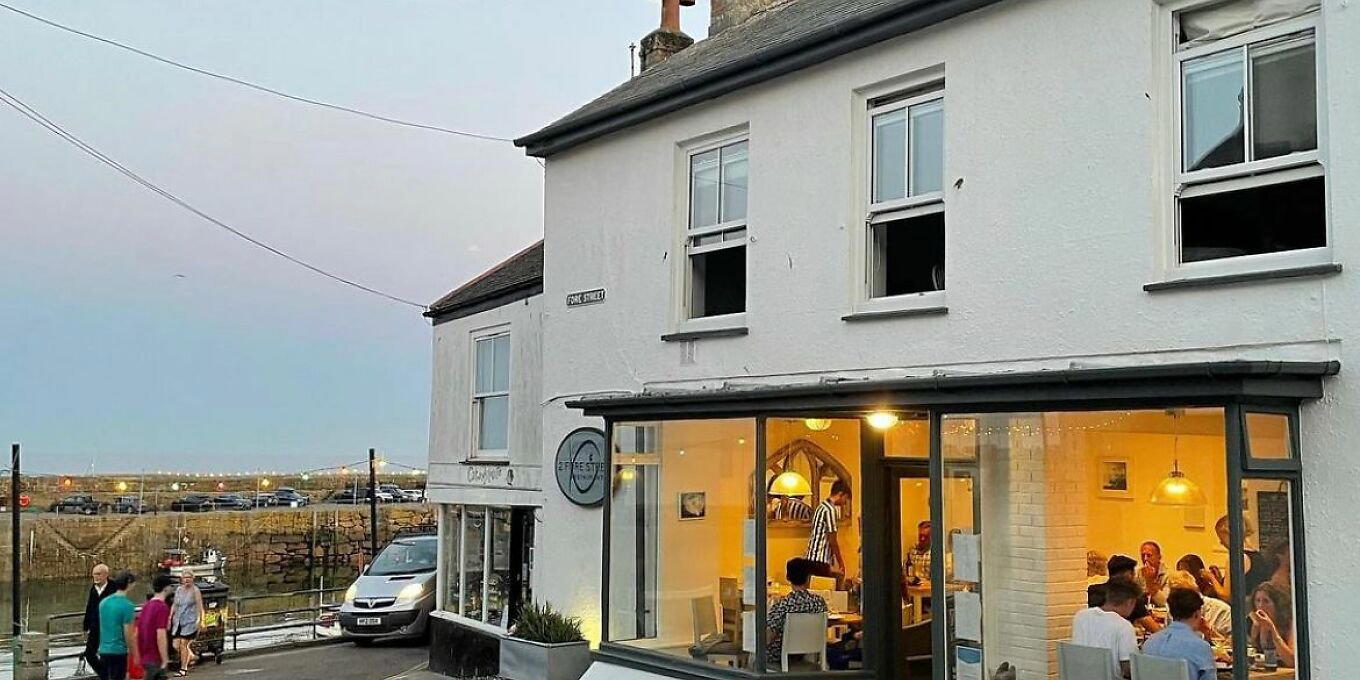
The Shipyard address is direct to find on foot once in the village: follow the harbour wall south from the main clock tower and the converted industrial buildings come into view. The building's exterior retains its working character, which is part of the point. Those accustomed to London destination dining at addresses like Waterside Inn in Bray or Hand and Flowers in Marlow will find Porthleven operates with different logistical expectations; the experience is shaped by the place as much as by the room. For those willing to build an itinerary around the southwest, pairing a Porthleven visit with the wider Cornish dining circuit produces a trip with real depth.