Kobé Japanese Steakhouse - St. Petersburg
Our verdict
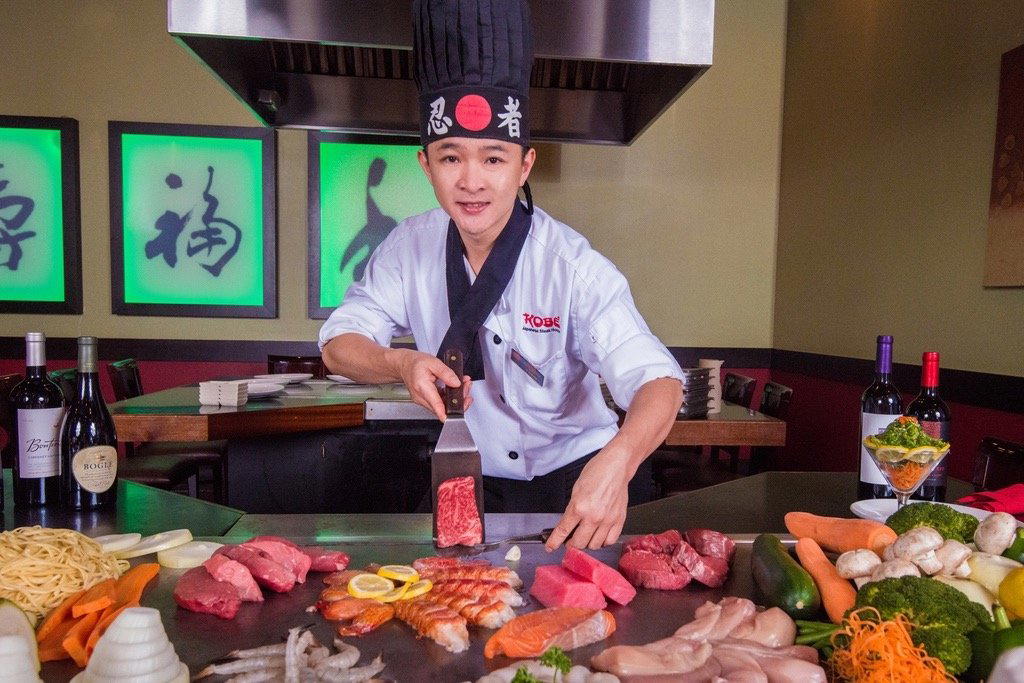
Kobé Japanese Steakhouse on 66th Street North is part of a teppanyaki tradition that has shaped Florida's Japanese steakhouse scene for decades. The format centers on tableside cooking, where the grill becomes both kitchen and theatre. For St. Petersburg diners weighing Japanese steakhouse options, Kobé sits in a category with its own internal logic around occasion dining, group formats, and the relationship between performance and plate.

Pearl is the En Primeur Club membership app, where members save venues, book tables and use the concierge.
The menu
What to order
- Filet Mignon
- Spicy Tuna Poke Bowl
- Yum Yum Shrimp
Teppanyaki in St. Petersburg: The Format That Built American Japanese Dining
The teppanyaki steakhouse occupies a peculiar position in American dining history. It arrived as spectacle, knives spinning, flames cresting the onion volcano, and stayed because the format solved a problem that few other dining categories could: it made a full-table occasion out of a single cooking surface. Kobé Japanese Steakhouse on 66th Street North in St. Petersburg operates within that tradition, at an address that places it solidly in the residential mid-city stretch of Pinellas County rather than the waterfront dining corridor that defines downtown St. Pete.
That address matters as context. The venues clustered around Beach Drive or Central Avenue tend to attract walk-in tourism traffic and the kind of table turns that come with proximity to hotels. A 66th Street North location draws a different pattern: regulars, local families celebrating birthdays and graduations, and the broader group-dining market that teppanyaki has served since Benihana made the format mainstream in the 1960s. Kobé's position in that suburban tier is not a compromise, it is an orientation toward a specific and loyal diner.
What the Teppanyaki Format Actually Delivers
Understanding the teppanyaki format requires separating it from the broader category of Japanese cuisine. It shares almost nothing with omakase counter dining at venues like Atomix in New York City, where silence and restraint are the medium. It is closer in spirit to the tableside ritual at steakhouses, where the cooking is partly the point. The iron griddle at the center of the teppan table is the organizing principle: proteins, vegetables, and fried rice are prepared in front of seated guests, with the chef's pace and precision setting the tempo of the meal.
In American Japanese steakhouse culture, the grill also functions as the wine and drinks interface. Hibachi-style venues typically pair well-selected sake, Japanese whisky, and cocktails with grilled beef, which creates its own beverage consideration. The category sits at a comfortable distance from the cellar-driven wine programs you find at ambitious steakhouses, Beau and Mo's Italian Steakhouse in St. Pete, for instance, leans into an Italian-American steakhouse identity with wine more central to the experience, but that is a feature of the format's design, not a gap. The drinks list at a teppanyaki house tends to be built for accessibility, group ordering, and high-proof warmth that complements the smoke and char of the grill.
Where Kobé Sits in the St. Petersburg Dining Picture
St. Petersburg's restaurant scene has broadened considerably over the past decade. The downtown stretch now includes venues across a range of cuisine types and price points, from the seafood-driven programs at Allelo to the Neapolitan focus at Bavaro's Pizza Napoletana and Pastaria to the wine-centric approach at bin6south and Birch and Vine. Against that backdrop, Kobé occupies a category with less direct local competition: mid-city teppanyaki at a scale suited for group occasions.
The competitive frame for a venue like this is not the fine-dining tier, the operations at Le Bernardin in New York City, Alinea in Chicago, or The French Laundry in Napa represent a different category entirely. It is also not the farm-to-table format of Blue Hill at Stone Barns in Tarrytown or the seafood-driven ambition of Providence in Los Angeles.
On the Beverage Side of the Teppanyaki Table
The editorial angle that matters most when assessing a teppanyaki venue in a mid-city Florida context is the drink list's relationship to the food format. Teppan cooking produces bold, smoky, soy-glazed flavors that call for beverages with enough structure to hold up without requiring technical pairing depth. In practice, that means well-executed sake options, junmai or honjozo styles tend to work better than fragile ginjo with tableside heat, alongside Japanese whisky highballs or domestic beer, which the format has absorbed as natural accompaniments.
Venues in the Japanese steakhouse tier rarely invest in cellar-depth wine programs, and there is an honest logic to that. Compare this to the approach at dedicated wine-bar formats like bin6south, where the cellar is the editorial subject, or to the sommelier-driven programs at Single Thread Farm in Healdsburg or Addison in San Diego, where wine acts as a co-equal to the kitchen's output. At a teppanyaki house, the drink list supports the theatre of the meal. It does not compete with it.
Planning a Visit: What to Expect Practically
The 66th Street North address puts Kobé in a car-accessible zone of St. Petersburg, easily reached from the broader Pinellas County area. For visitors staying in downtown St. Pete or near the waterfront, this is a deliberate drive rather than a walkable option, but that is consistent with the format. Teppanyaki dining works well as a planned group occasion, and a reservation in advance is the standard operating posture for tables of four or more, particularly on weekends when family dining peaks. Walk-in availability for smaller parties may exist on weekday evenings, though the shared-table format at many teppanyaki restaurants means solo diners or pairs are sometimes seated with other guests. For a broader read on how Kobé fits within the wider dining offer across the city, the full St. Petersburg restaurants guide maps the scene by neighborhood and format. For those exploring the region's steakhouse options more specifically, Beau and Mo's Italian Steakhouse offers a point of direct comparison in the same city, at a format that weights wine and Italian-American steakhouse tradition more heavily than the teppan experience.
Frequently asked questions
What's Kobé Japanese Steakhouse - St. Petersburg's location?
Kobé Japanese Steakhouse - St. Petersburg is located at 2773 66th St N, St. Petersburg, FL 33710, St Petersburg.
Is Kobé Japanese Steakhouse in St. Petersburg suitable for large group dinners or celebrations?
The teppanyaki format at the 66th Street North location is structurally well-suited to group dining: communal seating around a shared grill station accommodates multiple guests at once, and the live cooking element provides a built-in focal point for celebrations. This makes it a practical choice for birthdays or family gatherings in the Pinellas County area. The format handles groups more naturally than conventional table-service Japanese restaurants.
What dish is Kobé Japanese Steakhouse - St. Petersburg famous for?
Kobé follows the American teppanyaki steakhouse format, where grilled steak cooked on an iron griddle at the table is the central draw. The format, established in the U.S. through chains like Benihana from the 1960s onward, positions steak and seafood combinations as the signature offering. The 66th Street North location operates within that same tradition.
Can I walk in to Kobé Japanese Steakhouse - St. Petersburg?
Walk-in availability at teppanyaki venues depends heavily on party size and time of day, since communal table seating means the kitchen manages multiple groups per grill station. Weekend evenings at St. Petersburg dining spots in this format tend to fill quickly. Calling ahead or booking in advance is the practical approach for groups larger than two.
What's Kobé Japanese Steakhouse - St. Petersburg best at?
The teppanyaki format is built around the live-cooking experience: a chef works an iron griddle at tableside, which makes Kobé a stronger fit for group occasions than for a quiet dinner. In the St. Petersburg dining context, it occupies the communal, event-style niche that few other local venues address in a Japanese format.
Quick Comparison
Comparable venues nearby, for context on price, style, and recognition.
| Venue | Cuisine | Price | Awards | Notes |
|---|---|---|---|---|
| Kobé Japanese Steakhouse - St. PetersburgThis venue (the venue you are viewing) | Japanese Teppanyaki Steakhouse | $30–50 | Not listed | Not listed |
| Nueva Cantina | Contemporary Mexican Street Food | $10–20 | Not listed | South St. Petersburg |
| Pepe's Cantina St. Petersburg | Authentic Mexican and Tex-Mex | $20–30 | Not listed | Historic Kenwood |
| Sesh St. Pete | Horror-Themed American Brewpub | Not listed | Not listed | Old Northeast |
| Fortu | Modern Japanese-Inspired Pan-Asian | $50–100 | Michelin Plate | downtown |
| Sila Thai Restaurant | Traditional Thai | $20–30 | Not listed | St. Petersburg |
Continue exploring
More in St Petersburg
Restaurants in St Petersburg
All restaurants in St Petersburg →
Bars in St Petersburg
All bars in St Petersburg →
Details
- Lively
- Energetic
- Date Night
- Group Dining
- Celebration
- Family
- Open Kitchen
- Chefs Counter
- Craft Cocktails
- A La Carte
- Family Style
- Signature Cocktails
- Vegetarian Friendly
Current opening hours
- Monday
- 5–9:30 PM
- Tuesday
- 5–9:30 PM
- Wednesday
- 5–9:30 PM
- Thursday
- 5–9:30 PM
- Friday
- 5–10 PM
- Saturday
- 12–10 PM
- Sunday
- 12–9:30 PM
Hours can change for holidays and private events. Hours as of .
Lively and exciting communal dining environment with open kitchen energy and interactive chef performances.