Kerala Kitchen
Kerala Kitchen in Lawrenceville, Georgia brings the coastal and backwater cooking traditions of South India's Kerala state to Gwinnett County's growing South Asian dining corridor. The cooking leans on coconut, curry leaf, and tamarind as foundational ingredients rather than decorative flourishes. For the Atlanta metro's Indian food circuit, this strip-mall address on Scenic Highway North is a practical and substantive stop.
Pearl is the En Primeur Club membership app — saves, bookings, and concierge access live there. Same editors, same standards.
- Address
- 1215 Scenic Hwy N #4, Lawrenceville, GA 30045
- Phone
- +16783657445
- Website
- facebook.com
- Directions
- Get directions
 Saves & bookings on Pearl
Where Gwinnett County Meets the Malabar Coast
Strip-mall dining in suburban Atlanta carries its own logic. The overhead is lower, the clientele is local and repeat, and the kitchen tends to cook for people who know what the food should taste like rather than for tourists ordering by photograph. Kerala Kitchen on Scenic Highway North in Lawrenceville operates inside that economy, which is part of what makes it worth understanding. Gwinnett County has one of the largest South Asian populations in the American Southeast, and the restaurants that serve that community cook differently from the curry-house model that dominated American Indian dining for decades. The emphasis shifts toward regional specificity, toward ingredient fidelity, toward the particular flavors of a single state rather than a composite pan-Indian menu.
Kerala, the narrow coastal strip on India's southwestern tip, produces one of the country's most distinctive regional cuisines. The geography explains most of it: the Arabian Sea to the west, the Western Ghats inland, and a backwater canal system threading through coconut groves. The result is a cooking tradition built around fresh coconut in multiple forms, curry leaf as a near-constant aromatic, black pepper grown locally before it traveled to the rest of the world, tamarind for sourness, and seafood that reflects a fishing culture stretching back centuries. This is not the cream-heavy, tomato-based style that most American diners associate with Indian restaurant cooking. It is lighter in texture, more herbaceous, and more sharply defined by sourness and heat working together.
The Ingredient Logic Behind Kerala Cooking
The sourcing question matters here because Kerala cuisine is one of the harder regional Indian traditions to approximate when core ingredients are unavailable or substituted. Coconut oil, for instance, carries a flavor profile that vegetable oil cannot replicate. Curry leaves lose their volatile aromatics rapidly after harvest, which means dried versions produce a fundamentally different dish. Kodampuli, the dried Malabar tamarind used in fish curries like meen curry, has no real substitute and is difficult to source outside specialist Indian grocery suppliers. Mustard seeds, used for tempering, behave differently depending on variety and freshness.
The Lawrenceville address matters in this context because Gwinnett County supports a supply chain for these ingredients. Buford Highway and its surrounding suburbs have anchored South Asian and Southeast Asian grocery infrastructure for decades, which means restaurants in the corridor have access to fresh curry leaves, coconut products, and specialty imports that restaurants in less-dense markets cannot reliably obtain. A Kerala kitchen operating here has better ingredient access than the same concept would have in, say, a secondary Midwestern city. That access has a direct effect on what ends up in the pot.
Compare this to the farm-to-table sourcing model that defines places like Blue Hill at Stone Barns in Tarrytown or Single Thread Farm in Healdsburg, where the sourcing story is explicit and marketed as part of the dining premise. At a community-serving South Asian restaurant, the sourcing is equally intentional but rarely announced. It shows up in the flavor rather than the menu description.
Kerala Cooking in the American Regional Indian Context
Regional Indian cooking has had a quieter rise in American cities than, say, regional Mexican or regional Chinese, but it is happening. Cities with large South Asian populations, including Atlanta, Houston, Chicago, and the New Jersey suburbs, now support restaurants that specialize in Tamil Nadu, Andhra Pradesh, Gujarati, or Kerala traditions rather than blending them into a unified curry-house format. Atomix in New York City does something analogous with Korean cooking, presenting regional specificity and technique as a value proposition rather than a novelty. The scale and price point differ enormously, but the underlying argument is similar: precision within a tradition produces better results than synthesis across many traditions.
For the Atlanta metro specifically, the Indian dining options cluster into a few tiers. Fine-dining Indian in Midtown or Buckhead tends toward a modernized, broadly accessible format. Casual chains cover volume. The community-specific restaurants in Lawrenceville, Duluth, and along the Buford Highway corridor serve the actual diaspora and tend to cook with more regional accuracy. Bacchanalia in Atlanta represents the city's progressive American fine-dining tier, but the regional specificity available in Gwinnett's South Asian corridor is its own form of culinary depth, operating on different terms.
For visitors more familiar with celebrated American fine dining, the contrast is instructive. Restaurants like The French Laundry in Napa, Alinea in Chicago, or Le Bernardin in New York City signal their sourcing and technique through price and presentation. Community-oriented regional specialists signal the same values through flavor fidelity and a clientele that would notice immediately if something were off. Both are forms of quality assurance; they simply operate through different feedback mechanisms.
Planning Your Visit
Kerala Kitchen sits at 1215 Scenic Hwy N #4 in Lawrenceville, Georgia 30045, in a shopping center format typical of the area. This part of Gwinnett County is accessible by car from Atlanta in roughly 35 to 40 minutes depending on I-85 traffic, and it sits within a dense cluster of South Asian restaurants, grocers, and specialty shops that makes the neighborhood worth a longer, multi-stop visit. The strip-mall setting means parking is easy and the format is casual; there is no dress code consideration worth making. Frontera Mex-Mex Grill is among the other options nearby if you are building out a Lawrenceville eating itinerary. Our full Lawrenceville restaurants guide maps the broader dining picture across the county.
For those who make a habit of tracking regional American dining beyond the usual coastal fine-dining circuits, places like Causa in Washington, D.C., Frasca Food & Wine in Boulder, or Brutø in Denver demonstrate that serious regional cooking happens well outside the obvious markets. The Lawrenceville South Asian corridor belongs in that same category of destinations requiring some intentional navigation but delivering specificity that is hard to replicate elsewhere.
Continue exploring
More in Lawrenceville
Restaurants in Lawrenceville
Browse all →
Bars in Lawrenceville
Browse all →
At a Glance
- Cozy
- Family
- Casual Hangout
- Standalone
Current opening hours
- Monday
- 11:30 AM–9 PM
- Tuesday
- Closed
- Wednesday
- 11:30 AM–9 PM
- Thursday
- 11:30 AM–9 PM
- Friday
- 11:30 AM–9 PM
- Saturday
- 11:30 AM–9 PM
- Sunday
- Closed
Hours can change for holidays and private events. Last verified .
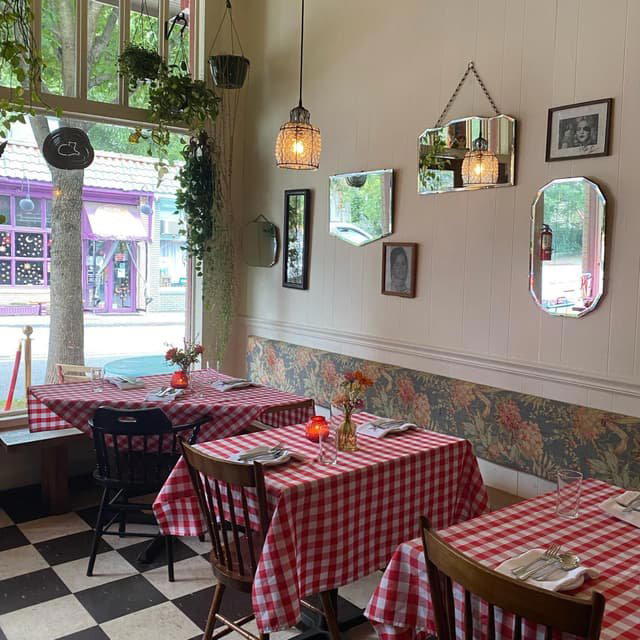
Warm, inviting, and cozy family-run hole-in-the-wall spot with a homely atmosphere.
Know Before You Go
- Getting there
- 1215 Scenic Hwy N #4, Lawrenceville, GA 30045